Crohn’s disease is a form of inflammatory bowel disease that can affect the digestive tract from mouth to colon, often with heavy impact on the small intestine and the GI tract overall. During a crohn’s flare, symptoms of crohn and crohn’s disease symptoms can include abdominal pain, urgent bowel changes, fatigue, and nutrient deficiencies.
This one is personal for me because I have Crohn’s disease, and I know how much food choices can change flare intensity and day-to-day energy. The bottom line: a smart crohn’s disease diet can improve digest choices, support a healthy gut microbiome, and reduce daily stress around meals.
For medical context, Mayo Clinic has a strong overview of Crohn’s disease symptoms, risk factors, and disease control considerations.
This is educational content, not medical advice. Work with your healthcare provider or health care provider for treatment options, nutritional supplements, and an eating plan tailored to your body’s ability and nutritional needs.
Crohn’s Disease Diet Foods to Eat (28)
If you’re building a Crohn’s Disease diet foods to eat list, start with these excellent choices and scale based on tolerance.
Crohn’s Disease Food to Eat
Why It Helps
Easy Meal Idea
#1. Lean proteins
Lean proteins are often easier on the gastrointestinal tract during active symptoms.
Chicken + brown rice bowl
#2. Protein foods (fish/chicken/turkey)
Protein foods help preserve strength when appetite is low.
Baked fish + root mash
#3. Brown rice
Gentle carb base and part of a well-balanced diet in many plans.
Brown rice + chicken broth soup
#4. Low-fiber foods (during flare)
Low-fiber foods can reduce irritation in active phases.
White rice + soft fish
#5. Soluble fiber sources
Soluble fiber can be easier than wheat bran for many people.
Oats + banana
#6. Leafy greens (well-cooked)
Cooked leafy greens can be part of a healthy diet when tolerated.
Soft spinach side
#7. Less processed foods
Less processed foods reduce additive load and digestive stress.
Simple baked meals
#8. Healthy fats (small amounts)
Healthy fats support calories without massive volume.
Olive oil drizzle on veg
#9. Olive oil
Contains fatty acids and fits anti-inflammatory diets in moderation.
Mild saute base
#10. Source of healthy omega-3 fat
A source of healthy omega-3 fat may support anti-inflammatory properties.
Salmon + soft veg
#11. Potassium-rich foods
Useful for hydration/electrolyte support after GI loss.
Mashed sweet potato
#12. Antioxidant-rich foods
Can fit part of a nutrient-rich diet in tolerant portions.
Cooked berries in oats
#13. Chicken broth
Easy hydration and light recovery meal during flare windows.
Broth + rice + shredded chicken
#14. Various teas
Helpful fluid support when appetite is low.
Ginger tea or mild herbal tea
#15. Ginger tea
Often better tolerated than fruit juices or orange juice.
Warm cup after meals
#16. Coconut water
Hydration option for some patients with flare fatigue.
Small serving between meals
#17. Aged cheeses (if tolerated)
Aged cheeses may contain lactose in lower amounts than cow’s milk.
Small portion with crackers
#18. Lactose-free alternatives
Good for lactose intolerance and milk products sensitivity.
Lactose-free yogurt
#19. Nutritional yeast
Good source of B vitamins in some eating plans.
Sprinkle on rice bowls
#20. Vitamin D support foods
May help healthy bone status with provider guidance.
Fortified dairy-free options
#21. Vitamin B support foods
Vitamin B intake matters when risk of nutritional deficiencies is elevated.
Eggs + fortified cereals
#22. Ground flaxseed (small amount)
Can add healthy fats and gentle fiber if tolerated.
Add to oats
#23. White breads (during active flare)
Lower-residue texture can be easier than rough whole grains during a crohn’s flare.
Soft toast with eggs
#24. Well-cooked raw-veg alternatives
Replacing raw vegetables with soft-cooked options can reduce irritation.
Cooked zucchini bowl
#25. Good bacteria foods (if tolerated)
Can support healthy gut microbiome when tolerance allows.
Low-lactose cultured yogurt
#26. Anti-inflammatory diets staples
Anti-inflammatory properties may support symptom stability over time.
Salmon + olive oil + greens
#27. Part of a nutrient-rich diet proteins
Helps meet nutritional needs without high trigger load.
Turkey + rice plate
#28. Excellent choices for hydration meals
Supports fluids and electrolytes during active Crohn’s disease symptoms.
Chicken broth + soft starch
If you have Whole Foods in your area, you can get many Crohn’s-friendly staples with same-day delivery here: Whole Foods same-day delivery.
My Favorite Crohn’s Diet Cookbook
If you want a done-for-you meal approach, my favorite go-to Crohn’s-friendly cookbook is this one. Even though it was published in 2025, the recipes are timeless and can serve you well for years.
95 Pages – 11/03/2025 (Publication Date) – Independently published (Publisher)
Crohn’s Disease Foods to Avoid (27)
Pair your Crohn’s Disease diet foods to eat plan with this avoid list for cleaner symptom data.
Trigger Food
Why It Can Worsen Crohn’s Disease Symptoms
#1. Spicy foods
Can aggravate abdominal pain and stool urgency.
#2. Fatty foods
Large amounts of fat can worsen digestive discomfort.
#3. High-fat fried foods
Harder to tolerate during a crohn’s flare.
#4. Raw vegetables
Rough texture may irritate inflamed bowel segments.
#5. Whole grains (during flare)
Fiber load may be too high in active phases.
#6. Whole wheat bread (during flare)
Can be harder than lower-residue options in active symptoms.
#7. Wheat bran
Insoluble fiber may increase irritation.
#8. White breads (long-term overuse)
Can displace nutrient-rich foods if overused.
#9. Cow’s milk
Common issue when lactose intolerance overlaps.
#10. Milk products (full-fat)
Can aggravate symptoms for sensitive patients.
#11. Fruit juices
Concentrated sugar load can trigger GI symptoms.
#12. Orange juice
Acid + sugar combo can worsen discomfort.
#13. Processed snack foods
Often low in useful nutrients and high in additives.
#14. Alcohol
Can irritate the digestive tract and GI tract.
#15. Carbonated drinks
Can increase bloating and pressure.
#16. Large salads
Raw load may be rough in active disease windows.
#17. Large amounts of nuts/seeds
Texture can irritate for some people.
#18. Particular food triggers
Individual specific foods vary; use a food diary.
#19. Very high-fiber foods during flare
Too much fiber can worsen active symptoms.
#20. Heavy creamy sauces
Fatty acids load may increase discomfort.
#21. Very spicy sauces
Can intensify gastrointestinal tract irritation.
#22. High-lactose desserts
May worsen lactose-linked symptoms.
#23. Experimental restrictive combos
Increases nutritional deficiencies risk without clear benefit.
#24. Orange juice in large amounts
High acidity and sugar can irritate sensitive GI tract phases.
#25. Whole wheat bread in active flare
Fiber density can be too much in a crohn’s flare window.
#26. Much fiber too quickly
Rapid fiber jumps may worsen cramping and stool urgency.
#27. Particular food overload in one meal
Large single-food loads can stress digestive tolerance and trigger symptoms.
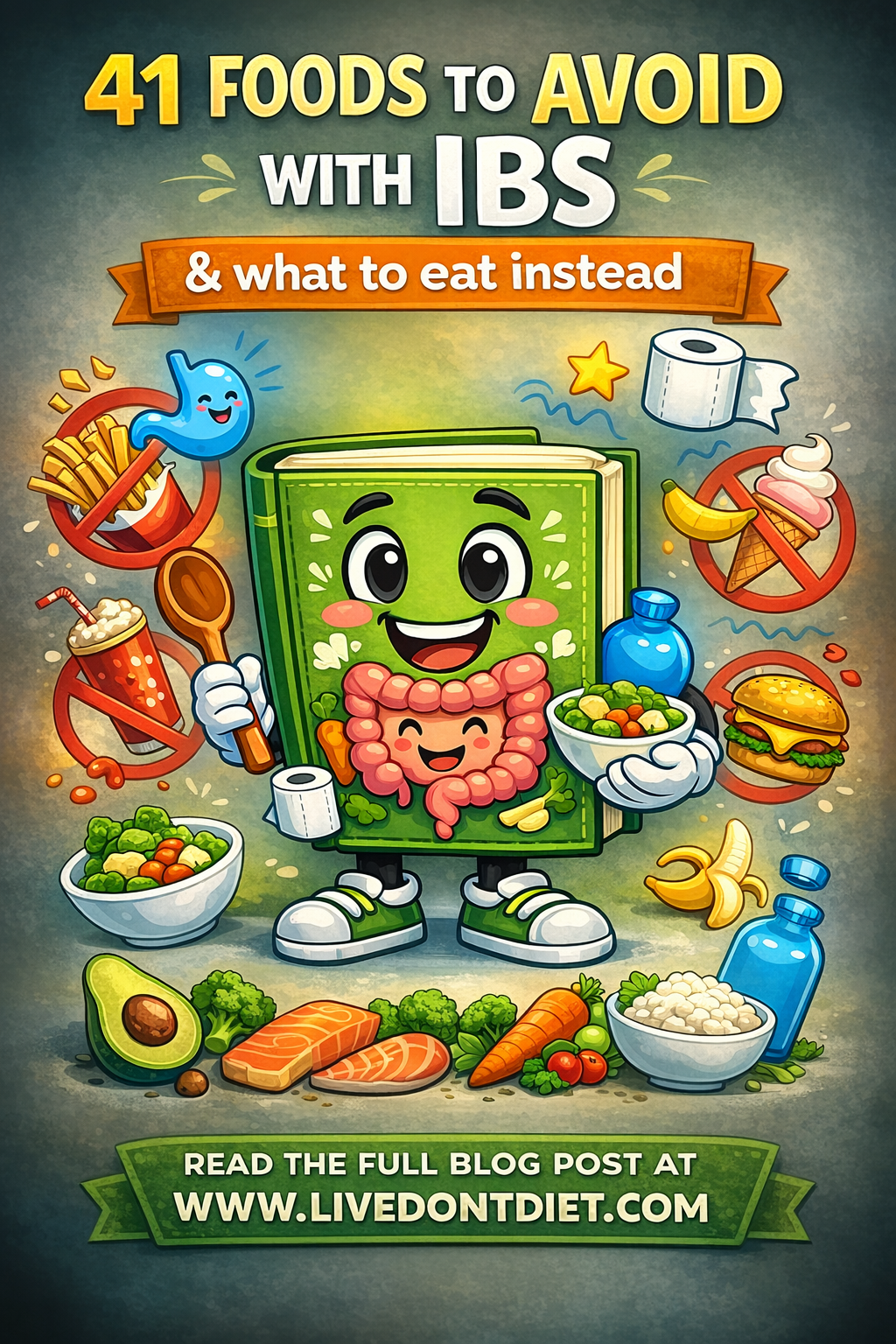
Pinterest Pin
Here’s a colorful Pinterest pin about our list of Crohn’s disease foods to eat and avoid if you are on Pinterest and want to save this article for yourself and share with your friends.
The best advice for a Crohn’s disease diet is not perfection, it is consistency and data. Start with low residue diet principles in active flare periods, then gradually expand food groups to recover a healthy diet and right amount of nutrients.
Use an elimination diet carefully, then reintroduce one food at a time. This protects against unnecessary restriction and helps avoid long-term nutritional deficiencies, including vitamin d and vitamin b gaps. If needed, work with a registered dietitian nutritionist to build a personalized diet plan.
Because celiac disease, ulcerative colitis, and other inflammatory bowel disease patterns can overlap, provider guidance is essential. A University of Massachusetts or other tertiary center GI team can help in complex cases with kidney diseases, medication interactions, or persistent nutrient deficiencies.
6 FAQs About Crohn’s Disease Diet Foods to Eat
These Crohn’s Disease diet foods to eat FAQs cover the most common implementation questions.
1) What are the first Crohn’s Disease Diet Foods to Eat during a flare?
Start with low-fiber foods, lean proteins, chicken broth, and simple starches like rice or potatoes. Keep portions smaller and avoid spicy foods and fatty foods initially. This approach gives your digestive tract a calmer baseline while you track tolerance. Then expand slowly toward a well-balanced diet with broader food groups and anti-inflammatory diets principles.
2) Do all patients need to avoid dairy products forever?
Not always, and your Crohn’s Disease diet foods to eat plan should reflect personal tolerance. Some people react strongly to milk products or cow’s milk, especially with lactose intolerance, while others tolerate aged cheeses or lactose-free options. Test specific foods carefully and monitor symptoms of Crohn in a food diary. Personalized tolerance usually works better than rigid permanent restrictions for long-term disease control and nutritional needs.
3) Is a low residue diet the best long-term approach?
Usually no, and your Crohn’s Disease diet foods to eat approach should evolve over time. A low residue diet can help during active flare windows, but long-term use may reduce variety of foods and increase nutritional deficiencies risk. Most plans transition toward a healthier, less restricted pattern once symptoms stabilize. Work with your health care provider to phase foods back in and protect overall health and body’s immune system.
4) Can whole grains and raw vegetables ever return?
Yes, often in stages, and a Crohn’s Disease diet foods to eat framework should include gradual reintroduction. During active inflammation, whole grains and raw vegetables may worsen Crohn’s disease symptoms, but many people can reintroduce portions later. The key is timing, preparation style, and quantity. Reintroduction should be slow and recorded, with emphasis on good choices that preserve comfort while expanding your nutritional profile over time.
5) Should I use supplements for nutrient gaps?
Sometimes, and your Crohn’s Disease diet foods to eat plan may need targeted supplement support. Nutritional supplements can help when bloodwork or intake suggests deficits in vitamin d, vitamin b, or other markers tied to intestinal inflammation. But supplements should complement, not replace, a practical eating plan based on healthy foods, lean proteins, and tolerated carbohydrates. Review needs with your healthcare provider before adding new supplement routines.
6) When should I seek medical help urgently?
Seek urgent medical help if abdominal pain escalates, hydration drops, bleeding appears, fever persists, or food intake becomes difficult, even when following a Crohn’s Disease Diet foods to eat plan. Severe Crohn’s flare periods can progress quickly and need clinical support. Early intervention protects the GI tract, reduces complication risk factors, and improves outcomes from medical treatments that work alongside dietary changes and lifestyle support.
Conclusion: Crohn’s Disease Diet Foods to Eat and Avoid
A strong Crohn’s Disease diet foods to eat plan gives you structure when symptoms feel unpredictable. Start with the foods you tolerate best, remove obvious trigger foods, and rebuild with purpose.
If you track carefully, adjust with your healthcare provider, and protect your nutritional needs, you can reduce flare chaos and improve day-to-day stability over the long way.
Tim Brennan is a writer and creator who has struggled for most of his young and adult life with maintaining an optimal diet. In his 20s he managed to lose almost 50 lbs on the South Beach Diet, in his 30s it was Weight Watchers, and 40s Keto. Today, at the tender age of 53 his current goal is to lose the “Covid 19,” that is, the extra 19lbs he gained during the pandemic.
Please Share: Pinterest 0 Facebook 0 Twitter 0 Blogger 0 In this article, you’ll get a practical Crohn’s disease diet foods to eat framework, plus key foods to avoid for fewer flare days. Gut Soothing […]
Please Share: 2 Shares Pinterest 0 Facebook 0 Twitter 1 Blogger 1 In this article, you’ll get a practical GERD foods to eat plan first, plus the key foods to avoid if you want fewer […]
Please Share: 257 Shares Pinterest 230 Facebook 24 Twitter 1 Blogger 1 If you are searching for the best IBS cookbooks for beginners, these are the five I would start with first. Why I Built […]


Leave a Reply