
Eating Smart on GLP-1
If you’re on a GLP-1 medication (Ozempic, Wegovy, Mounjaro, Zepbound, or any of the newer ones), you already know the protein-first rule. Your appetite is smaller, your stomach empties more slowly, and the meals that used to feel normal now feel like too much halfway through.
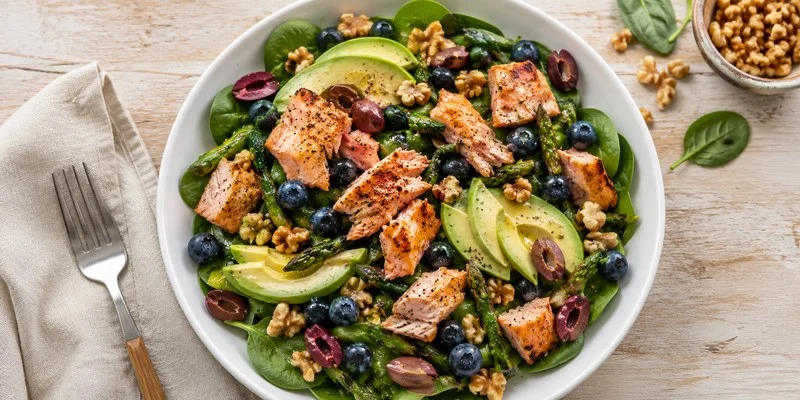
This high protein salmon salad is built for exactly that. Roasted salmon does the protein-and-omega-3 heavy lifting (about 22 grams of protein per 3-ounce fillet) and the salad base gives you fiber and color without overwhelming a slowed-down stomach. Twenty-five minutes start to finish, about thirty grams of protein per serving. That protein-first approach is exactly what the Mayo Clinic Diet recommends for people taking GLP-1 medications, where lifestyle change is what makes the weight loss stick.
A note on portions if you’re new to GLP-1: this recipe is sized for two, but it’s perfectly normal to eat half a serving and box the rest for tomorrow. Smaller, more frequent meals beat heroic single sittings on these medications.
Why You’ll Love This High Protein Salmon Salad
Here’s what makes this high protein salmon salad a reliable lunch on GLP-1:
- About 30 grams of protein per serving. Protein-first eating is the whole point on GLP-1, and this high protein salmon salad delivers without leaning on dairy or anything heavy.
- Roasted, not raw. Cooked salmon and roasted asparagus are easier on a GLP-1-slowed stomach than seared or grilled. Gentle heat, gentle digestion.
- Real fats in real portions. Quarter avocado, one ounce of walnuts, two tablespoons of olive oil dressing: exactly the portion sizes from LDD’s 33 Foods to Eat on GLP-1 guide.
- Twenty-five minutes, one sheet pan. Salmon and asparagus roast together; everything else is no-cook assembly.
- Two meals or four. Cook the full recipe, eat half tonight, box the other half for tomorrow’s lunch. The salmon holds beautifully cold.
Ingredients
You need a handful of fresh ingredients to build this high protein salmon salad: sheet-pan salmon and asparagus, a no-cook salad base, and a simple olive-oil dressing.
If you have Whole Foods in your area, you can get everything for this high protein salmon salad with same-day delivery here: Whole Foods same-day delivery.
For the sheet pan:
- 2 (4-oz) salmon fillets: skin-on or skinless, fresh or thawed. Wild-caught if available; it has a better omega-3 ratio.
- 1 pound asparagus: trimmed, cut into 2-inch pieces.
- 1 tablespoon olive oil
- 1/2 teaspoon salt (divided)
- 1/4 teaspoon black pepper
- 1/2 lemon: sliced into thin rounds.
For the salad base:
- 4 cups baby spinach or mixed greens
- 1/2 avocado: sliced into thin wedges. This is about 1/4 per serving, the GLP-1-friendly portion.
- 1/2 cup fresh blueberries
- 2 tablespoons crumbled walnuts: about 1 ounce, dry-toasted in a skillet for 3 minutes if you want extra flavor.
- 2 tablespoons pitted Kalamata or green olives: halved.
For the dressing:
- 2 tablespoons extra-virgin olive oil
- 1 tablespoon fresh lemon juice
- 1 teaspoon Dijon mustard
- 1/4 teaspoon salt
- Black pepper to taste.
How to Make High Protein Salmon Salad
- Heat the oven. 400°F. Line a sheet pan with parchment.
- Prep the sheet pan. Toss the asparagus with 1 teaspoon of the olive oil and 1/4 teaspoon salt; spread to one side of the pan. Place the salmon fillets on the other side. Drizzle with the remaining 2 teaspoons olive oil and season with the remaining 1/4 teaspoon salt + black pepper. Lay a lemon slice on top of each salmon fillet.
- Roast. 12 to 15 minutes, until the salmon flakes easily with a fork and reads 145°F internal, and the asparagus is tender-crisp. Let the salmon rest 2 minutes off the heat before flaking.

- Whisk the dressing. In a small bowl, whisk the olive oil, lemon juice, Dijon, salt, and pepper until emulsified.
- Build the bowls. Divide the greens between two bowls. Top with the roasted asparagus, avocado slices, blueberries, walnuts, and olives.
- Flake the salmon. Use two forks to flake the salmon into large pieces. Distribute over the salads. Discard the lemon slices (they’ve done their job).
- Dress and serve. Drizzle with the dressing, toss gently, eat right away.
Tips for Getting It Right
A few small tricks make a real difference when you’re making this high protein salmon salad:
- 145°F is the magic number. Salmon at 145°F is opaque but still moist. Past that, it dries out fast. A small instant-read thermometer earns its keep here.
- Toast the walnuts if you have 3 extra minutes. Dry skillet, medium heat, stir constantly until fragrant. Massively better flavor than raw.
- Use a quality olive oil. This high protein salmon salad lives or dies on the dressing. A bottle of decent extra-virgin olive oil costs $10-15 and changes everything.
- Pre-slice the avocado just before serving. Air-exposed avocado browns within 20 minutes. If you’re meal-prepping this high protein salmon salad for tomorrow’s lunch, store the avocado whole and slice the morning of.
- Don’t dress until you’re eating. A pre-dressed salad in the fridge is a sad, soggy salad in the fridge.
Common Mistakes to Avoid
Watch out for these when you make this high protein salmon salad:
- Using fattier salmon cuts. Belly cuts and skin-on can be too rich on GLP-1. Stick with a standard center-cut fillet.
- Overdoing the avocado. A quarter per serving is the GLP-1-tolerable amount; a whole half can sit heavy on a slowed stomach. Per LDD’s 33-foods guide, avocado tolerates well in small portions only.
- Skipping the dressing entirely. Some GLP-1 newbies cut all added fat to manage nausea, but the two tablespoons of olive oil dressing here is real, healthy fat. The protein and the dressing together are what make the salad feel like a meal.
- Pre-mixing the bowl. Build in layers and toss only the bite you’re eating; salmon flakes break down fast under aggressive tossing.
- Reheating the salmon hot. Cold flaked salmon over fresh greens is the better play; high heat past 145°F dries the fillet out and ruins the texture.
Variations
Once you’ve made this high protein salmon salad once, it becomes a base you can build on:
- Swap salmon for grilled chicken breast: 26 grams of protein per 4 oz, leaner profile, same method.
- Add 1/4 cup cooked quinoa per serving for more complex carbs and a fuller meal on bigger-appetite days.
- Trade blueberries for fresh strawberries or raspberries during their seasons. Same low-glycemic, anti-inflammatory profile.
- Sub roasted broccoli for asparagus if asparagus isn’t in season. Same sheet pan method, same 12-minute roast.
- Make it Mediterranean. Add 2 tablespoons crumbled feta if your tolerance for dairy is fine on the medication.
Storage and Reheating
Here are my recommendations for storage and handling your high protein salmon salad:
Refrigerator: Store the components of this high protein salmon salad separately for up to 2 days. Roasted salmon and asparagus hold cold; greens, avocado, and dressing should be added when you’re ready to eat.
Salmon-only storage: Up to 3 days refrigerated in an airtight container. The cold salmon is great flaked over greens the next day without any reheating.
Reheating salmon: Skip it. Cold salmon over fresh greens is the better play. If you must reheat, do it at 275°F for 8 minutes; anything hotter ruins the texture.
Freezing: Don’t freeze this high protein salmon salad assembled. Cooked salmon freezes okay (up to 2 months) but the texture suffers.

The Best Cookbook for GLP-1 Eating
A protein-first cookbook built for life on GLP-1.

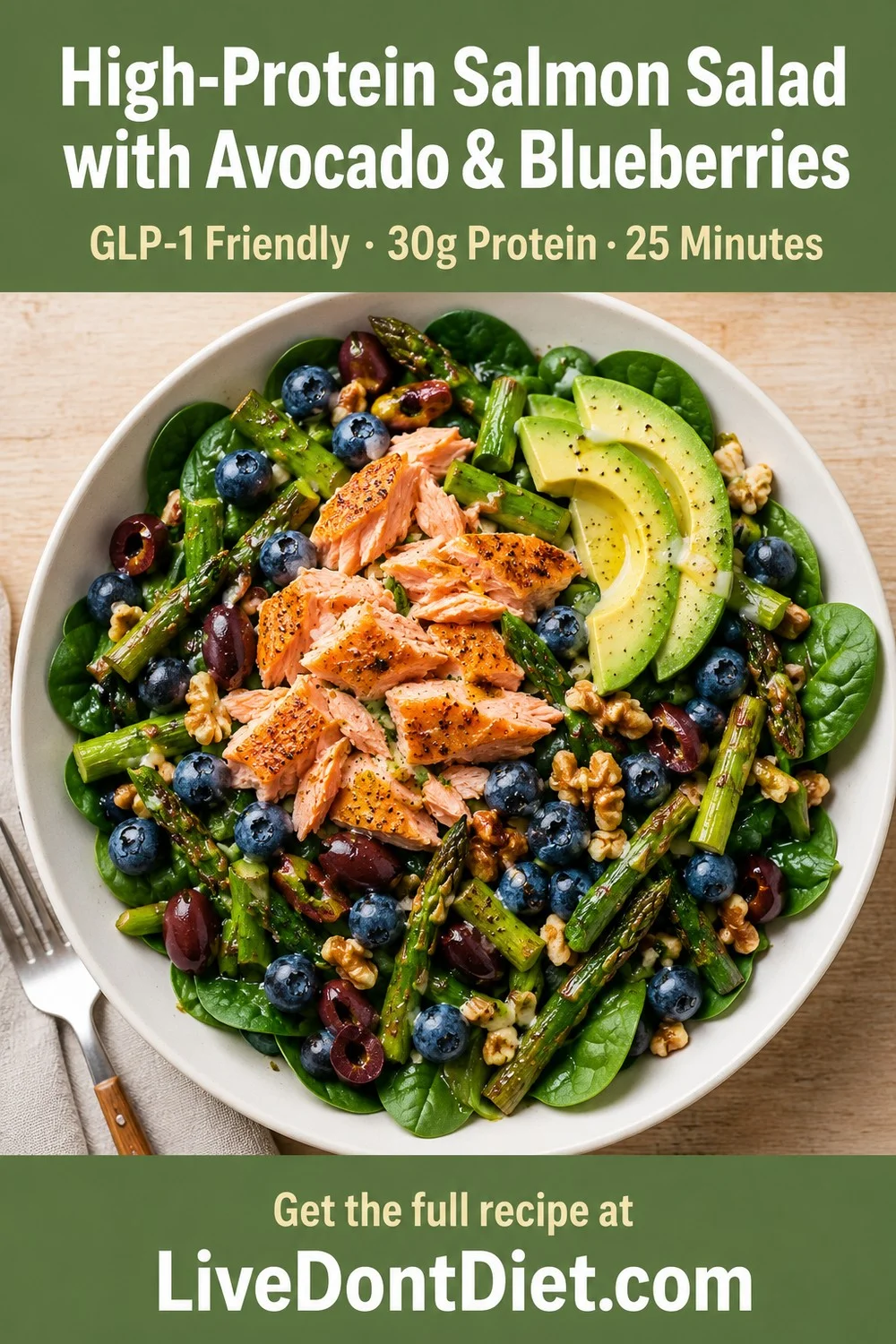
Save This High Protein Salmon Salad Recipe for Later
Pin this high protein salmon salad so you can come back to it next time you need a fast, protein-forward GLP-1 lunch.
FAQs
Here are the questions readers ask most about high protein salmon salad.
1. Is this high protein salmon salad safe to eat on GLP-1?
This high protein salmon salad is built around the foods on LDD’s 33 Foods to Eat on GLP-1 list: salmon, avocado, asparagus, olive oil, walnuts, and spinach. Each ingredient is in the portion size GLP-1 patients typically tolerate well. Blueberries are not currently on that specific list but are widely considered GLP-1-friendly (low glycemic, anti-inflammatory, high fiber). Halve the avocado or walnuts if you’re new to the medication and prone to nausea.
2. How much protein is in this high protein salmon salad?
About 30 grams of protein per serving, mostly from the 4-ounce salmon fillet (around 22 grams) with additional protein from the walnuts and greens. That’s right in the sweet spot for a GLP-1 lunch: enough to satisfy a slowed appetite for hours without overwhelming gastric emptying.
3. Can I use canned salmon instead of fresh?
Yes. Canned wild salmon (drained, water-packed) is a real time-saver and the protein profile is nearly identical to fresh. Skip the roasting step entirely; flake the canned salmon directly into the salad and add the roasted asparagus separately. The recipe drops from 25 minutes to about 12.
4. Is this high protein salmon salad good for Ozempic or Wegovy specifically?
Yes. Ozempic, Wegovy, Mounjaro, and Zepbound are all GLP-1 agonists with the same protein-first dietary playbook. This high protein salmon salad fits all of them. Tolerance to fat varies more by individual than by medication. Start with the full recipe and scale back the avocado and walnuts if you notice nausea or early fullness.
5. Why blueberries if they’re not on the 33-foods list?
Blueberries are an oversight on the current 33-foods list, not an exclusion. They’re a low-glycemic, anti-inflammatory, high-fiber fruit that’s regularly recommended on every reputable GLP-1 diet plan. We’ll likely update the master list to include them in a future revision.
6. Can I meal-prep this high protein salmon salad?
Yes, with one rule: store the components separately. Roast the salmon and asparagus on Sunday and store in airtight containers for up to 3 days. Each morning, build the bowl fresh: greens, sliced avocado, blueberries, walnuts, olives, flaked salmon, dressing last. Twenty-second assembly, fresh result.
More Recipes Like This
If you liked this high protein salmon salad, these LDD guides cover the surrounding territory:
- 33 Foods to Eat on GLP-1: the master list of what’s safe and what works on the medication.
- 51 High-Protein Foods for GLP-1: protein-first food directory for GLP-1 weight loss.
- 21 Best Snacks for GLP-1: gentle, protein-forward snacks for between-meal moments.
- 31 Foods to Avoid on GLP-1: the do-not-eat companion guide.
- Low-Fat Turkey Meatball Soup: a gentle high-protein soup for readers who need a low-fat dinner.
- Diverticulitis Egg Drop Soup: a simple low-residue soup for flare recovery days.
Recipe Card
- 2 (4-oz) salmon fillets
- 1 pound asparagus, trimmed and cut into 2-inch pieces
- 1 tablespoon olive oil (for sheet pan)
- 1/2 teaspoon salt, divided
- 1/4 teaspoon black pepper
- 1/2 lemon, sliced into thin rounds
- 4 cups baby spinach or mixed greens
- 1/2 avocado, sliced
- 1/2 cup fresh blueberries
- 2 tablespoons crumbled walnuts
- 2 tablespoons pitted Kalamata or green olives, halved
- 2 tablespoons extra-virgin olive oil (for dressing)
- 1 tablespoon fresh lemon juice
- 1 teaspoon Dijon mustard
- 1/4 teaspoon salt (for dressing)
- Heat oven to 400°F. Line a sheet pan with parchment.
- Toss asparagus with 1 teaspoon olive oil and 1/4 teaspoon salt. Spread on one side of the pan. Place salmon fillets on the other side, drizzle with the remaining olive oil, season with remaining salt and pepper. Top each fillet with a lemon slice.
- Roast 12 to 15 minutes until salmon reads 145°F internal and asparagus is tender-crisp. Rest salmon 2 minutes.
- Whisk dressing: 2 tablespoons olive oil, lemon juice, Dijon, salt, and pepper.
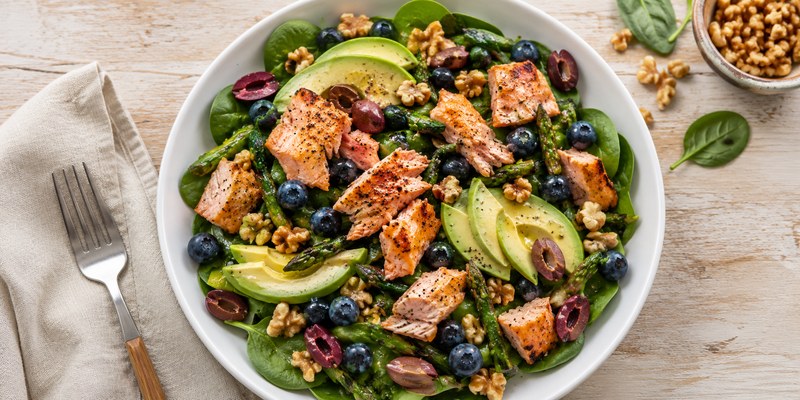
- Divide greens between two bowls. Top with roasted asparagus, avocado, blueberries, walnuts, and olives.
- Flake the salmon over the salads. Drizzle with dressing, toss gently, serve immediately.
