

Explore 31 prediabetes dinner ideas with flexible plate planning, familiar ingredients, vegetarian options, and practical family-style swaps.
In This Guide
Prediabetes Dinner, Shared Table

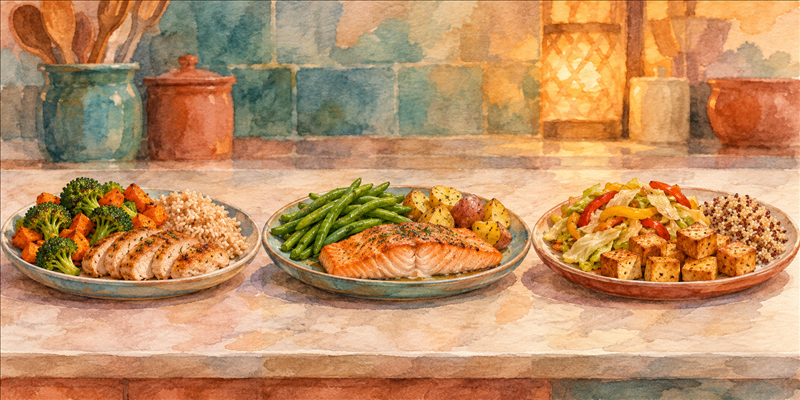
I like a dinner plan that lets everyone eat from the same serving dishes. One person may want more rice, another more vegetables, but cooking two unrelated meals makes an ordinary evening harder than it needs to be. These prediabetes dinner ideas start with familiar combinations and leave room to arrange the plate differently.
The aim is useful variety: a tray dinner, a bowl, a soup, or taco night, rather than thirty versions of chicken and lettuce. The quantities below illustrate assembly, not a personal carbohydrate prescription. If you need help choosing ingredients first, the prediabetes food guide covers the broader categories.
The CDC plate method offers a practical starting point: half nonstarchy vegetables, a quarter lean protein, and a quarter carbohydrate foods. Personal portions still depend on your needs. No dinner in this list promises a particular glucose result or replaces individualized care.
Key Takeaways
- One shared meal: These prediabetes dinner ideas let diners arrange familiar ingredients in different portions.
- Keep carbohydrates visible: Rice, potatoes, beans, and bread can fit; consider their combined contribution thoughtfully.
- Use personal guidance: A flexible plate framework supports planning but cannot promise your individual glucose response.
31 Prediabetes Dinner Ideas
Choose prediabetes dinner ideas by the ingredients and cooking method you want tonight. The quantities are culinary examples, not required portions or calculated nutrient totals. Meat, fish, grains, and vegetables mean cooked amounts; canned beans and fish mean drained amounts. Make nonstarchy vegetables a substantial part of the plate and adjust other components with your care plan.
🌱
Whole Foods Grocery Shortcut
Start with vegetables, a protein ingredient, and a carbohydrate food you enjoy. Compare sauces and convenience items by their actual labels.
As an Amazon Associate, I earn from qualifying purchases.
| Food | Assembly and Amounts | Pro Tip |
|---|---|---|
| 1. Salmon, Broccoli, and Brown Rice | Plate 3 oz cooked salmon with a generous portion of broccoli and 1/2 cup cooked brown rice. Keep the vegetables prominent rather than hiding them under the grain. | Roast broccoli separately so it can brown without overcooking the fish. Rice remains part of the meal; its amount can be individualized. |
| 2. Chicken Fajita Plate | Combine 3 oz cooked chicken with peppers and onions, then serve with 1 small tortilla and a cabbage side. Let everyone assemble their own bites. | Keep extra tortillas, cheese, and sauce on the table. Shared ingredients do not require everyone to build an identical plate. |
| 3. Tofu and Bok Choy Bowl | Set 4 oz cooked tofu beside bok choy, mushrooms, and 1/2 cup cooked rice. Add a measured spoonful of your preferred sauce rather than flooding the bowl. | A bowl can follow the same vegetable-first pattern as a plate. Spread ingredients out before mixing so the proportions are easier to see. |
| 4. Turkey Meatballs With Roasted Vegetables | Serve 3 oz cooked turkey meatballs with zucchini, peppers, and 1/2 cup cooked barley. Spoon a little yogurt-herb sauce over the meatballs. | The turkey meatball bowl offers preparation inspiration; its brown rice and vegetables can be rearranged to suit this dinner. |
| 5. Lentil Vegetable Soup and Salad | Build a bowl around 1/2 cup cooked lentils, tomatoes, carrots, celery, and broth, with a generous leafy salad alongside. Add bread according to your meal plan. | Lentils supply carbohydrate as well as protein. A soup containing lentils is not carbohydrate-free simply because it has no pasta. |
| 6. Shrimp Tacos With Cabbage Slaw | Fill 2 small corn tortillas with 3 oz cooked shrimp and shredded cabbage; put extra slaw and cucumber on the plate. Offer salsa separately. | Check tortilla size instead of treating every taco shell as equivalent. The filling can remain the same while the number or size of tortillas changes. |
| 7. Chickpea Chopped Salad | Toss 1/2 cup drained chickpeas with cucumber, tomato, peppers, parsley, and a little feta. Serve over leafy greens, with any bread planned alongside. | Chickpeas contribute both carbohydrate and protein. A lemon-and-olive-oil dressing adds flavor without making the salad a guaranteed glucose-control meal. |
| 8. Pork Tenderloin With Sweet Potato | Slice 3 oz cooked pork tenderloin beside green beans and 1/2 small baked sweet potato. Season the vegetables with herbs or spices you enjoy. | Sweet potato belongs with the carbohydrate foods, not the nonstarchy vegetable portion. Choose its size deliberately rather than banning it. |
| 9. Chicken and Vegetable Pasta | Toss 1/2 cup cooked pasta with 3 oz cooked chicken, roasted zucchini, mushrooms, and tomato sauce. Add a leafy side when the pan is light on vegetables. | Use pasta as one component rather than the entire bowl. Whole-grain pasta is an option, but it still contributes carbohydrate. |
| 10. Black Bean Stuffed Pepper | Fill 1 pepper half with 1/2 cup drained black beans, diced tomato, and a small spoonful of cooked rice; serve with roasted cauliflower. | Both beans and rice contribute carbohydrate. Adjust their combined amounts instead of counting the beans only as protein. |
| 11. Cod, Green Beans, and Potato | Serve 3 oz cooked cod with plentiful green beans and 1 small roasted potato. Add lemon, herbs, and a little olive oil to finish. | Potato size varies considerably. Cut a larger potato into a portion that fits your needs rather than treating one whole potato as a fixed measure. |
| 12. Turkey Burger With Crunchy Vegetables | Place 1 cooked turkey burger in a bun sized to your plan, and serve with cucumber, tomato, and roasted broccoli instead of an automatic second starch. | A bun is allowed. Compare the full plate, including fries or sweetened drinks, rather than making the burger bread the only focus. |
| 13. Tofu Peanut Noodle Salad | Toss 4 oz cooked tofu with cabbage, carrots, cucumber, and 1/2 cup cooked noodles. Add a modest amount of peanut sauce and loosen it with water if needed. | Sauce recipes vary in sugar and fat. Read the ingredients, and account for noodles even when most of the dish looks like vegetables. |
| 14. Chicken Greek Salad Plate | Arrange 3 oz cooked chicken with cucumber, tomato, leafy greens, olives, and a little feta; add a small pita or another planned carbohydrate food. | The Greek salad bowl shows the ingredient combination. Its name does not make portions or dressing irrelevant. |
| 15. Bean and Vegetable Chili | Simmer 1/2 cup cooked kidney beans with tomatoes, peppers, zucchini, and chili seasoning. Serve with a cabbage salad; add rice only if it fits your plan. | Beans already provide carbohydrate. If you add rice, corn, or bread, consider those together rather than treating each as a separate free side. |
| 16. Beef and Broccoli Stir-Fry | Combine 3 oz cooked lean beef with abundant broccoli and mushrooms, then serve with 1/2 cup cooked rice. Keep sauce visible rather than soaking the vegetables. | Slice the beef across the grain for tenderness. A home stir-fry lets you choose the amount of rice without needing a separate family meal. |
| 17. Egg and Vegetable Frittata | Make a frittata with 2 fully cooked eggs, spinach, mushrooms, and peppers; serve with salad and a slice of whole-grain toast if desired. | Vegetables inside a small frittata may not fill half a plate. Add a side rather than assuming a few spinach leaves complete the vegetable portion. |
| 18. Salmon Cakes With Slaw | Shape cakes from 3 oz canned salmon, a little binder, and seasonings; cook thoroughly and serve with cabbage slaw plus a planned portion of roasted potato. | Breadcrumbs or oats in the cakes contribute carbohydrate too. Check a tested recipe for binding proportions rather than estimating a nutrient total here. |
| 19. Edamame and Quinoa Bowl | Combine 1/2 cup shelled cooked edamame with 1/3 cup cooked quinoa, roasted broccoli, and shredded cabbage. Dress with lime and a little oil. | Edamame and quinoa both contribute carbohydrate alongside other nutrients. Make the vegetables substantial and adjust the combined grain-and-legume portion to your needs. |
| 20. Chicken Tortilla Soup | Make a vegetable-rich broth with 3 oz cooked chicken, tomatoes, peppers, and zucchini. Add 1 small tortilla cut into strips and a cabbage side. | If the recipe also includes beans or corn, include those in the carbohydrate picture. A clear broth does not make every soup low in carbohydrate. |
| 21. White Bean and Tuna Salad | Mix 1/3 cup drained white beans with 3 oz drained tuna, cucumber, celery, tomato, and parsley. Serve on greens with lemon dressing. | The beans supply carbohydrate as well as protein; tuna does not cancel it. Add bread only as part of the whole meal choice. |
| 22. Turkey Lettuce Cups With Rice | Spoon 3 oz cooked seasoned turkey into romaine leaves and serve with peppers, cucumber, and 1/2 cup cooked rice. Keep the rice on the plate, not hidden in the filling. | Use the lettuce cup recipe for the format. Lettuce cups are a choice, not proof that tortillas must always be avoided. |
| 23. Tofu Curry With Cauliflower | Simmer 4 oz tofu with cauliflower, spinach, tomato, and curry spices; serve with 1/2 cup cooked rice. Choose the sauce ingredients you enjoy. | Coconut milk and jarred sauces vary. Compare labels and use an amount that fits the whole meal rather than relying on a curry label alone. |
| 24. Roast Chicken With Farro Salad | Pair 3 oz cooked chicken with 1/2 cup cooked farro tossed with chopped tomato, cucumber, and parsley, plus a generous roasted vegetable side. | Farro contains wheat and carbohydrate. Substitute a suitable grain for a separate gluten restriction, not because prediabetes automatically requires gluten avoidance. |
| 25. Lentil Bolognese Over Mixed Noodles | Spoon a sauce containing 1/3 cup cooked lentils over a mix of zucchini ribbons and 1/3 cup cooked pasta. Serve with a leafy salad. | Lentils and pasta both count toward carbohydrate intake. Zucchini adds volume and variety without requiring you to eliminate pasta entirely. |
| 26. Shrimp and Vegetable Skewers | Thread 3 oz shrimp with peppers and zucchini, cook thoroughly, and serve with a small portion of corn plus cucumber salad. | Corn is a starchy vegetable. Let the peppers, zucchini, and salad supply the nonstarchy part rather than grouping all vegetables together. |
| 27. Chicken Avocado Salad With Toast | Combine 3 oz cooked chicken with a little avocado, cucumber, tomato, and herbs; serve over greens with 1 slice of toast. | The chicken avocado salad provides a mixing method. Include the toast and any other sides when considering the complete meal. |
| 28. Vegetable and Turkey Stuffed Zucchini | Fill 2 zucchini halves with 3 oz cooked turkey, diced mushrooms, and 1/3 cup cooked bulgur; bake until the squash reaches your preferred texture. | Bulgur is a wheat-based carbohydrate food. The zucchini shell changes presentation, not the need to consider the filling and sides. |
| 29. Black Bean and Egg Bowl | Combine 1/3 cup drained black beans, 1 fully cooked egg, sautéed peppers, and shredded lettuce. Add salsa and a small tortilla if desired. | Decide whether you want the tortilla before adding other starches. Beans remain part of carbohydrate planning even when an egg supplies additional protein. |
| 30. Sheet-Pan Tofu With Carrots and Broccoli | Roast 4 oz tofu with broccoli and carrots, then serve with 1/2 cup cooked barley. Keep the barley separate until plating for easy adjustment. | Use differently sized cuts or separate trays so vegetables finish together. A little planned sauce is more useful than calling the meal carb-free. |
| 31. Mediterranean Lentil and Egg Plate | Serve 1/2 cup cooked lentils with 1 fully cooked egg, cucumber, tomato, and a generous portion of greens. Add herbs and a lemon dressing. | This plate uses lentils as a carbohydrate-and-protein food. You can vary the vegetables without assuming an extra grain is always required. |
Prediabetes Dinners: Pinterest Pin
📌 Save these prediabetes dinner ideas to your dinner board for a week of flexible choices.

3-Day Prediabetes Dinner Meal Planner
Use these prediabetes dinner ideas to choose three evenings, not to prescribe a complete day of eating. Shared ingredients can reduce shopping and preparation without turning every night into the same bowl. Breakfast, lunch, snacks, and drinks still belong in your overall plan.
| Night | Dinner | Ingredient Connection |
|---|---|---|
| 1 | Chicken fajita plate | Prepare extra peppers and cabbage for another dinner; portion tortillas individually. |
| 2 | Tofu and bok choy bowl | Use some cabbage with the greens, and keep cooked rice separate until serving. |
| 3 | Bean and vegetable chili | Add remaining peppers and zucchini; remember beans already contribute carbohydrate. |
For an all-meals view, use the seven-day meal plan rather than trying to infer breakfast and lunch from a dinner list. The breakfast collection is a separate starting point when mornings need attention.
Prediabetes Plates, Bowls, and Takeout
Prediabetes dinner ideas do not need to fit into tidy compartments. With mixed dishes, identify the main ingredients before deciding what belongs alongside. The American Diabetes Association describes the plate as a flexible planning tool that can work with different eating patterns, not a requirement to eat one cuisine.
Bowls and Casseroles
Look for the vegetables, protein, and carbohydrate foods inside the dish. A casserole with pasta and beans already contains carbohydrate from both. A nonstarchy vegetable side may be more useful than automatically adding bread.
Family-Style Meals
Put vegetables where everyone can reach them and serve grains separately when practical. People can choose different amounts without labeling one plate normal and another a special diet. Sauces and toppings can stay on the table.
Restaurant and Takeout Meals
Identify the main components and ask for vegetables or sauce separately when that helps. Large portions can be shared or saved. An entrée title does not reveal its full ingredients, so use available menu information rather than guessing exact carbohydrate grams.
Vegetarian Combinations
Beans and lentils belong in both the protein and carbohydrate discussion. Tofu, eggs, and dairy offer other possibilities depending on your preferences. Avoid assuming a meat-free meal is carbohydrate-free, or that adding protein cancels the starch already present.
Prediabetes Dinner Shopping Tips
A practical grocery list turns prediabetes dinner ideas into meals you can repeat. Choose a few vegetables, two protein options, and carbohydrate foods you genuinely enjoy. There is little value in a technically impressive shopping basket that leaves you without a dinner you want to cook.
- Buy vegetables in convenient forms. Plain frozen broccoli, bagged cabbage, and canned tomatoes can reduce preparation. Compare added sauces separately, and use what fits your time and budget.
- Read the whole label. Serving size is a reference amount, not automatically your portion. Look at the food you will actually eat, including sauce and side dishes, before making comparisons.
- Keep a pantry dinner available. Beans, canned fish, a familiar grain, and vegetables can become a meal without an elaborate recipe. Rinse canned beans if preferred and check the product instructions.
- Plan the carbohydrate component deliberately. Choose rice, bread, potatoes, beans, or another food rather than treating every side as an unrelated extra. The food-swap guide offers context without requiring blanket bans.
- Make leftovers a new assembly. Roast vegetables can move from a plate to a bowl, and cooked chicken can become a salad. Follow safe storage instructions rather than keeping food indefinitely for convenience.
- Separate dinner from every other decision. The snack ideas are optional planning help, not a requirement to eat between meals. Your overall schedule and needs remain individual.
FAQs
These answers explain how to use prediabetes dinner ideas while keeping portions, food preferences, and professional guidance individual.
1. Can rice and pasta stay on the menu?
Rice and pasta can remain part of a meal. The useful questions are how much you choose and what else is on the plate, not whether the ingredient is automatically forbidden. These prediabetes dinner ideas combine starch with vegetables and protein. Whole-grain versions are options, but they still contribute carbohydrate and do not guarantee a particular response.
2. Do beans count as protein or carbohydrate?
Beans and lentils contribute both protein and carbohydrate. That matters when a meal also contains rice, bread, corn, or pasta. Use prediabetes dinner ideas to identify those ingredients together rather than counting beans only as protein. A registered dietitian can help you arrange plant-based meals around your personal needs without treating legumes as foods to avoid.
3. How should I choose prediabetes dinner ideas?
Choose a meal you enjoy and can realistically prepare, then identify its nonstarchy vegetables, protein, and carbohydrate foods. Use the plate framework as a starting point and adjust portions to your needs. A familiar family meal with practical changes may be more useful than an entirely separate menu that is difficult to maintain over time.
4. Are the amounts in this list personal targets?
The amounts are assembly examples, not prescribed portions, carbohydrate limits, or verified nutrition calculations. Your needs depend on your overall eating pattern, health, activity, and care plan. Adapt prediabetes dinner ideas accordingly. Ask your clinician or a registered dietitian for individualized targets if you need them rather than assuming one rice or protein portion fits everyone.
5. Can dinner alone reverse prediabetes?
No individual meal can promise to reverse prediabetes or produce a specific glucose result. Long-term habits and appropriate professional support matter more than a single dinner. Use prediabetes dinner ideas as practical planning help, not a cure. Continue recommended follow-up and discuss sustainable changes with your care team rather than replacing care with a food list.
6. What can I do with a mixed dish?
Identify the main ingredients before choosing sides. A soup, casserole, or bowl may already contain vegetables, protein, and more than one carbohydrate food. For prediabetes dinner ideas built around mixed dishes, add a nonstarchy vegetable side when useful. Avoid assuming every meal needs extra bread or that its ingredients must sit in separate compartments to count.
7. Does adding protein cancel the carbohydrates?
Protein does not erase the carbohydrate in rice, noodles, beans, or other foods. A mixed meal can affect digestion differently from an isolated food, but it does not make carbohydrate disappear. Keep the whole meal in view when using prediabetes dinner ideas. Individual glucose responses vary, so follow personalized advice rather than relying on a cancellation rule.
Video: Prediabetes Plate Planning
This plate-method overview offers a visual way to think about vegetables, protein, and carbohydrate foods. Apply it flexibly when choosing prediabetes dinner ideas, especially for bowls and mixed dishes. It explains a planning framework, not a personalized meal prescription or a prediction of your glucose response.
Video credit: American Diabetes Association.
Your Prediabetes Dinner Ideas Plan

I would begin with a dinner already in your rotation. Add a vegetable side, separate the rice or tortillas for easier serving, or choose a different protein if that makes the meal more appealing. These prediabetes dinner ideas are most useful when they make an ordinary evening easier, not when they create another demanding set of rules.
Keep the carbohydrate foods visible, including beans and lentils, and leave room for your own portion needs. A plate framework can organize decisions without turning every dinner into a calculation. It cannot replace individual guidance or promise what your glucose reading will be afterward.
Pick a few combinations for the next shopping trip, then keep the broader dinner collection for additional cooking inspiration. Shared ingredients, flexible portions, and meals you enjoy are a better starting point than a separate menu nobody wants to maintain.

Leave a Reply