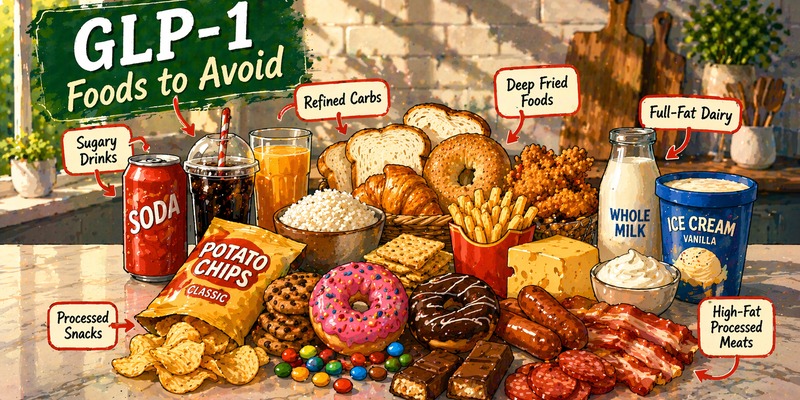
This guide covers the main foods to avoid on GLP-1 — the categories that trigger nausea, slow weight loss, and make the medication harder to tolerate day to day.
Table of Contents
GLP-1 Slows Everything Down

A close friend of mine started Wegovy last year and called me one night after a takeout dinner — fried rice, orange chicken, the works — miserable on her couch for hours. She asked what she could have eaten instead, and I did not have a good answer yet. That conversation is what sent me into the research that became this list.
Mayo Clinic notes that the common side effects of GLP-1 receptor agonists — nausea, vomiting, and constipation — are all worsened by fat-heavy and sugar-heavy meals. GLP-1 drugs slow gastric emptying significantly, so the wrong food sits in a slower stomach for hours. Adjusting what goes on the plate is one of the fastest ways to cut discomfort and keep the weight loss moving.
If constipation is the symptom that keeps showing up, my guide to best supplements for constipation separates daily fiber support from short-term relief options.
I am not a medical professional. This is general guidance only, not a substitute for advice from your physician or a registered dietitian familiar with your specific GLP-1 treatment.
Key Takeaways
Three main categories of foods to avoid on GLP-1:
- For nausea, fried food and high-fat items are the biggest triggers — fat digestion slows dramatically on this medication, making these the first category to cut.
- For blood sugar, sugary drinks, candy, and sweetened cereals conflict with the glucose-stabilizing benefits GLP-1 therapy is designed to provide.
- For reflux, spicy food, tomato sauces, coffee, citrus, and carbonated drinks worsen the reflux that slowed gastric emptying makes more likely.
Video: The Worst Offenders
A short, well-explained video on the main foods to avoid on GLP-1 and why they cause the worst symptoms for most people.
📹 Video Credit: Dr. Kevin Joseph
Save This for Later
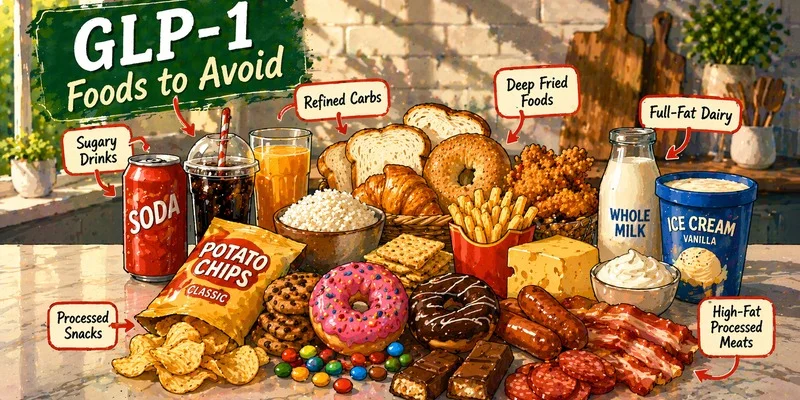
Here is a quick Pinterest pin I put together covering the foods to avoid on GLP-1 — save it for later and share it with anyone starting on Ozempic, Wegovy, or Mounjaro.

Fried and Greasy Foods
Fried items top nearly every list of foods to avoid on GLP-1. High fat combines with slow gastric emptying to keep discomfort going for hours after even a small portion.
- French fries — High fat from deep frying lingers in a GLP-1-slowed stomach for hours, producing nausea and heaviness.
- Fried chicken — Fat from the skin and frying oil makes this one of the most consistently reported trigger foods on GLP-1.
- Onion rings — Battered and fried, high in fat and refined carbs. A small serving triggers discomfort on GLP-1 medications.
- Fried fish — Even lean fish is problematic when deep-fried. The fat load overloads a stomach already slow on GLP-1 therapy.
- Donuts and fried pastries — High fat plus high sugar — a double trigger for nausea and blood sugar disruption on GLP-1.
High-Fat Foods
Beyond fried items, these slow an already-delayed stomach even further through raw fat content alone.
- Bacon — About 40 grams of fat per three-ounce serving. A fat-dense breakfast option and reliable nausea trigger on GLP-1 therapy.
- Sausage and processed meat — High in saturated fat and sodium. Regular consumption contributes to bloating and discomfort on GLP-1 medications.
- Creamy pasta sauces — Alfredo and cream sauces can exceed 30 grams of fat per serving — too high for a slowed stomach.
- Full-fat cheese in large amounts — A small amount is tolerable; a large portion significantly increases fat load and extends transit time.
- Butter used heavily — Each tablespoon adds 12 grams of fat. Dishes cooked in heavy butter are a slow-digestion problem on this medication.
Sugary Foods and Drinks
Blood sugar management is a core benefit of GLP-1 therapy. These items — along with white bread and white rice — directly undermine that benefit with rapid glucose spikes.
- Soda and sugary drinks — High sugar plus carbonation. Bloating and pressure compound the discomfort of a stomach already slow to empty.
- Fruit juice — Removes fiber and concentrates sugar, creating a rapid glucose spike with no satiety benefit.
- Candy — Pure sugar, no nutritional value. Disrupts the blood-sugar management this medication is designed to support.
- Ice cream — High sugar plus high fat at the same time — both trigger categories in one easy-to-overconsume format.
- Sweetened cereals — High glycemic, low fiber, low protein. Conflicts directly with the glucose-stabilizing goals of GLP-1 therapy.
- Flavored yogurt with added sugar — Plain is ideal; the sweetened version undermines blood sugar control.
Ultra-Processed Foods
Ultra-processed items combine high sodium, low protein, and addictive flavor profiles designed to override the satiety effects GLP-1 therapy provides.
- Potato chips and flavored crackers — High sodium, refined carbs, and enough fat to slow digestion. Portion control is a consistent problem.
- Packaged cookies and snack cakes — High sugar and high fat at once — hits both primary trigger categories in one processed product.
- Fast food burgers — Between the bun, beef fat, and added sauces, most exceed 30 to 40 grams of fat per serving.
- Frozen dinners (most) — High sodium, often high fat, low in fresh produce. Poorly matched to GLP-1 weight reduction goals.
- Processed deli meats — High in sodium and often high in fat. Regular consumption adds up quickly in fat load and bloating.
Alcohol
Not strictly prohibited, but alcohol belongs on any list of foods to avoid on GLP-1 — it interacts dramatically with slowed gastric emptying and absorbs faster when the stomach is already moving this slowly.
- Beer — Carbonation and alcohol together. Carbonation adds bloating pressure; alcohol absorbs more intensely on a slower-moving stomach.
- Wine in large quantities — A single glass is tolerated by most; larger amounts amplify absorption and can trigger low blood sugar.
- Spirits and cocktails — Fast-absorbing alcohol combined with high sugar in most cocktails — a double trigger for discomfort.
Foods That Worsen Reflux
GLP-1 medications increase reflux risk by slowing stomach emptying. These are the classic dietary triggers that worsen acid exposure when digestion is already delayed.
- Spicy food — Does not interact directly with GLP-1 drugs, but significantly worsens the reflux that slow digestion makes more common.
- Tomato-based sauces in large amounts — Acidic and often concentrated. A common reflux trigger that becomes more problematic with slower digestion.
- Citrus fruits in large amounts — Acidity in large citrus portions worsens esophageal irritation when digestion is already slow.
- Coffee in large amounts — Relaxes the lower esophageal sphincter, worsening reflux. Multiple large coffees is a reliable heartburn trigger.
Other Common Triggers
These additional foods to avoid on GLP-1 round out the ones most frequently reported as problematic by people on semaglutide and tirzepatide.
- Carbonated drinks — Add gas to a stomach already slow to empty. Even sparkling water causes bloating and pressure for many users.
- Dried fruit — Concentrated sugar without the water of whole fruit. A small handful can deliver several whole-fruit servings of sugar.
- Large portions of any food — GLP-1 medications reduce stomach capacity. Even well-tolerated foods cause nausea when portions exceed that capacity.
Recommended GLP-1 Cookbook
🍳 A Cookbook That Skips Every Trigger


FAQs
Here are the top questions I get about the foods to avoid on GLP-1, answered in plain English.
1. What are the top foods to avoid on GLP-1 medications?
Fried foods, high-fat options, and heavily sugary items cause the most problems. GLP-1 medications slow gastric emptying significantly, meaning fat and fried food sit in the stomach far longer than before. Nausea, prolonged heaviness, and reflux are the common results. Starting with these three categories makes the biggest practical difference in managing GLP-1 side effects.
2. Can I eat fried food occasionally on this medication?
Occasional small amounts are tolerated by some people, but fried food is consistently one of the foods to avoid on GLP-1 that causes the most reported issues. Even a small serving produces hours of nausea and stomach heaviness because of how dramatically GLP-1 drugs slow fat digestion. The risk-to-reward ratio is poor for most users.
3. Which triggers cause the most nausea?
High-fat foods and fried items are the most consistent nausea triggers. Anything above twenty grams of fat per serving sits in the stomach significantly longer due to slowed gastric emptying, prolonging discomfort. Creamy sauces, bacon, heavily buttered dishes, and fried proteins are the most frequently reported culprits. Eliminating these first produces the most noticeable relief.
4. Why does sugar cause problems on a GLP-1 diet?
Sugar spikes blood sugar rapidly, interfering with one of the core benefits of GLP-1 therapy — steady glucose management. High-sugar items are among the foods to avoid on GLP-1 because they provide little protein or fiber to offset the rapid rise. Sweetened drinks, candy, and flavored yogurt are the most common offenders in daily food choices.
5. Which foods should I cut first for weight loss?
Prioritize cutting high-fat and fried items first, then high-sugar options second. Together these two categories account for most reported side effects and the bulk of empty calories that compete with weight loss goals. Ultra-processed food is a close third — high in sodium, low in protein, and directly designed for overconsumption that conflicts with GLP-1 goals.
6. Is dairy safe to eat on GLP-1 medications?
Low-fat dairy is generally fine and not among the foods to avoid on GLP-1. Plain Greek yogurt, cottage cheese, and skim milk provide useful protein in a manageable format. Full-fat dairy in large amounts is more problematic — heavy cream, generous portions of full-fat cheese, and cream sauces each add fat load that worsens nausea noticeably.
7. Which foods are worst if I experience acid reflux?
Spicy food, tomato-based sauces, citrus, and coffee are the main reflux triggers. GLP-1 therapy already slows gastric emptying, increasing how long stomach acid contacts the esophagus. Adding reflux triggers on top of this significantly worsens heartburn. Carbonated drinks compound the problem by adding pressure to a slow-moving stomach, making them a double trigger worth avoiding.
Final Thoughts on Foods to Avoid on GLP-1

This is not about perfect eating — it is about removing the triggers that make the medication unnecessarily uncomfortable.
Most people find that avoiding fried food and high-fat items alone produces a dramatic improvement in how the therapy feels day to day.
Side effects typically improve as the body adjusts. Pairing that adjustment with smarter food choices accelerates the process. For the other side of this list, see my companion guide on Foods to Eat on GLP-1 — 33 options that actually work.
If smaller meals are leaving gaps, my guide to the best supplements for Ozempic and GLP-1 users covers vitamins, protein, electrolytes, fiber, and probiotics without treating supplements like medication replacements.
If the confusing part is the access program rather than the food list, my Is Ro GLP-1 Legit For Weight Loss? review breaks down Ro, Ozempic, Wegovy, pricing examples, and qualification basics.
If cost or plan rules are the bigger barrier, the does Medicare cover GLP-1 drugs guide explains the temporary Bridge program and the key exclusions.