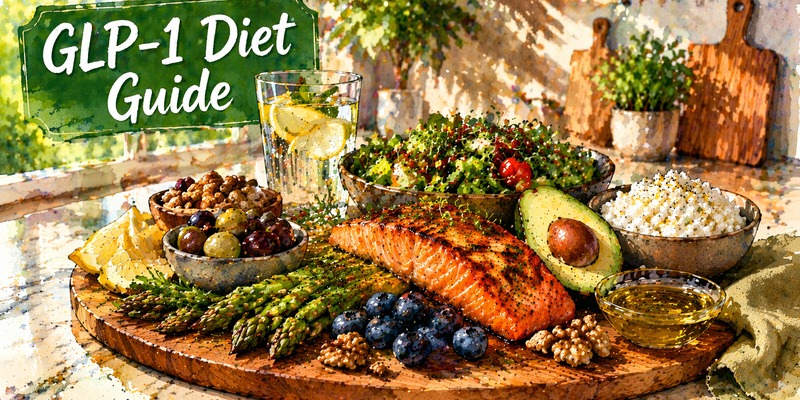
This guide covers 33 foods to eat on GLP-1 — ranked by how well each one supports your results, hits your nutritional targets, and avoids worsening the most common side effects of these medications.
Table of Contents
Eating Well on GLP-1

My neighbor started Wegovy six months ago and texted one evening asking what she should actually be eating. She had dropped 18 pounds but was constantly nauseous and unsure which of her food choices were helping and which were making it worse. That text is what sent me into the research on this medication.
The NIDDK notes that GLP-1 medications are effective tools for weight reduction, but dietary choices matter as much as the medication itself. Protein, fiber, and essential nutrients have to be the priority on a sharply reduced calorie intake — muscle loss is the main reason a GLP-1 diet plan matters beyond just eating less.
I am not a medical professional. Nothing here replaces medical advice from your prescribing physician or a registered dietitian. Always consult your provider before making significant dietary changes on this medication.
Key Takeaways
Here is what I found building this list:
- For protein, start every meal with chicken, eggs, Greek yogurt, or cottage cheese — aim for 20–30 grams before anything else to preserve muscle mass.
- For carbs and fiber, choose whole grains, sweet potato, and leafy greens over white bread or white rice to keep blood sugar stable.
- For daily habits, eat protein first, keep portions small, and stop at the first fullness signal — every single time.
Video: What to Eat
A practical expert overview of what foods to eat on GLP-1 — especially useful in the first few weeks when nausea and low appetite are the biggest obstacles.
📹 Video Credit: Bazgha Khalid, MD
Save This for Later
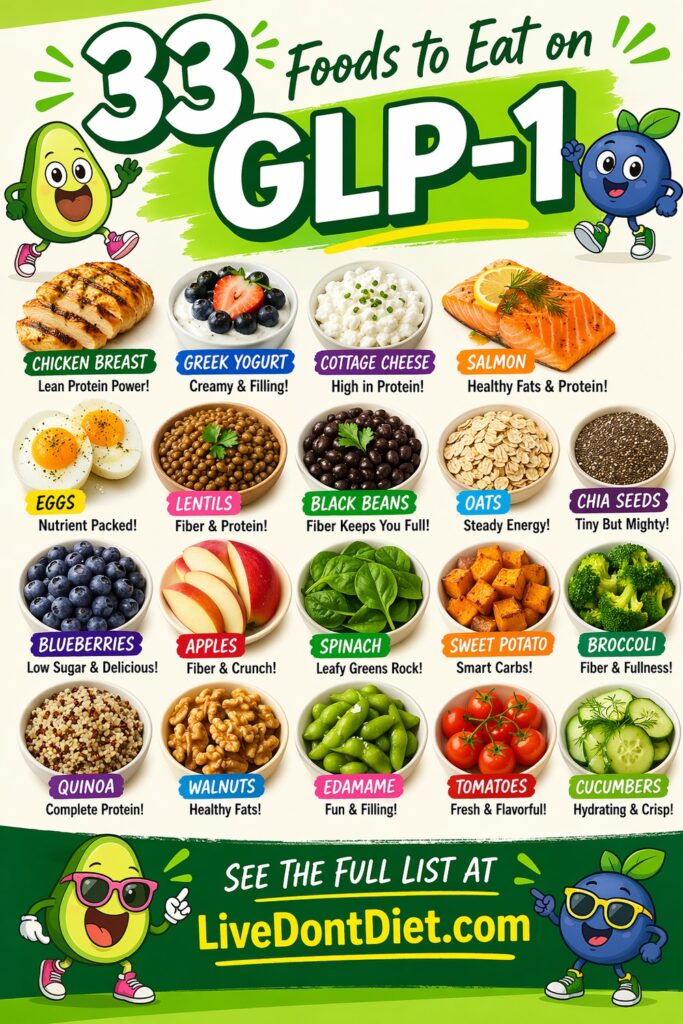
Here is a Pinterest pin I made of the full list — save it for when you are meal-planning, and share it with anyone else on GLP-1 trying to eat smarter.
Protein: The Non-Negotiable
Protein leads every list of foods to eat on GLP-1. The medication reduces calorie intake sharply, which makes hitting daily protein targets critical for preserving muscle mass while weight drops.
Aim for 20–30 grams of protein per meal. Protein powder or shakes have a similar effect — both fill gaps on low-appetite days when meeting targets through food alone is difficult.
- Chicken breast — 26g protein per 4oz, lean, easy to digest baked or poached — a reliable daily staple.
- Greek yogurt — 17g protein per cup. A parfait with berries and chia hits protein targets before appetite shuts down. Plain over flavored to avoid added sugar.
- Hard-boiled eggs — 6g protein each, portable, batch-prep friendly; two sit gently on a slowed stomach.
- Cottage cheese — 25g protein per cup, gentle on digestion; works as a standalone snack or meal component.
- Salmon — 22g protein per 3oz plus omega-3s; baked or poached outperforms pan-fried versions. Try my 25-minute high-protein salmon salad for an easy GLP-1 lunch.
- Canned tuna — 20g protein per 3oz, no cooking required; water-packed keeps fat content manageable.
- Turkey breast — Lower in fat than most meats, easy to portion for small meals; watch sodium on deli versions.
- Lean ground beef (93/7) — About 22g of protein per 3oz with less fat than standard ground beef — a workable red-meat option.
- Shrimp — 20g protein per 3oz, very low in fat, cooks fast; avoid heavy cream sauces that worsen nausea.
- Lentils — 18g protein and 15g fiber per cooked cup; a plant-based option that supports both protein and digestion.
- Firm tofu — 10g protein per half-cup, absorbs flavors well when baked; a reliable daily plant-based choice.
Fiber-Rich Vegetables
Vegetables are essential for managing constipation, one of the most common side effects of this medication. Cooked, soft options tolerate better than raw ones, especially early in treatment.
If supplements become part of the conversation, this guide to best supplements for constipation compares fiber, magnesium, PEG, and probiotic options by relief versus prevention.
- Spinach — Mild, wilts in two minutes, high in iron and magnesium; pairs well with any protein.
- Zucchini — Soft when cooked, low in calories, easy to roast with olive oil — one of the most GLP-1-friendly sides.
- Cooked carrots — Softer than raw, high in beta-carotene; gentler on digestion during early GLP-1 treatment.
- Sweet potato — 4g fiber per medium potato, good potassium; one of the best carbohydrate options for steady energy.
- Green beans — Low in calories, gentle in small portions; steamed or sautéed without heavy oil is best.
- Asparagus — High in folate, roasts in 15 minutes; helps manage water retention during weight loss.
- Cucumbers — Mostly water, which supports hydration; a solid option on low-appetite days when food is still needed.
Smart Carbohydrates
Smart carbohydrates belong on any list of foods to eat on GLP-1 — they provide sustained energy without the blood sugar crash that refined carbs like white bread and white rice reliably cause.
- Oats — High soluble fiber steadies blood sugar; steel-cut or rolled over instant.
- Brown rice — Lower glycemic response than white rice; a half-cup cooked fits reduced stomach capacity well.
- Quinoa — 8g protein per cooked cup plus complex carbs; works well as a grain base in bowls.
- Whole grain bread — One slice with at least 3g fiber provides steady energy without the blood sugar spike.
- Chickpeas — 7g protein and 6g fiber per half-cup; filling in small portions and versatile across meal types.
Healthy Fats
Healthy fats matter, but portions matter more here than anywhere else. High-fat foods slow digestion further on this medication and are one of the main triggers for nausea — keep amounts small.
- Avocado — About a quarter at a time provides monounsaturated fats and potassium without excess calories.
- Olive oil — A teaspoon or two for cooking adds healthy fat without further slowing digestion.
- Walnuts — About one ounce provides omega-3s and protein; better tolerated in small amounts only.
- Chia seeds — One tablespoon in yogurt or oatmeal adds fiber and omega-3s without significant volume.
Hydration Essentials
GLP-1 receptor agonists reduce thirst signals for some users, making hydration one of the most overlooked categories. Dehydration worsens constipation and fatigue — sip steadily rather than in large amounts at once.
- Water — Eight to ten glasses daily is non-negotiable on this medication. Sip steadily rather than in big volumes on a slower-moving stomach.
- Bone broth — Electrolytes and protein in a gentle format; especially useful when solid food is hard to manage.
- Herbal tea — Ginger tea reduces nausea, a common early side effect; peppermint eases stomach discomfort.
- Coconut water — Natural electrolyte source easier on the stomach than sports drinks; unsweetened only.
Meal Structure Tips
How you structure the foods to eat on GLP-1 matters as much as which ones you pick. Smaller portions on a consistent schedule reduce nausea, protect muscle mass, and make active weight loss sustainable.
- Eat protein first at every meal — Starting with protein before vegetables and carbs helps hit daily targets before appetite signals shut down — a single ordering habit that protects muscle more than any supplement adjustment.
- Keep portions small and frequent — Three small meals plus one or two snacks consistently outperforms large meals on a slowed stomach. Resistance training alongside small meals helps preserve bone mass and muscle as calorie intake drops.
Recommended GLP-1 Cookbook
🍳 The Companion Cookbook


FAQs
Here are the questions I hear most often about the foods to eat on GLP-1, answered without the textbook tone.
1. What should I eat first at every meal on GLP-1?
Protein comes first — aim for twenty to thirty grams from chicken, eggs, Greek yogurt, or cottage cheese before anything else on the plate. GLP-1 medications reduce appetite sharply, and once fullness signals hit, eating more becomes very difficult. This single ordering habit consistently protects muscle mass and helps meet daily protein targets at every meal.
2. Can I eat carbohydrates on this medication?
Yes, but type matters. The foods to eat on GLP-1 should include complex carbohydrates like oats, quinoa, sweet potato, and whole grain bread. These digest slowly and keep blood sugar stable without the spike that refined carbs cause. Aim for roughly a quarter of the plate rather than half, and avoid white bread and white rice.
3. Which options help most with nausea?
Soft, low-fat options tolerate best during adjustment. Plain oatmeal, ginger tea, cooked vegetables, and small portions of lean protein all reduce gastric irritation on a slowed stomach. Avoid fried food, heavy sauces, and large portions during early treatment. Eating slowly, staying hydrated, and keeping servings small reduces nausea as the body adjusts over several weeks.
4. How much protein do I need daily?
Most guidelines recommend eighty to one hundred grams of daily protein for the average adult on this medication, with higher needs for people doing regular physical activity. Foods to eat on GLP-1 should lead with protein at every meal because reduced calorie intake makes hitting this target harder. Protein shakes fill gaps on low-appetite days when eating whole food is difficult.
5. Which options best protect muscle mass?
Lean proteins at every meal are the most critical factor. Chicken breast, Greek yogurt, cottage cheese, and lentils provide protein to offset the muscle loss risk that comes with reduced calorie intake. Resistance training alongside consistent protein intake reinforces this. Building six to eight reliable high-protein meals and rotating through them provides the best protection.
6. Is alcohol safe while taking this medication?
Alcohol should be avoided or strictly limited. GLP-1 receptor agonists slow gastric emptying, causing alcohol to absorb more intensely on smaller amounts. Many foods to eat on GLP-1 guides overlook this, but faster intoxication is increasingly common. Alcohol is also calorie-dense, nutritionally empty, and lowers food-quality decisions — all of which work against the medication’s goals.
7. Which options help manage constipation?
Fiber-rich vegetables, lentils, oats, chia seeds, and consistent hydration are the most effective starting points. Cooked spinach, carrots, and green beans are gentler on a slowed digestive system than raw options. Drinking eight to ten glasses of water daily and eating slowly in small portions keeps digestion moving steadily without requiring supplements in most cases.
Foods to Eat on GLP-1: The Bottom Line

Getting the most from this medication comes down to quality over quantity. Protein first at every meal, enough fiber to keep digestion moving, and smart carbohydrates in smaller portions covers the foundation for most users.
Foods that hurt — fried food, sugary drinks, heavy meals, and refined carbs — announce themselves through immediate nausea. Use that feedback as your guide, not a rigid rulebook.
Build a reliable meal plan around six to eight of these foods and repeat them. Most users find their rhythm within a few weeks. For the other side of the plate, see my companion guide on Foods to Avoid on GLP-1.
For the between-meal side of this same playbook, the 21 best snacks for GLP-1 rotation stacks neatly on top of this foods list.
If you are also trying to cover nutrition gaps, my guide to the best supplements for Ozempic and GLP-1 users walks through the support stack I would compare next.
For mornings specifically, these GLP-1 breakfast ideas keep protein first without forcing a large meal before your appetite is ready.
If you are still deciding how to access treatment, my Is Ro GLP-1 Legit For Weight Loss? review compares Ro with Ozempic and Wegovy before you build the food routine around it.
If coverage is the next hurdle after food planning, the does Medicare cover GLP-1 drugs guide explains who may qualify for the 2026 Bridge program.
If coverage is the next hurdle after food planning, the does Medicare cover weight loss drugs guide explains the 2026 Bridge program, the $50 copay, and who may qualify.
If you are comparing medication-specific meal planning, the foods to eat on Zepbound and Mounjaro guide narrows this list for dual GIP/GLP-1 routines.