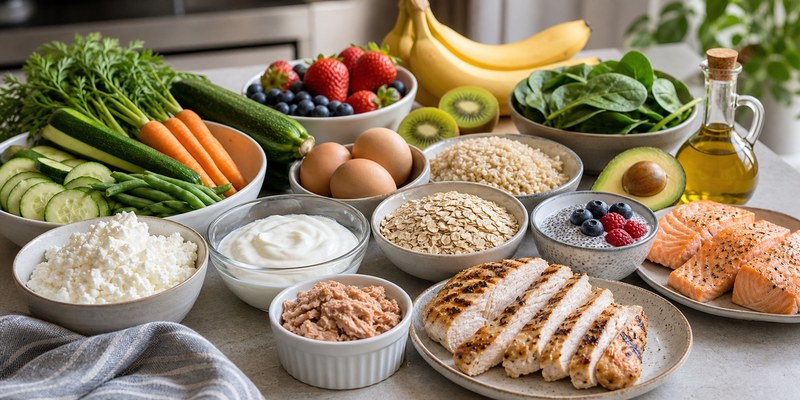
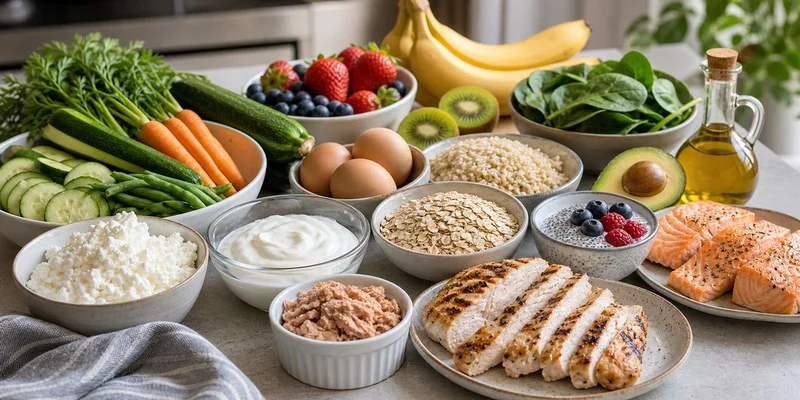
These foods to eat on Zepbound and Mounjaro keep protein up when appetite all but disappears.
Table of Contents
When Appetite Disappears

Week two on tirzepatide surprises people: dinner arrives and you genuinely forget to care. Three bites of chicken, half a bowl of soup, and you are done — which sounds like winning until the fatigue and the muscle loss start showing up with it.
The right foods to eat on Zepbound and Mounjaro treat every small portion like it has a job: protein first, fluids all day, fiber in amounts your slowed digestion can handle, and nothing greasy enough to wake up nausea.
This list keeps the medical lane clear — the MedlinePlus tirzepatide guide covers the drug itself, and your prescriber owns the dosing questions. What follows is the grocery half: 33 foods that earn their place on a shrunken plate.
Key Takeaways
- Protein first: aim for 20 to 30 grams at each small meal so the weight you lose comes from fat, not muscle.
- Gentle beats greasy: fried food and heavy cream sauces are the fastest route to tirzepatide nausea.
- Small plates, real jobs: the best foods to eat on Zepbound and Mounjaro deliver nutrition in a few bites, because a few bites may be the whole meal.
33 Foods That Earn Their Bites
Use these foods to eat on Zepbound and Mounjaro as your weekly grocery core.
| Food | Why It Helps | Pro Tips |
|---|---|---|
| #1. Greek yogurt | About 17 g of protein per cup, cold and easy when nothing sounds good. | Plain nonfat plus berries; sweet flavors can turn on queasy days. |
| #2. Eggs | 6 g of protein each in the softest, most forgiving package. | Soft-scrambled goes down easier than fried on slow-stomach days. |
| #3. Cottage cheese | About 14 g of protein per half-cup with almost no chewing required. | Single-serve tubs remove the portioning decision entirely. |
| #4. Chicken breast | About 26 g of protein per 4 oz — the workhorse. | Shred it into broth when a solid plate feels like too much. |
| #5. Rotisserie chicken | All the protein with none of the cooking energy you may not have. | Pull and portion the whole bird the day you buy it. |
| #6. Ground turkey | About 22 g of protein per 4 oz and gentler than fatty beef. | Cook it 93/7; grease is what your stomach objects to now. |
| #7. Canned tuna | About 17 g of protein per pouch with zero prep. | Water-packed pouches beat oil when nausea is close by. |
| #8. Salmon | About 23 g of protein per 4 oz plus omega-3s. | Bake it plain with lemon; heavy glazes can backfire. |
| #9. Shrimp | About 20 g of protein per 3 oz and done in minutes. | A few shrimp over rice is a complete tirzepatide dinner. |
| #10. White fish | Cod and tilapia are the gentlest proteins in the case. | Steam or poach; the mild flavor rarely triggers aversions. |
| #11. Firm tofu | About 10 g of protein per half-cup, soft by design. | Cube into brothy soups for protein that barely needs chewing. |
| #12. Whey protein shakes | 20-30 g of protein you can sip when eating is not happening. | Our GLP-1 protein smoothie bowl turns one into an actual meal. |
| #13. Bone broth | About 10 g of protein per cup, plus fluids and sodium on rough days. | Keep cartons on hand for the days when only liquids appeal. |
| #14. Brothy soups | Hydration and nutrition in the easiest format your stomach knows. | Chicken and rice or vegetable — skip the cream-based ones. |
| #15. Oatmeal | Soluble fiber that eases the constipation tirzepatide is famous for. | Make it with milk instead of water for bonus protein. |
| #16. White rice | The classic gentle carb when the stomach is unsettled. | Small scoops beside protein, not a bowl on its own. |
| #17. Sourdough toast | Easier to digest than soft sandwich bread for many people. | One slice under eggs makes a complete small breakfast. |
| #18. Bananas | Gentle carbs plus potassium when meals have gotten tiny. | Half a banana counts; whole foods do not require whole portions. |
| #19. Unsweetened applesauce | Fruit that works even on the queasiest days. | Buy single-serve cups so it is there when you need it. |
| #20. Mashed potatoes | Soft comfort carbs that sit quietly. | Make them with milk and go easy on the butter. |
| #21. Plain crackers | The morning-nausea first responder. | Two or three before getting up can settle the stomach. |
| #22. Baby carrots | Crunchy fiber in self-limiting portions. | Pair with hummus for a snack with a protein job. |
| #23. Cucumbers | Water-rich crunch that supports your fluid goal. | Slice into water too — hydration counts double now. |
| #24. Cooked zucchini | Soft vegetable fiber your slowed gut can process. | Cooked vegetables beat big raw salads in the early months. |
| #25. Cooked spinach | Iron and folate in a soft, few-bite package. | Wilt a handful into soups, eggs, and rice. |
| #26. Berries | Fiber and vitamins in small, gentle portions. | A half-cup with yogurt covers fruit for the day. |
| #27. Melon | Water-rich fruit that helps on low-fluid days. | Pre-cut containers make it a zero-effort snack. |
| #28. Avocado | Soft, mild fat that adds calories when intake drops too low. | A quarter-avocado on toast is enough at these portions. |
| #29. Canned green beans | Soft fiber with no prep and a long shelf life. | Rinse to cut sodium, warm with a little olive oil. |
| #30. Sugar-free electrolyte drinks | Sodium and potassium your body loses when you eat and drink less. | Keep packets in your bag for low-intake days. |
| #31. Ginger tea | Ginger has real anti-nausea evidence behind it. | Brew a mug before meals on shaky-stomach days. |
| #32. Chia pudding | Fiber, fluid, and staying power in a soft spoonable cup. | Two tablespoons of chia in milk, overnight, done. |
| #33. Protein smoothies | A full small meal you can drink over half an hour. | Frozen fruit, milk, protein powder — sip slowly, never chug. |
A Simple Day on Tirzepatide
Here is how the foods to eat on Zepbound and Mounjaro above stack into five small meals — protein at every one, and the day’s total still lands where it should.
| Meal | Plate | Protein |
|---|---|---|
| Breakfast | Greek yogurt with a half-cup of berries | ≈17 g |
| Mid-morning | Protein smoothie, sipped slowly | ≈25 g |
| Lunch | Brothy chicken soup with plain crackers | ≈15 g |
| Afternoon | Cottage cheese cup | ≈14 g |
| Dinner | 3 oz salmon with a small scoop of mashed potatoes | ≈18 g |
| Day total | Five small meals, fluids between them | ≈89 g |
Foods to Limit
Slowed digestion changes the rules: things you handled fine before now sit for hours. Alongside the foods to eat on Zepbound and Mounjaro, these are the usual offenders — our foods to avoid on GLP-1 guide goes deeper on each.
| Limit | Why It Backfires | Eat This Instead |
|---|---|---|
| Fried food | Grease plus slow gastric emptying is the classic nausea recipe. | Baked or air-fried versions |
| Heavy cream sauces | High fat sits for hours and often ends in reflux. | Broth-based or tomato-based sauces |
| Big red-meat portions | Dense protein loads overwhelm a stomach that empties slowly. | 3-4 oz portions, sliced thin |
| Carbonated sugary soda | Bloating plus empty calories in a smaller stomach. | Flat electrolyte drinks or infused water |
| Alcohol | Hits harder at low food intake; ask your prescriber where your line is. | Small amounts with food, or skip it |
| Rich desserts | Concentrated sugar and fat can trigger sudden queasiness. | Berries, applesauce, or a few bites shared |
| Big raw-vegetable salads | Piles of raw fiber bloat a slowed gut. | Cooked vegetables in small servings |
Shopping Tips
Shopping for foods to eat on Zepbound and Mounjaro is mostly about buying for the appetite you will have, not the one you remember.
- Buy single-serve everything — yogurt cups, cottage cheese tubs, tuna pouches — because full-size packages now outlast your appetite.
- Keep one shelf of rough-day food stocked: broth, crackers, applesauce, ginger tea, and electrolyte packets.
- Put protein first in the cart; if you only eat a few bites today, those bites should carry 20-plus grams.
- Choose cooked-vegetable plans over big raw salads for the early months; your gut will tell you when to reintroduce.
- Precut, pre-portioned, and rotisserie are not lazy anymore — they are how food actually gets eaten at this appetite level.

Hover over this pin to save this post for later.
FAQs
Quick answers to the questions people actually ask about foods to eat on Zepbound and Mounjaro.
1. How much protein do I need on tirzepatide?
Many care teams suggest somewhere between 60 and 90 grams daily for adults losing weight, split across small meals so each one carries 20 to 30 grams. Your own target depends on body size and health history, so confirm it with your prescriber. The foods to eat on Zepbound and Mounjaro above make those numbers reachable.
2. What helps with nausea?
Small portions eaten slowly, plain crackers before you get out of bed, ginger tea, and cold foods like yogurt that carry less aroma. Greasy and fried dishes are the most common triggers, so the gentler foods to eat on Zepbound and Mounjaro earn their keep here. Persistent vomiting is a call-your-prescriber situation, not a food problem.
3. What are the best foods to eat on Zepbound and Mounjaro for breakfast?
Greek yogurt with berries, soft-scrambled eggs on sourdough toast, cottage cheese, or a protein smoothie you sip over half an hour. Mornings are often the queasiest window, so cold and mild usually beats hot and rich. Aim for 15 to 25 grams of protein before noon and the whole day gets easier to balance.
4. What should I avoid eating?
Fried food, heavy cream sauces, oversized meat portions, carbonated sugary drinks, and rich desserts cause most of the trouble, because fat and sugar sit longest in a slowed stomach. Alcohol hits harder at low intake too. Build meals from the foods to eat on Zepbound and Mounjaro first and the avoid list mostly handles itself.
5. Why am I constipated and what helps?
Tirzepatide slows digestion while you are also eating and drinking less — a constipation recipe. Fluids come first: water, broth, and electrolyte drinks all day. Then add soluble fiber from the foods to eat on Zepbound and Mounjaro list, like oatmeal, chia pudding, and berries. If a week passes without relief, ask your care team.
6. Can I drink alcohol on tirzepatide?
That is a prescriber conversation, because the answer depends on your health history and how your blood sugar behaves. What is universally true: alcohol lands harder when food intake is low, so never drink on an empty tirzepatide stomach. Pair any drink with foods to eat on Zepbound and Mounjaro, and keep it small.
7. What if I can only eat a few bites?
Make every one of the bites count: protein first, everything else second. When solids feel impossible, drinkable meals — protein smoothies, bone broth, milk-based oatmeal — keep nutrition moving. The foods to eat on Zepbound and Mounjaro list is built for exactly this, and a sudden inability to keep anything down belongs to your prescriber, today.
Conclusion
Tirzepatide shrinks the plate; your job is making sure what remains on it works hard. Protein at every small meal, fluids between them, soft fiber for the slow days, and a rough-day shelf ready before you need it.
The five-meal day above shows the shape: roughly 89 grams of protein in portions that respect a small appetite. Swap proteins and sides freely — the pattern is the point.
Keep these foods to eat on Zepbound and Mounjaro as your grocery core, and for the wider medication picture, our foods to eat on GLP-1 hub covers the whole drug class.