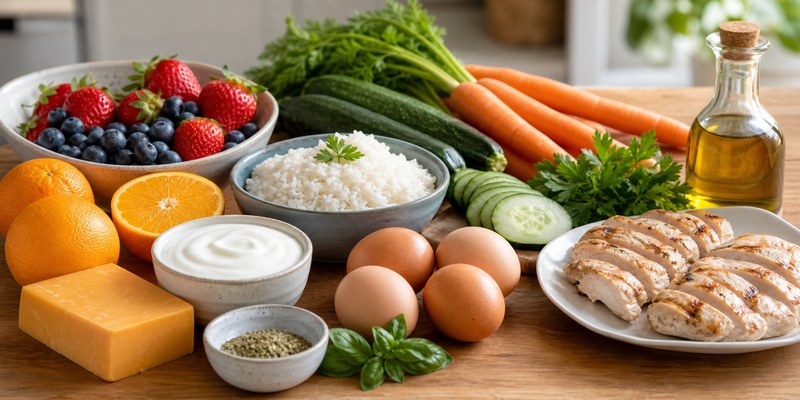
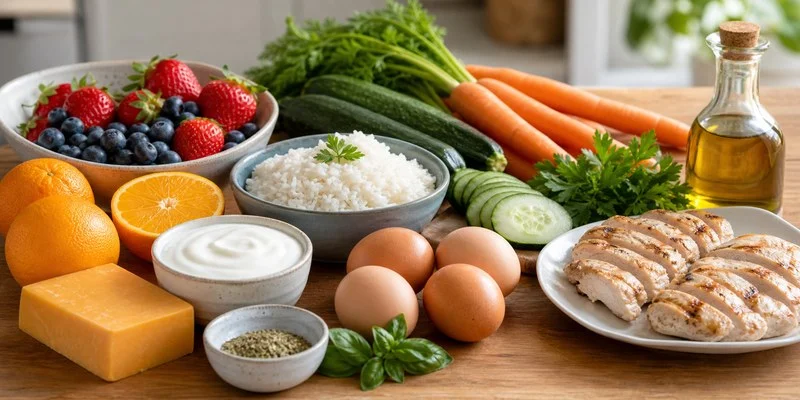
These low FODMAP foods take the guesswork out of IBS elimination meals, serving sizes included.
Table of Contents
When Every Meal Feels Risky

IBS shrinks your menu one bad afternoon at a time. First onion goes, then apples, then that protein bar you thought was safe — until you are eating the same four bland meals of rice and chicken on rotation and still guessing wrong once a week.
A proper list of low FODMAP foods rebuilds the menu with the portion sizes attached, because on this plan the serving size is the difference between safe and sorry. A third of a cup of zucchini usually sits fine; two cups in one bowl may not.
The serve sizes below follow Monash University-style FODMAP testing, and the NIDDK’s IBS eating guidance frames the bigger plan. Run the elimination phase with a dietitian when you can — this list handles the grocery half of the job for you.
Key Takeaways
- Portions are the plan: most low FODMAP foods stay gentle only at their tested serving size, so measure before you trust.
- Elimination is temporary: two to six strict weeks, then structured reintroduction — this is a diagnostic diet, not a forever diet.
- Stacking counts: several safe servings from the same FODMAP group in one meal can add up to symptoms.
51 Safe Staples With Serve Sizes
Use these low FODMAP foods as your elimination-phase grocery list.
| Food | Why It Helps | Pro Tips |
|---|---|---|
| #1. Eggs | Pure protein with zero FODMAPs — portion size never matters here. | Scrambled with chive greens beats an onion omelet during elimination. |
| #2. Chicken | Plain meats carry no FODMAPs at any portion. | Watch marinades — garlic and honey hide in most bottled ones. |
| #3. Turkey | FODMAP-free lean protein that keeps meals from repeating. | Swap the sauce for garlic-infused oil and our turkey rice bowl recipe fits the plan. |
| #4. Beef | Unprocessed cuts are FODMAP-free; only the seasoning can betray you. | Season with salt, pepper, and smoked paprika instead of packet mixes. |
| #5. Pork | Another zero-FODMAP protein for rotation. | Skip pre-marinated tenderloins; they nearly always contain garlic. |
| #6. Salmon | Omega-3s support an irritated gut, FODMAP-free at any serve. | Roast with lemon and dill — both fully safe flavors. |
| #7. Canned tuna | Shelf-stable protein for the days cooking feels like too much. | Choose tuna in water or olive oil, not flavored pouches. |
| #8. Shrimp | Fast-cooking, FODMAP-free protein. | Sauté in garlic-infused oil for scampi flavor without the fructans. |
| #9. Firm tofu | Pressing drains the water-soluble FODMAPs, so firm and extra-firm test low. | Firm only — silken tofu tests higher and behaves differently. |
| #10. Tempeh | Fermentation lowers the FODMAP load; about 100 g tests low. | Slice thin and pan-crisp; check flavored brands for garlic. |
| #11. Lactose-free milk | All the calcium and protein of milk with the lactose pre-digested. | Works 1:1 in any recipe that calls for regular milk. |
| #12. Lactose-free yogurt | Gut-friendly breakfast base without the lactose dose. | Plain plus a small handful of blueberries stays in bounds. |
| #13. Cheddar | Aged cheeses lose nearly all lactose — about 40 g tests low. | The sharper the cheddar, the less lactose it carries. |
| #14. Parmesan | Aged even harder than cheddar, so lactose is negligible. | A little grated goes far on rice, eggs, and roasted vegetables. |
| #15. Brie and Camembert | Surprisingly low in lactose despite the creamy texture. | Standard wedge portions are fine on a snack plate. |
| #16. Feta | Brined cheese that tests low at about 40 g. | Crumble over cucumber salads dressed with lemon and oil. |
| #17. Unsweetened almond milk | Low FODMAP at a full cup, unlike regular milk. | Skip honey-sweetened versions; look for “unsweetened” on the label. |
| #18. White rice | The safest starch in the pantry — zero FODMAPs. | Batch-cook and freeze portions for instant safe sides. |
| #19. Brown rice | Adds fiber while staying FODMAP-free. | A rice cooker removes the last excuse not to keep it around. |
| #20. Quinoa | Complete protein grain that tests low at a cooked cup. | Rinse before cooking and dress with lemon and olive oil. |
| #21. Rolled oats | About a half-cup dry tests low and brings soluble fiber IBS guts often tolerate well. | Make overnight oats with lactose-free milk and strawberries. |
| #22. Rice noodles | Pasta night without wheat fructans. | Stir-fry with scallion greens, not the white bulbs. |
| #23. Sourdough spelt bread | Long fermentation eats the fructans — about two slices test low. | True slow-fermented sourdough only; supermarket “sourdough flavor” does not count. |
| #24. Gluten-free bread | Most are wheat-free and low FODMAP by default. | Still read labels — some brands add honey, inulin, or apple fiber. |
| #25. Corn tortillas | Naturally wheat-free taco and wrap base. | Warm them dry in a skillet so they bend without cracking. |
| #26. Popcorn | A genuinely safe snack at normal bowl sizes. | Air-pop and dress with olive oil and salt at home. |
| #27. Buckwheat | Despite the name, no wheat and low FODMAP. | 100% buckwheat soba works; blended soba usually includes wheat. |
| #28. Carrots | Completely FODMAP-free — eat them without counting. | Your default “fill the plate” vegetable during elimination. |
| #29. Potatoes | FODMAP-free comfort starch. | Roast with rosemary and garlic-infused oil for flavor without fructans. |
| #30. Cucumbers | Cooling, hydrating, and safe at any reasonable serve. | Slice into water when plain hydration gets boring. |
| #31. Lettuce | All common varieties test low. | Butter lettuce cups replace bread for lunch wraps. |
| #32. Baby spinach | About a cup and a half tests low — generous for a leafy green. | Wilts into eggs and rice bowls in seconds. |
| #33. Kale | Roughly a cup tests low, with vitamins C and K along for the ride. | Massage with olive oil and lemon to soften it raw. |
| #34. Zucchini | Low at about a third of a cup — a classic stacking trap beyond that. | Measure it; zucchini noodles make an oversize serve feel small. |
| #35. Eggplant | About a cup tests low, rare for a “meaty” vegetable. | Roast cubes hot so they crisp instead of steaming. |
| #36. Green beans | Around 15 beans tests low — an easy visual portion. | Steam and finish with feta and lemon zest. |
| #37. Red bell pepper | Low at about a third of a cup after recent re-testing. | Green peppers test differently; stick with red and measure. |
| #38. Bok choy | About a cup tests low and stir-fries in minutes. | Pair with ginger and scallion greens for takeout flavor at home. |
| #39. Broccoli heads | Florets test low at about three-quarters of a cup; stalks test higher. | Eat the tops, save the stalks for after reintroduction. |
| #40. Parsnips | FODMAP-free root with real sweetness. | Roast alongside carrots for a safe two-root tray. |
| #41. Scallion and chive greens | The green tops carry the onion flavor without the fructans. | Buy scallions weekly; use tops freely, never the white bulbs. |
| #42. Olives | Salty, satisfying, and low FODMAP in normal handfuls. | A briny stand-in when a recipe leans on missing garlic. |
| #43. Canned lentils | Canning leaches out FODMAPs — about a quarter-cup, rinsed, tests low. | Canned only during elimination; dried lentils test much higher. |
| #44. Firm bananas | One medium firm banana tests low; ripeness raises the FODMAP load. | Buy them slightly green and eat before the spots appear. |
| #45. Blueberries | A small handful — about a quarter-cup — tests low. | Frozen work fine in oats and lactose-free yogurt. |
| #46. Strawberries | About five medium berries tests low after re-testing. | Slice them so five berries visually goes further. |
| #47. Oranges | One whole medium orange tests low. | Eat the fruit, skip the juice — juicing concentrates the sugars. |
| #48. Kiwi | Two small kiwis test low, and kiwi has its own constipation-easing evidence. | Halve and scoop with a spoon; no peeling required. |
| #49. Pineapple | A full cup tests low — one of the roomiest fruit serves. | Fresh or frozen; canned should sit in juice, not syrup. |
| #50. Garlic-infused oil | Garlic’s flavor is oil-soluble but its fructans are not — the plan’s best-known workaround. | Buy commercially made infused oil for safety and steady flavor. |
| #51. Peanut butter | About two tablespoons tests low, with protein and staying power. | Choose brands without honey or high-fructose corn syrup. |
A Simple Low FODMAP Day
This sample day spreads the low FODMAP foods out so servings from the same group never pile into one meal — that spacing is what keeps stacking from undoing careful shopping.
| Meal | Plate | Why It Works |
|---|---|---|
| Breakfast | Overnight oats with lactose-free milk and five sliced strawberries | Soluble fiber plus safe fruit, all inside tested serves. |
| Lunch | Turkey and cheddar in butter-lettuce wraps, side of carrots | Zero-FODMAP protein and a vegetable you never have to measure. |
| Snack | Popcorn, or a firm banana with peanut butter | Real snacks, not rice cakes and regret. |
| Dinner | Shrimp in garlic-infused oil over rice noodles with bok choy | Takeout flavor with the fructans engineered out. |
| Evening | Two small kiwis | Sweet finish with bonus regularity evidence behind it. |
Foods to Limit
During elimination, these are the heavy hitters to keep out of the cart — not forever, just until reintroduction tells you which groups your gut actually objects to. Swapping toward low FODMAP foods from the list above covers almost every craving these leave behind.
| Limit | Why It Bothers IBS | Eat This Instead |
|---|---|---|
| Onion and garlic | Fructans — the most common and most concentrated IBS trigger. | Garlic-infused oil and scallion greens |
| Apples and pears | Excess fructose plus sorbitol in one package. | Oranges or a firm banana |
| Wheat bread and pasta | Fructans again, in bigger portions than most people realize. | Sourdough spelt or rice noodles |
| Honey and agave | Concentrated excess fructose. | Pure maple syrup |
| Regular milk and soft cheese | Lactose loads that elimination is designed to test. | Lactose-free milk, cheddar, or feta |
| Most beans in big serves | Galacto-oligosaccharides that ferment hard. | Canned lentils, quarter-cup, rinsed |
| Cauliflower and mushrooms | Mannitol-heavy vegetables that test high quickly. | Broccoli heads, bok choy, or carrots |
| Sugar-free gum and mints | Sorbitol and xylitol are polyols — FODMAPs by definition. | Regular mints or peppermint tea |
Shopping Tips
Shopping for low FODMAP foods is mostly a label-reading discipline, and these rules cover the traps.
- Assume onion and garlic powder are in everything processed — broths, seasoning mixes, chips, deli meats — until the label proves otherwise.
- Get the Monash University FODMAP app; serve sizes get re-tested and the app is where updates land first.
- Keep garlic-infused oil and scallions in the kitchen at all times — flavor is why most elimination attempts collapse.
- Buy bananas on the green side and eat them before they spot; ripeness changes their FODMAP math.
- Look for certified low FODMAP logos on packaged foods; they save label-reading time you will spend elsewhere.

Hover over this pin to save this post for later.
FAQs
Quick answers to the questions people actually ask about low FODMAP foods.
1. How long should I stay on elimination?
Two to six weeks is the standard window. If symptoms have clearly improved by then, you move to reintroduction; if nothing changed, low FODMAP foods may not be your answer and it is worth revisiting the diagnosis with your doctor. Staying strict for months without testing groups just shrinks your diet for no payoff.
2. Is the low FODMAP diet forever?
No — and treating it as forever is the most common mistake. The plan is a diagnostic: eliminate, then reintroduce one FODMAP group at a time to find your actual triggers. Most people land on a personalized diet that keeps low FODMAP foods as the base while freely eating several groups that never bothered them.
3. Which low FODMAP foods should I buy first?
Start with the flavor rescue kit: garlic-infused oil, scallions, lemons, and ginger, because bland is what breaks people. Then cover protein with eggs, chicken, and canned tuna, starch with rice and potatoes, and dairy with lactose-free milk and cheddar. That single basket supports a full week of simple meals before you get adventurous.
4. How do I replace onion and garlic?
Garlic-infused oil carries the flavor because the fructans are not oil-soluble, and scallion or chive greens cover the onion side. Between those two swaps, most everyday recipes survive the transition intact. This swap is the single highest-leverage trick among low FODMAP foods — master it first and the rest of the plan stops feeling like punishment.
5. What is FODMAP stacking?
Stacking means several individually safe servings adding up to a triggering dose — a third-cup of zucchini is fine, but zucchini plus broccoli plus green beans in one stir-fry may not be. Space low FODMAP foods from the same group across the day, and keep mixed dishes to one measured serve per ingredient whenever possible.
6. Is gluten the real problem?
Usually not. For most IBS guts the trigger in wheat is fructans — fermentable carbs — rather than the gluten protein, which is why slow-fermented sourdough spelt sits fine while regular bread does not. Gluten-free products often double as low FODMAP foods, but read labels, since some brands add honey, inulin, or apple fiber to the mix.
7. Can I do this without a dietitian?
You can run the grocery side alone with a list like this and the Monash app, but reintroduction is where solo attempts usually stall. A dietitian sequences the challenge phases, keeps nutrition adequate, and stops the diet from quietly becoming permanent. Use low FODMAP foods as your toolkit and borrow expertise for the interpretation.
Conclusion
An IBS-friendly kitchen is not four rice-based meals on repeat. With serve sizes on the label and the onion-garlic workaround in the pantry, the elimination weeks can taste like real food while they do their diagnostic job.
The sample day above shows the rhythm: measured serves, groups spread across meals, and flavor built from infused oil, citrus, and green tops instead of the bulbs. Once that rhythm feels normal, reintroduction is far less intimidating.
Keep these low FODMAP foods as the base, reintroduce groups on schedule, and if your gut still needs backup, our best probiotics for IBS guide covers the supplement side of the same fight.