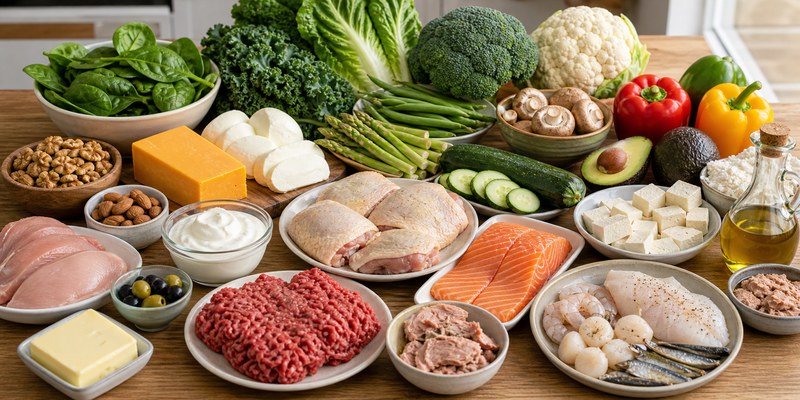
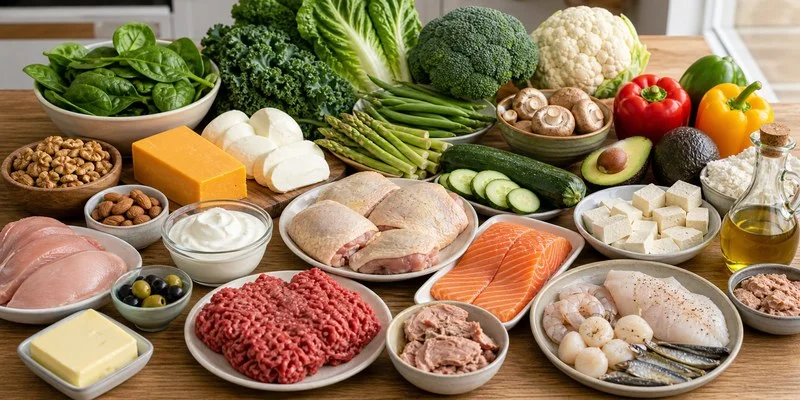
In this post, I share my big list of the best keto diet foods to eat, so counting carbs and planning meals, snacks, and grocery runs gets easier.
Table of Contents
Counting Carbs Without Misery

My first keto week humbled me fast. One tortilla and a “healthy” smoothie burned through most of my net carbs before lunch. By dinner, I had a sad plate of plain food, a headache, and a very bad attitude.
This list of the best keto diet foods to eat is what I wish I had then. Every pick includes net carbs, so you can add more variety without doing grocery-store math.
The counts are based on typical portions, and I also link to the Harvard Nutrition Source keto review for a more balanced look at low-carb diets. Check with your doctor first if you take diabetes, heart, or blood pressure meds. This is grocery guidance, not medical advice.
Key Takeaways
- Numbers beat vibes: The best keto diet foods to eat here list net carbs, keeping your budget visible.
- Protein and fat anchor the plate: Meat, fish, eggs, and most cheese cost almost nothing against your budget.
- Vegetables still matter: Non-starchy greens carry the fiber and minerals that keep a low-carb week sustainable.
Video: Keto Diet Foods to Eat
Physician Dr. Boz (Annette Bosworth, MD) walks a full keto grocery run in the video below, and it lines up cleanly with the best keto diet foods to eat in the list here.
55 Best Keto Diet Foods to Eat with a Net-Carb Tracker
The following table is my full best keto diet foods to eat list that you shop from each week.
| Food | Net Carbs | Pro Tip |
|---|---|---|
| #1. Eggs | ~0.6 g net each; 6 g complete protein | A batch of hard-boiled eggs on Sunday rescues every rushed morning. |
| #2. Chicken thighs | 0 g net; fattier cut fits macros | Crisp the skin in a hot pan; that texture is free. |
| #3. Chicken breast | 0 g net; max protein per dollar | Brine 30 minutes before cooking so it stops drying out. |
| #4. Turkey | 0 g net; lean and reusable | Ground 93/7 turkey carries taco seasoning beautifully. |
| #5. Ground beef | 0 g net; iron and B vitamins | An 80/20 blend keeps burgers juicy; try it in our keto taco casserole. |
| #6. Sirloin steak | 0 g net; ~40 g protein per 6 oz | Rest it five minutes after cooking so the juices stay put. |
| #7. Pork tenderloin | 0 g net; leanest cut in the case | Sear then roast to 145°F; overcooking is the only way to ruin it. |
| #8. Salmon | 0 g net; omega-3 fatty acids | Frozen fillets are cheaper and cook straight from the freezer. |
| #9. Sardines | 0 g net; omega-3s and calcium | Tinned in olive oil over arugula is a two-minute keto-friendly meal. |
| #10. Tuna | 0 g net; shelf-stable protein | A good option straight from the pantry; mayo, celery, no sweet relish. |
| #11. Cod | 0 g net; mild white fish | Butter-baste in a pan; it falls apart on the grill. |
| #12. Shrimp | ~0.2 g net per 3 oz | Buy frozen raw, not pre-cooked; it sautés in three minutes. |
| #13. Scallops | ~5 g net per 3.5 oz; count these | Budget for them like a starchy side, not a free protein. |
| #14. Firm tofu | ~2 g net per half-block; plant protein | Press it, cube it, and crisp it in a very hot pan. |
| #15. Heavy cream | ~0.4 g net per tbsp; full-fat dairy | Whip it unsweetened over berries for dessert. |
| #16. Cheddar | ~0.4 g net per oz; 7 g protein | Buy blocks and shred yourself; pre-shredded carries starch dust. |
| #17. Mozzarella | ~0.6 g net per oz; keto pizza base | Low-moisture blocks melt better than fresh for casseroles. |
| #18. Plain Greek yogurt | ~5 g net per half-cup; whole-milk plain, measured | Whole-milk plain only is the good idea here; flavored cups can triple the number. |
| #19. Cottage cheese | ~4 g net per half-cup; 14 g protein | Full-fat versions taste less like diet food and fit macros better. |
| #20. Spinach | ~0.4 g net per raw cup; green leafy vegetable | Baby spinach wilts into eggs, soups, and pans in seconds. |
| #21. Kale | ~4 g net per chopped cup; vitamins C and K | Massage with olive oil and salt to tame the chew. |
| #22. Romaine lettuce | ~1 g net per cup; bread stand-in | Whole leaves make wraps, cups, and taco shells. |
| #23. Arugula | ~0.4 g net per cup; peppery green | Dress with lemon and olive oil; it needs nothing else. |
| #24. Broccoli | ~4 g net per cup; fiber keto lacks | Roast at 425°F until the edges char; different vegetable entirely. |
| #25. Cauliflower | ~3 g net per cup; rice and crust swap | Rice it, mash it, or roast it whole; it takes any seasoning. |
| #26. Zucchini | ~2.5 g net per cup; noodle stand-in | Salt zoodles ten minutes and pat dry before cooking. |
| #27. Cucumbers | ~3 g net per sliced cup; crunchy dipper | The chip replacement for dips that actually satisfies. |
| #28. Mushrooms | ~2 g net per cup; meaty chew | Sear hot and dry first; add fat after they brown. |
| #29. Bell peppers | ~3 g net per half-cup; loaded with vitamin C | Red and yellow run a little sweeter, and slightly higher, than green. |
| #30. Asparagus | ~2 g net per 6 spears | Roast with parmesan; the spears take minutes. |
| #31. Green beans | ~4 g net per cup; comfort side | Sauté with garlic and almonds instead of casserole toppings. |
| #32. Avocado | ~2 g net per half; potassium for keto flu | Buy hard and ripen on the counter in rotation. |
| #33. Olives | <1 g net per 10 olives; salt and fat | The best keto snack to keep at your desk for the 3 p.m. attack. |
| #34. Olive oil | 0 g net; monounsaturated fats | Extra-virgin for cold uses; avocado oil beats canola oil for the hottest pans. |
| #35. Butter | 0 g net; high-fat flavor | Finish steaks off the heat; or blend a spoonful into bulletproof coffee. |
| #36. Ghee | 0 g net; high smoke point | Like coconut oil with its medium-chain triglycerides, it handles searing heat where butter burns. |
| #37. Cream cheese | ~2 g net per 2 tbsp; keto baking binder | Full-fat bricks only; whipped tubs add air, not value. |
| #38. Walnuts | ~2 g net per oz; omega-3 ALA | Toast in a dry pan to double the flavor. |
| #39. Macadamia nuts | ~1.5 g net per oz; lowest-carb nut | Portion into small containers; the bag is where daily calories hide. |
| #40. Pecans | ~1.2 g net per oz; buttery crunch | Candied-style with erythritol and cinnamon for snack cravings. |
| #41. Hemp hearts | ~1 g net per 3 tbsp; 10 g protein | Shake over salads and yogurt like low-carb granola. |
| #42. Chia seeds | ~2 g net per oz; mostly fiber | Overnight chia pudding with almond milk is a great way to premake breakfast. |
| #43. Ground flaxseed | ~0.5 g net per 2 tbsp; fiber workhorse | Buy ground or grind fresh; whole seeds pass straight through. |
| #44. Pumpkin seeds | ~2 g net per oz; magnesium boost | Roast with chili and lime for a crunchy snack. |
| #45. Sunflower seeds | ~4 g net per oz; cheap by the pound | Count the serving; the number climbs fast past one ounce. |
| #46. Tahini | ~3 g net per 2 tbsp; dressing base | Whisk with lemon, garlic, and water for instant sauce. |
| #47. No-sugar almond butter | ~3 g net per 2 tbsp; clean-label spread | Ingredient labels should read one word: almonds. |
| #48. Almond flour | ~3 g net per quarter-cup; baking swap | Blanched and fine-ground behaves most like wheat flour. |
| #49. Coconut flour | ~3 g net per 2 tbsp; drinks liquid | Never swap 1:1 for almond flour; recipes need far more moisture. |
| #50. Unsweetened almond milk | ~1 g net per cup; vs 12 g in dairy milk | Check for “unsweetened”; original versions carry added sugar. |
| #51. Raspberries | ~3 g net per half-cup; the keto fruit | With whipped cream, this is the house keto dessert. |
| #52. Pork rinds | ~0 g net per half-oz; 9 g protein | Crush them into a coating for chicken when breadcrumbs are off the table. |
| #53. Goat cheese | ~0.3 g net per oz; gentle on stomachs | Crumble over roasted asparagus or whisk into a warm pan sauce. |
| #54. Sauerkraut | ~1 g net per half-cup; live probiotics | Choose refrigerated jars; shelf-stable versions lose the live cultures. |
| #55. Brazil nuts | ~1.3 g net per oz; a day of selenium | Stop at two or three; the selenium stacks up faster than the carbs. |
Keto Diet Foods to Eat: Pinterest Pin
📌 Save this guide to the best keto diet foods to eat by pinning it to your low-carb board for later.

3-Day Keto Diet Meal Planner
Here is a 3-day plan built from the best keto diet foods to eat above, each day staying under 20 g net with the running math done for you.
| Meal | Day 1 | Day 2 | Day 3 |
|---|---|---|---|
| Breakfast | Three eggs, a batch of easy keto waffles, half an avocado (≈4 g net) | Greek yogurt, walnuts, chia seeds (≈3 g net) | Bacon and eggs, sauteed spinach, coffee with cream (≈4 g net) |
| Lunch | Chicken in romaine cups, keto chicken lettuce wraps (≈4 g net) | Ground-beef taco bowl, keto taco salad (≈5 g net) | Tuna salad in lettuce cups, olives (≈4 g net) |
| Snack | Cheddar cubes, small handful of macadamias (≈2 g net) | Cucumber slices, keto tortilla chips (≈2 g net) | Pork rinds, a few keto snacks (≈2 g net) |
| Dinner | Salmon, zucchini noodles, half-cup raspberries with cream (≈8 g net) | Sirloin steak, roasted broccoli, goat cheese (≈9 g net) | Cod baked in butter, asparagus, cauliflower mash (≈8 g net) |
| Day total (net carbs) | ≈18 g net | ≈19 g net | ≈18 g net |
Frequently Asked Questions (FAQs)
Here are quick answers to the questions people most often ask about the best keto diet foods to eat.
1. How many carbs a day keeps me in ketosis?
Most people stay in ketosis at 20 g net per day, and many still make ketones up to 50 g depending on their body size and daily activity. Start strict, watch how you feel for the first few weeks, then test your own personal ceiling. This list makes the 20 g version genuinely livable.
2. What are net carbs?
Net carbs are total carbohydrates minus fiber, because fiber passes through without raising blood sugar. A cup of broccoli has 6 g of carbohydrate total but about 4 g net. The best keto diet foods to eat here list net numbers, so you can compare items directly against a 20 g daily budget.
3. Which of the best keto diet foods to eat should you buy first?
Start with a dozen eggs, two proteins you already cook confidently, butter, olive oil, two block cheeses, and three low-carb vegetables. Spinach, cauliflower, and zucchini travel furthest. Add avocados, a bag of mixed nuts, and fresh berries for dessert. That single basket easily covers a full week of meals before any specialty product.
4. Can I eat fruit on keto?
Berries fit; most other fruit does not. Half a cup of raspberries costs about 3 g net, and strawberries about 4 g, while a single banana spends 20-plus grams in one sitting. Berries sit in the dessert tier of the best keto diet foods to eat; measured, occasional, and buried under unsweetened whipped cream.
5. Are the best keto diet foods to eat mostly cheese?
Cheese fits carb-wise, since most hard cheeses run under 1 g net per ounce, but it should not headline your plate. Cheese is the most common stall culprit because it is effortless to overeat and easy to add to almost everything. If weight loss slows, count your cheese portions for a full week.
6. Why do I feel awful the first week?
Keto flu is mostly an electrolyte problem: dropping carbs flushes water, and sodium, potassium, and magnesium leave with it. Salt your food deliberately, and lean on the best keto diet foods to eat that carry minerals: avocados, leafy greens, pumpkin seeds, and salmon. Most people feel normal again within a week once electrolytes are handled.
7. Do the best keto diet foods to eat mean I never count calories?
Not at first; moderate protein and fat are filling enough that most people under-eat quite naturally for months on end. If progress stalls, your calories still matter: audit the quiet accumulators first, meaning cheese, nuts, cream, and the nut butters. Foods with built-in portion limits, like eggs and vegetables, rarely cause the problem.
Your Best Keto Diet Foods to Eat Plan
The difference between my miserable first week and an easy keto day came down to one thing: keeping the right foods on hand.
- Anchor every plate: Start with protein and fat, where the net carbs are near zero and the day mostly budgets itself.
- Spend the carbs on food you like: Put your 20 g into vegetables and a few berries, not the bread and juice you won’t miss.
- Shop the same short list: Keep these in the cart each week and there is no math left to do at dinner.
Get those three down and keto stops being the sad-plate diet from my first week. When you want these foods turned into real recipes, my keto diet cookbooks roundup is where I would go next.
Resources
- Harvard T.H. Chan School of Public Health, The Nutrition Source – ketogenic diet review and evidence grading.
- Healthline: Ketogenic Diet 101 – a thorough beginner’s guide with food lists and net-carb basics.
- NCBI Bookshelf (NIH): Ketogenic Diet – the peer-reviewed StatPearls clinical overview.
- Mayo Clinic – practical guidance on low-carb diets and who should be cautious.
- Cleveland Clinic – a plain-language explainer on ketosis and keto flu.
- Diet Doctor – detailed food lists and net-carb references for keto.