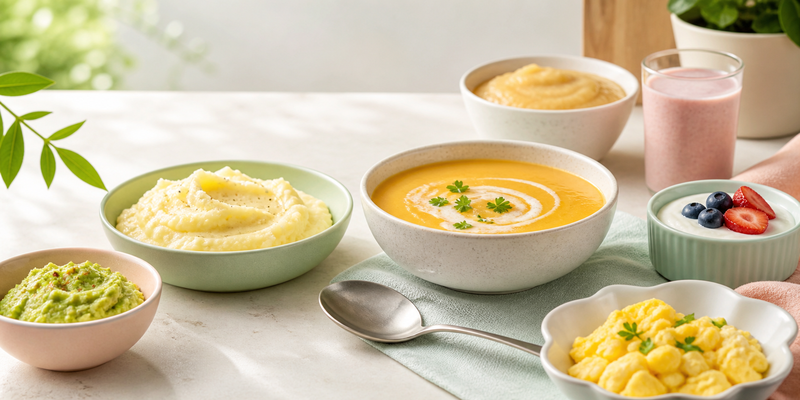
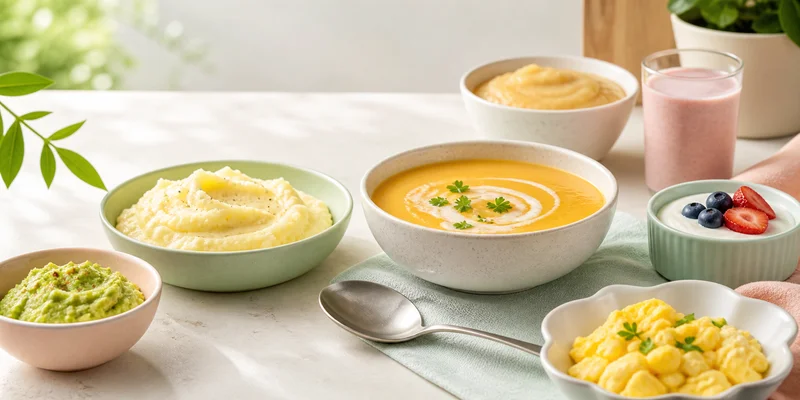
Lunch, But Soft

Key Takeaways
- Choose smooth, moist, lukewarm meals that do not need much chewing.
- Build lunch around protein when you can: eggs, Greek yogurt, cottage cheese, tofu, fish, beans, or finely mashed meat.
- Avoid crunchy bread, raw vegetables, seeds, spicy salsa, acidic sauces, hot soup, straws, and anything that leaves sharp bits behind.
35 Soft Food Lunches After Oral Surgery
Use these soft food lunches as a menu, not a strict timeline. The “best timing” column is conservative because swelling, stitches, bleeding risk, and your surgeon’s instructions matter more than the calendar.
Soft Lunch Grocery Shortcut
If you want to stock up on the basic soft food lunches, Amazon’s Whole Foods delivery makes it easy to order them often with same day delivery.
| Lunch idea | Best timing | Watch-out |
|---|---|---|
| 1. Smooth Greek yogurt with mashed banana | First 24 hours | Use a spoon, not a straw, and skip granola or seeds. |
| 2. Cottage cheese blended smooth | First 24 hours | Blend if curds bother the surgical area. |
| 3. Protein shake in a cup | First 24 hours | Sip from a cup slowly; do not use a straw. |
| 4. Lukewarm blended potato soup | First 24 hours to day 3 | Keep it warm, not hot, and blend out lumps. |
| 5. Smooth butternut squash soup | First 24 hours to day 3 | Skip spicy curry, chili flakes, and crunchy toppings. |
| 6. Creamy cauliflower soup with mild cheese | Days 2-3 | Blend completely smooth and avoid peppery heat. |
| 7. Soft scrambled eggs with ricotta | Days 2-3 | Cook gently so the eggs stay moist, not rubbery. |
| 8. Steamed egg custard | Days 2-3 | Keep it silky and plain; no scallions, sesame seeds, or chili oil. |
| 9. Mashed avocado and egg bowl | Days 2-3 | Mash thoroughly and skip toast early on. |
| 10. Refried beans with melted cheese | Days 2-3 | Choose mild beans and avoid chips, salsa, and raw onion. |
| 11. Silken tofu with mild broth | Days 2-3 | Use soft tofu and avoid crunchy garnishes. |
| 12. Smooth hummus and mashed avocado bowl | Days 2-3 | Eat with a spoon early; pita can wait until chewing is comfortable. |
| 13. Mashed sweet potato with Greek yogurt | Days 2-3 | Serve lukewarm and skip nuts, seeds, and crispy skins. |
| 14. Mashed potatoes with smooth gravy | Days 2-3 | Avoid peppery gravy or chunks of meat if they are hard to chew. |
| 15. Split pea soup blended smooth | Days 2-4 | Thin it with broth if it gets pasty. |
| 16. Lentil soup blended smooth | Days 2-4 | Blend well and keep seasoning mild. |
| 17. Egg drop soup with soft egg ribbons | Days 2-4 | Let it cool before eating and avoid slurping aggressively. |
| 18. Congee with soft egg | Days 3-5 | Rice grains can bother some sockets; skip it if food gets stuck. |
| 19. Very soft risotto with parmesan | Days 3-5 | Cook it loose and creamy, not sticky or al dente. |
| 20. Pastina with ricotta | Days 3-5 | Tiny pasta can collect near extraction sites; skip it if bits get stuck. |
| 21. Extra-soft macaroni and cheese | Days 3-5 | Avoid baked mac with crispy edges or breadcrumb topping. |
| 22. Polenta with mild cheese | Days 3-5 | Keep it soft and spoonable, not sliced or grilled. |
| 23. Creamy grits with a soft egg | Days 3-5 | Avoid coarse, dry, or clumpy grits. |
| 24. Finely mashed egg salad | Days 3-5 | Skip celery, onion, pickles, crusty bread, and crunchy crackers. |
| 25. Finely mashed tuna salad | Days 3-5 | Mash until smooth and avoid raw onion or seeded relish. |
| 26. Finely mashed salmon salad | Days 3-5 | Check carefully for bones and skip crunchy mix-ins. |
| 27. Smooth chicken salad bowl | Days 4-7 | Use very finely shredded or chopped chicken with enough yogurt or mayo. |
| 28. Soft chicken and rice soup | Days 4-7 | Use tender chicken, very soft rice, and no hot temperature. |
| 29. Blended vegetable bean chili | Days 4-7 | Keep it mild and smooth; no spicy heat or tough skins. |
| 30. Soft tofu and mashed sweet potato bowl | Days 4-7 | Add broth or yogurt sauce so it stays moist. |
| 31. Flaky white fish with mashed potatoes | Days 4-7 | Flake the fish small and avoid crispy edges. |
| 32. Soft salmon with avocado mash | Days 4-7 | Avoid dry salmon; moisture matters more than fancy seasoning. |
| 33. Cottage pie lunch bowl | Days 5-7 or later | Ground meat should be very tender and covered with mashed potato. |
| 34. Soft meatloaf with gravy | Days 5-7 or later | No crusty edges, chewy pieces, or spicy ketchup glaze. |
| 35. Crustless soft turkey and cheese melt | Days 5-7 or later | Use very soft bread if cleared; skip toasted edges and tough deli slices. |
How to Pack Soft Food Lunches
The easiest soft food lunches are usually bowl meals. They travel better, reheat gently, and do not require biting through bread or tearing food with your front teeth.
A simple lunch formula:
- Pick one soft protein: Greek yogurt, eggs, cottage cheese, tofu, fish, beans, or finely mashed chicken.
- Add one soft base: mashed potatoes, sweet potatoes, polenta, grits, soft pasta, blended soup, or congee.
- Keep it moist: broth, yogurt, gravy, mild cheese sauce, avocado, or a smooth soup base.
- Keep it gentle: lukewarm temperature, mild seasoning, no acidic sauce, no hard toppings, and no straw.
If you are packing lunch for work, a wide-mouth thermos is usually better than a sandwich container during the first few days. For cold lunches, use smooth yogurt bowls, cottage cheese, mashed avocado bowls, egg salad bowls, tuna salad bowls, or a protein shake you can sip from a cup.
The danger zone is “technically soft” food that still behaves badly. Toast is soft in the middle but scratchy at the edges. Rice is soft but can get stuck. A soft tortilla may still require pulling and chewing. If a food tugs, scratches, crumbles, or leaves little bits behind, save it for later in recovery.
Soft Lunch Foods to Avoid for Now
Some lunch foods look harmless until you are trying to eat them with a swollen jaw and a healing socket. Be picky for a few days.
The Cleveland Clinic says post-surgery foods should be soft enough to reduce chewing, while Mayo Clinic advises avoiding hot, spicy, hard, or chewy foods after wisdom tooth extraction.
Avoid these unless your oral surgeon says otherwise:
- Crunchy chips, crackers, crusty bread, croutons, and toasted sandwiches.
- Raw carrots, celery, lettuce ribs, cucumbers, peppers, and crunchy salad kits.
- Seeds, nuts, seeded berries, sesame toppings, everything seasoning, and granola.
- Spicy salsa, hot sauce, chili crisp, jalapenos, peppery soups, and acidic tomato-heavy meals.
- Very hot soup, coffee, tea, or reheated leftovers.
- Chewy steak, tough chicken, jerky, bacon, and dry deli meat.
- Smoothies, shakes, or drinks taken through a straw.
You do not have to be dramatic about it. This is temporary. The point is to protect the clot, avoid irritating the surgical area, and make lunch easy enough that you actually eat something nourishing.
Soft Food Lunch Grocery List
Here is the practical grocery list I would build around these lunches:
Proteins
- Greek yogurt
- Cottage cheese
- Eggs
- Ricotta
- Silken tofu
- Canned tuna, salmon, or chicken
- White fish fillets
- Mild refried beans
- Protein powder or ready-to-drink shakes
Soft bases
- Potatoes
- Sweet potatoes
- Butternut squash soup
- Creamy vegetable soups
- Broth
- Polenta
- Grits
- Pastina or small pasta
- Macaroni
- Soft white bread for later recovery
Moisture and flavor
- Mild cheese
- Plain Greek yogurt
- Smooth gravy
- Avocados
- Applesauce
- Milk or milk alternative
- Mild herbs
- Low-sodium broth
FAQs
Here are the questions readers are most likely to ask while planning lunch after dental surgery.
1. What lunches are best after oral surgery?
The best soft food lunches are smooth, moist, mild, and easy to eat from a spoon. Blended soups, mashed potato bowls, soft eggs, refried beans, cottage cheese, Greek yogurt bowls, soft pasta, and silken tofu are useful options. Keep them lukewarm, skip crunchy toppings, and follow your surgeon’s instructions if your recovery plan is stricter.
2. Can I pack lunch for work after oral surgery?
Yes, but choose meals that do not need biting, tearing, or aggressive chewing. Good soft food lunches for work include blended soup in a thermos, cottage cheese, Greek yogurt, mashed potato bowls, egg salad bowls, tuna salad bowls, or soft pasta. Pack a spoon, water, napkins, and any written rinse instructions from your dental team.
3. Are sandwiches safe as soft food lunches after tooth extraction?
Most sandwiches are better later, not during the first couple days. Even soft bread can tug, crumble, or stick around the surgical area. If your dentist clears it, use crustless very soft bread with finely mashed filling. Avoid toast, crusty rolls, chewy deli meat, lettuce, pickles, chips, and anything that requires big bites too early.
4. Can I eat soup for lunch after wisdom teeth removal?
Soup is one of the easiest soft food lunches, as long as it is smooth, mild, and not too hot. Blended potato, squash, cauliflower, lentil, or split pea soup can work well, and for a warm bowl with protein, Nana’s soft chicken and rice soup recipe uses tender rice and finely shredded chicken instead of crunchy toppings. Avoid spicy soups, acidic tomato-heavy soups, crunchy toppings, large meat chunks, and slurping hard from the spoon or cup while healing slowly.
5. What lunches have enough protein after oral surgery?
Protein-friendly soft food lunches include Greek yogurt, cottage cheese, soft scrambled eggs, steamed egg custard, refried beans, silken tofu, mashed tuna salad, salmon salad, chicken salad, flaky fish, and protein shakes sipped from a cup. Keep meats finely mashed and moist. Dry chicken, steak, bacon, or chewy deli slices can be too much early on after surgery.
6. How long do I need soft lunches after oral surgery?
Many people use soft food lunches for several days, but the right timeline depends on the procedure and your healing. Wisdom teeth removal, implants, grafts, and complicated extractions may need stricter instructions. Move back toward normal lunches only when chewing feels comfortable and your dental team says your socket or incision is healing well enough.
Conclusion: Soft Food Lunches After Oral Surgery
Good soft food lunches should make recovery less miserable, not turn every noon meal into a sad cup of pudding. Aim for food that is soft, moist, mild, and filling enough to carry you through the afternoon.
The best lunch choices are usually bowls, soups, soft egg dishes, mashed potato meals, yogurt-based plates, tofu bowls, and finely mashed protein salads. The worst choices are usually the ones that crunch, scrape, crumble, get stuck, or require a straw.
For the bigger all-day list, use 101 soft foods to eat after oral surgery. If you are planning the rest of the day too, the sibling guides for soft food breakfast ideas, soft food dinners, and snacks after oral surgery help keep each meal from turning into the same bowl of soup.