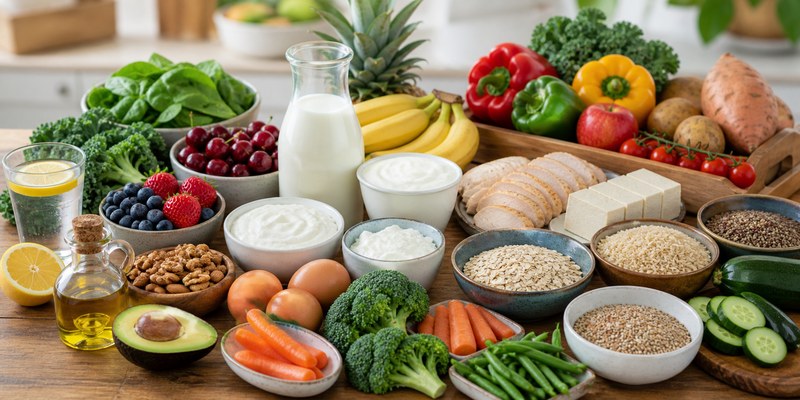
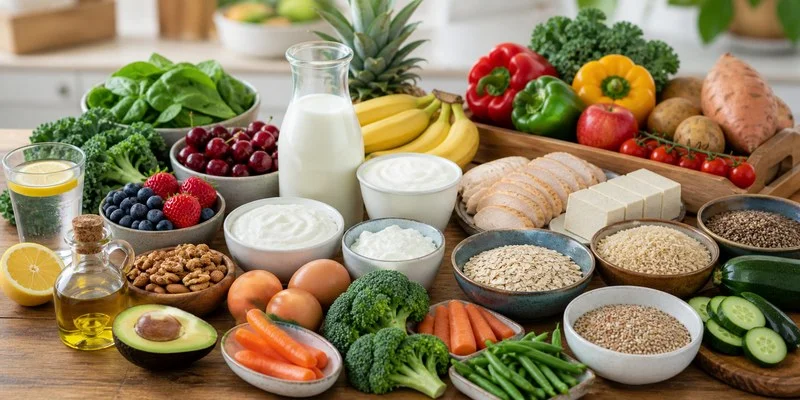
In this post, I share the best gout diet foods to eat to help keep flares away, with a serving size and a purine number for every pick on the list.
Table of Contents
A Favor for My Neighbor

I do not have gout, but my neighbor does. She knew this site and my food lists, and asked me to dig into the best foods for her flares. She does not use computers or AI, so she wanted a real person on it.
This list of gout diet foods to eat is what I pulled together for her. Every pick has a serving size and a rough purine number, so you can see why cherries, low-fat yogurt, coffee, and oats earn a spot, and why shellfish and organ meats do not.
For the research I checked it against the NIAMS gout overview. Gout is a medical condition, so nothing here replaces her rheumatologist or her medication. Treat it as grocery guidance alongside a doctor’s care, not medical advice.
Key Takeaways
- Dairy is your friend: Two daily low-fat milk or yogurt servings link to fewer gout flares.
- Plants get the green light: Even high-purine veggies like spinach and asparagus are not linked to flares.
- Repeat the winners: The gout diet foods to eat that help most are the ones you buy weekly.
Video: Gout Diet Foods to Eat
Rheumatologist Dr. Diana Girnita of Rheumatologist OnCall walks through the foods that help lower uric acid, which is exactly the thinking behind this list.
51 Gout Diet Foods to Eat, Ranked
The following table is my full gout diet foods to eat list that you shop from each week, and since steady weight loss also lowers uric acid, it pairs well with our low-carb diet foods list.
| Food | Why It Helps | Pro Tip |
|---|---|---|
| #1. Low-fat milk | Protective; about 8 g protein per cup and only ~5 mg purines per 100 g | Skim and 1% work equally well; pour it over oats or blend into smoothies. |
| #2. Nonfat Greek yogurt | Protective; 17 g protein per 6-oz cup, roughly 6 mg purines per 100 g | Buy plain and add your own fruit; flavored cups sneak in added fructose. |
| #3. Low-fat cottage cheese | Very low; ~11 mg purines per 100 g and 14 g protein per half-cup | Pair with pineapple or tomato for a five-minute lunch. |
| #4. Eggs | Very low; near 5 mg purines per 100 g and 6 g protein per large egg | Hard-boil six on Sunday for grab-and-go protein all week. |
| #5. Tofu | Low; about 30 mg purines per 100 g in a 3-oz slab, 8 g plant protein | Press extra-firm slabs and sear hot; tofu soaks up any low-sodium marinade. |
| #6. Chicken breast | Moderate; roughly 175 mg purines per 100 g, so cap it near 4 oz | Our anti-inflammatory chicken soup stretches one breast into two meals. |
| #7. Salmon | Moderate; about 170 mg purines per 100 g, but omega-3s calm inflammation | A 4-oz fillet twice a week beats a large portion every night. |
| #8. Skinless turkey | Moderate; near 150 mg purines per 100 g, keep to a 3-oz portion | 93/7 ground turkey makes chili and burgers without the red-meat load. |
| #9. Oats | Very low; close to 25 mg purines per 100 g and 4 g fiber per half-cup | Steel-cut or rolled both work; skip instant packets with added sugar. |
| #10. Brown rice | Very low; about 18 mg purines per 100 g cooked, safe daily grain | Batch-cook and freeze in one-cup portions for instant sides. |
| #11. Quinoa | Low; roughly 35 mg purines per 100 g and 8 g protein per cooked cup | Rinse before cooking to wash off the bitter saponin coating. |
| #12. Whole-grain bread | Very low; under 20 mg purines per 100 g with 3 g fiber per slice | Look for at least 3 g of fiber per slice on the label. |
| #13. Whole-wheat pasta | Very low; about 40 mg purines per 100 g and 6 g fiber per 2-oz serving | Cook al dente and dress with olive oil rather than cream sauces. |
| #14. Potatoes | Very low; near 15 mg purines per 100 g and 620 mg potassium each | Bake or boil; the fryer is where potatoes stop helping. |
| #15. Sweet potatoes | Very low; roughly 12 mg purines per 100 g and 4 g fiber per medium | Roast a full tray at 425°F and reheat portions all week. |
| #16. Cherries | Protective; a half-cup daily links to about 35% fewer flares, ~7 mg purines | Frozen cherries work year-round stirred into yogurt or oatmeal. |
| #17. Tart cherry juice | Protective; a 1-cup pour delivers the same anthocyanins, near 5 mg purines | Choose unsweetened and cut it with sparkling water. |
| #18. Strawberries | Protective; about 85 mg vitamin C per cup and only 4 mg purines per 100 g | Slice into cottage cheese or oats instead of sugaring them. |
| #19. Blueberries | Protective; roughly 14 mg vitamin C per cup and under 6 mg purines per 100 g | Frozen are cheaper than fresh and hold their nutrients. |
| #20. Oranges | Protective; about 70 mg vitamin C each and near 3 mg purines per 100 g | Eat the whole fruit; its fiber slows the fructose down. |
| #21. Lemons | Protective; 1 fruit gives 30 mg vitamin C plus citrate, ~2 mg purines | Squeeze one into your water pitcher every morning. |
| #22. Bananas | Very low; 420 mg potassium each and roughly 5 mg purines per 100 g | A ripe banana handles the dessert urge for pocket change. |
| #23. Kiwi | Protective; 2 small fruits pack 130 mg vitamin C and under 8 mg purines | Two small kiwis make one serving; eat them spoon-style. |
| #24. Watermelon | Protective; a 1-cup serving is 92% water and near 2 mg purines per 100 g | Cube it ahead of time; it disappears faster that way. |
| #25. Apples | Very low; 4 g fiber per medium fruit and about 14 mg purines per 100 g | Pair with peanut butter so the snack actually holds you. |
| #26. Pineapple | Protective; a 1-cup serving gives 79 mg vitamin C plus bromelain, ~19 mg purines | Fresh or frozen is best; canned should be in juice, not syrup. |
| #27. Cucumbers | Very low; a 1-cup serving is 95% water and only 7 mg purines per 100 g | Slice into ice water when plain hydration gets boring. |
| #28. Celery | Very low; about 9 mg purines per 100 g and just 6 calories per stalk | Fill the groove with cottage cheese instead of processed dips. |
| #29. Carrots | Very low; roughly 10 mg purines per 100 g and 25 calories each | Whole carrots are cheaper than baby-cut and keep twice as long. |
| #30. Red bell peppers | Protective; a half-cup beats an orange with 95 mg vitamin C, ~8 mg purines | Roast a batch and store slices in olive oil for the week. |
| #31. Broccoli | Very low; about 81 mg vitamin C per cup and 21 mg purines per 100 g | Steam instead of boiling so the vitamin C survives. |
| #32. Cauliflower | Moderate on paper; near 51 mg purines per 100 g, yet cleared of flare blame | Rice it as a base when you want stir-fry volume. |
| #33. Zucchini | Very low; a 1-cup serving is 17 calories and about 12 mg purines per 100 g | Spiralize it to stretch a pasta night without more noodles. |
| #34. Kale | Very low; 80 mg vitamin C per cup and roughly 13 mg purines per 100 g | Massage leaves with olive oil and lemon before salads. |
| #35. Cabbage | Very low; about 22 mg purines per 100 g and 33 mg vitamin C per cup | Shred with a vinegar dressing rather than creamy mayo. |
| #36. Romaine lettuce | Very low; near 3 calories per cup and under 10 mg purines per 100 g | Dry the leaves well so dressing clings instead of pooling. |
| #37. Tomatoes | Safe for most; about 11 mg purines per 100 g and 17 mg vitamin C each | Track your own response for two weeks before cutting them. |
| #38. Green beans | Very low; roughly 37 mg purines per 100 g and 4 g fiber per cup | Frozen green beans sauté from the bag in five minutes. |
| #39. Beets | Very low; near 19 mg purines per 100 g and 148 mg nitrate per cup | Vacuum-packed cooked beets skip the staining mess. |
| #40. Onions | Very low; about 13 mg purines per 100 g plus quercetin, 64 calories per cup | Caramelize a big batch to upgrade cheap meals all week. |
| #41. Garlic | Very low; roughly 17 mg purines per 100 g and 4 calories per clove | Add it near the end of cooking to keep the punch. |
| #42. Mushrooms | Moderate on paper; near 92 mg purines per 100 g, yet no flare link | Sear hot and dry for a meaty side dish without meat. |
| #43. Spinach | Moderate on paper; about 57 mg purines per 100 g, still innocent in studies | Baby spinach wilts into soups and eggs in seconds. |
| #44. Asparagus | Moderate on paper; roughly 23 mg purines per 100 g, the falsely accused veg | Roast at high heat and finish with lemon, not hollandaise. |
| #45. Lentils | Moderate; near 127 mg purines per 100 g but 18 g protein per cooked cup | One pot of lentil soup covers three lunches. |
| #46. Chickpeas | Moderate; about 100 mg purines per 100 g and 15 g protein per cup | Roast them crispy for a snack that is not chips. |
| #47. Black beans | Moderate; roughly 75 mg purines per 100 g and 15 g fiber per cup | Rinse canned beans to cut the sodium by nearly half. |
| #48. Walnuts | Very low; about 10 mg purines per 100 g and 2.5 g omega-3 ALA per ounce | Measure a small handful; the calories climb quickly. |
| #49. Almonds | Very low; near 37 mg purines per 100 g and 6 g protein per ounce | Portion into small containers instead of eating from the bag. |
| #50. Olive oil | Very low; essentially 0 mg purines and 119 calories per tablespoon | Extra-virgin for salads, regular for the hot pan. |
| #51. Coffee | Protective; 1 to 2 cups daily links to lower uric acid, near 0 mg purines | Keep it unsweetened; syrup fructose undoes the favor. |
Gout Diet Foods to Eat: Pinterest Pin
📌 On Pinterest? Pin this gout diet foods to eat guide to your gout board so it is ready next flare.

3-Day Gout Diet Meal Planner
Here is how the gout diet foods to eat above stack into three easy days, each staying under the roughly 400 mg of purines most rheumatologists suggest.
Day 1 · running ~10 mg purinesBreakfast
Oats with low-fat milkHalf-cup of cherries
Day 1 · running ~140 mg purinesLunch
Lentil soupWhole-grain breadOlive-oil side salad
Day 1 · running ~150 mg purinesSnack
Greek yogurtSmall handful of walnuts
Day 1 Total · about 320 mg purinesDinner
4-oz salmonRoasted potatoesGreen beansWater with lemon
Day 2 · running ~15 mg purinesBreakfast
Two scrambled eggsWhole-grain toastSliced strawberries
Day 2 · running ~190 mg purinesLunch
4-oz chicken breastBrown riceBroccoli
Day 2 · running ~200 mg purinesSnack
Cottage cheesePineapple
Day 2 Total · about 260 mg purinesDinner
Anti-inflammatory chicken soupWhole-wheat pastaKale salad
Day 3 · running ~35 mg purinesBreakfast
Greek yogurt bowlBlueberriesCoffee
Day 3 · running ~70 mg purinesLunch
Chickpea and quinoa bowlCucumber salad
Day 3 · running ~80 mg purinesSnack
AppleAlmonds
Day 3 Total · about 230 mg purinesDinner
Tofu stir-frySweet potatoWater with lemon
Frequently Asked Questions (FAQs)
Here are quick answers to the questions people most often ask about the gout diet foods to eat.
1. What foods help most during a flare?
No food ends a flare once it starts; that job belongs to your medication, water, and rest. The gentlest picks mid-flare are cherries, low-fat dairy, water-rich produce, and simple grains you can eat without thinking. Skip alcohol and organ meats completely until the joint cools down, then slowly rebuild your normal eating routine.
2. Are eggs safe to eat with gout?
Eggs are safe; they are one of the lowest-purine proteins you can buy, which makes them a reliable anchor for breakfast or dinner. Many gout diet foods to eat ask for portion math, but eggs mostly do not. Two eggs with vegetables and whole-grain toast is a low-purine meal you can repeat without much thought.
3. Which gout diet foods to eat lower uric acid the most?
Low-fat dairy leads the list, with two daily servings linked to fewer attacks in long-term studies. Cherries and tart cherry juice follow, then coffee and vitamin C-rich produce like oranges, kiwi, and bell peppers. Water quietly outworks them all, because steady hydration helps your kidneys flush excess urate out before it can crystallize.
4. Can I eat chicken and other meat with gout?
Meat stays on the menu in measured portions. Chicken, turkey, and lean beef carry moderate purines, so a 4-ounce serving a few times weekly usually fits. The gout diet foods to eat work by crowding, not banning: fill most of the plate with vegetables, grains, and dairy so meat becomes the side character instead of the star.
5. Which gout diet foods to eat calm inflammation without a flare?
Not the ones you might fear. Spinach, asparagus, mushrooms, and cauliflower test moderate for purines on paper, but large studies found vegetable purines do not raise flare risk. That research is why modern gout plates keep these vegetables on the safe side, while organ meats, anchovies, and beer behave very differently for your joints.
6. What should I drink with gout?
Water first; most people do well aiming for about eight cups spread through the day. Coffee and low-fat milk both show protective associations, and unsweetened tea is neutral. The drinks working against your gout diet foods to eat are beer, spirits, and anything sweetened with fructose, which raises uric acid faster than most solid food.
7. Do cherries fit the gout diet foods to eat every day?
The evidence is real, if not magic. Studies tracking flare-ups found cherry eaters had roughly a third fewer attacks, and tart cherry juice shows similar signals. Treat cherries as just one tool among many; a daily half-cup alongside dairy, hydration, and your prescribed medication, and not a replacement for any single one of them.
Your Simple Gout Plan
The gout diet foods to eat above are not a punishment plate; the protective picks turn eating back into something normal and repeatable.
- Lead with the protectors: two daily servings of low-fat dairy, a half-cup of cherries, and your morning coffee do the quiet heavy lifting.
- Keep meat honest: hold portions near 4 oz and let vegetables, grains, and legumes fill the rest of the plate, the same crowding trick in our Mediterranean diet foods guide.
- Guard your glass: water and unsweetened drinks flush urate, while beer and the fructose-sweetened sodas we flag in our prediabetes foods guide push it up.
Run that pattern for a few weeks and the shopping list writes itself; if this helped, you will likely also like our foods to reduce inflammation guide, which pairs naturally with this one.
Resources
The authority sources behind this guide, worth a read if you want to go deeper:
- NIAMS (NIH) – Gout overview: the federal reference on causes, flares, and management.
- Arthritis Foundation – Best Diet for Gout: practical food guidance from the leading patient org.
- Mayo Clinic – Gout diagnosis and treatment: clinical overview of diet and medication.
- Cleveland Clinic – Gout: symptoms, triggers, and self-care basics.
- American College of Rheumatology – Gout: the specialty society’s patient guidance.
- Harvard Nutrition Source – Cherries: the evidence behind the cherry-and-flare link.
- PubMed – Choi et al., purine-rich foods and gout risk: the cohort that cleared vegetable purines.