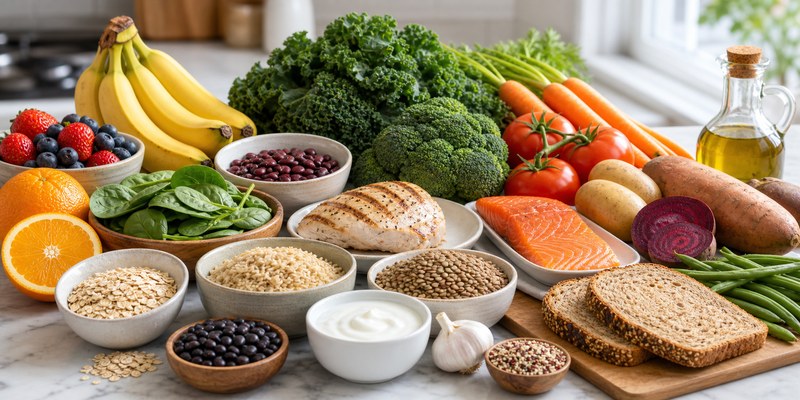
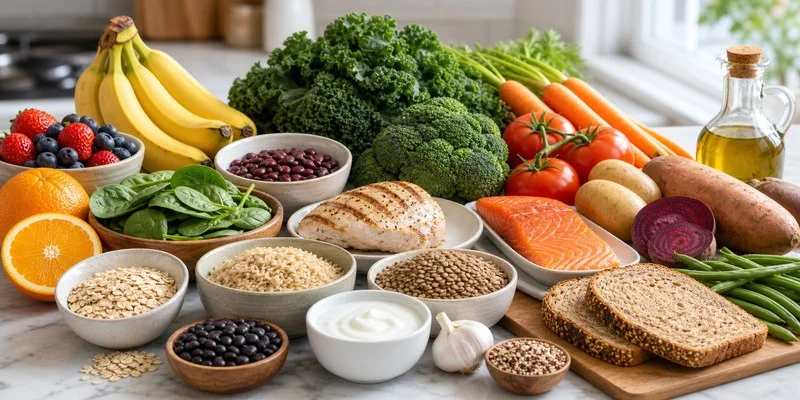
These 51 DASH diet foods pair potassium-rich staples with practical sodium swaps for easier heart-smart grocery trips today.
Table of Contents
My DASH Grocery Reset

I used to read the calorie line and barely glance at sodium. Then I compared two cans of soup that looked almost identical and found a huge difference. That was the moment the grocery aisle stopped feeling random and started feeling useful.
This list of DASH diet foods is how I shop the pattern now. Each item shows either a standout mineral or its serving role, so potatoes, beans, greens, yogurt, oats, fish, and unsalted nuts turn into meals instead of another pile of healthy ingredients.
I based the serving targets on the National Heart, Lung, and Blood Institute DASH eating plan, which emphasizes produce, whole grains, low-fat dairy, and lower sodium. Talk with your clinician before making a major change if you have kidney disease or take blood-pressure or potassium-affecting medicine. This is grocery guidance, not medical advice.
Key Takeaways
- Minerals Matter: DASH diet foods emphasize potassium, magnesium, and calcium alongside lower sodium.
- Produce Leads: Vegetables and fruit carry much of the plan’s everyday volume and variety.
- Labels Decide: Comparing sodium turns similar-looking cans, breads, sauces, and proteins into better choices.
51 DASH Diet Foods With Mineral Notes
Use these DASH diet foods to compare a typical serving, then choose combinations you already cook.
🌱
Whole Foods Grocery Shortcut
Stock potassium-rich produce, low-fat dairy, whole grains, and unsalted nuts in one run.
| Food | Why It Helps | Pro Tip |
|---|---|---|
| #1. Baked potato | About 900 mg of potassium in one medium spud, one of the highest single-food doses in the store. | Bake, boil, or roast with skin on; the salt shaker is where potatoes stop helping. |
| #2. Sweet potato | About 540 mg of potassium plus fiber, and it counts toward your 4-5 daily vegetable servings. | Roast a full tray at 425F and reheat portions all week. |
| #3. White beans | Roughly 1,000 mg of potassium per cooked cup, the quiet potassium champion of the pantry. | Rinse canned beans to wash off nearly half the packing sodium. |
| #4. Lentils | About 730 mg of potassium and magnesium per cooked cup, counting toward legumes 4-5 times a week. | One pot of lentil soup covers three low-sodium lunches. |
| #5. Spinach | About 840 mg of potassium and heavy magnesium in a single cooked cup. | Baby spinach wilts into eggs, soups, and pans in seconds. |
| #6. Swiss chard | About 960 mg of potassium per cooked cup with magnesium alongside. | Sautee the leaves and stems with garlic instead of salt. |
| #7. Kale | Calcium and vitamin K with about 300 mg of potassium per cooked cup. | Massage raw leaves with olive oil and lemon before salads. |
| #8. Beet greens | About 1,300 mg of potassium per cooked cup, higher than the beetroot itself. | Do not toss the tops; cook them like spinach the day you buy beets. |
| #9. Broccoli | About 460 mg of potassium per cooked cup plus fiber and calcium. | Roast until the edges char to make a plain vegetable disappear. |
| #10. Brussels sprouts | About 490 mg of potassium per cooked cup with fiber for fullness. | Halve and sear cut-side down; caramelizing beats boiling every time. |
| #11. Tomatoes | About 290 mg of potassium each, and canned no-salt-added versions keep it cheap year-round. | Buy no-salt-added cans; regular tomato products are a hidden sodium source. |
| #12. Beets | About 520 mg of potassium per cup with nitrates studied for blood-flow support. | Vacuum-packed cooked beets skip the staining and the long roast. |
| #13. Carrots | About 400 mg of potassium per cup and sweet enough to snack on raw. | Whole carrots keep twice as long as baby-cut and cost less. |
| #14. Winter squash | About 900 mg of potassium in a cooked cup of butternut, plus beta-carotene. | Buy it pre-cubed when time is short; it roasts in twenty minutes. |
| #15. Bell peppers | About 210 mg of potassium per cup and more vitamin C than an orange. | Roast a batch and store slices in olive oil for the week. |
| #16. Zucchini | About 460 mg of potassium per cooked cup with almost no sodium. | Spiralize it to stretch a pasta night without more noodles. |
| #17. Cauliflower | About 300 mg of potassium per cup and easy to rice as a low-sodium base. | Rice it in the food processor when you want stir-fry volume. |
| #18. Mushrooms | About 300 mg of potassium per cooked cup with a meaty, salt-free savoriness. | Sear hot and dry first, then add fat once they brown. |
| #19. Asparagus | About 400 mg of potassium per cooked cup plus folate. | Roast at high heat and finish with lemon rather than hollandaise. |
| #20. Bananas | The famous one, at about 420 mg of potassium in a single medium banana. | A ripe banana handles the dessert urge for pocket change. |
| #21. Oranges | About 240 mg of potassium plus vitamin C, and they count toward fruit 4-5 times a day. | Eat the whole fruit; its fiber slows the natural sugar down. |
| #22. Cantaloupe | About 430 mg of potassium per cup with high water content. | Cube it ahead of time and it disappears from the fridge faster. |
| #23. Honeydew | About 400 mg of potassium per cup and mostly hydration. | Pair with cottage cheese for a potassium-and-calcium snack. |
| #24. Apricots | About 380 mg of potassium in three fresh apricots, or more when dried. | Unsulfured dried apricots travel well as a desk snack. |
| #25. Prunes | About 700 mg of potassium per half-cup along with fiber. | Blend a few into oatmeal for natural sweetness without added salt. |
| #26. Raisins | About 320 mg of potassium per small box and portable anywhere. | Stick to the mini boxes so the portion stays honest. |
| #27. Kiwi | About 430 mg of potassium in two fruits plus more vitamin C than an orange. | Two small kiwis make one serving; eat them spoon-style. |
| #28. Strawberries | About 230 mg of potassium per cup and vitamin C to boot. | Slice into plain yogurt instead of sugaring them. |
| #29. Avocado | About 700 mg of potassium per fruit with heart-friendly unsaturated fat. | Buy them hard and ripen on the counter in rotation. |
| #30. Low-fat milk | Calcium plus about 380 mg of potassium per cup, covering low-fat dairy 2-3 times a day. | Skim and 1% both count; pour it over oats or blend into smoothies. |
| #31. Plain low-fat yogurt | About 570 mg of potassium and roughly 400 mg of calcium per cup. | Buy plain and add your own fruit; flavored cups sneak in sugar. |
| #32. Nonfat Greek yogurt | Calcium and protein for a low-fat dairy serving with almost no sodium. | Whisk it into dressings so you use less salt and mayo. |
| #33. Low-sodium cottage cheese | Calcium-rich protein when you choose the low-sodium tub over the standard one. | Regular cottage cheese is salty; read the label and pick the reduced version. |
| #34. Salmon | About 530 mg of potassium per half fillet plus omega-3s for the heart. | A 4-oz portion twice a week fits meats and fish 6 oz or less a day. |
| #35. Skinless chicken breast | Lean protein that stays under the 6-oz daily meat ceiling easily. | Buy plain, not brined or seasoned; the flavor packets are pure sodium. |
| #36. Turkey breast | Lean, low-sodium protein when you cook it fresh instead of buying deli slices. | Build our DASH turkey meatball bowl to stretch one pound into several meals. |
| #37. Eggs | Affordable protein with about 60 mg of potassium and no added sodium of their own. | Hard-boil six on Sunday for grab-and-go protein all week. |
| #38. Tuna (no-salt canned) | Shelf-stable protein once you choose no-salt-added cans over the salty default. | Mix with Greek yogurt and lemon rather than salted mayo. |
| #39. Tofu | Plant protein with calcium when it is set with calcium sulfate. | Press extra-firm slabs and sear hot; it soaks up any low-sodium marinade. |
| #40. Black beans | About 610 mg of potassium per cooked cup plus fiber and magnesium. | Rinse the can and they lose most of the packing sodium. |
| #41. Chickpeas | About 480 mg of potassium per cup with protein that displaces red meat. | Roast them crispy for a crunchy snack that is not chips. |
| #42. Edamame | About 680 mg of potassium per cup plus magnesium and plant protein. | Buy shelled and frozen; steam straight from the bag, unsalted. |
| #43. Oats | Soluble fiber for cholesterol and a magnesium base for a DASH breakfast. | Steel-cut or rolled both work; skip instant packets with added sodium. |
| #44. Brown rice | Whole-grain magnesium counting toward grains 6-8 times a day. | Batch-cook and freeze one-cup portions for instant sides. |
| #45. Quinoa | Magnesium and complete protein at about 320 mg of potassium per cooked cup. | Rinse before cooking to wash off the bitter saponin coating. |
| #46. Whole-wheat bread | Whole-grain fiber, so long as you pick a lower-sodium loaf off the shelf. | Compare labels; bread is a surprising top source of daily sodium. |
| #47. Barley | Beta-glucan fiber and magnesium for a hearty grain serving. | Simmer a pot and fold it into soups and grain bowls all week. |
| #48. Unsalted almonds | Magnesium and about 200 mg of potassium per ounce, for nuts 4-5 times a week. | Portion into single ounces so the handful does not become a meal. |
| #49. Unsalted pumpkin seeds | One of the densest magnesium sources you can snack on. | Buy them raw and unsalted; toast at home with no added salt. |
| #50. Sunflower seeds | Magnesium and vitamin E in an unsalted grab-and-go handful. | Choose the unsalted bag; the salted version undoes the point. |
| #51. Ground flaxseed | Magnesium and omega-3 ALA for a fiber lift on oats or yogurt. | Buy it pre-ground or grind fresh; whole seeds pass straight through. |
DASH Food List: Pinterest Pin
📌 Save these DASH diet foods to your heart-smart grocery board for later.

3-Day DASH Meal Planner
These DASH diet foods reuse the same groceries across three days, while produce and low-sodium staples show up at every meal.
| Day | Breakfast | Lunch | Dinner |
|---|---|---|---|
| Day 1 | Oats, low-fat milk, banana, and ground flaxseed | Lentil soup, baked potato, and a green salad | Salmon, brown rice, and roasted broccoli; see more DASH dinner ideas |
| Day 2 | Plain yogurt, berries, oats, and unsalted almonds | White-bean barley bowl with spinach and peppers | DASH turkey meatball bowl with zucchini and quinoa |
| Day 3 | Eggs, whole-wheat toast, orange, and low-fat milk | Chickpea cucumber salad with a baked sweet potato | Tofu, brown rice, mushrooms, and green beans; use a Mediterranean food list for more overlap |
DASH Foods to Limit
The biggest detours from DASH diet foods are concentrated sodium sources that set the daily total before the salt shaker reaches the table.
1. Deli and Cured Meats
A few slices can carry 500 to 1,200 mg sodium before bread or condiments.
Swap: Fresh-roasted chicken or turkey breast.
2. Canned Soup
One can can approach the stricter 1,500 mg daily sodium target.
Swap: Homemade lentil soup with no-salt-added broth.
3. Jarred Sauces
A half-cup can hide 400 to 600 mg sodium behind the tomatoes.
Swap: Our low-sodium pizza sauce.
4. Frozen Dinners and Pizza
Single trays commonly carry 700 to 1,500 mg sodium per serving.
Swap: Batch-cooked grain bowls built from the planner above.
DASH Shopping Tips
Shopping for DASH diet foods starts with our DASH diet overview, then these store habits keep sodium down without turning the trip into homework. The best DASH diet cookbooks and high-fiber cookbook guide can supply recipes for the same staples.
- Shop produce first, where potatoes, greens, fruit, and fresh herbs do most of the potassium work.
- Read the sodium line before the calorie line, especially on bread, soup, sauce, broth, and canned protein.
- Choose no-salt-added or low-sodium cans, then rinse beans and vegetables before they reach the pan.
- Keep frozen vegetables, fruit, cooked grains, and plain fish available so a busy night does not become takeout.
- Use lemon, vinegar, garlic, pepper, and herbs for flavor; our anti-inflammatory foods guide adds more overlapping staples.
FAQs
Quick answers to the questions people actually ask about DASH diet foods.
1. What do I buy first on DASH?
Start with the potassium heavyweights and one easy dairy: potatoes, a bag of beans, greens, bananas, and low-fat milk or plain yogurt. Add oats and a lean protein you already cook. Those DASH diet foods cover several days and move your minerals in the right direction before you touch any specialty item on the shelf.
2. How much sodium is allowed?
The standard DASH target is about 2,300 mg of sodium a day, and a stricter version drops it near 1,500 mg for a bigger blood-pressure effect. Most of the excess comes from packaged foods, not the shaker, so cooking with the DASH diet foods on this list is how the number actually falls.
3. Which DASH diet foods have the most potassium?
Beans and starchy vegetables lead the pack. A cup of white beans runs about 1,000 mg, a baked potato about 900 mg, cooked spinach about 840 mg, and a banana about 420 mg. Spreading several of these across the day is how the plan reaches its high potassium goal without any supplement.
4. Can I eat meat on DASH?
Meat stays on the plate in measured amounts. The plan caps poultry, fish, and lean meat at roughly six ounces a day, so a 4-ounce dinner portion fits easily. Choose fresh over cured or deli versions among your DASH diet foods, since processed meats carry the sodium that works against your blood pressure.
5. Do I need low-fat dairy?
Low-fat dairy is a core piece, and the plan asks for two to three servings daily. Milk, plain yogurt, and low-sodium cottage cheese deliver the calcium that pairs with potassium and magnesium against high blood pressure. The DASH diet foods approach favors low-fat versions so you get the minerals without the extra saturated fat.
6. Is DASH good for weight loss?
Weight loss often follows because DASH diet foods are filling and high in fiber and water. Vegetables, fruit, beans, and whole grains crowd out calorie-dense processed food without formal counting. If losing weight is a goal, watch portion sizes on nuts and grains, since even healthy foods add up when the handfuls grow.
7. How fast does DASH lower blood pressure?
Research on the eating pattern shows measurable drops in blood pressure within about two weeks when people stick with it. The effect grows as sodium falls and potassium climbs. Treat these DASH diet foods as a daily habit rather than a quick fix, and keep taking any medication your doctor prescribed for you unless told otherwise.
Video: DASH Eating Basics
Mayo Clinic dietitians explain how DASH diet foods, lower sodium, label reading, and practical meal planning work together.
Video credit: Mayo Clinic.
Your DASH Diet Foods Grocery Plan

A useful DASH diet foods cart starts with ordinary food: potatoes, beans, greens, fruit, low-fat dairy, whole grains, fish, and unsalted nuts for the weeks ahead.
- Lead with produce: Put a potassium-rich fruit or vegetable into every meal.
- Compare packaged foods: Bread, soup, sauce, and canned protein can hide most of the day’s sodium.
- Repeat the planner: Three dependable days beat a complicated menu that lasts one week.
Use the three-day planner until the combinations feel automatic, then widen the rotation with our DASH dinner ideas or the broader Mediterranean diet foods list. Keep prescribed medication in place unless your clinician tells you otherwise.