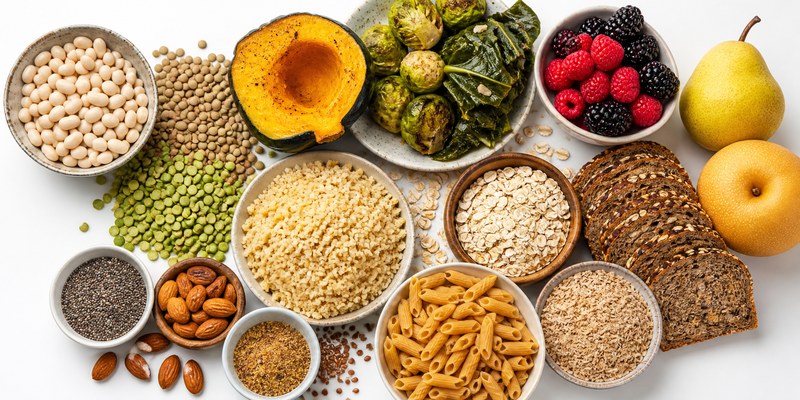
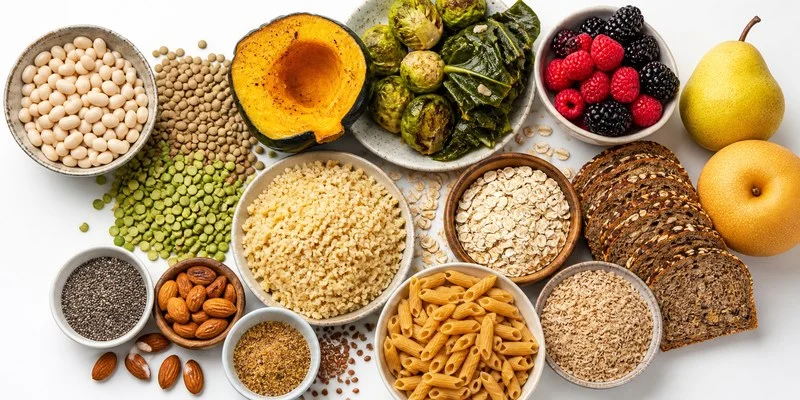
In this post, I share 101 high fiber foods with real gram counts per serving, so hitting your daily fiber target stops being guesswork.
In This Guide
Getting Serious About Fiber

For years I thought my breakfast was a healthy one: corn flakes, milk, and a glass of orange juice. That is barely 1 g of fiber, and the juice contributes none of it at all.
This list of high fiber foods is how I fixed that. Every pick shows a real serving and a real gram count, so you can see that one cup of navy beans beats a whole week of that cereal.
Most adults need about 14 g of fiber for every 1,000 calories, which the Academy of Nutrition and Dietetics fiber guide puts at 25 to 28 g a day for women and 28 to 34 g for men. The Academy also notes that fiber needs water to move comfortably, so add it gradually. Check with your clinician first if you have a bowel condition or a history of obstruction. This is grocery guidance, not medical advice.
Key Takeaways
- Aim for 14 g per 1,000 calories: Most adults land between 25 and 34 g a day.
- Skins and hulls hold it: Peeling produce or juicing fruit strips out most of the fiber.
- Start with beans: One cooked cup of these high fiber foods can cover half your day.
Video: Fiber Basics Made Simple
A short expert walkthrough of how high fiber foods fit into an ordinary week of eating, which helps most if you are starting from a mostly refined plate.
📹 Video Credit: Lacey Baier
High Fiber Food List: Pinterest Pin
📌 Are you on Pinterest? Save this high fiber foods list to your grocery board so the gram counts are there the next time you shop.

18 High Fiber Foods From Beans, Lentils and Peas
Beans are the densest high fiber foods in the store, and my vegan food list builds whole meals around them.
🌱
Whole Foods Grocery Shortcut
Beans, lentils, oats, berries, chia seeds, and frozen vegetables in one Whole Foods order.
- Navy beans: 19.1 g fiber per cooked cup. They cook up creamy in soup, so one pot covers several lunches.
- Adzuki beans: 16.8 g fiber per cooked cup. Small and slightly sweet, the easiest bean to hide in a rice bowl.
- Split peas: 16.3 g fiber per cooked cup. No soaking, and they collapse into a thick soup in 45 minutes.
- Lentils: 15.6 g fiber per cooked cup. They cook in 20 minutes flat, and they sit on my insulin resistance list.
- Pinto beans: 15.4 g fiber per cooked cup. Mash them with broth for a refried side in five minutes.
- Mung beans: 15.2 g fiber per cooked cup. They soften faster than most beans, so a weeknight dal is realistic.
- Black beans: 15.0 g fiber per cooked cup. Rinsing canned beans drops the sodium by roughly 40 percent. Good in a burrito bowl.
- Lima beans: 13.2 g fiber per cooked cup. Frozen baby limas cook in 15 minutes and taste nothing like the canned version.
- Kidney beans: 13.1 g fiber per cooked cup. They hold their shape in chili better than any other bean here.
- Chickpeas: 12.5 g fiber per cooked cup. Roast them at 400F, or pile them on a power salad.
- Great northern beans: 12.4 g fiber per cooked cup. Mild enough to take on garlic and rosemary without a fight.
- Cannellini beans: 11.2 g fiber per cooked cup. Blend half a can into soup and it thickens without any cream.
- Black-eyed peas: 11.1 g fiber per cooked cup. They cook in 30 minutes from dry, with no overnight soak.
- Refried beans, canned: 10.5 g fiber per cup. Check the label for lard, then use them as the fastest tortilla filling.
- Fava beans: 9.2 g fiber per cooked cup. Double-peel them once and you will see why they cost what they do.
- Green peas: 8.8 g fiber per cooked cup. Frozen peas go straight into pasta, rice, or soup with no prep.
- Edamame: 8.1 g fiber per cooked cup. Buy them shelled and frozen. They also anchor my flexitarian list.
- Hummus: 5.9 g fiber per half cup. The easiest vegetable delivery system in the fridge.
18 Fiber-Rich Vegetables Worth Buying Weekly
Vegetables are the high fiber foods most people already buy, though the gram counts swing far more than the produce aisle suggests. My Whole30 food list leans on the same picks.
- Acorn squash: 9.0 g fiber per cooked cup. Roast the halves cut side down and scoop the flesh from the shell.
- Collard greens: 7.6 g fiber per cooked cup. Stack the leaves, roll them tight, then ribbon them so they cook evenly.
- Artichoke: 6.9 g fiber per medium cooked. Steam it 30 minutes and eat the leaves one at a time. A slow, satisfying vegetable.
- Butternut squash: 6.6 g fiber per cooked cup. Buy it pre-cubed. Peeling is why most whole squash rot on the counter.
- Brussels sprouts: 6.4 g fiber per cooked cup. Halve them and roast cut side down at 425F until the faces darken.
- Parsnips: 6.2 g fiber per cooked cup. They roast sweeter than carrots and cost about the same.
- Okra: 5.2 g fiber per cooked cup. Roast it hot and dry, because moisture is what turns okra slimy.
- Broccoli: 5.1 g fiber per cooked cup. Steam it five minutes and use the stems, which match the florets for fiber.
- Turnip greens: 5.0 g fiber per cooked cup. A splash of vinegar at the end cuts the bitterness better than salt.
- Kale: 4.7 g fiber per cooked cup. Massage raw kale with oil for two minutes and the texture changes completely.
- Spinach: 4.3 g fiber per cooked cup. A whole bag cooks down to one cup, which is the only honest way to eat this much.
- Corn kernels: 4.2 g fiber per cooked cup. Frozen corn goes into soup or salad with nothing more than a rinse.
- Green beans: 4.0 g fiber per cooked cup. Blanch them, then ice them so they stay bright instead of khaki.
- Baked potato with skin: 3.9 g fiber per medium. The skin carries most of it, so peeling throws the fiber away.
- Sweet potato with skin: 3.8 g fiber per medium. Six minutes in the microwave, then broil it briefly for real skin.
- Swiss chard: 3.7 g fiber per cooked cup. Give the stems two minutes before the leaves go in, or they stay stringy.
- Carrots: 3.6 g fiber per raw cup. Whole carrots cost less than baby carrots and stay crunchy far longer.
- Beets: 3.4 g fiber per cooked cup. The vacuum-sealed cooked ones save an hour and taste close to roasted.
18 High-Fiber Fruits, Fresh and Dried
Fruit gives you high fiber foods that need no cooking at all, and the berries here overlap with my MIND diet list for brain health.
- Asian pear: 9.9 g fiber per large fruit. It eats like an apple with the juice of a pear, and one fruit is a third of a day.
- Guava: 8.9 g fiber per cup. Eat the seeds. They are most of the reason the number is high.
- Raspberries: 8.0 g fiber per cup. The highest-fiber common berry, and the frozen ones work fine in yogurt.
- Blackberries: 7.7 g fiber per cup. Rinse them the moment you get home and they last two days longer.
- Dried figs: 7.3 g fiber per half cup. Chop them into oatmeal, since whole ones are easy to overeat.
- Pomegranate arils: 7.2 g fiber per cup. Break the fruit apart under water. The arils sink, the pith floats.
- Pear with skin: 7.0 g fiber per large fruit. Leave the skin on. A peeled pear loses a third of its fiber.
- Prunes: 6.1 g fiber per half cup. Six make a real dessert, and they show up in my diverticulitis dessert ideas.
- Avocado: 6.0 g fiber per half cup mashed. Half an avocado on toast turns a thin breakfast into a decent one.
- Dates: 5.6 g fiber per quarter cup chopped. Blend two into a smoothie instead of honey or maple syrup.
- Apple with peel: 4.4 g fiber per medium fruit. The same apple as applesauce carries three times the fiber. Apple juice has none.
- Kiwi: 4.1 g fiber per two medium. Eat the skin if you can stand the fuzz. It nearly doubles the count.
- Banana: 3.1 g fiber per medium. A slightly green banana carries more resistant starch than a ripe one.
- Strawberries: 2.9 g fiber per cup. Push a straw through the bottom to hull them and you lose almost no fruit.
- Clementines: 2.8 g fiber per two fruits. The membranes hold the fiber, so segments beat juice every time.
- Mango: 2.6 g fiber per cup. Buy it frozen in chunks and it blends without ice.
- Raisins: 2.4 g fiber per half cup. Useful in oatmeal, though they are dense, so measure rather than pour.
- Blueberries: 1.8 g fiber per half cup. Lower than most berries per bite, which is worth knowing before you build a plan on them.
17 Whole Grains With Real Fiber Counts
Swapping refined grains for whole ones is the quietest way to add high fiber foods to a day, and my gluten-free food list covers the versions that skip wheat.
- Freekeh: 8.6 g fiber per cooked cup. Roasted green wheat, smoky enough to make a plain grain bowl interesting.
- Bulgur: 8.2 g fiber per cooked cup. It only needs a soak in hot water, the fastest grain here.
- Teff: 7.1 g fiber per cooked cup. Tiny grains that cook into porridge in 15 minutes.
- Sprouted grain bread: 6.7 g fiber per two slices. Keep it frozen and toast it straight from the bag.
- Whole wheat pasta: 6.5 g fiber per cooked cup. Cook it a minute short of the box time. It goes soft fast.
- Barley: 6.3 g fiber per cooked cup. The soluble fiber in barley is what thickens a soup as it sits.
- Steel-cut oats: 5.5 g fiber per cooked cup. Make a pot on Sunday and reheat it with milk all week.
- Amaranth: 5.3 g fiber per cooked cup. It cooks sticky rather than fluffy, so treat it as porridge.
- Whole wheat bread: 4.8 g fiber per two slices. Check that the first ingredient reads whole wheat flour, not wheat flour.
- Buckwheat groats: 4.6 g fiber per cooked cup. Toast them dry in the pan first and the nutty flavor doubles.
- Rolled oats: 4.5 g fiber per cooked cup. Also the base for banana oat pancakes on a slow morning.
- Wild rice: 3.3 g fiber per cooked cup. Mix it half and half with brown rice so the cost stays reasonable.
- Brown rice: 3.2 g fiber per cooked cup. Cook it like pasta in extra water and drain. It never goes gummy.
- Popcorn, air-popped: 3.0 g fiber per 3 cups. A whole grain that behaves like a snack, unless it is drowning in butter.
- Quinoa: 2.5 g fiber per half cup cooked. Rinse it first to wash the bitter coating off the seed.
- Millet: 2.3 g fiber per cooked cup. Cheap, mild, and gluten free, though it needs real seasoning.
- Rye bread: 1.9 g fiber per slice. Dark, dense rye carries far more than the pale sandwich version.
15 Nuts and Seeds That Add Fiber Fast
These are the supporting high fiber foods: a spoonful adds up across a day without changing what you cooked. My paleo food list leans on the same handful.
- Chia seeds: 9.8 g fiber per 2 Tbsp. Soak them overnight in milk for pudding, or stir them into a protein smoothie bowl.
- Ground flaxseed: 5.7 g fiber per 3 Tbsp. Buy it ground and keep it cold, because whole seeds pass straight through.
- Almonds: 3.5 g fiber per 1 oz. A quarter cup runs about 23 almonds. Measure it once and you can eyeball it after.
- Pecans: 2.7 g fiber per 1 oz. High in fat, low in effort. Chop them over roasted squash.
- Unsweetened shredded coconut: 2.2 g fiber per 2 Tbsp. Almost all the carbohydrate in coconut is fiber, so a little goes far.
- Brazil nuts: 2.1 g fiber per 1 oz. Two a day is plenty, because the selenium content is high.
- Walnuts: 2.0 g fiber per quarter cup. Keep them frozen. Walnut oil turns rancid faster than any other nut.
- Pumpkin seeds: 1.7 g fiber per 1 oz. The hulled green ones carry less fiber than the whole white ones.
- Peanut butter: 1.6 g fiber per 2 Tbsp. Buy the jar with peanuts and salt on the label, nothing else.
- Peanuts: 1.5 g fiber per 2 Tbsp. Cheaper than every tree nut, and near the top of the nut range.
- Hazelnuts: 1.4 g fiber per 10 nuts. Rub the skins off in a towel after toasting, or they stay bitter.
- Sunflower seeds: 1.3 g fiber per 2 Tbsp. The cheapest way to add crunch to a plain salad.
- Pistachios: 1.2 g fiber per 20 kernels. The shells slow you down, which is the whole point.
- Sesame seeds: 1.1 g fiber per 1 Tbsp. Toast them 90 seconds in a dry pan and they wake up.
- Cashews: 0.9 g fiber per 1 oz. The lowest-fiber nut in the aisle. Fine to eat, not one to count on.
15 High-Fiber Snacks, Swaps and Pantry Picks
These are the shortcut high fiber foods: one-for-one swaps that raise a day’s total without adding a single step. Several also fit the low-FODMAP approach in my IBS food list.
- Black bean pasta: 11.4 g fiber per 2 oz dry. One bowl beats what most people eat all day. Sauce it heavily.
- Roasted chickpea snacks: 10.1 g fiber per half cup. Crunchy and shelf-stable, the desk snack that replaces crackers.
- Coconut flour: 10.0 g fiber per quarter cup. It drinks liquid, so never swap it one-for-one for wheat flour.
- All-bran style cereal: 9.6 g fiber per half cup. The highest-fiber box in the cereal aisle, and an acquired taste.
- Unsweetened cocoa powder: 9.5 g fiber per quarter cup. Cocoa solids carry real fiber, which is the most agreeable fact here. Stir it into oatmeal.
- Dried apricots: 9.4 g fiber per cup. The unsulfured ones look brown and taste better than the orange ones.
- Chickpea pasta: 8.4 g fiber per 2 oz dry. It holds its shape better than lentil pasta and tastes closer to wheat.
- Dry roasted edamame: 8.3 g fiber per half cup. Protein and fiber in one handful, and it keeps in a work bag for weeks.
- High-fiber tortilla: 7.9 g fiber per large tortilla. A straight swap for a white flour wrap. Read the panel, because brands run from 3 to 12 g.
- Whole wheat couscous: 7.5 g fiber per cooked cup. It steeps in five minutes off the heat, the laziest whole grain in the pantry.
- Lentil pasta: 7.4 g fiber per 2 oz dry. Rinse it after draining, because it sheds more starch than wheat pasta.
- Wheat bran: 6.8 g fiber per quarter cup. Stir a spoonful into pancake batter or meatballs and you will not taste it.
- Oat bran: 5.8 g fiber per cooked cup. Creamier than oatmeal and higher in soluble fiber than rolled oats.
- Bran flakes cereal: 5.4 g fiber per three quarters cup. The compromise box: gentler than all-bran, far better than corn flakes.
- Psyllium husk: 4.9 g fiber per 1 Tbsp. Almost pure fiber. Stir it into a full glass of water and drink immediately.
Adding Fiber Without the Bloat
Most of the trouble people blame on high fiber foods comes from adding them too fast, not from the food itself.
- Move in 5 g steps: Add one new serving a week instead of rebuilding every meal on a Monday.
- Drink more water: Fiber needs fluid to plump up and pass smoothly, and without it the change backfires.
- Split it across meals: Roughly 10 g at breakfast, lunch, and dinner is far easier than 30 g at once.
- Cook the tough stuff: Cooked vegetables are gentler than raw ones while your gut adjusts to the change.
- Plan a week at a time: A structured week like my 7-day prediabetes meal plan takes the guesswork out.
Recommended High Fiber Cookbook
A cookbook turns a list of high fiber foods into an actual week of dinners, which is where most good intentions fall apart. My high-fiber cookbook roundup covers the rest of the shelf.
🍳 The Companion Cookbook

FAQs
Here are the questions I hear most about high fiber foods.
1. How much fiber do I need each day?
Most adults should aim for about 14 g of fiber for every 1,000 calories they eat. In practice that lands near 25 to 28 g a day for women and 28 to 34 g a day for men. Older adults often need a little less, because total calorie needs drop with age.
2. What happens if I add too much fiber at once?
Gas, bloating, cramping, and loose stools are the usual first complaints, and they do pass. Fiber behaves like a sponge in the digestive tract, so it needs water to move comfortably. Add high fiber foods over two or three weeks rather than in a single day, and raise your fluid intake alongside them each day.
3. What are the best high fiber foods to start with?
Beans, lentils, and split peas give the biggest jump per serving, and one cooked cup can cover half a day on its own. Berries, pears with the skin left on, and chia seeds need no cooking at all. Swapping white bread and white rice for whole grain versions costs almost no effort either.
4. Is soluble or insoluble fiber more important?
Both matter, and nearly every plant carries a mix of the two. Soluble fiber dissolves into a gel that helps with cholesterol and blood sugar, while insoluble fiber adds bulk and keeps things moving along. Eating a wide range of high fiber foods across the week covers both without any tracking at all.
5. Can high fiber foods replace a fiber supplement?
For most people, yes. Whole plants bring vitamins, minerals, and the fullness that a scoop of powder does not, and a low intake often signals other gaps in a whole diet. Supplements still earn their place when a daily target is hard to reach on food alone, especially during a week of travel.
6. What is fibermaxxing, and does it work?
It is the social media habit of pushing intake well past the usual daily target, often with chia, beans, and bran at every single meal. Loading high fiber foods that quickly tends to backfire with bloating and discomfort. A steady climb into the recommended range is the version that actually sticks long term.
7. Which high fiber foods are the cheapest to buy?
Dried beans, split peas, lentils, oats, and frozen vegetables run cheapest by the gram, and none of them spoil in a hurry. A bag of dried beans costs a fraction of the canned version if you are willing to cook a pot. Cabbage, carrots, and bananas hold that same line in the produce aisle.
High Fiber Foods: The Bottom Line

Fiber is the nutrient most people under-eat without ever noticing, and fixing it is mostly a shopping decision.
- Buy beans first: One cooked cup can cover half a day all by itself.
- Keep the skins on: Peeling and juicing are where most of the fiber quietly disappears.
- Climb slowly: Two or three weeks of small additions beats one ambitious afternoon.
If this list helped, my DASH diet foods guide applies the same shopping logic to blood pressure, and my fiber supplement roundup covers the nights when food alone did not get you there. Pick five staples, learn their numbers, and the rest of the week plans itself.