
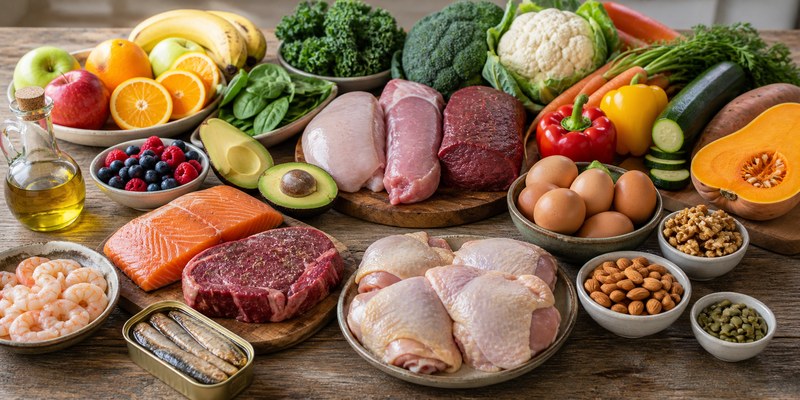
These paleo diet foods pair 51 grain-free staples with clear fit cues, serving ideas, and simple swaps for grains, dairy, and legumes.
Table of Contents
Paleo Grocery Run Reality

The first grain-free grocery run is a strange one. You reach for your usual cereal, bread, and yogurt, then remember none of it counts, and suddenly the middle aisles feel off-limits while you stand there wondering what actually goes in the cart.
That is where a working list of paleo diet foods earns its place. Most versions use the same basic frame: whole, minimally processed foods. Think a chicken thigh, salmon fillet, egg, roasted carrot and onion, almonds, and berries, with no grains, beans, or dairy on the plate.
Every food below carries a plain note on why it fits, leaning on the framing in the Harvard Nutrition Source paleo review, which flags that dropping grains and dairy can shortchange some nutrients. Loop in your own clinician before big swaps. This list is grocery guidance, not medical advice.
Key Takeaways
- Choose whole foods: Paleo diet foods start with meat, seafood, eggs, produce, nuts, and fruit.
- Keep the exclusions clear: Grains, legumes, and dairy stay outside the classic paleo framework.
- Watch common mix-ups: Peanuts are legumes, while fruit, tree nuts, and modest honey can fit.
51 Paleo Diet Foods With Clear Fit Cues
Use this grain-free grocery tracker to compare whole foods, practical servings, and the reason each pick fits.
🌱
Whole Foods Grocery Shortcut
Stock plain proteins, produce, nuts, seeds, and natural fats in one run.
| Food | Why It Helps | Pro Tip |
|---|---|---|
| #1. Eggs | Eggs fit most classic paleo lists as a whole animal food; each provides about 6 g protein. | Buy pastured when you can and hard-boil a batch for grab-and-go mornings. |
| #2. Chicken thighs | Unprocessed meat is the backbone of the plan; the darker cut carries about 25 g protein per fillet plus more natural fat than breast. | Crisp the skin in a hot pan – that texture is free and fully compliant. |
| #3. Chicken breast | Plain poultry with nothing added fits cleanly; roughly 26 g of lean protein per 3-oz serving. | Brine 30 minutes so it stops drying out on a grain-free plate. |
| #4. Turkey | Whole lean meat straight off the bird qualifies; about 24 g protein per 3-oz portion with easy iron. | Ground 93/7 turkey carries herbs and spices without any breadcrumb filler. |
| #5. Grass-fed beef | Plain beef fits the plan; grass-fed beef has slightly more omega-3 than grain-finished beef, but far less than oily fish. | An 80/20 blend stays juicy; read labels so no fillers sneak into the pack. |
| #6. Sirloin steak | A whole muscle cut with zero additives; about 40 g protein per 6-oz steak to protect muscle. | Rest it five minutes after cooking so the juices stay put. |
| #7. Pork tenderloin | Fresh pork fits where cured deli meat may not; 3 oz of tenderloin has about 22 g protein. | Sear then roast to 145F; skip the sugar-heavy barbecue glaze. |
| #8. Bison | Plain bison fits as an unprocessed red meat; 3 oz brings roughly 22 g protein and less fat than many beef cuts. | Cook it a touch under where you would stop beef, since it dries out fast. |
| #9. Lamb | Plain lamb fits the classic whole-meat pattern; 3 oz supplies about 23 g protein plus zinc and vitamin B12. | A shoulder chop takes garlic and rosemary better than any marinade in a bottle. |
| #10. Salmon | Plain salmon fits whether wild or farmed; a cooked 3-oz portion has about 22 g protein plus omega-3 fats. | Frozen fillets are cheaper and cook straight from the freezer. |
| #11. Sardines | Sardines packed in water or olive oil fit; 3 oz adds about 21 g protein and calcium from the soft bones. | Over arugula with lemon, it is a two-minute grain-free lunch. |
| #12. Cod | Plain, unbreaded cod fits; a 3-oz cooked portion has about 19 g protein. | Baste with olive or coconut oil if you are following a dairy-free version. |
| #13. Shrimp | Unprocessed shellfish qualifies easily; about 20 g protein per 3-oz serving with almost no fat. | Buy frozen raw, not breaded popcorn shrimp, which hides wheat. |
| #14. Tuna | Water-packed tuna with a short ingredient list fits; 3 oz provides about 22 g protein. | Bind it with mashed avocado instead of mayo made with refined seed oil. |
| #15. Sweet potatoes | Sweet potatoes fit many paleo versions; 1 medium potato brings about 4 g fiber and beta-carotene, while white potatoes remain debated. | Roast a full tray at 425F and reheat portions all week. |
| #16. Butternut squash | Butternut squash is a whole, starchy vegetable; 1 cooked cup has roughly 7 g fiber and plenty of vitamin A. | Cube and roast; the caramelized edges beat any grain side. |
| #17. Carrots | Carrots are an easy whole root vegetable; a raw 1-cup portion offers close to 4 g fiber plus beta-carotene. | Whole carrots are cheaper than baby-cut and keep twice as long. |
| #18. Beets | Beets fit as a whole root vegetable; 1 cooked cup delivers roughly 3 g fiber plus naturally occurring dietary nitrates. | Vacuum-packed cooked beets skip the staining mess. |
| #19. Turnips | Turnips fit as a lightly starchy root; a cubed 1-cup portion brings about 2 g fiber and fewer carbohydrates than potatoes. | Roast alongside meat as a milder stand-in for the potatoes you are skipping. |
| #20. Spinach | Spinach fits without special prep; 2 raw cups add around 1 g fiber plus folate and vitamin K. | Baby spinach wilts into eggs and soups in seconds. |
| #21. Kale | Kale is a whole leafy green; 1 chopped cup adds fiber plus vitamins C and K. | Massage with olive oil and salt to tame the chew before a salad. |
| #22. Broccoli | An unprocessed cruciferous vegetable that fits, bringing fiber and about 80 mg vitamin C per cup. | Roast at 425F until the edges char – a different vegetable entirely. |
| #23. Cauliflower | Cauliflower fits as a whole vegetable and grain swap; 1 raw cup carries about 2 g fiber. | Rice it as the base your skipped rice used to fill. |
| #24. Zucchini | Zucchini is a whole summer squash and useful noodle swap; a sliced 1-cup portion has about 20 calories. | Salt zoodles ten minutes and pat dry before cooking. |
| #25. Cucumber | Cucumber fits raw with no special prep; a sliced cup is roughly 95% water and just 16 calories. | Slice thick for the dip-scooping job that crackers used to do. |
| #26. Mushrooms | Mushrooms fit as a whole food with savory flavor; 1 raw cup contains about 15 calories plus several B vitamins. | Sear hot and dry first, then add fat once they brown. |
| #27. Bell peppers | Bell peppers fit raw or cooked; 1/2 cup of red pepper provides about 95 mg vitamin C. | Red and yellow run sweeter than green if you want crunch for a snack. |
| #28. Asparagus | Asparagus is a whole spring vegetable; a cooked cup supplies about 4 g fiber plus folate. | Roast with olive oil and lemon instead of a butter-heavy hollandaise. |
| #29. Brussels sprouts | Brussels sprouts fit as a whole cruciferous vegetable; 1 cooked cup brings close to 6 g fiber. | Halve and roast cut-side down for crisp edges instead of a mushy boil. |
| #30. Cabbage | Cabbage is an inexpensive whole leafy vegetable; a chopped raw cup adds about 2 g fiber. | Shred with olive oil and vinegar instead of bottled slaw dressing with added sugar or refined seed oil. |
| #31. Onions | Onions build flavor without a bottled sauce; 1 chopped cup has roughly 3 g fiber. | Caramelize a big batch to upgrade cheap meals all week. |
| #32. Garlic | Garlic fits as a whole aromatic; even 1 minced clove adds flavor without a packaged marinade. | Add it near the end of cooking to keep the punch. |
| #33. Tomatoes | Fresh tomatoes fit as a whole fruit; a chopped cup adds around 2 g fiber plus lycopene and vitamin C. | Fresh or jarred with a clean label – watch for added sugar in sauces. |
| #34. Avocado | Avocado fits as a whole fruit rich in monounsaturated fat; 1/2 fruit provides about 5 g fiber. | Buy hard and ripen on the counter in rotation so none go to waste. |
| #35. Berries | Whole berries fit the plan; 1 cup of raspberries has roughly 8 g fiber plus naturally occurring pigments. | Frozen mixed berries are cheaper than fresh and hold their nutrients. |
| #36. Apples | A whole tree fruit that fits, with about 4 g fiber each to slow the natural sugar. | Pair with almond butter so the snack actually holds you. |
| #37. Oranges | A whole citrus fruit that qualifies; about 70 mg vitamin C in each one. | Eat the whole segment, not the juice, so the fiber comes along. |
| #38. Bananas | A plain banana fits as whole fruit and a portable workout snack; 1 medium fruit provides about 420 mg potassium. | A ripe one handles the dessert urge for pocket change. |
| #39. Plantains | Plantains fit as a starchy whole fruit; 1 cooked cup provides about 3 g fiber. | Slice and pan-fry in coconut oil for a chip that is fully compliant. |
| #40. Almonds | Almonds fit as tree nuts, unlike peanuts; 1 oz offers about 6 g protein plus vitamin E. | Portion into small containers – the bag is where daily calories hide. |
| #41. Walnuts | A tree nut that qualifies and adds omega-3 ALA a meat-heavy plate can miss. | Toast in a dry pan to double the flavor before they hit a salad. |
| #42. Pecans | Pecans fit as tree nuts; 1 oz has about 3 g fiber and mostly unsaturated fat. | Toss with cinnamon for a snack that needs no added sugar. |
| #43. Macadamias | Macadamias fit as tree nuts; a 1-oz portion contains about 21 g fat, most of it monounsaturated. | A small handful goes far; the calories climb fast past one ounce. |
| #44. Pumpkin seeds | Pumpkin seeds fit as whole seeds; 1 oz supplies about 8 g protein and 150 mg magnesium. | Roast with chili and lime for a crunchy, compliant snack. |
| #45. Chia seeds | Whole seeds that fit and turn into a grain-free pudding with fiber and omega-3 ALA. | Soak overnight in coconut milk instead of dairy for a make-ahead breakfast. |
| #46. Olive oil | Olive oil is a minimally processed fat used in many paleo plans; 1 tablespoon carries about 14 g fat. | Extra-virgin for cold uses; it replaces the seed oils paleo skips. |
| #47. Coconut oil | Coconut oil fits many paleo versions; 1 tablespoon has about 14 g fat. | Use it for searing if your version excludes butter and other dairy. |
| #48. Coconut flakes | Unsweetened coconut flakes fit as a whole-food fat and cereal swap; 1/4 cup brings about 3 g fiber. | Check the bag for “unsweetened” so no cane sugar rides along. |
| #49. Honey | Some paleo versions allow raw honey in small amounts; 1 teaspoon adds about 6 g sugar, so a drizzle is enough. | A drizzle only – treat it like the rare treat it was, and try our anti-inflammatory foods for lower-sugar swaps. |
| #50. Arugula | Arugula fits as a peppery leafy green; 2 raw cups provide about 10 calories plus vitamin K. | Dress with lemon and olive oil; it needs nothing else. |
| #51. Celery | Celery fits as a crunchy whole vegetable; 1 chopped cup provides about 2 g fiber and is mostly water. | Fill the groove with almond butter instead of the usual cream cheese. |
Paleo Food List: Pinterest Pin
Save these paleo diet foods to your meal-planning board, then compare them with our Mediterranean diet foods when you want a less restrictive long-term pattern.
📌 Hover over this pin to save this post for later.

One Day Paleo Meal Planner
Here is how the paleo diet foods above assemble into one repeatable day, with protein at every meal and produce in most. For another whole-food template, see our low-carb food list.
| Meal | Plate | Protein |
|---|---|---|
| Breakfast | Three eggs scrambled in coconut oil with spinach and half an avocado | ≈20 g |
| Lunch | Grilled chicken thighs over arugula with olive oil and lemon | ≈28 g |
| Snack | An apple with a small handful of almonds | ≈6 g |
| Dinner | Salmon with roasted sweet potato and broccoli | ≈30 g |
| Dessert | Mixed berries with unsweetened coconut flakes | ≈2 g |
| Day total | Whole foods only, nothing from a grain, legume, or dairy aisle | ≈86 grams of protein |
Paleo Foods to Limit
Most mix-ups come from foods that look wholesome but fall outside the classic rules. These paleo diet foods replace them, while our prediabetes foods guide offers more blood-sugar-aware swaps.
1. Grains and legumes
Two excluded groups cover bread, oats, rice, beans, lentils, and peanuts.
Swap: Cauliflower rice, sweet potato, or tree nuts
2. Dairy and white potatoes
Two common debates are dairy and white potatoes, which modern versions treat differently.
Swap: Coconut milk, avocado, squash, or turnip
3. Refined sugar and seed oils
Two processed categories conflict with the plan’s whole-food filter.
Swap: Whole fruit, modest raw honey, olive oil, or coconut oil
4. Processed meats
One label-heavy category includes deli meat and hot dogs with curing additives.
Swap: Fresh-cooked chicken, beef, pork, or fish
Paleo Shopping Tips
Shopping for paleo diet foods gets simple once the cart follows a few standing rules that keep grains, legumes, and dairy out by default. For more pantry ideas, compare our vegetarian foods, plant-based meals, and high-fiber cookbook guide.
- Shop the store perimeter first – fresh meat, seafood, eggs, and produce cover almost every food on this list before you reach a packaged aisle.
- Read the ingredient line, not the front label: if you cannot picture the whole plant or animal it came from, and it names grains, legumes, dairy, or added sugar, leave it.
- Buy fat on purpose – olive oil, coconut oil, avocados, and nuts replace butter and refined seed oils in a stricter version, and they keep meals satisfying.
- Keep freezer backups of salmon, ground beef, and mixed vegetables so a busy week never becomes a takeout week.
- Portion nuts into single-ounce containers the day you buy them, because the bag is the easiest place to blow past a sensible serving.
FAQs
Quick answers to the questions people actually ask about paleo diet foods.
1. Are peanuts paleo?
Peanuts sit out, and this trips up almost everyone. Despite the name and the nut-aisle shelf, a peanut is a legume that grows underground, so it lands in the excluded group with beans and lentils. Among paleo diet foods, you should reach for tree nuts instead – almonds, walnuts, pecans, and macadamias all fit cleanly.
2. Can I eat potatoes on paleo?
White potatoes are a genuine gray area. The classic Harvard framing excludes them, while some modern paleo versions allow them. Sweet potatoes, squash, and turnips are less disputed choices when you want something starchy and filling among paleo diet foods. If you want the strictest reading, leave white potatoes out and use those roots instead.
3. What are the best paleo diet foods to start with?
Begin with a dozen eggs, two proteins you already cook well, olive oil, and three easy vegetables like spinach, broccoli, and sweet potato. Then add avocados, a bag of almonds, and fresh or frozen berries. That single basket covers a full week of grain-free, whole-food meals before you ever chase a specialty product.
4. Is dairy ever allowed on paleo?
Classic paleo excludes milk, cheese, and yogurt. Some flexible versions allow grass-fed butter or ghee, so check which version you are following. Coconut milk keeps paleo diet foods dairy-free when a recipe needs creaminess. For the simplest grocery rule, skip the dairy aisle and treat butter and ghee as optional variations rather than universal staples.
5. Can I eat fruit and honey on paleo?
Whole fruit is welcome, which sets this plan apart from stricter whole-food diets that cut it out completely. Berries, apples, oranges, and bananas all fit, and raw honey is allowed in small amounts as the one natural sweetener. Keep portions sane, because paleo diet foods still respond to overeating sugar, even the unrefined kind.
6. Do I need grass-fed and organic?
Grass-fed meat and organic produce are nice upgrades, not entry requirements. The core move is choosing whole, unprocessed foods, and a conventional chicken breast still beats a boxed grain meal every time. Spend extra where it matters to you, then let budget-friendly paleo diet foods like eggs and frozen vegetables carry the rest.
7. Is paleo the same as keto?
They overlap but are not twins. Both drop grains and refined sugar, yet many paleo diet foods include fruit, honey, and starchy roots like sweet potato that a low-carb keto plan would ration hard. Paleo asks whether a food is whole and ancestral; keto cares mainly about the carb count on your plate.
Paleo Diet Video: Whole Foods vs. Keto
Scripps Health explains how a paleo pattern prioritizes whole foods while keto prioritizes carbohydrate limits; that distinction keeps paleo diet foods from becoming a generic low-carb list.
Video credit: Scripps Health.
Your Paleo Diet Foods Plan

Start with whole meat, seafood, eggs, vegetables, fruit, nuts, seeds, and simple fats. Then check the version you follow for debated foods such as white potatoes, butter, and ghee.
The sample day includes protein at every meal, produce in most slots, berries for something sweet, and roughly 86 grams of protein. Change the protein, vegetable, or fruit each week to keep the plan practical without making it complicated.
Keep this 51-item list as your grocery backbone, and if you ever want to tighten the carbs further, our best keto diet foods guide builds on many of the same whole-food staples.
