Here are 51 foods to lower blood pressure, grouped by what each one does, with a real potassium, calcium, or sodium number on every pick.
In This Guide
Learning to Cook Without Salt

Canned soup was my sensible lunch for years. One afternoon I turned the empty can over and read the label properly, and most of a day of sodium had gone into a bowl I did not even think of as salty.
This list of foods to lower blood pressure is what I put together once I started reading labels instead of guessing. Every pick carries a real number, so you can tell a swap that does something from one that only looks healthy.
The NHLBI DASH eating plan puts the daily sodium target at 2,300 mg and notes that 1,500 mg lowers blood pressure further still, while leaning on foods rich in potassium, calcium, and magnesium. Talk with your clinician first if you take a blood pressure medicine or a diuretic, or if you have kidney disease, because potassium advice changes then. This is grocery guidance, not medical advice.
Key Takeaways
- Potassium counts as much as salt: DASH aims for about 4,700 mg a day, almost all of it from plants.
- Cut the sodium you cannot taste: Canned soup, bread, and deli meat carry far more than the shaker does.
- Eat the pattern, not one hero: These foods to lower blood pressure only add up across a whole week.
Video: Blood Pressure Eating Basics
A short expert walkthrough of how foods to lower blood pressure fit into an ordinary week of shopping and cooking, which helps most if your lunch still comes out of a can like mine did.
📹 Video Credit: Violin MD
Blood Pressure Food List: Pinterest Pin
📌 Pin this roundup of foods to lower blood pressure to your grocery board and the numbers ride along to the store with you. Thanks for the save.

10 Foods to Lower Blood Pressure With Potassium
Potassium is the one mineral here with a daily target attached to it, about 4,700 mg on the DASH diet food list, and fruit is the easiest place to find it. Start here if you want one change that needs no cooking at all.
🌱
Whole Foods Grocery Shortcut
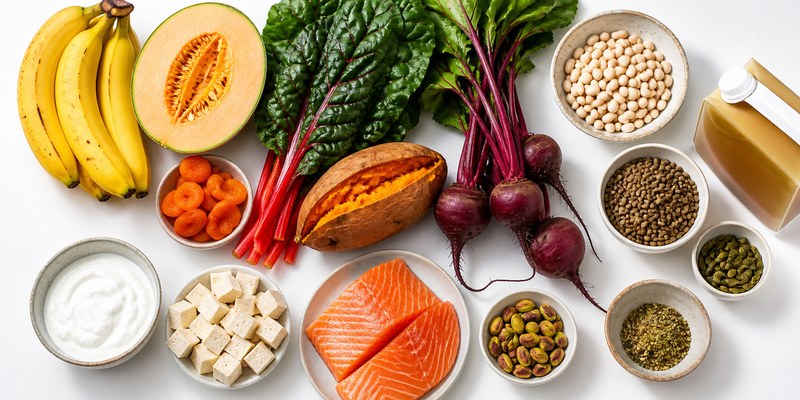
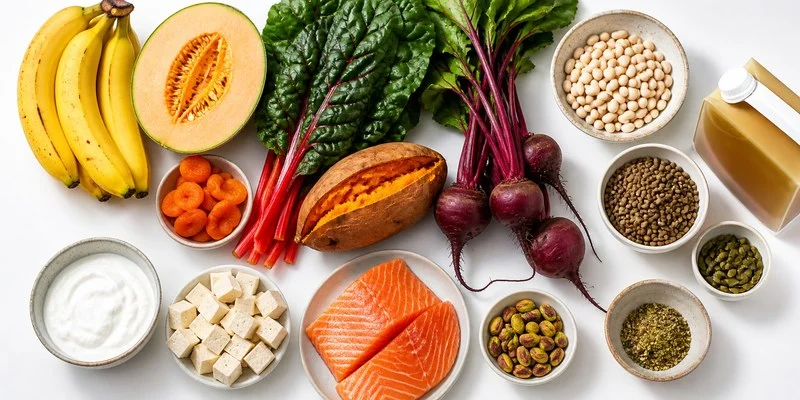
Bananas, cantaloupe, dried apricots, Swiss chard, white beans, plain low-fat yogurt, salmon, and low-sodium broth in one Whole Foods order.
- Dried apricots: about 755 mg of potassium per half cup, the densest scoop in the whole produce aisle. Six halves make a pocketable afternoon snack.
- Avocado: about 690 mg of potassium in a whole one, alongside mostly unsaturated fat. Leave the pit in the unused half and it browns slower.
- Pomegranate: about 666 mg of potassium in one whole fruit. Break it apart under water and the seeds sink while the pith floats.
- Raisins: about 618 mg of potassium per half cup. They are sticky enough to feel like dessert, which is the point on a plain day.
- Cantaloupe: about 427 mg of potassium per cup, cubed, at roughly 60 calories. Buy it heavy for its size and slightly fragrant at the stem end.
- Bananas: about 422 mg of potassium in a medium one, and the pick everybody already knows. They also carry my banana oat pancakes.
- Honeydew: about 404 mg of potassium per cup, with a milder flavor than cantaloupe. Frozen chunks work well in a morning smoothie.
- Oranges: about 237 mg of potassium in a medium one. Eating the segments beats the juice, since the fiber comes along with them.
- Kiwi: about 215 mg of potassium in one fruit, plus more vitamin C than an orange. Halve it and eat it out of the skin with a spoon.
- Watermelon: about 170 mg of potassium per cup, plus citrulline, an amino acid studied for blood vessel relaxation. Cheap and enormous in summer.
10 Vegetables That Support Healthy Numbers
DASH asks for four to five servings of vegetables a day, which is where most people fall short, and the leafy ones overlap heavily with my MIND diet food list. Half a plate of these at dinner is the simplest version of foods to lower blood pressure there is.
- Swiss chard: about 961 mg of potassium per cooked cup, the biggest number on this page. Chop the stems and start them a few minutes before the leaves.
- Baked potato with the skin: about 926 mg of potassium in a medium one. The skin holds a real share of it, so leave it on.
- Spinach: about 839 mg of potassium per cooked cup, and a full bag wilts down to roughly one cup. It also anchors my Mediterranean power salad.
- Bok choy: about 631 mg of potassium per cooked cup with calcium alongside it. Two minutes in a hot pan is genuinely enough.
- Butternut squash: about 582 mg of potassium per cooked cup. Roast the cubes at 425F and do not stir them until they color on one side.
- Sweet potato: about 542 mg of potassium in a medium baked one. Bake it whole instead of boiling, which washes minerals into the water.
- Arugula: about 480 mg of dietary nitrate per 100 g, the highest of the common salad greens. The body converts some of it toward nitric oxide.
- Broccoli: about 457 mg of potassium per cooked cup. Steam it for 5 minutes rather than 15 and it keeps both color and bite.
- Tomatoes: about 292 mg of potassium in a medium one, plus lycopene. Canned counts, so long as you buy the no-salt-added tins.
- Beets: about 250 mg of dietary nitrate per cooked cup. Roast them in foil, then the skins rub off with a paper towel.
9 Whole Grains, Beans and Seeds for Magnesium
Magnesium is the quiet third mineral in this story, and beans deliver it with potassium and fiber in the same spoonful. Leaning on plants for a few dinners a week, the way my vegetarian food list does, covers a lot of ground among foods to lower blood pressure.
- White beans: about 1,004 mg of potassium per cooked cup, more than any other food here. Rinsing the canned ones cuts their sodium by roughly 40 percent.
- Lima beans: about 955 mg of potassium per cooked cup. Frozen baby limas cook in 10 minutes and taste nothing like the canned ones.
- Pinto beans: about 746 mg of potassium per cooked cup. Mash them with a little of the cooking liquid instead of lard for refried beans.
- Lentils: about 731 mg of potassium per cooked cup and no soaking required. My high-fiber cookbook roundup is full of them.
- Amaranth: about 160 mg of magnesium per cooked cup, the densest grain in this group. It cooks into something closer to porridge than rice.
- Pumpkin seeds: about 156 mg of magnesium per 1 oz. I keep a jar next to the stove and scatter them over soup and salad.
- Quinoa: about 118 mg of magnesium per cooked cup and a complete protein. Rinse it first or the coating tastes bitter.
- Chia seeds: about 95 mg of magnesium per 2 tablespoons. Soak them overnight in milk and breakfast is already waiting for you.
- Buckwheat: about 86 mg of magnesium per cooked cup, and it is not wheat at all. Toasted groats hold their shape in a grain bowl.
8 Low-Fat Dairy and Calcium Sources
DASH asks for two to three low-fat dairy servings a day, which is the part people forget when they picture foods to lower blood pressure. Non-dairy sources count too, and my flexitarian food list mixes both without much fuss.
- Plain low-fat yogurt: about 448 mg of calcium per cup. Buy it plain and add your own fruit, since flavored tubs hide a lot of sugar.
- Calcium-set firm tofu: about 434 mg of calcium per half cup. Check the label for calcium sulfate, because not every brand is set that way.
- Part-skim ricotta: about 337 mg of calcium per half cup. Spread it on toast with sliced tomato and skip the butter entirely.
- Low-fat kefir: about 316 mg of calcium per cup, plus live cultures. It pours, so it disappears into a smoothie without any effort.
- Skim milk: about 299 mg of calcium per cup and no saturated fat worth counting. Good in oatmeal, better than cream in coffee.
- Collard greens: about 268 mg of calcium per cooked cup, one of the best non-dairy sources. Cook them without the ham hock this time.
- Low-fat cottage cheese: about 138 mg of calcium per half cup. Watch the sodium on this one, and look for the no-salt-added tubs used in my cottage cheese flatbread.
- Kale: about 94 mg of calcium per cooked cup, in a form the body absorbs well. Strip the leaves off the stems before cooking.
8 Fish, Lean Protein and Nuts
Trading fatty and cured meat for these keeps saturated fat and sodium down at once, which is most of what protein contributes to foods to lower blood pressure. My pescatarian food list goes further on building weeks around fish.
- Salmon: about 534 mg of potassium per 3 oz, plus omega-3 fats. Roast it at 400F for 12 minutes and pull it while it still looks slightly underdone.
- Fresh tuna: about 484 mg of potassium per 3 oz. Canned works too, and it anchors my no-mayo tuna salad.
- Halibut: about 449 mg of potassium per 3 oz with a mild, meaty texture. It takes lemon and pepper and needs nothing else.
- Skinless chicken breast: about 332 mg of potassium per 3 oz. Buy it unbrined, since the injected kind can carry several hundred milligrams of added sodium.
- Pistachios: about 291 mg of potassium per 1 oz. Buying them in the shell slows you down, which turns out to be the feature.
- Almonds: about 80 mg of magnesium per 1 oz, one of the densest nut sources. Buy them raw or dry roasted rather than salted.
- Cashews: about 74 mg of magnesium per 1 oz and a softer bite than almonds. They blend into a creamy sauce with no dairy at all.
- Unsalted peanuts: about 48 mg of magnesium per 1 oz at the lowest price on this page. The unsalted jar is the whole point here.
6 Herbs, Drinks and Pantry Swaps
These need no cooking at all, and the last three carry the largest single numbers among all the foods to lower blood pressure on this page. Swapping a pantry staple changes every meal you make that week, the same way it does on my insulin resistance food list.
- Salt-free herb blend: about 2,300 mg of sodium sits in a single teaspoon of table salt, and none at all in the blend that replaces it. Garlic, smoked paprika, and lemon zest do the same job.
- Low-sodium broth: about 140 mg of sodium per cup against roughly 860 mg in the regular carton. Soup is where the biggest single cut usually hides.
- No-salt-added canned beans: about 460 mg of sodium saved per half cup compared with the standard tin. Rinsing the standard kind gets you part of the way.
- Hibiscus tea: about 3 cups a day in the small trials that found a modest drop. It is tart, caffeine free, and costs almost nothing to try.
- Beet juice: about 250 mL a day in most of the nitrate research. The effect appears short lived, so it works better as a habit than a one-off.
- Unsweetened cocoa powder: about 2 tablespoons a day in the flavanol studies. Stir it into oatmeal or yogurt, where no added sugar comes with it.
Cutting Sodium Without Cutting Flavor
Roughly three quarters of the sodium most people eat arrives already inside packaged and restaurant food, so which foods to lower blood pressure you buy matters far less than what you stop buying alongside them.
- Read three labels, not thirty: Check your soup, your bread, and your lunch meat once and you have found most of it.
- Aim at 2,300 mg first: Hit the standard target for a month before deciding whether 1,500 mg is realistic for you.
- Add acid where salt used to go: Lemon, vinegar, and a hot pepper make food taste seasoned without any sodium.
- Give plants two dinners a week: Beans and greens bring potassium and magnesium in the same pot, like this DASH turkey meatball bowl.
- Salt the plate, not the pan: A pinch at the table lands on your tongue, where a spoonful in the pot disappears.
Recommended DASH Diet Cookbook
A cookbook turns a list of foods to lower blood pressure into an actual week of dinners, which is where good intentions usually come apart. My Mediterranean cookbook roundup covers the neighboring shelf.
🍳 The Companion Cookbook

- Used Book in Good Condition
- Hardcover Book
FAQs
The questions I hear most about foods to lower blood pressure.
1. How fast can eating changes move my numbers?
Most people see some movement within two to four weeks of eating differently every day, and a clinician will usually recheck after a few months. How far it moves depends on where you started, how much sodium you cut, and whether the change holds through a normal week. One good day changes nothing on its own.
2. How much sodium should I aim for each day?
The standard target is 2,300 mg a day, and 1,500 mg brings the number down further still for people who can manage it. Most of that arrives in packaged food rather than the shaker, so pairing the cut with foods to lower blood pressure works better than seasoning less at the table.
3. Which foods to lower blood pressure work best?
Beans, leafy greens, and potatoes carry the largest potassium numbers on this page, and swapping regular broth or canned beans for the low-sodium versions removes the most salt in one move. Beet juice and hibiscus tea show smaller effects in the current research, so treat them as a small bonus rather than the main plan.
4. Is more potassium safe for everyone?
Not for everyone, no. Reduced kidney function, some diuretics, and certain heart medicines change how much your body clears, and salt substitutes made with potassium chloride raise exactly the same question. Ask your clinician where your own ceiling sits before you load up on foods to lower blood pressure that happen to be potassium heavy.
5. Can foods to lower blood pressure replace my medication?
That is a decision for you and your prescriber, never a swap to make on your own at home. Diet and medicine work through different routes and are very often used together. Stopping a prescription without medical guidance may raise your risk, so bring a list of the eating changes to your next appointment instead.
6. What is the best breakfast for high blood pressure?
Plain low-fat yogurt with banana, a spoon of chia seeds, and a handful of raisins lands over 1,400 mg of potassium and a real dose of calcium before you leave the house. Swapping a bacon roll for that bowl covers a good share of a day of foods to lower blood pressure.
7. Do foods to lower blood pressure work without cutting salt?
They do help on their own, and the two together do noticeably more. Eating more produce shifts the potassium side of the balance even while sodium stays high, but the largest changes in the research came from people who moved both levers at once. Start with whichever of the two feels easier for you this week.
Foods to Lower Blood Pressure: The Bottom Line

No single item here carries the day by itself, and that is the useful part: small changes repeated across a normal week are what add up.
- Fix breakfast first: Yogurt, fruit, and seeds cover potassium and calcium before the day gets complicated.
- Change the can before the recipe: Low-sodium broth and no-salt-added beans reach every soup and chili you make.
- Give beans a standing slot: Two plant dinners a week bring potassium and magnesium in one pot.
If this list helped, my fatty liver diet foods guide applies the same shopping logic to a number that often travels with this one, and the Greek salad bowl is the lunch I default to instead of the can. Pick three swaps, hold them for a month, and let the next reading tell you where to go.