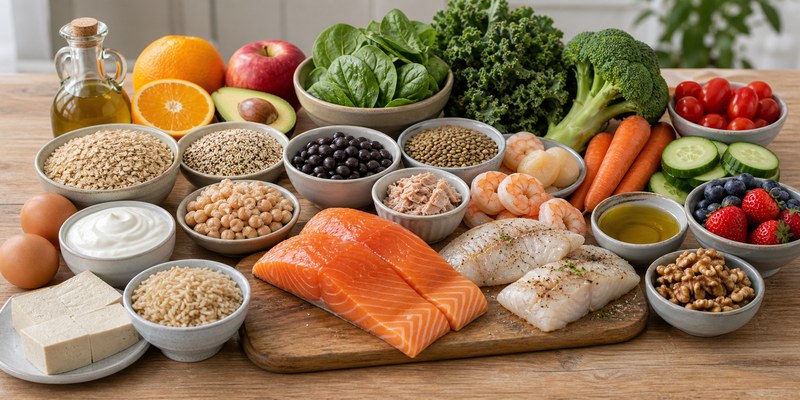
These 51 pescatarian diet foods pair fish, shellfish, plants, eggs, and dairy with protein and omega-3 meal-planning recommendations.
Table of Contents
Pescatarian Fish-Counter Choices

When I plan more fish dinners, I slow down at the seafood counter. Salmon, cod, shrimp, and tins of sardines all look useful, but the price tags do not tell me which choice brings more omega-3 fat or enough protein for dinner.
I built this list of pescatarian diet foods so I can compare the catch before it reaches my cart. Each seafood pick has a practical protein or omega-3 number, while eggs, yogurt, beans, grains, and vegetables fill the meals when fish is not on the plate.
I use the American Heart Association fish and omega-3 guidance as my baseline, especially its advice to eat fish twice a week. I still vary the species and keep high-mercury choices limited. Pregnancy, allergies, and medication changes deserve advice from a doctor or registered dietitian. This is grocery guidance, not medical advice.
Key Takeaways
- Compare the catch: These pescatarian diet foods pair protein with practical omega-3 numbers.
- Vary seafood choices: Rotate salmon, sardines, trout, shellfish, and lean white fish through the week.
- Watch mercury: Keep shark, swordfish, king mackerel, and bigeye tuna off the everyday list.
51 Pescatarian Diet Foods With Omega-3 Numbers
Use this fish-forward grocery list to compare seafood with eggs, dairy, legumes, grains, and produce. The numbers make the strongest omega-3 choices easy to spot.
🌱
Whole Foods Grocery Shortcut
Stock fish, shellfish, beans, grains, produce, eggs, and plain dairy in one run.
| Food | Why It Helps | Pro Tip |
|---|---|---|
| #1. Salmon | About 1.5-2 g omega-3 plus roughly 22 g protein per 3-oz cooked fillet; the anchor of the whole plan. | Frozen fillets cook straight from the freezer and cost less than the fresh case. |
| #2. Sardines | About 1.3 g omega-3 and near 21 g protein per 3-oz tin, calcium from the soft bones included. | Tinned in olive oil over greens is a two-minute lunch; try them in a high-protein salmon salad rotation. |
| #3. Atlantic mackerel | About 1 g omega-3 with close to 20 g protein per 3-oz serving. | Grill hot and fast; its oil keeps the fillet from drying out. |
| #4. Rainbow trout | About 1 g omega-3 and roughly 20 g protein per 3-oz portion, low on the mercury scale. | Pan-sear skin-side down for a crisp finish in minutes. |
| #5. Herring | About 1.7 g omega-3 and near 20 g protein per 3-oz serving. | Pickled or smoked, it stretches a snack board without cooking. |
| #6. Anchovies | About 1.4 g omega-3 and roughly 24 g protein per 3-oz serving of the tinned fillets. | A little melts into pasta or dressing and disappears into savory depth. |
| #7. Albacore tuna | About 0.7 g omega-3 with near 25 g protein per 3-oz serving. | Higher mercury than light tuna, so cap it at one serving a week. |
| #8. Canned light tuna | About 0.2 g omega-3 and roughly 22 g protein per 3-oz serving, low-mercury. | The safe everyday tuna; mix with yogurt instead of mayo. |
| #9. Cod | About 0.2 g omega-3 and near 19 g protein per 3-oz fillet, mild and flaky. | Butter-baste in the pan; it collapses on an open grill. |
| #10. Pollock | About 0.5 g omega-3 with roughly 20 g protein per 3-oz serving. | The budget white fish behind most fish sticks; buy it plain. |
| #11. Halibut | About 0.5 g omega-3 and near 23 g protein per 3-oz portion. | Firm enough for skewers; do not overcook this lean steak. |
| #12. Tilapia | About 0.2 g omega-3 and roughly 21 g protein per 3-oz fillet. | Lean and cheap; season boldly since the fish stays mild. |
| #13. Shrimp | About 0.3 g omega-3 and near 20 g protein per 3-oz serving, nearly carb-free. | Buy raw and frozen, not pre-cooked; it sautés in three minutes. |
| #14. Scallops | About 0.3 g omega-3 with roughly 17 g protein per 3-oz serving. | Dry the surface hard before searing so they brown, not steam. |
| #15. Mussels | About 0.7 g omega-3 and near 20 g protein per 3-oz serving, plus iron. | Steam in white wine and garlic; discard any that stay shut. |
| #16. Clams | About 0.24 g omega-3 with roughly 22 g protein per 3-oz serving and heavy iron. | Canned clams turn a pantry into chowder in ten minutes. |
| #17. Oysters | About 0.5 g omega-3 and near 8 g protein per 3-oz serving, plus a full day of zinc. | Shuck fresh or buy tinned smoked for the same mineral hit. |
| #18. Crab | About 0.4 g omega-3 with roughly 17 g protein per 3-oz serving. | Buy pasteurized lump for salads; skip the sugary imitation sticks. |
| #19. Squid | About 0.5 g omega-3 and near 13 g protein per 3-oz serving. | Cook it 2 minutes or 40; anything between turns it to rubber. |
| #20. Eggs | About 6 g protein each and a cheap complete protein for a meat-free plate. | Hard-boil a batch on Sunday to rescue every rushed morning. |
| #21. Greek yogurt | About 17 g protein per plain whole-milk cup, with gut-friendly cultures. | Buy unsweetened and add your own fruit; flavored cups load sugar. |
| #22. Cottage cheese | About 14 g protein per half-cup with an easy savory-or-sweet swing. | Full-fat tastes less like diet food and keeps you full longer. |
| #23. Cheddar | About 7 g protein per ounce of aged block for meat-free depth. | Shred your own; pre-shredded carries anti-caking starch dust. |
| #24. Milk | About 8 g protein per cup, the simplest calcium base for smoothies. | Blend with berries and yogurt for a five-minute breakfast. |
| #25. Firm tofu | About 8 g complete plant protein per half-block, meatless and mild. | Press it, cube it, and crisp it in a very hot pan. |
| #26. Tempeh | About 17 g protein per 3-oz serving with a nutty, fermented bite. | Steam ten minutes before frying to soften any bitterness. |
| #27. Edamame | About 9 g protein per half-cup shelled, plus fiber. | Keep a freezer bag for instant snacks with flaky salt. |
| #28. Lentils | About 9 g protein and 8 g fiber per half-cup cooked. | One pot of lentil soup covers three unglamorous but reliable lunches. |
| #29. Black beans | About 8 g protein and 7 g fiber per half-cup cooked. | Rinse the canned kind to cut sodium by nearly half. |
| #30. Chickpeas | About 7 g protein per half-cup, roastable or blended into hummus. | Dry them well before roasting so they crisp instead of steam. |
| #31. Quinoa | About 8 g complete protein per cooked cup, a rare full-amino grain. | Rinse before cooking to wash off the bitter saponin coating. |
| #32. Walnuts | About 2.5 g plant omega-3 ALA per ounce, the top nut for it. | Toast in a dry pan to double the flavor before they hit a salad. |
| #33. Chia seeds | About 5 g omega-3 ALA per ounce, plus a wall of fiber. | Soak overnight with milk for a no-cook pudding breakfast. |
| #34. Ground flaxseed | About 1.6 g omega-3 ALA per tablespoon and a fiber workhorse. | Buy it ground; whole seeds pass straight through unused. |
| #35. Hemp hearts | About 1 g omega-3 ALA and 10 g protein per three tablespoons. | Shake over yogurt and salads like a low-effort protein dust. |
| #36. Spinach | About 3 g protein per cooked cup with iron and folate. | Baby leaves wilt into eggs, soups, and pans in seconds. |
| #37. Kale | About 3 g protein per cooked cup, dense with vitamins C and K. | Massage raw leaves with olive oil and salt to soften the chew. |
| #38. Broccoli | About 3 g protein per cup plus the fiber a fish plate can lack. | Roast at 425°F until the edges char for a different vegetable entirely. |
| #39. Brussels sprouts | About 3 g protein per cup with a sweet, roasted edge. | Halve and roast cut-side down for caramelized bottoms. |
| #40. Asparagus | About 3 g protein per cup and a fast-roasting spring side. | Snap the woody ends and finish with lemon, not hollandaise. |
| #41. Green peas | About 4 g protein per half-cup, a sweet freezer staple. | Stir frozen peas in at the end so they stay bright, not mushy. |
| #42. Avocado | About 3 g fiber per half plus the good fat that carries a salad. | Buy hard and ripen on the counter in a running rotation. |
| #43. Sweet potatoes | About 2 g protein per medium root, plus fiber and beta-carotene. | Roast a full tray at 425°F and reheat portions all week. |
| #44. Brown rice | About 5 g protein per cooked cup, a whole-grain plate base. | Batch-cook and freeze in one-cup portions for instant sides. |
| #45. Oats | About 5 g protein per half-cup dry, a steady fiber breakfast. | Steel-cut or rolled both work; skip the sugary instant packets. |
| #46. Whole-grain bread | About 4 g protein per two slices to carry an egg or tuna. | Look for at least 3 g of fiber per slice on the label. |
| #47. Tomatoes | About 1 g protein per cup with vitamin C and lycopene. | Roast a batch to concentrate the sweetness for sauces. |
| #48. Bell peppers | About 1 g protein per cup, plus more vitamin C than an orange. | Red and yellow run sweeter than green when raw. |
| #49. Cucumbers | About 1 g protein per cup, mostly water and cooling crunch. | The chip stand-in for dips that actually satisfies. |
| #50. Berries | About 4 g fiber per cup of raspberries for a low-sugar dessert. | Frozen mixed berries are cheaper and hold their nutrients. |
| #51. Lemons | Bright acid that makes seafood taste like more without salt. | Zest before juicing; the peel oils carry most of the flavor. |
Pescatarian Seafood List: Pinterest Pin
Save these pescatarian diet foods before your next seafood run, then use our Mediterranean tuna salad for an easy first lunch.
📌 Hover over this pin to save this post for later.

3-Day Pescatarian Seafood Meal Planner
These pescatarian diet foods cover three days while keeping seafood varied and plants visible. Our plant-based meal ideas fill the meals when fish is not on the plate.
| Meal | Day 1 | Day 2 | Day 3 |
|---|---|---|---|
| Breakfast | Eggs, spinach, whole-grain toast | Greek yogurt, berries, walnuts | Oats, milk, chia, and banana |
| Lunch | Lentil and brown-rice bowl | Tuna, white bean, and tomato salad | Chickpea wrap with peppers |
| Snack | Cottage cheese with berries | Edamame and an orange | Walnuts with plain yogurt |
| Dinner | Salmon, broccoli, and quinoa | Shrimp, vegetables, and brown rice | Cod, sweet potato, and kale |
| Daily pattern | Fatty fish once | Shellfish once | Lean white fish once |
Pescatarian Foods to Limit
The pescatarian diet foods above work best when high-mercury predators, deep-fried seafood, and sugary sides stay limited. Our prediabetes foods guide uses similar swaps.
1. High-Mercury Predator Fish
A 3-ounce serving of shark, swordfish, king mackerel, or bigeye tuna carries the highest mercury concern.
Swap: Salmon, sardines, trout, shrimp, or canned light tuna.
2. Deep-Fried Seafood
A restaurant portion can exceed 400 calories before fries, sauce, or sweet drinks enter the meal.
Swap: Baked, grilled, or pan-seared fish with a lower-carb side.
3. Breaded Frozen Fish Sticks
Some servings provide under 10 g fish protein while adding refined breading and sodium.
Swap: Plain frozen cod, pollock, haddock, or salmon fillets.
4. Heavy Cream Sauces
A half-cup sauce can add 20 g or more saturated fat and overwhelm a lean seafood plate.
Swap: Lemon, herbs, tomato sauce, yogurt sauce, or olive oil.
Pescatarian Seafood Shopping Tips
Shopping for pescatarian diet foods gets easier when the cart begins with two different seafood meals and enough plants for the rest. Our Mediterranean food list and vegetarian food guide add useful overlap.
- Choose two different seafood species each week instead of repeating one fish.
- Keep canned sardines, salmon, clams, or light tuna for quick shelf-stable meals.
- Buy frozen seafood confidently; much of it is flash-frozen close to the catch.
- Add eggs, yogurt, beans, tofu, and lentils for meals that do not need fish.
- Read breading, sodium, and sauce labels before assuming every seafood product is a strong choice.
FAQs
Quick answers to the questions people ask most about pescatarian diet foods.
1. How much fish should I eat a week?
Two servings of fatty fish a week is the standard target among pescatarian diet foods, and one serving runs about three ounces cooked. Lean on salmon, sardines, mackerel, or trout for the omega-3 EPA and DHA. On the off days, plant sources like walnuts, chia, and ground flax cover the gentler ALA form well enough.
2. Which fish has the most omega-3?
Cold-water fatty fish lead by a wide margin. A 3-oz salmon fillet carries roughly 1.5 to 2 grams, sardines about 1.3, and herring near 1.7, while lean white fish like cod and tilapia sit near 0.2. Among pescatarian diet foods, those oily fish are where the real EPA and DHA come from.
3. Can you get enough protein on pescatarian diet foods?
Protein is rarely the problem here. A 3-oz fish fillet brings about 20 grams, eggs add 6 apiece, Greek yogurt near 17 a cup, and beans, lentils, tofu, and quinoa stack more on top. The sample day above lands around 103 grams from seafood, dairy, and plants without a single serving of meat.
4. Are eggs and dairy allowed?
Eggs and dairy are welcome; a pescatarian plate is a vegetarian one with fish and seafood added, so pescatarian diet foods keep eggs, yogurt, milk, and cheese. Only meat and poultry come off the table. That pairing is what makes the plan easy to feed a mixed household without cooking two separate dinners.
5. Is shrimp and shellfish pescatarian?
Shellfish count fully. Shrimp, scallops, mussels, clams, oysters, and crab all sit among pescatarian diet foods alongside the finned fish. Most bring around 17 to 22 grams of protein per 3-oz serving, and oysters and clams also stack in serious iron and zinc. Keep an eye on allergies, though, since shellfish is a common one.
6. Should I worry about mercury?
Mercury matters most for big predator fish eaten often. Cap king mackerel, shark, swordfish, and bigeye tuna, and go easy on albacore. The everyday pescatarian diet foods; salmon, sardines, trout, light tuna, and shellfish; stay low, so variety keeps you safe. Pregnancy and young children call for tighter limits and a doctor’s input.
7. Do I need a fish oil supplement?
Most people hitting two fatty-fish meals weekly do not need one. Whole fish delivers protein and minerals a capsule skips entirely. If you rarely eat seafood, an algae-based EPA and DHA supplement suits the pescatarian diet foods approach and skips the fishy burp. Ask your doctor before adding any supplement to your routine.
Pescatarian Video: Choosing Seafood
Oldways explains how seafood fits a healthy eating pattern and reinforces the variety principle behind pescatarian diet foods.
Video credit: Oldways.
Conclusion: Your Pescatarian Diet Foods Plan

A pescatarian plate is not a fish-only plate. Seafood supplies the protein and marine omega-3 fats, while eggs, dairy, beans, grains, vegetables, fruit, nuts, and seeds complete the week.
- Book two fish meals: Start with salmon, sardines, trout, or another lower-mercury choice.
- Rotate the catch: Use fatty fish, shellfish, and lean white fish for variety.
- Build the rest from plants: Beans, grains, vegetables, and fruit keep the plate balanced.
Repeat that pattern with different species and simple sides instead of chasing a perfect menu. Our anti-inflammatory foods guide and high-protein salmon salad are natural next steps without making dinner complicated.