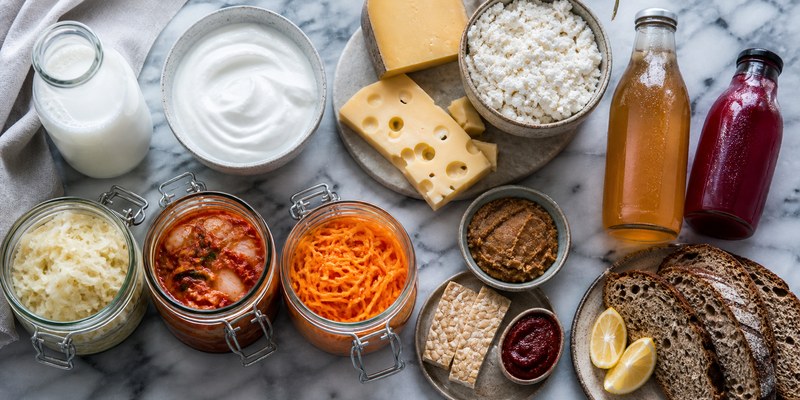
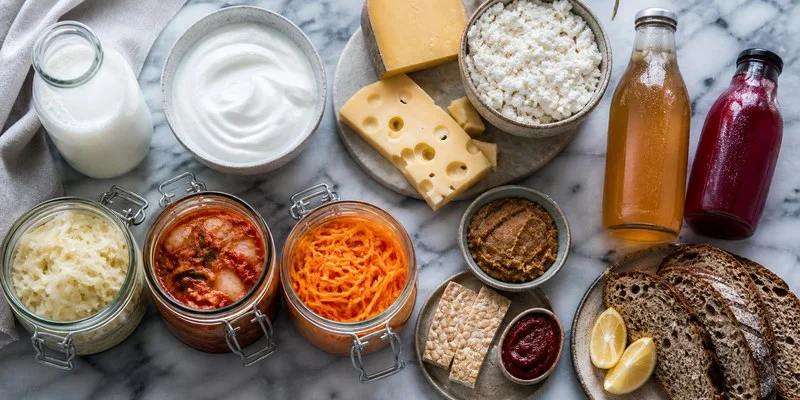
These 51 fermented foods to eat are sorted by where they sit in the store, with a live-culture note and a real number on every single pick.
In This Guide
Why the Cold Case Wins

My grocery store sells sauerkraut in two places: a can on a warm middle shelf and a jar in the refrigerated case three aisles away. I read both labels one afternoon, and only the cold one mentioned live cultures anywhere on the panel.
This list of fermented foods to eat is built around that one difference. Every pick carries a live-culture note and a real number for whatever it brings, whether that is protein, sodium, or sugar, so a spoonful of raw kraut counts and a pasteurized can does not.
Researchers at Stanford Medicine put 36 healthy adults on a 10-week fermented-food diet and watched gut microbe diversity climb while 19 inflammatory proteins in their blood fell, with the strongest effects coming from the larger servings. Talk with your clinician first if you are pregnant, immune-compromised, or taking immune-suppressing medicine. This is grocery guidance, not medical advice.
Key Takeaways
- The cold case comes first: Heat processing ends the live cultures, so refrigerated jars beat shelf-stable cans.
- Variety beats volume: Rotating fermented foods to eat across a week works better than one heroic scoop.
- Start at a tablespoon: A sensitive gut wants a small first serving and a slow build.
Video: Fermented Food Basics
A short walkthrough from a credible creator on where fermented foods to eat fit into an ordinary week of shopping and cooking, which lands better than a page of label rules about pasteurization.
📹 Video Credit: Dr Pal
Live-Culture Food List: Pinterest Pin
📌 Save this board of fermented foods to eat and all 51 picks ride along to the store in your pocket. Thanks for the pin.

10 Fermented Foods to Eat Every Week
These ten cover dairy, vegetables, soy, and drinks between them, which is close to the spread the Stanford volunteers were handed. Every one of them is sold refrigerated in an ordinary supermarket, and several land straight in my protein smoothie bowl without a second thought.
🌱
Whole Foods Grocery Shortcut
Kefir, plain Greek yogurt, raw sauerkraut, kimchi, miso, tempeh, kombucha, and cultured cottage cheese in one Whole Foods order.
- Plain kefir: about 12 strains of live bacteria and yeast per cup, the widest mix in the dairy case. Drink it cold and unsweetened, because the flavored bottles bury the tang under sugar.
- Plain Greek yogurt: about 15 g of protein per 3/4 cup, with the cultures concentrated by straining. Buy it plain and add the fruit yourself.
- Raw sauerkraut: about 460 mg of sodium per half cup, so treat it as a condiment rather than a side dish. It has to come from the refrigerated case to carry anything live.
- Kimchi: about 20 calories per 1/4 cup, which is almost nothing for that much flavor. Add it after the pan comes off the heat, never during.
- Miso paste: about 630 mg of sodium per tablespoon, so one spoon seasons a whole pot. Whisk it into broth once the burner is off.
- Tempeh: about 16.7 g of protein per 3 oz, the highest of any ferment on this page. Steam it for 10 minutes before frying and the bitter edge goes.
- Kombucha: about 8 g of sugar per 8 oz, which is worth checking bottle by bottle. Look for raw plus refrigeration, since plenty of shelf brands are pasteurized.
- Cultured cottage cheese: about 14.2 g of protein per half cup, but only some brands add cultures at all. It also carries my cottage cheese flatbread when a savory breakfast is the plan.
- Natto: about 370 mcg of vitamin K2 per 1/4 cup, far more than anything else here. Stir it hard for a minute, because the strings mean the culture is thriving.
- Brined dill pickles: about 4 calories in one spear, in the easiest ferment to actually enjoy. Look for a cloudy brine and no vinegar in the ingredients.
9 Cultured Dairy Picks With Live Bacteria
Cultured dairy is the easiest lane in the whole category, because the cultures are the reason the product exists rather than a bonus. The fermented foods to eat in this group all bring protein alongside the bacteria, and a spoonful of the thick ones works anywhere mayonnaise would, including my Mediterranean cucumber salad.
- Skyr: about 19.2 g of protein per 5.3 oz cup, strained thicker than Greek yogurt. It is milder too, which wins over anyone who finds yogurt too sour.
- Labneh: about 6.4 g of protein per 2 tablespoons of strained yogurt cheese. Spread it raw on toast, because baking it into a hot dip ends the cultures.
- Quark: about 14.5 g of protein per half cup of cultured fresh cheese. Use it as a lighter sour cream and nobody at the table notices.
- Cultured buttermilk: about 4.1 g of protein per half cup, in the thinnest form here. Check that the carton says cultured, since the acidified version never fermented.
- Aged cheddar: about 7.1 g of protein per 1 oz, with live bacteria surviving in raw-milk wedges. Look for both aged and raw milk on the label.
- Aged gouda: about 7.7 g of protein per 1 oz, and the flavor sharpens the longer the wheel sits. Grate it over roasted vegetables rather than melting it.
- Swiss cheese: about 7.9 g of protein per 1 oz, made by the same bacteria that put the holes in it. Slice it cold for lunch and skip the griddle.
- Creme fraiche: about 0.9 g of protein per 2 tablespoons, so this one is about flavor rather than nutrition. Stir it into soup off the heat.
- Aged blue cheese: about 6.1 g of protein per 1 oz, with mold cultures alongside the bacteria. Crumble it cold over greens, because heat cuts the live count.
8 Vegetables From the Refrigerated Case
Salt is what makes a lacto-ferment work, so every jar in this group carries sodium worth counting. These fermented foods to eat belong beside a meal rather than in the middle of it, and anyone already watching sodium should read my DASH diet food list before loading the plate.
- Curtido: about 210 mg of sodium per 1/4 cup of Salvadoran fermented cabbage slaw. Three days on the counter is usually enough, and it tops tacos beautifully.
- Fermented beets: about 175 mg of sodium per 1/4 cup, earthy and lightly sweet. Keep the pink brine for salad dressing instead of pouring it away.
- Fermented carrots: about 150 mg of sodium per 1/4 cup, the friendliest starting point in this group. Cut them into sticks, because the crunch survives a long ferment.
- Kkakdugi: about 290 mg of sodium per 1/4 cup of cubed radish kimchi. The cubes stay crisp for weeks, and the juice over rice is a two-minute side.
- Dilly beans: about 240 mg of sodium in five fermented green beans. The garlic clove in the jar ferments alongside them and turns mellow.
- Fermented cauliflower: about 195 mg of sodium per 1/4 cup, mild enough for anyone new to this. A pinch of turmeric in the brine turns the florets gold.
- Fermented jalapeños: about 115 mg of sodium per tablespoon, with the heat rounded off. Blend the whole jar into a sauce if raw peppers are too sharp.
- Fermented red onions: about 85 mg of sodium per tablespoon, the lightest jar here. Three days turns thin slices magenta and takes the raw bite away. If onions are a known trigger, my list of IBS foods to avoid explains why.
8 Pastes and Sauces That Season a Meal
This group is where the fermented foods to eat stop being a serving and start being a seasoning, which means the sodium numbers matter more than the culture count. A spoon of paste changes a whole pot, the way gochujang carries my turkey rice bowl on a weeknight.
- Doenjang: about 2.3 g of protein per tablespoon of Korean fermented soybean paste. Use it where miso goes and expect a deeper, funkier base for stew.
- Gochujang: about 1.1 g of protein per tablespoon of fermented chili paste. Refrigerate the tub after opening so the ferment stays slow and the flavor bright.
- Douchi: about 3.4 g of protein per tablespoon of fermented black soybeans. Rinse and mash them into a stir-fry, where very little goes a long way.
- Sufu: about 2.6 g of protein per tablespoon of fermented bean curd. It is intensely salty, so treat a cube as a condiment for rice or greens.
- Naturally brewed soy sauce: about 900 mg of sodium per tablespoon, from months of real fermentation. The chemically hydrolyzed bottles skip that step entirely.
- Tamari: about 1,005 mg of sodium per tablespoon, brewed with little or no wheat. Check the label if gluten is the reason you picked it up.
- Fish sauce: about 1,410 mg of sodium per tablespoon of long-fermented anchovy. It is fermented but not a probiotic, so reach for it to build savory depth. It shows up all over my pescatarian food list for the same reason.
- Fermented hot sauce: about 125 mg of sodium per teaspoon when the mash is bottled unheated. Ferment peppers for a week before blending, and skip it entirely if spice is a trigger, which my gastritis food list covers in detail.
8 Cultured Drinks Worth Pouring
Drinkable ferments were part of the Stanford menu, and they are the easiest way to add a serving without cooking anything. The catch is sugar, because a bottle can carry as much as a soda, and the acid in these fermented foods to eat can bother anyone prone to reflux, which my GERD food list deals with directly.
- Water kefir: about 4.4 g of sugar per cup, made with dairy-free grains and a light natural fizz. A second ferment with fruit juice softens the yeasty edge.
- Beet kvass: about 2.5 g of sugar per 4 oz, the driest pour on this page. Sip a small glass rather than a pint, since the brine is potent.
- Bread kvass: about 11 g of sugar per 8 oz of fermented rye drink. Pick a cloudy, lightly fizzy bottle, because a clear one is usually flavored soda.
- Tepache: about 13 g of sugar per 8 oz, fermented from pineapple rinds you would otherwise bin. Three days on the counter turns scraps into a spiced cooler.
- Jun tea: about 6 g of sugar per 8 oz, made from green tea and honey. Ferment it cooler than kombucha so the honey-fed cultures stay comfortable.
- Boza: about 18 g of sugar per half cup of fermented millet drink, the sweetest thing here. A small glass is a traditional Balkan breakfast, not a tumbler.
- Vegetable brine drink: about 320 mg of sodium per 2 oz shot of leftover kraut or pickle brine. This was on the Stanford menu, and it costs nothing.
- Salted lassi: about 5.5 g of protein per cup of cultured yogurt drink. Blend it with mint and salt rather than mango syrup and it stays savory.
8 Grains, Fruits, and Pantry Jars
This last group is the honest one, because several of these fermented foods to eat lose their live cultures to the oven or the steamer and are still worth buying. The long ferment changes the food itself, which is also the argument running through my list of foods that reduce inflammation.
- Whole grain sourdough: about 2.2 g of fiber per slice, with the cultures baked off. The long ferment still softens the blood sugar response compared with white bread.
- Injera: about 6.8 g of fiber in one piece of fermented teff flatbread. Let the batter sour for about three days, and the tang tells you it worked.
- Idli: about 3.9 g of protein in two steamed rice and lentil cakes. Ferment the batter overnight until it doubles, because that rise is the wild culture.
- Preserved lemons: about 65 mg of sodium in a rinsed quarter, salt-fermented for weeks. Mince only the peel into grain bowls, since the flesh is far too salty.
- Umeboshi: about 250 mg of sodium in one small salt-fermented plum. Tuck it into rice, where a single piece seasons the entire bowl.
- Fermented salsa: about 55 mg of sodium per 2 tablespoons of lacto-fermented tomato and onion. Two days on the counter makes it brighter, and it outlasts fresh pico by a week.
- Raw apple cider vinegar: about 3 calories per tablespoon, with the cloudy mother still in the bottle. Dilute it in water, because straight acid is hard on tooth enamel. It also dresses my Mediterranean tuna salad without any mayonnaise.
- Honey-fermented garlic: about 5.8 g of sugar per teaspoon, with cloves mellowed by weeks in raw honey. Mash one into a dressing and the sharp raw bite is gone.
Starting Ferments Without the Bloat
The mistake almost everyone makes is buying four jars and eating all of them on a Monday. Here is how I would work fermented foods to eat into a week without spending it uncomfortable, and my gut reset guide covers the same ground at a slower pace.
- Open one new jar at a time: A single change tells you what agreed with you, and four at once tells you nothing at all.
- Measure the first serving at a tablespoon: Build to a quarter cup over a fortnight rather than starting there on day one.
- Anchor two meals instead of one: Kefir or yogurt at breakfast and kraut or kimchi at dinner spreads the load across the day.
- Add the jar after the heat: Miso, kimchi, and creme fraiche all go in once the burner is off, or the cultures are gone.
- Count the sodium in the condiments: Three fermented sides on one plate can quietly outrank the main course for salt.
Recommended Fermenting Cookbook
A cookbook is what turns fermented foods to eat from a shopping list into jars on your own counter, which is far cheaper than buying every one of them. My roundup of the best IBS cookbooks covers the gentler end of that shelf if your gut is the reason you are here.
🍳 The Companion Cookbook

FAQs
The questions I hear most about fermented foods to eat.
1. How much cultured food do you need in a day?
Two to four small servings spread across the day beat one large scoop at dinner. The Stanford volunteers who saw the biggest change in microbe diversity were the ones eating the larger daily amounts, so more does appear to matter. Start low, watch what your gut does for a week, then build up slowly from there.
2. Are store-bought jars still full of live bacteria?
Only the refrigerated, unpasteurized ones are. Heat processing for a stable shelf ends the bacteria, which is why the fermented foods to eat on this page sit in the cold case. Scan the label for raw or live active cultures, skip the shelf-stable cans, and read a cloudy brine as a good sign.
3. Which fermented foods to eat carry the most cultures?
Kefir, natto, and raw sauerkraut sit at the top, with kefir carrying about a dozen strains of bacteria and yeast in a single cup. Buy them raw and refrigerated, eat them cold, and rotate several kinds through the week so your gut meets a wider mix rather than one repeat of the same jar.
4. What should you eat while taking antibiotics?
Lean on the varied, unpasteurized fermented foods to eat here, such as yogurt, kefir, raw kraut, and miso. Space each serving a couple of hours away from the dose so the drug is not working against it, and keep going for a fortnight past the final pill. Your prescriber can say whether that timing suits your course.
5. Can fermented foods to eat cause bloating or gas?
They can at first, particularly if you start big. Several of these jars are naturally high in FODMAPs, so a sensitive gut may protest for a week or two while it adjusts. Cut back to a tablespoon, and if the bloating sticks, check my low FODMAP food list before pushing the portion any higher.
6. Do probiotic pills replace the real thing?
Both have a place, but whole food brings more to the table than a capsule does. The fermented foods to eat here carry live cultures plus protein, fiber, and salt you can taste, and the Stanford arm eating whole ferments is the one where inflammatory markers dropped. Use a supplement as a backup on travel weeks.
7. Are fermented foods to eat safe during pregnancy?
Pasteurized yogurt and cooked miso are generally considered fine, but raw, unpasteurized jars genuinely need a clinician’s sign-off first. Skip anything made with unpasteurized milk, go easy on the very salty and the lightly alcoholic ones, and let your own prenatal team make the final call here. Kombucha and kvass both fall in that last group.
Fermented Foods to Eat: The Bottom Line

Nothing on this page is a cure, and a gut that has been unhappy for years will not turn around on one jar. What these picks do is make a small daily serving easy to repeat.
- Shop the cold case only: If the jar sat on a warm shelf, buy it for flavor and expect nothing living inside.
- Keep three kinds in the fridge: One dairy, one vegetable, and one drink covers more ground than three tubs of yogurt.
- Watch the salt, not the servings: Sodium is the limit that actually bites on this list, long before culture counts do.
If a capsule is easier than a jar on a given week, my roundup of the best probiotics for IBS covers what to look for on a label, and if you want the broader anti-inflammatory pattern to build all this into, my Mediterranean diet food list is the natural next basket. Pick two jars and hold them for a month.