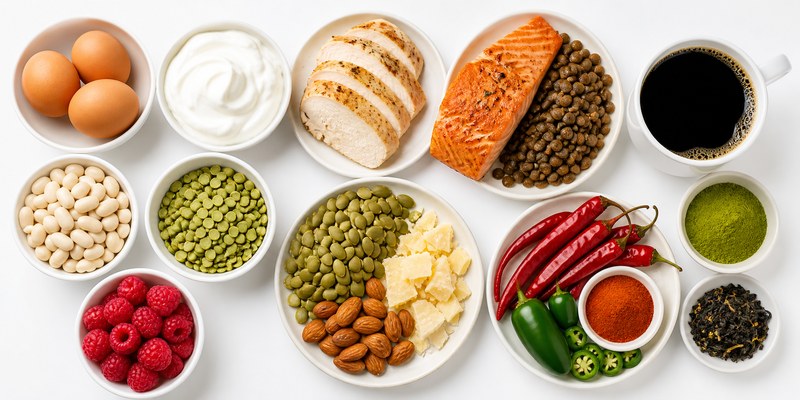
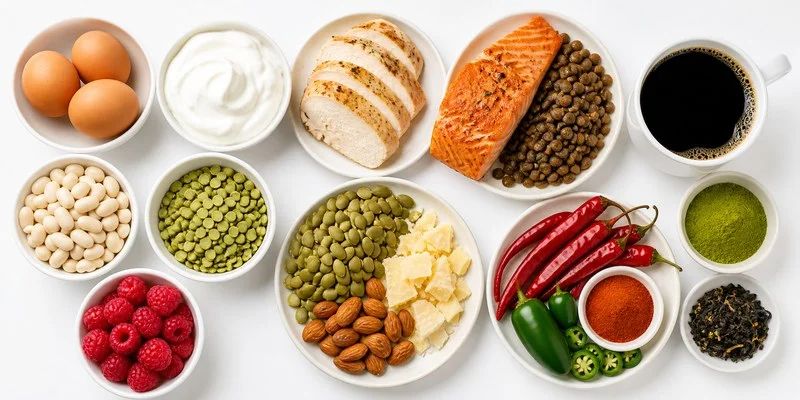
These 51 foods that boost metabolism are sorted by the lever each one pulls, with a real number on every pick so nothing here is guesswork.
In This Guide
The Fast Metabolism Myth

Every January my grocery store builds a display of metabolism teas and powders right inside the front doors. I turned four boxes over and read the panels, and every one of them listed a spice I already had sitting in the cupboard.
This list of foods that boost metabolism is the version that starts in the produce aisle instead of at that display. Every pick carries a real number for whatever does the work in it, whether that is protein, fiber, or caffeine, and the list is honest about how small some of those effects are.
The staff at Mayo Clinic make the point plainly: a slow metabolism is not usually what causes weight gain, only about 10 percent of the calories you eat go toward digesting them, and muscle mass is the single biggest thing driving your resting rate. Talk with your clinician before changing how you eat if you take thyroid, diabetes, or blood pressure medicine. This is grocery guidance, not medical advice.
Key Takeaways
- Protein is the whole game: It costs the most to break down and protects the muscle you have.
- The effects are small: No plate of foods that boost metabolism outperforms a workout.
- Muscle sets the floor: Feed it and lift twice a week, because that number drives everything else.
Video: Metabolism and Nutrition Basics
A short walkthrough from a credible creator on where foods that boost metabolism fit into an ordinary week of shopping and cooking, which is easier to follow than a page of numbers about resting rates.
📹 Video Credit: Dr. Boz
Metabolism Food List: Pinterest Pin
📌 Pin this board of foods that boost metabolism and the whole list of 51 rides along in your pocket. The save is much appreciated.

10 Foods That Boost Metabolism Every Day
These ten cover protein, fiber, and caffeine between them, so one of them changes a meal more than the entire display of powders I read the labels on. If blood sugar is the reason you landed here, my post on foods to eat for insulin resistance is the closer fit.
🌱
Whole Foods Grocery Shortcut
Eggs, Greek yogurt, chicken breast, lentils, rolled oats, almonds, cottage cheese, and salmon in one Whole Foods order.
- Eggs: about 12.6 g of protein in two large ones, in the cheapest complete protein on the shelf. They anchor my egg toast when breakfast has about four minutes to happen.
- Plain Greek yogurt: about 17.3 g of protein per 6 oz cup, roughly double what regular yogurt carries. It is also the base of my protein smoothie bowl.
- Chicken breast: about 26.7 g of protein per 3 oz cooked, which clears a full meal target in one portion. Shred a batch cold into my chicken avocado salad and lunch is handled.
- Lentils: about 17.9 g of protein per cooked cup, with a large helping of fiber in the same spoonful. Red ones cook down in 20 minutes with no soaking.
- Rolled oats: about 5.3 g of protein per half cup dry, which is more than most people expect from a grain. Cook them in milk rather than water and the number climbs.
- Black coffee: about 95 mg of caffeine per 8 oz cup, the largest single dose most people take in a day. The effect on calorie burning is real and modest, so treat it as a small bonus.
- Green tea: about 28 mg of caffeine per 8 oz cup, alongside the catechins it is studied for. Steep it for two minutes at a shade under boiling so it does not turn bitter.
- Almonds: about 6.1 g of protein per 1 oz, in the most portable form on this page. A handful is a portion, and the bag is not.
- Cottage cheese: about 14 g of protein per half cup, and it takes sweet or savory equally well. The low fat version keeps the protein and drops the rest.
- Salmon: about 22.1 g of protein per 3 oz fillet, with omega-3 fat riding along. Frozen fillets bake from solid in 20 minutes at 400F.
9 High-Protein Picks That Cost the Most to Digest
Protein is the strongest of the foods that boost metabolism, because breaking it down burns a larger share of its own calories than carbohydrate or fat does. Roughly 25 to 30 g at a sitting is the range I aim for, which is the same target my post on foods to eat on Zepbound and Mounjaro is built around.
- Canned tuna in water: about 20.1 g of protein per 3 oz drained, at the lowest effort of anything here. It carries my Mediterranean tuna salad with olive oil instead of mayonnaise.
- Turkey breast: about 25.6 g of protein per 3 oz cooked, with less fat than chicken thigh. It is the base of my turkey rice bowl on a weeknight.
- Lean ground beef, 93 percent: about 22.6 g of protein per 3 oz cooked, and it browns in one pan. Drain it anyway, because the label percentage is measured raw.
- Pork tenderloin: about 23.9 g of protein per 3 oz cooked, the leanest cut in the pork case. Roast it to 145F and let it rest, or it goes dry fast.
- Shrimp: about 20.4 g of protein per 3 oz, ready in the time it takes to boil water. Frozen raw shrimp thaw under cold running water in five minutes.
- Skyr: about 19.3 g of protein per 5.3 oz cup, strained thicker than Greek yogurt. Look for live active cultures on the label, since not every brand keeps them.
- Tempeh: about 19.9 g of protein per 3 oz, and it holds a marinade better than tofu. Steam it for 10 minutes first to take the bitter edge off.
- Edamame: about 18.5 g of protein per cooked cup, shelled. A frozen bag microwaves in four minutes and works as a snack straight from the bowl.
- Sardines: about 22.7 g of protein per 3.75 oz tin, bones and all for the calcium. The ones packed in olive oil taste better than the water pack.
8 Muscle-Supporting Foods That Protect Resting Burn
Muscle mass is the single largest thing setting your resting rate, so the foods that boost metabolism over years are the ones that keep muscle on you while you lose fat. Two seafood meals a week covers a good share of that, which is the rhythm my pescatarian food list is built on.
- Lean sirloin steak: about 25.8 g of protein per 3 oz cooked, with the iron and B12 attached. Slice it against the grain and a smaller portion goes further.
- Cod: about 19.4 g of protein per 3 oz, at almost no fat. It takes any seasoning you give it, which is the point of a blank fish.
- Firm tofu: about 21.8 g of protein per cup, cubed. Press it between two plates for 20 minutes and it browns instead of steaming.
- Low fat milk: about 8.2 g of protein per cup, in the easiest form to drink. Use it in oatmeal and coffee and the day picks up 15 g without a decision.
- Parmesan cheese: about 10.1 g of protein per 1 oz, the densest cheese in the case. A grated tablespoon over vegetables makes them worth eating.
- Pumpkin seeds: about 8.6 g of protein per 1 oz, the highest of any seed in the bin. Buy them raw and toast them in a dry pan for two minutes.
- Black beans: about 15.2 g of protein per cooked cup, with fermentable fiber alongside. They fill my California burrito bowl without any meat at all.
- Quinoa: about 8.1 g of protein per cooked cup, and it carries all nine essential amino acids. Rinse it before cooking or the coating tastes soapy.
8 High-Fiber Foods the Gut Works Hardest On
Fiber passes through partly undigested, so a high-fiber plate delivers fewer usable calories than its label suggests and keeps you full for longer. These foods that boost metabolism work by that route rather than by any change to your resting rate, and they overlap heavily with my DASH diet food list.
- Navy beans: about 19.1 g of fiber per cooked cup, the highest number on this page for one bowl. Half a cup is a sensible first serving.
- Split peas: about 16.3 g of fiber per cooked cup, and they break down into soup with nothing but time. No soaking required.
- Chickpeas: about 12.5 g of fiber per cooked cup. They scatter over my Mediterranean power salad and turn it into an actual meal.
- Chia seeds: about 9.8 g of fiber per 2 tablespoons, much of it the soluble kind that gels. Stir them into yogurt the night before and it thickens by morning.
- Raspberries: about 8 g of fiber per cup, the most of any common fruit. Frozen ones cost less and work fine stirred into oats.
- Pearled barley: about 6 g of fiber per cooked cup, and it holds its bite. Cook it in stock and it works as a rice swap.
- Broccoli: about 5.1 g of fiber per cooked cup, with a useful amount of protein for a vegetable. Roast the florets dry at 425F so they brown instead of steaming.
- Sweet potato with the skin on: about 3.8 g of fiber in a medium one. Bake it whole and eat the skin, where a good share of that sits.
8 Drinks and Spices With a Small Measured Effect
This group is where most of the marketing lives, so it is the group to read carefully. Caffeine and capsaicin both nudge calorie burning upward for a short window, but the size of it is nothing like the protein effect, and none of these foods that boost metabolism belong in the same sentence as a workout. The picks here also show up on my MIND diet food list.
- Yerba mate: about 85 mg of caffeine per 8 oz cup, between coffee and tea in strength. It brews bitter if the water is fully boiling, so let it sit a minute first.
- Matcha: about 70 mg of caffeine per teaspoon of powder, because you drink the whole leaf. Whisk it into hot water rather than stirring, or it clumps.
- Espresso: about 63 mg of caffeine per 1 oz shot, which is less per cup than drip coffee despite the reputation. One shot in hot water makes an americano.
- Black tea: about 47 mg of caffeine per 8 oz cup, and it holds up to milk. Steep it three minutes, then pull the bag before the tannins take over.
- Oolong tea: about 38 mg of caffeine per 8 oz cup, sitting between green and black in both flavor and strength. The same leaves take three or four steeps.
- Unsweetened cocoa powder: about 12 mg of caffeine per tablespoon, plus the flavanols it is studied for. Stir it into oats or yogurt rather than buying a sweetened mix.
- Cayenne pepper: about 1.5 g of fiber per tablespoon, and the capsaicin that gives it heat is what the research looks at. A quarter teaspoon is plenty in a pot of chili.
- Fresh jalapeño: about 1.1 g of fiber in a medium pepper, with the same capsaicin in a milder form. Leave the seeds in if you want the heat and take them out if you do not.
8 Everyday Produce and Pantry Swaps Worth Making
This last group is the volume layer, and it earns a place among the foods that boost metabolism by filling the plate for very little in return. Every one of them also appears on my flexitarian food list, which is convenient if you are cutting back on meat rather than adding to it.
- Green peas: about 8.4 g of protein per cooked cup, which is unusual for something in the freezer aisle. They go straight from frozen into a hot pan.
- Artichoke: about 6.9 g of fiber in a medium one, and it feeds gut bacteria particularly well. The jarred hearts in water save half an hour of trimming.
- Avocado: about 6.7 g of fiber in half a fruit, with monounsaturated fat attached. Half is a portion, and the other half keeps overnight with the pit left in.
- Spinach: about 5.2 g of protein per cooked cup, which surprises most people. A full bag cooks down to about one cup, so buy more than looks reasonable.
- Brussels sprouts: about 4 g of fiber per cooked cup. Roast them halved and cut side down so they brown rather than steam.
- Mushrooms: about 3.4 g of protein per cooked cup, and they take on whatever is in the pan. Cook them dry first, then add the fat once the water has gone.
- Asparagus: about 2.9 g of protein per cooked cup, and it roasts in 12 minutes. Snap the woody ends rather than cutting them, since the stalk breaks where it should.
- Whole grain rye bread: about 1.9 g of fiber per slice, and it keeps you fuller than white bread does. Check that whole grain flour leads the ingredient list.
Building a Day That Protects the Burn
Groceries are only half of it, because the muscle that sets your resting rate is built by what you lift and kept by what you eat. Here is how I would put the foods that boost metabolism to work across an ordinary day, and my 7-day meal plan lays the eating half out meal by meal.
- Anchor every meal at 25 to 30 g of protein: Spreading it across the day beats stacking it all into dinner, which is where most people put it.
- Lift twice a week, every major muscle group: One set to the point where the muscle tires at about 12 to 15 repetitions is enough to hold the line.
- Bank 150 minutes of moderate activity: A brisk 30 minute walk five days a week gets you there, and 300 minutes does more.
- Count the movement that is not exercise: Housework, gardening, pacing, and fidgeting add up to somewhere between 100 and 800 calories a day.
- Skip the booster products entirely: No agency requires proof that they work before they reach a shelf, and the money buys better groceries.
Recommended High-Protein Cookbook
A cookbook turns foods that boost metabolism into a week of actual dinners, which is where a good grocery list normally falls apart. My roundup of the best Mediterranean diet cookbooks covers the rest of that shelf in more detail.
🍳 The Companion Cookbook

FAQs
The questions I hear most about foods that boost metabolism.
1. Can you actually speed up your metabolism?
Not by much, and not with groceries alone. Your resting rate is set mostly by body size, muscle mass, sex, and age, and only about 10 percent of what you eat is spent on digesting it. The lever you can genuinely move is how much muscle you carry and how much you move.
2. How much of a difference does protein really make?
Protein costs more energy to break down than carbohydrate or fat, so a plate built around it spends a larger share of its own calories. The bigger win is that protein protects muscle while you lose weight, and muscle is what holds your resting rate up. That is why foods that boost metabolism start here.
3. Do foods that boost metabolism work if I skip breakfast?
Meal timing matters far less than the daily total, so a skipped morning meal is not a problem on its own. What tends to go wrong is protein, because most people who skip breakfast never make up the gap later in the day. If you eat only twice in a day, aim higher at both sittings.
4. Does drinking cold water burn extra calories?
The effect is real and very small. Warming a glass of cold water to body temperature costs a handful of calories, nowhere near enough to show up on a scale. Drink it because it helps with fullness and because fiber needs fluid to work, not because it belongs beside foods that boost metabolism.
5. Which foods that boost metabolism should I add first?
Start at breakfast, because it is the meal most people leave lightest on protein. Two eggs, a cup of plain Greek yogurt, or a bowl of cottage cheese lands the first change before the day gets complicated. Hold that pattern for a week, then add a second protein anchor at lunch rather than rebuilding everything.
6. Do metabolism booster supplements do anything?
Mayo Clinic is blunt about this. Products that claim to speed calorie burning seldom live up to the claim, some carry real side effects, and no agency requires proof that they are safe or that they work before they reach a shelf. Groceries are the better bet, and foods that boost metabolism cost less.
7. How do foods that boost metabolism change after 50?
The grocery list does not change, but the protein target matters more. Muscle is lost with age, more of the body weight becomes fat, and calorie burning slows with it. Keeping protein high at every meal and lifting something heavy twice a week is how you flatten that curve. The groceries stay exactly the same.
Foods That Boost Metabolism: The Bottom Line

Nothing here rebuilds your resting rate on its own, and any list promising otherwise is selling something. These picks make the protein target easy to hit.
- Build every plate around protein: Roughly 25 to 30 g at a sitting is the range that does the most work.
- Treat caffeine and heat as a rounding error: Enjoy them, but do not count on them for anything you can measure.
- Feed the muscle you are trying to keep: Protein plus two lifting sessions a week protects the number underneath everything else.
If the eating window rather than the shopping list is what you want to change next, my guide to intermittent fasting for weight loss covers the schedules people stick to, and my list of the best foods to break a fast handles the meal after. Pick three swaps and hold them for a month.