
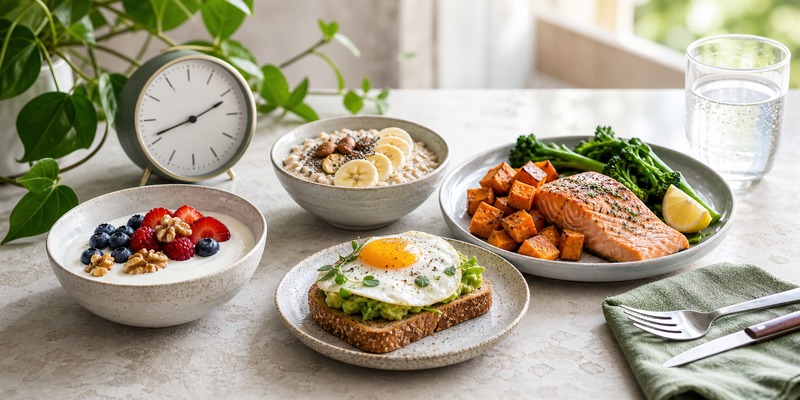
The best foods to break an intermittent fast simplify a balanced first meal without rituals or overcomplicated guesswork.
Table of Contents
Make the First Meal Count

A fasting schedule gets complicated the moment lunch arrives. People assume they need a special ritual, then either pick at a too-small spoonful of yogurt or dive at the biggest plate in reach.
This list of the best foods to break an intermittent fast keeps the decision simple. Each idea pairs protein, produce, fiber-rich carbohydrate, or unsaturated fat, so the first plate lands like a real meal instead of a test of willpower.
Johns Hopkins Medicine emphasizes nutritious foods during the eating window. After an ordinary 14- to 18-hour fast, most adults can eat a balanced meal. Prolonged fasting, malnutrition, diabetes medication, pregnancy, and eating-disorder history belong in a clinician-guided lane.
Key Takeaways
- Build a meal: The best foods to break an intermittent fast combine protein, plants, and satisfying energy.
- Start normally: A routine overnight fast does not require a medical refeeding protocol.
- Match your needs: Portions, timing, medications, and tolerance matter more than a universal menu.
17 Best Foods to Break an Intermittent Fast
Use these ideas as flexible meal templates. Typical nutrition numbers vary by brand, portion, and preparation.
🌱
Grocery Shortcut
Stock eggs, yogurt, oats, whole grains, produce, beans, fish, and simple proteins in one run.
| Food | Why It Helps | Pro Tip |
|---|---|---|
| #1. Plain Greek yogurt, berries, and walnuts | A 3/4-cup serving can provide about 15 g protein, while berries and walnuts add fiber and unsaturated fat. | Choose 1 tub with no more than 6 g added sugar, then portion the nuts before eating. |
| #2. Eggs on whole-grain toast | Two eggs provide roughly 12 g protein, and one slice of whole-grain toast adds a familiar carbohydrate base. | Try our egg toast recipe; add 1 handful of spinach or tomatoes. |
| #3. Oatmeal with banana and chia | One cooked cup supplies soluble fiber, while 1 tablespoon chia adds texture and about 5 g more fiber. | Cook plain oats in 5 minutes, then add cinnamon instead of turning breakfast into dessert. |
| #4. Salmon, sweet potato, and greens | A 4-ounce salmon fillet delivers about 23 g protein plus omega-3 fats, with colorful vegetables alongside. | Roast 2 portions together so tomorrow’s first meal is already handled. |
| #5. Chicken quinoa bowl | Four ounces chicken offers about 30 g protein, and 1/2 cup quinoa adds carbohydrate and fiber. | Use 3 colors of vegetables and a lemon-olive-oil dressing for an easy bowl. |
| #6. Lentil vegetable soup | One cup cooked lentils contains about 18 g protein and 15 g fiber before the vegetables even join in. | Start with 1 bowl, eat slowly, and freeze the other servings for busy days. |
| #7. Cottage cheese and fruit | One cup cottage cheese can provide about 25 g protein, while fruit contributes carbohydrate, water, and fiber. | Check 2 labels for sodium and added sugar; plain usually makes the better base. |
| #8. Avocado toast with egg | Half an avocado contributes fiber and unsaturated fat, while 1 egg adds protein and staying power. | Use 1 slice of sturdy whole-grain bread so the toppings outweigh the bread. |
| #9. Banana oat pancakes with yogurt | Oats, egg, and banana create a balanced base; yogurt can lift the plate above 20 g protein. | Make our banana oat pancakes and freeze a 2-pancake portion. |
| #10. Tuna salad and whole-grain crackers | A 5-ounce can of tuna offers around 25 g protein, while crunchy vegetables bring volume and texture. | See our Mediterranean tuna salad; keep crackers to 1 measured serving. |
| #11. Tofu vegetable rice bowl | Half a block of firm tofu supplies roughly 20 g protein, paired with rice and vegetables for balance. | Press tofu for 15 minutes, then crisp the cubes while 1 cup vegetables cooks. |
| #12. Turkey taco lettuce cups | Four ounces lean turkey contributes about 22 g protein, with beans or corn adding carbohydrate if desired. | Use our turkey taco lettuce cups; plan 3 cups per plate. |
| #13. Protein smoothie bowl | A bowl built with yogurt or milk can deliver 20 g protein, plus fruit and seeds for fiber. | Follow our protein smoothie bowl and eat it with a spoon over 10 minutes. |
| #14. Hummus, vegetables, and whole-grain pita | Four tablespoons hummus supply about 4 g protein and fiber, while vegetables and pita make it meal-sized. | Add 2 boiled eggs or 3 ounces chicken when you need a stronger protein anchor. |
| #15. Greek salad bowl with chicken | Three ounces chicken provide about 22 g protein, and the vegetables, beans, and olive oil round out the plate. | Try our Greek salad bowl; measure 1 tablespoon dressing first. |
| #16. Chia pudding with berries | Two tablespoons chia contain about 10 g fiber, while milk and yogurt can contribute meaningful protein. | Mix it 8 hours ahead and add berries at serving so they stay bright. |
| #17. Bean, brown rice, and salsa bowl | Half a cup black beans adds about 7 g protein and fiber, paired with rice for a practical pantry meal. | Rinse canned beans for 20 seconds, then add cabbage, salsa, and avocado. |
Break-Fast Foods: Pinterest Pin
Save this best foods to break an intermittent fast list before the next grocery run.
📌 Hover over this pin to save this post for later.

3-Day Best Foods to Break an Intermittent Fast Meal Planner
Each day uses a protein anchor, plants, and a satisfying carbohydrate. Adjust portions and the eating window to your needs.
| Day | First meal | Later meal |
|---|---|---|
| Day 1 | 12 p.m.: Greek yogurt, berries, walnuts | 6 p.m.: Salmon, sweet potato, greens |
| Day 2 | 11 a.m.: Eggs, whole-grain toast, fruit | 5:30 p.m.: Chicken quinoa bowl |
| Day 3 | 1 p.m.: Lentil vegetable soup, pita | 7 p.m.: Tuna salad and crackers |
Break-Fast Foods to Limit
The best foods to break an intermittent fast need no dramatic rules, but these first-meal swaps make balance easier. Our full guide covers more foods to avoid while intermittent fasting.
1. Sugary drink alone
A drink by itself leaves the first meal with zero planned protein or produce.
Swap: Choose water plus a meal with protein and produce.
2. Oversized fried combo
One oversized combo can replace the balanced plate you meant to build.
Swap: Pick grilled protein, vegetables, and one satisfying side.
3. Dessert-style breakfast
A dessert-style breakfast can pack two sweet foods into one first meal.
Swap: Try plain oats or yogurt with fruit and nuts.
4. Alcohol as the opener
One drink before food can hit differently after 14 to 18 hours without a meal.
Swap: Eat first, hydrate, and follow your clinician’s guidance.
Best Foods to Break an Intermittent Fast Shopping Tips
- Pick three proteins: Eggs, yogurt, fish, poultry, tofu, or beans prevent a one-food cart.
- Buy two fast produce options: Frozen vegetables and prewashed greens remove prep friction.
- Keep one whole grain ready: Oats, brown rice, quinoa, or whole-grain bread cover several meals.
- Choose plain bases: Add fruit and seasoning yourself instead of buying dessert-level yogurt or oats.
- Plan one freezer backup: Soup, cooked grains, or a frozen portion protects the schedule on a rushed day.
FAQs
These reader questions put the best foods to break an intermittent fast into everyday situations without turning a flexible meal into a rigid medical rule.
1. Do I need to eat something tiny after a 16-hour fast?
After a routine overnight schedule, adults can start with a normal balanced meal rather than a ceremonial bite. The best foods to break an intermittent fast include protein, produce, fiber-rich carbohydrate, or unsaturated fat. Eat at a comfortable pace, stop when satisfied, and get individualized advice if medication, pregnancy, illness, or eating-disorder history changes the picture.
2. Is fruit a good first food during the eating window?
Fruit can fit well when paired with yogurt, cottage cheese, eggs, nuts, or protein. That pairing makes the best foods to break an intermittent fast feel like a meal instead of a quick sugar hit. Whole fruit also brings water and fiber. Choose portions and varieties you enjoy and tolerate, rather than hunting for one perfect fruit.
3. What are the best foods to break an intermittent fast?
Balanced combinations are the practical winners: Greek yogurt with berries and walnuts, eggs on whole-grain toast, lentil soup, salmon with vegetables, or a chicken quinoa bowl. Each includes a protein anchor plus plants and satisfying energy. There is no mandatory first ingredient after an ordinary 16-hour schedule, so use taste, tolerance, budget, and medical needs to decide.
4. Should I avoid carbohydrates when I end a fast?
Carbohydrates do not need an automatic ban. Oats, beans, fruit, sweet potato, brown rice, and whole-grain bread can appear among the best foods to break an intermittent fast. Pair them with protein and produce, and choose a portion matching your goals. People using glucose-lowering medication should discuss fasting schedules and meals with their clinician first.
5. Can coffee be part of my first meal?
Coffee can accompany the best foods to break an intermittent fast if caffeine agrees with you, but it does not replace water or a balanced plate. Watch creamers, syrups, and oversized specialty drinks that turn coffee into dessert. If caffeine on an empty stomach causes jitters, reflux, or nausea, have it with food or choose decaf instead.
6. What if a large first meal makes me uncomfortable?
Reduce the portion, slow the pace, and choose a simpler combination such as yogurt and fruit, eggs and toast, or soup with protein. The best foods to break an intermittent fast should fit your tolerance, not test it. Persistent pain, vomiting, faintness, or repeated symptoms deserve medical attention, especially when fasting is prolonged or illness is involved.
7. Is breaking a fast the same as medical refeeding?
A usual time-restricted eating window is not the same as refeeding after prolonged starvation or severe malnutrition. The best foods to break an intermittent fast here assume an ordinary overnight pattern. People who have gone many days without adequate nutrition, lost weight unexpectedly, or have relevant medical risks need clinician-supervised refeeding rather than internet meal advice.
Best Foods to Break an Intermittent Fast Resources
Break-Fast Foods Video
Johns Hopkins dietitian Christie Williams explains time-restricted eating and how the best foods to break an intermittent fast fit the eating window.
Your Best Foods to Break an Intermittent Fast Plan

Start with the pattern, not a perfect ingredient: choose a protein, add a fruit or vegetable, include a fiber-rich carbohydrate when it suits you, and use a satisfying fat. That formula turns a fasting endpoint into an ordinary meal you can repeat.
The strongest options are the ones you tolerate, enjoy, and can keep stocked. Our intermittent fasting cookbook guide can add more meal ideas, while our list of foods for weight loss offers another way to build a balanced cart.
If you are considering targeted hydration or nutrient backup, compare our best supplements for intermittent fasting first.
For a full weekly rhythm, use our guide to starting intermittent fasting for weight loss.
Keep the first attempt simple, eat at a comfortable pace, and notice how the meal fits your energy and schedule. If fasting causes dizziness, repeated overeating, medication problems, or anxiety around food, step back and talk with a qualified clinician.
