
Table of Contents
Intermittent Fasting for Weight Loss, Without the Guesswork

I’ve tried intermittent fasting more times than I can count, and the early attempts failed for one dumb reason: I made it complicated. Intermittent fasting for weight loss starts with the easy part: pick an eating window and stop treating it like a dare.
Fasting doesn’t burn fat by itself; it just hands you fewer hours to overeat, which usually means fewer calories without counting a single one. Johns Hopkins Medicine calls time-restricted eating a workable approach, but they’re clear that what goes in the window still decides the result.
An early scale change can include water weight as well as body fat, so do not treat the first week as a promise. If you’re pregnant, on medication, managing diabetes, or have a history of disordered eating, talk to your doctor first, not a blog.
Key Takeaways
- Pick a window: Start with 16:8, then move the eight-hour eating period around your real day.
- Build meals around protein: Use two balanced meals and one optional bridge instead of grazing.
- Watch the trend: Early water-weight changes can motivate you, but lasting fat loss still takes a calorie deficit.
How to Start in 5 Steps
- Pick an eight-hour eating window: A noon-to-8 p.m. 16:8 schedule is an easy default, but 10 a.m. to 6 p.m. works just as well when it fits work, sleep, medication instructions, and family meals better.
- Close the kitchen outside it: Finish calories when the window closes. Water is the default; plain tea or black coffee can fit if caffeine agrees with you. The point is a clean boundary, not a contest to tolerate discomfort.
- Build two balanced meals and one optional bridge: Put a useful protein serving, vegetables or fruit, a fiber-rich carbohydrate, and a satisfying fat on each main plate. Use the bridge only when hunger, training, or the gap between meals makes it useful.
- Hydrate before chasing products: Drink regularly across the day and pay attention to heat, exercise, and heavy sweating. Most people do not need a fasting stack. When restrictive intake or training creates a real gap, compare the best supplements for intermittent fasting one need at a time.
- Track energy and adjust: Give the schedule enough time to become routine, then judge hunger, sleep, training, mood, and meal quality. Move the window or shorten the fast if it causes dizziness, persistent fatigue, binges, anxiety, or medication trouble.
What a Typical Week Looks Like
A noon-to-8 p.m. day can be as simple as a first meal at noon, an optional bridge around 3:30, and dinner near 7. Move all three together when an earlier window fits better. When the window opens, the guide to the best foods to break an intermittent fast can help you build the first plate.
| Day | 12 p.m. first meal | 3:30 p.m. optional bridge | 7 p.m. later meal |
|---|---|---|---|
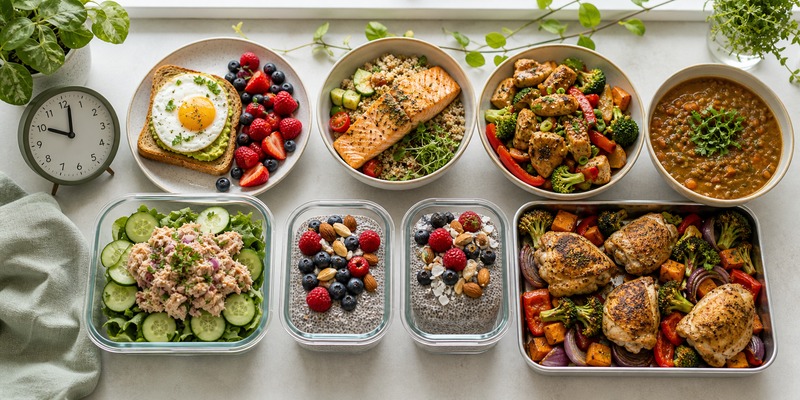
| Day 1 | Egg toast, berries | Yogurt, walnuts | Salmon quinoa bowl |
| Day 2 | Banana oat pancakes | Apple, peanut butter | Chicken stir-fry |
| Day 3 | Tuna cucumber salad | Cottage cheese, peach | Turkey taco cups |
| Day 4 | Lentil soup, toast | Hummus, vegetables | Tofu vegetable curry |
| Day 5 | Protein smoothie bowl | Pear, cheese | Chicken soup, flatbread |
| Day 6 | Avocado bean grain bowl | Kefir berry smoothie | Shrimp whole-wheat pasta |
| Day 7 | Mediterranean egg bowl | Chia pudding | Sheet-pan chicken dinner |
Seven Sample Days With 21 Meal Ideas
These are examples, not a prescription. Each day gives you a first meal, one optional bridge, and a later meal that can be shifted earlier or later without changing the basic pattern.
🌱
Meal-Planning Grocery Shortcut
Stock eggs, yogurt, oats, grains, beans, fish, poultry, vegetables, fruit, and nuts in one cart.
| Sample meal | Why It Helps | Practical Shortcut |
|---|---|---|
| #1. Day 1 first meal: egg toast and berries | Two eggs provide about 12 g protein, and whole-grain toast plus berries bring carbohydrate and fiber. | Use our egg toast recipe at noon; add 1 cup berries. |
| #2. Day 1 bridge: yogurt, walnuts, cinnamon | Three-quarter cup Greek yogurt can add 15 g protein, with walnuts contributing unsaturated fat. | Preportion 1 ounce walnuts so the bridge does not become open-bag grazing. |
| #3. Day 1 later meal: salmon quinoa bowl | Four ounces salmon offers about 23 g protein, paired with quinoa and vegetables for a complete bowl. | Cook 2 fillets at 6:30 p.m. and save one for tomorrow. |
| #4. Day 2 first meal: banana oat pancakes | Oats, banana, and egg create a fiber-rich base; yogurt can push the plate above 20 g protein. | Try our banana oat pancakes; freeze 2 extras. |
| #5. Day 2 bridge: apple and peanut butter | One apple supplies fiber and crunch, while 2 tablespoons peanut butter add fat and protein. | Measure the 2 tablespoons instead of eating directly from the jar. |
| #6. Day 2 later meal: chicken brown-rice stir-fry | Four ounces chicken brings about 30 g protein, while brown rice and 2 cups vegetables fill the plate. | Use frozen vegetables and a 15-minute low-sodium sauce shortcut. |
| #7. Day 3 first meal: tuna cucumber salad | A 5-ounce tuna can supplies about 25 g protein, with vegetables and olive oil adding volume and fat. | Pair our Mediterranean tuna salad with 1 whole-grain pita. |
| #8. Day 3 bridge: cottage cheese and peach | One cup cottage cheese can provide about 25 g protein, and a peach adds sweetness and fiber. | Compare 2 brands for sodium and added sugar before buying. |
| #9. Day 3 later meal: turkey taco lettuce cups | Four ounces turkey offers roughly 22 g protein, and beans or corn add satisfying carbohydrate. | Build 3 lettuce cups and add 1/2 cup brown rice if hungry. |
| #10. Day 4 first meal: lentil soup and toast | One cup lentils contains around 18 g protein and 15 g fiber, making soup a sturdy first meal. | Heat 2 portions at noon; refrigerate one before sitting down. |
| #11. Day 4 bridge: hummus and vegetables | Four tablespoons hummus contribute protein and fiber, while 2 cups vegetables add crunch and volume. | Pack the hummus in a 1/4-cup container to keep the snack portable. |
| #12. Day 4 later meal: tofu vegetable curry | Half a block of firm tofu can supply about 20 g protein, paired with vegetables and rice. | Use 1 cup light coconut milk across 4 servings, not one. |
| #13. Day 5 first meal: protein smoothie bowl | Yogurt or milk can provide 20 g protein, while fruit, oats, and seeds add texture and fiber. | Keep it spoon-thick and use our protein smoothie bowl template. |
| #14. Day 5 bridge: pear and cheese | One pear brings about 5 g fiber, and 1 ounce cheese adds protein and satisfaction. | Pack exactly 1 cheese portion rather than carrying the whole block. |
| #15. Day 5 later meal: chicken soup and flatbread | Chicken and beans can create a protein-rich bowl, while vegetables and broth add volume. | Pair chicken soup with 1 piece of cottage cheese flatbread. |
| #16. Day 6 first meal: avocado bean grain bowl | Half a cup beans offers about 7 g protein and fiber, with whole grains and avocado rounding out the meal. | Use 3 colorful vegetables and 1 tablespoon lime dressing. |
| #17. Day 6 bridge: kefir berry smoothie | One cup plain kefir can provide about 10 g protein, with berries adding fiber and flavor. | Blend for 30 seconds and skip juice or syrup additions. |
| #18. Day 6 later meal: shrimp whole-wheat pasta | Four ounces shrimp provides roughly 23 g protein, and whole-wheat pasta adds carbohydrate and fiber. | Cook 2 ounces dry pasta per person and double the vegetables. |
| #19. Day 7 first meal: Mediterranean egg bowl | Two eggs add 12 g protein, while chickpeas, vegetables, and olive oil create a substantial bowl. | Borrow produce ideas from our Mediterranean cucumber salad. |
| #20. Day 7 bridge: chia pudding | Two tablespoons chia provide about 10 g fiber, while milk and yogurt add protein. | Prepare it 8 hours ahead so the seeds fully soften. |
| #21. Day 7 later meal: sheet-pan chicken dinner | Four ounces chicken delivers about 30 g protein, with potatoes and vegetables sharing one pan. | Roast 4 servings at 425 F and bank Monday’s lunch. |
Save the Sample Fasting Days
📌 Hover over this pin to save this post for later.

Where the Weight Loss Actually Comes From
A shorter eating period can make it easier to eat fewer calories without logging every bite, but the clock is not magic. The National Institute of Diabetes and Digestive and Kidney Diseases still centers weight loss on a healthy eating pattern that reduces calorie intake and can be maintained over time.
A 2024 randomized isocaloric trial gave both groups the same calories and found similar weight changes whether people used a restricted window or a usual schedule. That is the practical lesson: the window can organize intake, but it does not cancel what you eat inside it.
The first scale change can look faster because eating less may use stored glycogen and release associated water. Mayo Clinic explains that this early water loss is temporary. Treat it as a normal fluctuation, not proof that dramatic weekly losses will continue.
Mistakes That Stall Results
A narrow window does not help when it becomes a reason to graze, drink calories, or save everything for one oversized dinner. The complete guide to foods to avoid while intermittent fasting has more swaps.
1. All-day snack pile
A three-hour grazing loop can crowd out the two complete meals you planned.
Swap: Plan two meals and one optional bridge.
2. Sugary drink opener
One 16-ounce sweet drink can replace hydration without adding a balanced meal.
Swap: Choose water, coffee, or tea beside real food.
3. One enormous dinner
One oversized plate asks a single meal to carry the entire eight-hour window.
Swap: Add an earlier first meal and keep dinner comfortable.
4. Ultra-processed default
Seven packaged defaults make protein, produce, and fiber harder to repeat all week.
Swap: Keep a freezer backup with protein, vegetables, and grains.
FAQs
These answers cover schedule choice, realistic progress, drinks, exercise, and the situations that need medical guidance.
1. What is the easiest intermittent fasting schedule for beginners?
A 16:8 schedule is common because it places meals inside eight hours, but beginners can start with 14:10 if fasting feels disruptive. Choose times that protect sleep, medication instructions, work, and family meals. Consistency matters more than copying noon to 8 p.m., and an earlier window may feel better for many people.
2. How soon can I see weight loss with intermittent fasting?
The scale may change during week one because calorie reduction can use stored glycogen and release water. Fat loss moves more slowly and varies with intake, activity, sleep, medications, and weight. A fasting window cannot guarantee a number or deadline. Judge the trend over weeks instead of treating an early drop as the permanent pace.
3. What is the safest way to use intermittent fasting for weight loss?
Start with a repeatable 16:8 or 14:10 window, keep two balanced meals inside it, hydrate, and stop if the schedule creates dizziness, binges, medication problems, or persistent fatigue. Early scale movement may include water, not only fat. Pregnancy, diabetes treatment, eating-disorder history, adolescence, frailty, or chronic disease warrants individual guidance before fasting begins.
4. What can I drink during the fasting period?
Water is the simplest choice. Plain tea and black coffee are commonly used because they contain little or no energy, although caffeine may worsen reflux, anxiety, sleep trouble, or medication effects. Milk, cream, sugar, juice, alcohol, and caloric flavorings belong inside the eating period. Daily hydration needs rise with heat, exercise, illness, and heavy sweating.
5. Do I need to count calories while intermittent fasting?
Counting is optional. Time restriction may lower intake by removing late snacks or extra meals, but portions and calorie-dense drinks can erase that effect. Start with balanced plates and monitor hunger, fullness, energy, and progress. Tracking can help when results stall, but it should not be used when numbers worsen anxiety or disordered eating patterns.
6. Can I exercise before my first meal?
Some adults tolerate familiar, moderate exercise before eating, while others often perform better after a meal. Hydrate, avoid testing a new intense workout while deeply fasted, and stop for faintness, confusion, weakness, chest pain, or unusual symptoms. Athletes and people using glucose-lowering or blood-pressure medication need individualized fuel and timing advice from a qualified clinician.
7. Who should avoid intermittent fasting?
Children, adolescents, people who are pregnant or breastfeeding, and anyone with an eating-disorder history should not begin fasting without qualified professional guidance. Diabetes medication, kidney disease, frailty, undernutrition, low blood pressure, and other conditions can significantly change the risk. Anyone who develops recurrent dizziness, binges, anxiety, or medication problems should stop and contact a clinician.
Intermittent Fasting Resources
- Johns Hopkins Medicine: Intermittent Fasting
- NIDDK: Eating and Physical Activity for Weight Management
- Annals of Internal Medicine: Isocaloric Time-Restricted Eating Trial
- Mayo Clinic: Early Water Loss and Weight-Loss Plateaus
A Practical Intermittent-Fasting Video
Johns Hopkins dietitian Christie Williams explains the basic schedule and why food quality during the eating period still matters.
Start With the Window You Can Keep

Pick the eating window that causes the least friction, then make the food inside it boringly dependable. Two protein-forward meals and one optional bridge are easier to repeat than a perfect schedule followed by an oversized dinner.
Use the sample days as a starting point, not a rigid menu. Borrow ideas from our Mediterranean diet foods or low-carb foods, and use the intermittent fasting cookbook guide when you want a deeper recipe plan.
