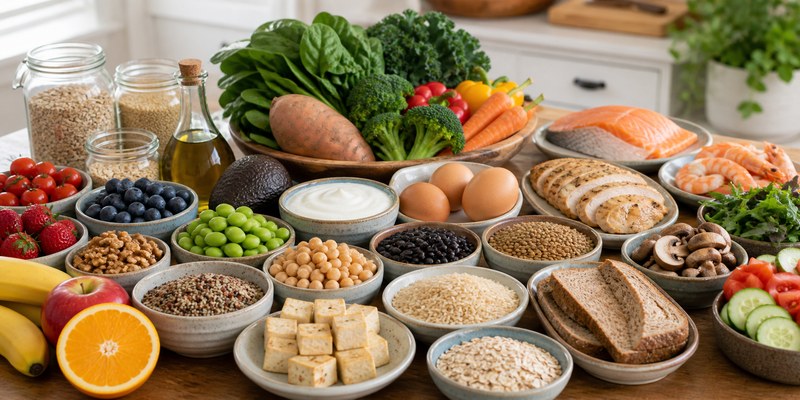
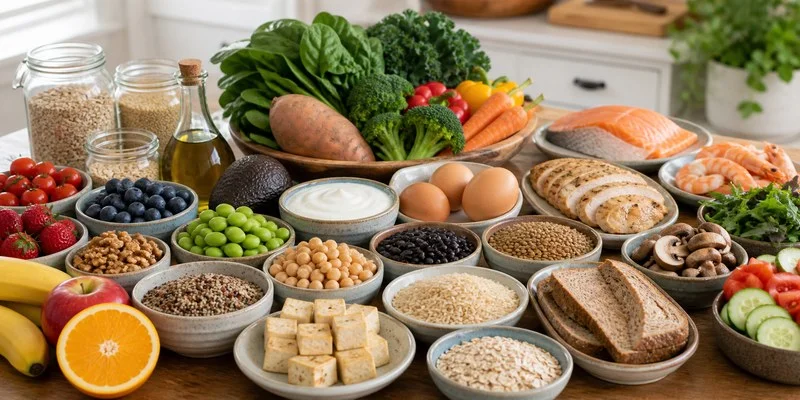
These 51 flexitarian diet foods distinguish plant staples from occasional animal additions using protein counts and meal ideas.
Table of Contents
Flexitarian Meals Without Hard Rules

When I try to eat more plants without giving up every animal food, dinner is where I can overthink it. I open the fridge, see beans left from Tuesday, and still wonder whether I need chicken to make the meal feel complete.
I use this list of flexitarian diet foods to settle that question quickly. Beans, lentils, tofu, grains, and vegetables are everyday staples; eggs, yogurt, fish, and meat are occasional additions. The protein number beside each pick helps me build a filling bowl without turning dinner into a math project.
I follow the mostly plant-based approach in the Mayo Clinic flexitarian diet overview. It gives me room to choose meat sometimes without treating one dinner as a pass-or-fail test. Anyone managing diabetes, kidney disease, or blood pressure should check major changes with a clinician. This is grocery guidance, not medical advice.
Key Takeaways
- Build around plants: These flexitarian diet foods keep beans, grains, vegetables, and fruit in daily rotation.
- Use meat selectively: Add eggs, dairy, fish, or lean meat when they improve the meal.
- Check the protein: Compare serving sizes before assuming every meatless bowl will keep you full.
51 Flexitarian Diet Foods With Protein Counts
Use this plant-forward grocery list to compare everyday staples with occasional animal foods. The protein column makes it easier to build a complete plate.
🌱
Whole Foods Grocery Shortcut
Stock beans, grains, produce, and freezer backups first, then add a modest amount of lean animal protein.
| Food | Why It Helps | Pro Tip |
|---|---|---|
| #1. Lentils | Everyday plant staple: about 18 g protein per cooked cup, so they anchor a meatless dinner cheaply. | Red lentils melt into soup in 20 minutes; no soaking needed. |
| #2. Black beans | Everyday plant staple with about 15 g protein per cup plus fiber that keeps you full. | Rinse the can to cut sodium, then smash half for taco filling. |
| #3. Chickpeas | Everyday plant staple carrying about 15 g protein per cup and a neutral, roastable base. | Roast crisp for a snack or blend into hummus for the week. |
| #4. Pinto beans | Everyday plant staple with about 15 g protein per cup and a soft, creamy texture. | Mash with cumin for a no-fry refried side in minutes. |
| #5. Edamame | Everyday plant staple delivering about 17 g complete protein per cup. | Buy shelled and frozen; three minutes in boiling water is lunch. |
| #6. Tofu | Everyday plant staple with about 20 g protein per half block and no strong flavor. | Press extra-firm slabs, then sear hot so the edges crisp. |
| #7. Tempeh | Everyday plant staple packing about 21 g protein per half cup with a firm, nutty bite. | Steam it 10 minutes before marinating to soften the bitterness. |
| #8. Green peas | Everyday plant staple with about 8 g protein per cup and natural sweetness. | Keep a freezer bag to stir into rice, pasta, or curry. |
| #9. Peanut butter | Everyday plant staple carrying about 7 g protein per two tablespoons of good fat. | Buy the jar whose label reads only peanuts and salt. |
| #10. Almonds | Everyday plant staple with about 6 g protein per ounce plus vitamin E. | Portion an ounce into small bags so the handful does not become three. |
| #11. Walnuts | Everyday plant staple offering about 4 g protein and omega-3 ALA per ounce. | Toast in a dry pan to wake up the flavor before adding to salads. |
| #12. Chia seeds | Everyday plant staple with about 5 g protein per ounce and a fiber gel that thickens. | Stir into oats overnight for a pudding-style breakfast. |
| #13. Ground flaxseed | Everyday plant staple adding about 3 g protein and omega-3s per two tablespoons. | Buy it pre-ground; whole seeds pass through undigested. |
| #14. Hemp hearts | Everyday plant staple with about 10 g protein per three tablespoons. | Shake over yogurt or grain bowls like a soft, nutty topping. |
| #15. Oats | Everyday plant staple carrying about 5 g protein per half-cup dry plus steadying fiber. | Cook with soy milk instead of water to push the protein higher. |
| #16. Quinoa | Everyday plant staple and a complete protein at about 8 g per cooked cup. | Rinse before cooking to wash off the bitter saponin coating. |
| #17. Brown rice | Everyday plant staple base with about 5 g protein per cooked cup. | Batch-cook and freeze in flat portions for instant bowls. |
| #18. Barley | Everyday plant staple with about 3.5 g protein per cooked cup and a chewy bite. | Simmer into soup where it thickens the broth as it cooks. |
| #19. Whole-grain bread | Everyday plant staple carrying about 4 g protein per slice with real fiber. | Choose a loaf listing whole grain first and 3-plus g fiber per slice. |
| #20. Whole-grain pasta | Everyday plant staple with about 7 g protein per cooked cup. | Toss with white beans and greens for a fast plant-forward bowl. |
| #21. Sweet potatoes | Everyday plant staple with about 4 g protein each plus beta-carotene. | Roast a full tray at 425 degrees and reheat portions all week. |
| #22. Spinach | Everyday plant staple adding about 5 g protein per cooked cup with iron. | Wilt a few handfuls into any hot dish right before serving. |
| #23. Kale | Everyday plant staple with about 3 g protein per cooked cup and vitamins C and K. | Massage raw leaves with olive oil and lemon to soften the chew. |
| #24. Broccoli | Everyday plant staple offering about 4 g protein per cooked cup with fiber. | Roast until the edges char for a completely different vegetable. |
| #25. Brussels sprouts | Everyday plant staple with about 3 g protein per cup and a caramel edge when roasted. | Halve them and roast cut-side down so they brown, not steam. |
| #26. Cauliflower | Everyday plant staple with about 2 g protein per cup and endless swap uses. | Rice it as a lighter base under a bean-heavy bowl. |
| #27. Bell peppers | Everyday plant staple with more vitamin C than an orange per half cup. | Slice raw for scooping hummus instead of chips. |
| #28. Mushrooms | Everyday plant staple with a meaty chew that stretches ground meat dishes. | Mince and mix half-and-half with beef to cut the meat in tacos. |
| #29. Zucchini | Everyday plant staple, mild and quick, for bulking pastas and sheet pans. | Grate into sauces where it disappears but adds volume. |
| #30. Carrots | Everyday plant staple, sweet and sturdy, for snacks and roasts. | Whole carrots keep far longer than the baby-cut bags. |
| #31. Tomatoes | Everyday plant staple, fresh or canned, that carries a plant-forward sauce. | Keep canned crushed tomatoes on hand for a five-minute pasta base. |
| #32. Onions | Everyday plant staple that builds savory depth so you lean less on meat. | Caramelize a big batch to upgrade cheap bean meals all week. |
| #33. Avocado | Everyday plant staple with good fat and potassium to round out a bowl. | Buy them firm and let a couple ripen on the counter in rotation. |
| #34. Olive oil | Everyday plant staple fat and the default anchor of plant-forward cooking. | Extra-virgin for salads and finishing; regular for the hot pan. |
| #35. Berries | Everyday plant staple with fiber and antioxidants at a low sugar cost. | Frozen mixed berries are cheaper and just as nutritious as fresh. |
| #36. Apples | Everyday plant staple whose fiber slows its natural sugar down. | Pair with peanut butter so the snack actually holds you to dinner. |
| #37. Oranges | Everyday plant staple giving about 70 mg vitamin C, which helps you absorb plant iron. | Eat one alongside a lentil lunch to boost the iron uptake. |
| #38. Bananas | Everyday plant staple with easy potassium for a portable snack. | Freeze the spotty ones for smoothies instead of tossing them. |
| #39. Pears | Everyday plant staple with about 6 g fiber each for steady fullness. | Slice into a grain salad for sweetness without added sugar. |
| #40. Fortified soy milk | Everyday plant staple with about 8 g protein per cup, closest to dairy milk. | Pick unsweetened and check for added calcium and B12. |
| #41. Greek yogurt | Occasional animal food with about 17 g protein per cup for an easy protein hit. | Buy plain and add your own fruit; flavored cups triple the sugar. |
| #42. Cottage cheese | Occasional animal food with about 14 g protein per half cup. | Spoon over tomatoes or blend smooth for a high-protein dip. |
| #43. Eggs | Occasional animal food at about 6 g protein each and a complete amino profile. | Batch-boil six on Sunday so plant-heavy lunches get a protein boost. |
| #44. Chicken breast | Occasional animal food with about 26 g protein per 3 ounces, kept to a few dinners. | Cook once and shred across two bowls so one breast feeds two meals. |
| #45. Turkey breast | Occasional animal food, lean at about 25 g protein per 3 ounces. | Ground 93/7 turkey carries taco seasoning without the red-meat load. |
| #46. Salmon | Occasional animal food with about 22 g protein per 3 ounces plus omega-3s. | Frozen fillets cook straight from the freezer on a busy night. |
| #47. Canned tuna | Occasional animal food with about 20 g protein per pouch, shelf-stable and cheap. | Fold into a bean salad, like our Mediterranean tuna salad, for a fast lunch. |
| #48. Shrimp | Occasional animal food with about 20 g protein per 3 ounces and a two-minute cook. | Keep a frozen bag; it thaws under cool water in five minutes. |
| #49. Sardines | Occasional animal food with about 23 g protein per tin plus calcium and omega-3s. | Tinned in olive oil over greens is a two-minute plate. |
| #50. Lean ground beef | Occasional animal food, best as an accent at about 22 g protein per 3 ounces. | Stretch it with mushrooms and beans so a pound covers more meals. |
| #51. Feta cheese | Occasional animal food, big flavor at about 4 g protein per ounce. | A little crumbled over grains makes a plant bowl taste indulgent. |
Flexitarian Grocery List: Pinterest Pin
Save these flexitarian diet foods for your next grocery run, then pair the list with our vegetarian foods guide when you want more meatless options.
📌 Hover over this pin to save this post for later.

3-Day Flexitarian Diet Meal Planner
These flexitarian diet foods fit three ordinary days without making every meal meatless. For more combinations, use our plant-based meal ideas.
| Meal | Day 1 | Day 2 | Day 3 |
|---|---|---|---|
| Breakfast | Oats, soy milk, berries, peanut butter | Greek yogurt, walnuts, pear | Eggs, spinach, whole-grain toast |
| Lunch | Lentil-spinach bowl with brown rice | Chickpea salad wrap with peppers | Black bean and sweet potato bowl |
| Snack | Apple with peanut butter | Edamame with an orange | Cottage cheese with berries |
| Dinner | Salmon, broccoli, and quinoa | Tempeh stir-fry with brown rice | Chicken, mushrooms, and whole-grain pasta |
| Daily pattern | Plants at every meal; fish once | Fully plant-forward dinner | Plants first; poultry once |
Flexitarian Foods to Limit
The flexitarian diet foods above work best when refined starch, sugary drinks, and daily processed meat stay occasional. Our prediabetes foods guide uses the same fiber-first logic.
1. Daily Processed Meat
A 2-ounce serving can carry 500 to 700 mg sodium and displace beans or lentils.
Swap: Beans most days, with lean meat reserved for a few meals.
2. Sugary Drinks and Juice
One 12-ounce drink can add 30 to 40 g sugar without useful fiber or protein.
Swap: Water with citrus, whole fruit, or a lower-sugar option.
3. Refined White Starches
A typical serving provides under 2 g fiber and leaves the plant-forward plate less filling.
Swap: Brown rice, barley, quinoa, or whole-grain bread.
4. Ultra-Processed Meat Substitutes
Some patties exceed 500 mg sodium while offering less fiber than a bean meal.
Swap: Tofu, tempeh, lentils, or a homemade bean patty.
Flexitarian Shopping Tips
Shopping for flexitarian diet foods gets easier when plant staples enter the cart first. Our high-fiber cookbook guide and Mediterranean food list add practical meal ideas.
- Choose beans, lentils, grains, and produce before visiting the meat or dairy aisles.
- Buy animal foods in smaller packages so occasional portions remain easy to see.
- Keep frozen vegetables, berries, and edamame ready for nights when fresh produce runs low.
- Compare added sugar and sodium on yogurt, sauces, and meat-substitute labels.
- Store one shelf-stable protein, such as beans, lentils, sardines, or tuna, for backup dinners.
FAQs
Quick answers to the questions people ask most about flexitarian diet foods.
1. How much meat does a flexitarian eat in a week?
There is no fixed rule, but a common target is eating meat or fish on two or three days each week, with plants carrying all of the rest. Treat animal protein as an occasional guest at the table, so most flexitarian diet foods on your plate still stay plant based across the week.
2. Do I need to count protein grams every day?
Tracking grams forever gets tedious, so use it as a short teaching exercise for a week. Weigh and log a few typical days to learn what about 20 grams of protein looks like from beans, tofu, eggs, or chicken. After that, the staple versus occasional tags on these flexitarian diet foods handle the ratio for you.
3. Which flexitarian diet foods should a beginner buy first?
Start with three plant staples you already like, one everyday protein such as lentils or Greek yogurt, and one occasional animal food for two dinners this week. A bag of oats, a carton of eggs, frozen berries, and a head of broccoli cover most breakfasts and lunches before you spend on anything specialty.
4. Is a flexitarian diet the same as being semi-vegetarian?
The two labels describe nearly the same plate, plant forward with modest animal protein a few times each week. Semi-vegetarian is the older term for it, while flexitarian became popular after 2009. Either way, the flexitarian diet foods you buy stay mostly whole plants, with occasional fish, poultry, eggs, or dairy alongside them.
5. Can I get enough iron and B12 eating this way?
Occasional meat, eggs, and dairy cover B12, which fully plant based eaters must supplement, so this flexible approach comes with a built in cushion. Pair plant iron from lentils, spinach, and tofu with a squeeze of lemon or other vitamin C, and spread these flexitarian diet foods across most of your meals for steady intake.
6. What if my family will not give up meat?
Meet them partway rather than forcing an all or nothing switch on the whole household at once. Cook one plant forward base, then let each person add their own chicken, fish, or beef on top. Building the flexitarian diet foods into shared bowls, tacos, and pasta keeps everyone fed without cooking two separate dinners.
7. Are frozen and canned foods okay on a flexitarian plate?
Frozen and canned staples are genuinely useful here, not a compromise you should feel bad about. Frozen vegetables and berries keep their nutrients, and canned beans, lentils, and tuna turn a bare pantry into dinner fast. Rinse canned goods to cut sodium, and these flexitarian diet foods rescue the busy weeknights that derail most plans.
Flexitarian Video: Plants First
UNMCEDU explains the flexible plant-first pattern behind flexitarian diet foods and why the approach does not require giving up meat completely.
Video credit: UNMCEDU.
Conclusion: Your Flexitarian Diet Foods Plan

A flexible plate is easiest to repeat when beans, grains, vegetables, fruit, nuts, and seeds do the routine work. Eggs, dairy, fish, poultry, or meat can stay optional accents.
- Start with the plant: Choose the bean, grain, or vegetable before the animal protein.
- Check one number: Use protein per serving to keep a meatless meal satisfying.
- Leave room for real life: A flexible pattern should survive restaurants, leftovers, and busy nights.
Use the list for two weeks, notice which meals repeat naturally, and build from there. Our anti-inflammatory foods guide and Mediterranean tuna salad are easy next steps without complicating ordinary weeknights.