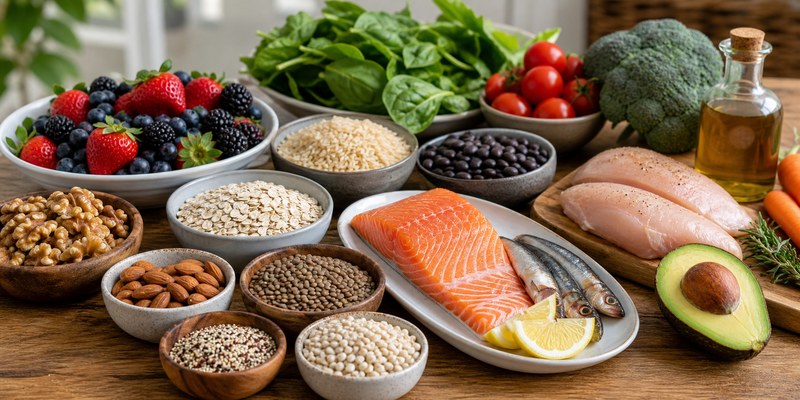
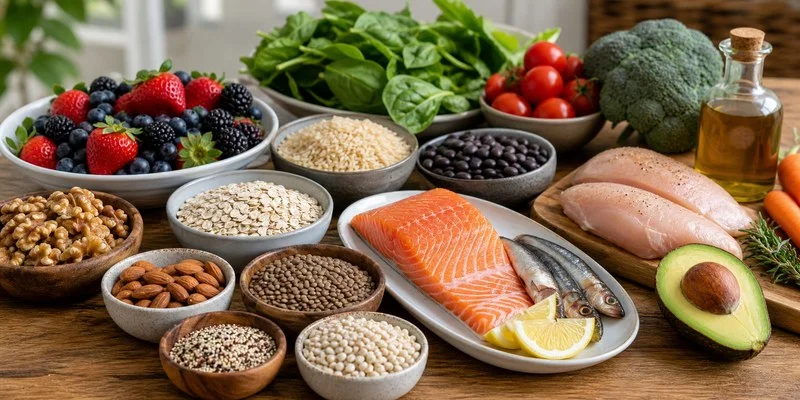
In this post, I share 51 MIND diet foods to eat for brain health, including greens, berries, beans, whole grains, fish, and olive oil.
Table of Contents
Your MIND Diet Week

I’m at the age where I’ve started thinking about my brain as much as my waistline. I’ve tried low carb, keto, and Mediterranean eating over the years, but the MIND diet is designed specifically around foods that may help protect the aging brain.
This list of MIND diet foods to eat covers its ten brain-healthy food groups, including leafy greens, berries, nuts, beans, fish, and olive oil. Each food is tagged with its group and recommended target, making the plan easier to follow.
There is real research behind it, including this report from Rush University Medical Center that first linked the pattern to slower cognitive decline. Check with your doctor first if you are managing blood pressure, cholesterol, or memory. This is grocery guidance, not medical advice.
Key Takeaways
- Greens lead: MIND diet foods to eat start with six-plus servings of leafy greens each week.
- Targets, not rules: Aim for berries most days, fish weekly, and a handful of nuts, not perfection.
- Built on the Mediterranean: The Mediterranean diet foods pattern is the base, sharpened here for the aging brain.
51 MIND Diet Foods to Eat With a Brain-Group Tracker
The following table is my full brain-healthy food list for weekly shopping, with the group and recommended target next to every pick.
🌱
Whole Foods Grocery Shortcut
Stock the brain-healthy basics in one Whole Foods run: greens, berries, beans, nuts, whole grains, fish, and olive oil.
| Food | Why It Helps | Pro Tip |
|---|---|---|
| #1. Spinach | Leafy greens are the flagship group at six-plus servings weekly, and one cooked cup carries about 260 mcg of folate tied to slower memory decline. | Baby spinach wilts into eggs, soup, or a pan in seconds, so it disappears into meals you already make. |
| #2. Kale | Another leafy-green serving toward that six-plus weekly goal, with about 490 mcg of vitamin K and lutein per cooked cup. | Massage torn leaves with olive oil and lemon so raw salads lose their toughness. |
| #3. Collard greens | Counts as a hearty leafy-green serving, adding about 770 mcg of vitamin K per cooked cup toward the group’s weekly target. | Braise low and slow, then chop into grain bowls for the week. |
| #4. Swiss chard | A leafy green with about 150 mg of magnesium per cooked cup plus folate, both linked to steadier cognition. | Cook the stems a few minutes before the leaves so both finish tender. |
| #5. Romaine lettuce | A crisp leafy green with about 60 mcg of folate per two cups that makes the daily-greens habit easy without cooking. | Whole leaves double as low-effort wraps for tuna or chicken. |
| #6. Arugula | Peppery leafy green counting toward greens, delivering the dietary nitrates, about 480 mg per 100 g, studied for blood flow to the brain. | Pile it raw over warm pasta or fish; residual heat wilts it just enough. |
| #7. Butter lettuce | A tender leafy green with about 55 mcg of vitamin K per cup for people who find kale and chard too bitter. | Use the cupped leaves as taco shells for turkey or beans. |
| #8. Watercress | A peppery leafy green with about 250% of daily vitamin K per plate, supporting the greens target. | Fold into egg salad or blend into a green sauce to stretch it. |
| #9. Broccoli | An other-vegetable serving, aimed at about one a day, with roughly 80 mg of vitamin C per cup for antioxidant support. | Roast at 425 F until the edges char for a nuttier, less watery result. |
| #10. Bell peppers | An other-vegetable serving with about 120 mg of vitamin C per cup, the antioxidant that helps blunt oxidative stress on neurons. | Red and orange run sweeter and hold more vitamin C than green. |
| #11. Carrots | Counts toward daily vegetables, with about 10 mg of beta-carotene per cup that the body turns into vitamin A. | Keep whole carrots over baby-cut; they last longer and cost less. |
| #12. Tomatoes | An other-vegetable pick delivering about 3 mg of lycopene per medium tomato, an antioxidant studied in brain aging. | Cooking with a little olive oil makes the lycopene easier to absorb. |
| #13. Onions | A daily-vegetable base with about 3 g of fiber per cup plus quercetin, a flavonoid the research associates with brain benefit. | Caramelize a big batch to upgrade cheap meals all week. |
| #14. Cauliflower | Another serving toward the one-a-day vegetable goal, with about 50 mg of vitamin C per cup and a mild taste. | Rice it as a base when you want stir-fry volume with more vegetables. |
| #15. Zucchini | A low-effort other-vegetable with about 2 g of fiber per cup that stretches pasta and sheet-pan dinners. | Roast thick coins rather than watery thin slices for better texture. |
| #16. Green beans | Counts toward daily vegetables and brings about 4 g of fiber per cup plus a little folate. | Frozen green beans saute straight from the bag in five minutes. |
| #17. Asparagus | An other-vegetable serving with about 70 mcg of folate per cup, the B vitamin tied to lower homocysteine and better cognition. | Roast at high heat and finish with lemon rather than heavy sauce. |
| #18. Blueberries | Berries are their own group at about five days a week, and blueberries top the research with about 4 g of fiber and anthocyanins per cup. | Frozen cost less than fresh and hold their nutrients for smoothies and oats. |
| #19. Strawberries | A berry serving toward the five-days goal, adding about 90 mg of vitamin C per cup alongside the flavonoids. | Slice into yogurt or oats instead of reaching for a sweetened cup. |
| #20. Blackberries | Counts as a berry serving with about 8 g of fiber per cup and a deep dose of anthocyanins. | Fold gently into overnight oats so they stay whole, not mushy. |
| #21. Raspberries | A berry pick with about 8 g of fiber per cup plus ellagic acid, another studied plant antioxidant. | Keep a bag in the freezer as the default fruit for the dessert slot. |
| #22. Walnuts | Nuts are targeted at about five servings weekly, and walnuts carry about 2.5 g of plant omega-3 ALA per ounce. | Toast in a dry pan a few minutes to double the flavor of a small handful. |
| #23. Almonds | A nut serving toward the five-a-week goal, with about 7 mg of vitamin E per ounce, the antioxidant most tied to slower decline. | Portion into small containers so the calories from the bag stay honest. |
| #24. Pecans | Counts as a nut serving with about 3 g of fiber per ounce and ranks among the highest nuts for antioxidants. | Chop over a salad for crunch without reaching for croutons. |
| #25. Pistachios | A nut serving with about 6 g of protein per ounce plus vitamin B6 and lutein, both studied for cognition. | Buy them in-shell; the slower pace naturally curbs the portion. |
| #26. Hazelnuts | A nut serving with about 4 mg of vitamin E per ounce, reinforcing the antioxidant case for the group. | Toast and rub off the skins for a smoother, sweeter bite. |
| #27. Lentils | Beans are targeted at about three servings weekly, and lentils bring about 18 g of protein plus folate per cooked cup. | One pot of lentil soup covers three brain-friendly lunches. |
| #28. Black beans | A bean serving toward the three-a-week goal, with about 15 g of fiber per cooked cup and anthocyanins in the dark skins. | Rinse canned beans to cut the sodium by nearly half. |
| #29. Chickpeas | Counts as a bean serving with about 15 g of protein per cooked cup, pairing fiber with folate. | Roast them crispy for a snack that beats chips on nutrition. |
| #30. White beans | A bean serving with about 11 g of fiber per cooked cup plus magnesium and resistant starch that steadies blood sugar. | Mash with olive oil and garlic for a fast, creamy spread. |
| #31. Kidney beans | Another serving toward the beans target, with about 13 g of fiber per cooked cup and plant antioxidants. | Stir into chili or grain bowls to stretch a smaller portion of meat. |
| #32. Edamame | A bean-group serving with about 18 g of complete plant protein per cup plus folate and vitamin K. | Keep a frozen bag for a two-minute steamed snack or salad topper. |
| #33. Oats | Whole grains are targeted at about three servings a day, and oats add about 4 g of soluble fiber per cooked cup. | Steel-cut or rolled both count; skip the sugary instant packets. |
| #34. Brown rice | A whole-grain serving toward the three-a-day goal, with about 80 mg of magnesium per cooked cup and B vitamins intact. | Batch-cook and freeze in one-cup portions for instant sides. |
| #35. Quinoa | Counts as a whole grain and adds complete protein, about 8 g per cooked cup. | Rinse before cooking to wash off the bitter saponin coating. |
| #36. Barley | A whole-grain serving with about 6 g of fiber per cooked cup, whose beta-glucan supports steady blood sugar. | Simmer into soups where it thickens the broth as it cooks. |
| #37. Farro | A chewy whole grain counting toward the daily target, with about 8 g of protein per cooked cup. | Cook a batch in broth and reheat as a warm base all week. |
| #38. Whole-grain bread | A convenient whole-grain serving with about 3 g of fiber per slice when whole wheat is the first ingredient. | Look for at least 3 g of fiber per slice and skip the “wheat” fakes. |
| #39. Whole-grain pasta | Counts toward whole grains with about 6 g of fiber per cooked cup, more than the refined version. | Cook al dente and toss with olive oil and greens instead of cream. |
| #40. Bulgur | A quick-cooking whole grain with about 8 g of fiber per cooked cup plus folate. | Just soak it in hot water for tabbouleh; no pot required. |
| #41. Salmon | Fish is targeted at about one meal weekly, and salmon brings about 1.5 g of omega-3 DHA per 3 ounces to build brain-cell membranes. | Frozen fillets cook from solid and star in our high-protein salmon salad. |
| #42. Sardines | A fish serving with about 1 g of omega-3 per tin, cheap and dense with DHA plus calcium from the soft bones. | Tinned in olive oil over greens is a two-minute lunch. |
| #43. Trout | Counts as a fatty-fish serving with about 1 g of omega-3s per fillet and a milder flavor than salmon. | Roast whole fillets skin-down for eight minutes at 400 F. |
| #44. Mackerel | A fish serving with about 2 g of omega-3 DHA per 3 ounces, among the highest of any fish. | Choose Atlantic mackerel over king to keep mercury lower. |
| #45. Cod | A leaner fish serving with about 20 g of protein per 3 ounces for people easing into seafood. | Butter-baste in a pan; it flakes apart on a grill grate. |
| #46. Chicken breast | Poultry is targeted at about two servings weekly, and a 3-ounce breast brings about 26 g of lean protein that displaces red meat. | Brine 30 minutes before cooking so it stops drying out. |
| #47. Turkey breast | A poultry serving with about 25 g of protein per 3 ounces, easy to reuse across bowls and wraps. | 93/7 ground turkey carries taco seasoning without much added fat. |
| #48. Extra-virgin olive oil | Named the primary cooking fat, with about 10 g of monounsaturated fat per tablespoon plus polyphenols, over butter. | Use regular for hot pans and save the peppery extra-virgin for finishing. |
| #49. Avocado | Sits with the healthy fats, delivering about 10 g of fiber per fruit plus monounsaturated fat and folate. | Buy them firm and let a couple ripen on the counter in rotation. |
| #50. Plain Greek yogurt | A protein pick with about 17 g per cup that carries berries and walnuts without the added sugar the plan limits. | Choose plain whole-milk and add your own fruit; flavored cups triple the sugar. |
| #51. Eggs | A flexible protein with about 6 g each and roughly 150 mg of choline, the nutrient used to make brain messengers. | Scramble in olive oil with spinach to fold in a greens serving at breakfast. |
MIND Food List: Pinterest Pin
On Pinterest? Save these MIND diet foods to eat to your meal-prep board so they are waiting the next time you plan the week. Thanks for the share.
📌 Hover over this pin to save this post for later.

3-Day MIND Diet Foods to Eat Meal Planner
Here is how the picks above assemble into three simple days that hit several weekly targets at once, and the same greens-and-beans base doubles as solid prediabetes foods to eat for steadier blood sugar.
| Meal | Day 1 | Day 2 | Day 3 |
|---|---|---|---|
| Breakfast | Oats with blueberries and walnuts | Eggs scrambled with kale in olive oil | Greek yogurt with raspberries and pecans |
| Lunch | Lentil and spinach soup with whole-grain bread | Chickpea and tomato salad on romaine | Sardines over mixed greens with whole-grain crackers |
| Snack | Strawberries and a handful of almonds | Carrots with white-bean dip | Blueberries and a few hazelnuts |
| Dinner | Salmon over arugula with olive oil and brown rice | Chicken breast with roasted broccoli and quinoa | Turkey and black-bean chili with collard greens |
| Day total (groups hit) | ~9 of 10 | ~8 of 10 | ~9 of 10 |
How the MIND Diet Supports Brain Health
These MIND diet foods to eat come from the Mediterranean-DASH Intervention for Neurodegenerative Delay, a brain-healthy diet developed by Dr. Martha Clare Morris, a nutritional epidemiologist at Rush University Medical Center. The creators of the MIND diet shaped a Mediterranean-DASH diet intervention from the Dietary Approaches to Stop Hypertension. This combination of the Mediterranean diet and DASH turns two established dietary approaches into an eating plan built around specific foods and food groups.
The dietary patterns favor green leafy vegetables and other leafy green vegetables, including collard greens, with six or more servings of leafy greens each week. They also emphasize servings of whole grains such as brown rice and whole wheat bread, plus black beans, other plant-based foods, fatty fish, extra-virgin olive oil, healthy fats, monounsaturated fats, and omega-3 fatty acids. Red meat, animal protein from heavily processed animal-based foods, dairy products, fried foods, and fast food are limited.
These nutrient-dense foods supply vitamin E and other essential nutrients that help protect brain cells from free radicals and oxidative stress. Scientists study whether those health benefits support brain function, cognitive function, cognitive health, and overall brain health. The same pattern can support heart health by addressing high blood pressure, blood sugar, heart disease, cardiovascular disease, heart attack risk factors, weight loss, overall health, and other chronic diseases.
Research involving older adults, the Rush Memory and Aging Project, the U.S. POINTER study, the National Institute on Aging, and the Harvard School of Public Health has examined healthy aging and the risk of cognitive decline. A higher MIND diet score, high adherence, or even moderate adherence has been associated with a lower risk of dementia, a reduced risk of Alzheimer outcomes, and a lower risk of Alzheimer’s disease or another neurodegenerative disease. That association does not guarantee prevention, especially with a family history of Alzheimer’s disease.
U.S. News & World Report has also covered this new diet plan, but rankings are not medical advice. Treat it as a framework for nutritious meals made from whole foods and brain-healthy foods, not a cure. A health care provider can compare its dietary components with your medications, while a healthcare provider who knows your history can adjust portions and goals.
Frequently Asked Questions (FAQs)
Quick answers to what people actually ask about the MIND diet foods to eat that support the aging brain.
1. What is the MIND diet in plain terms?
These MIND diet foods to eat blend the Mediterranean and DASH patterns into one plan aimed at the aging brain. Rush University researchers organized ten brain-healthy groups with weekly targets and five groups to limit. In their study, older adults who followed the pattern most closely showed the slowest measured memory decline over several years.
2. How many servings of leafy greens should I eat?
Aim for six or more servings each week, the highest target among these MIND diet foods to eat. That works out to roughly a green salad or a cooked handful most days. Spinach, kale, collards, and romaine all count, so rotating a few keeps the habit from turning boring by Wednesday on busy weeks.
3. Are the MIND diet foods to eat hard to find or cook?
Almost none need a specialty store or a brand-new kitchen skill. Greens, berries, beans, oats, olive oil, and canned fish sit in any ordinary supermarket, and most cook in one pan or none at all. The plan leans on repeatable staples rather than restaurant technique, which is exactly why people stick with it for years.
4. Can I follow the plan without eating fish?
Fish only asks for about one meal a week, so a gap there will not sink you. Lean harder on walnuts for plant omega-3s, and keep greens, berries, and beans on target. Many MIND diet foods to eat overlap with a plant-forward plate, though a doctor may suggest algae-based omega-3 for the missing DHA.
5. Which foods matter most on a tight budget?
Budget-friendly MIND diet foods to eat include frozen greens and berries, dried beans, oats, sardines, and olive oil. Buy whatever produce is cheapest and lean on the freezer for the rest. If bloating from more beans worries you, our low-FODMAP foods list helps, and batch cooking keeps the weekly cost predictable for easy planning.
6. How is this different from the Mediterranean diet?
They share a foundation, but these MIND diet foods to eat sharpen the focus onto choices studied for the brain. The plan singles out leafy greens and berries as scored groups and drops the general push on potatoes, whole fruit, and dairy. Each pick was chosen for a tie to memory, not only heart health.
7. What makes a good snack between meals?
Among these MIND diet foods to eat, reach for pairs that mix fiber and healthy fat: berries with yogurt, an apple with walnuts, or roasted chickpeas. They quiet the afternoon crash that sends us toward the vending machine. For more ideas, our high-protein snacks guide has options, including make-ahead bites for busy afternoons.
MIND Diet Research Resources
These sources support the research and serving targets behind the MIND diet foods to eat in this guide.
- Rush University Medical Center, the MIND diet and cognitive performance.
- Harvard T.H. Chan Nutrition Source, a review of the MIND diet.
- Cleveland Clinic, how to follow the MIND diet.
- Ohio State Health & Discovery, the MIND diet for brain health.
- Massachusetts General Hospital, a MIND diet 3-day sample meal plan.
Video: MIND Eating Basics
This walkthrough shows how the core MIND diet foods to eat fit into a weekly routine.
Video credit: Unified Care.
Conclusion: Best MIND Diet Foods to Eat

After trying every plan over the years, here is what I would actually keep:
- Lead with greens: six-plus servings of leafy greens a week is the single biggest lever, so buy them first.
- Aim, don’t obsess: berries most days, beans and nuts through the week, and fish when you can.
- Cook in olive oil: make it the default fat and keep red meat, fried food, and sweets rare rather than routine.
Run that pattern for a few weeks and the grocery list starts writing itself, and when you want recipes built on the same groups, our best MIND diet cookbooks roundup covers the books worth shelf space.