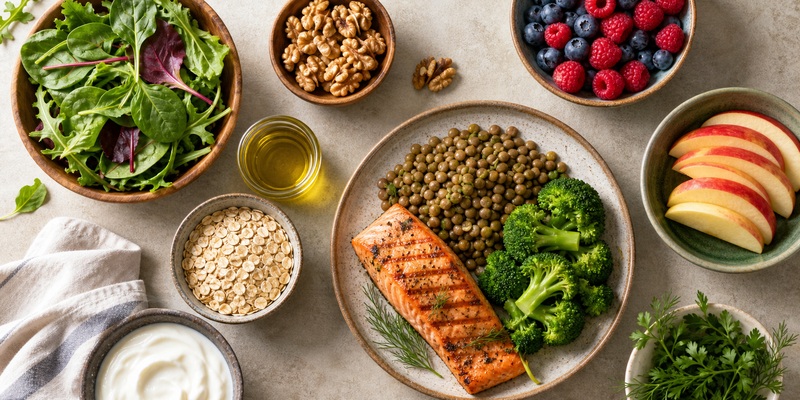
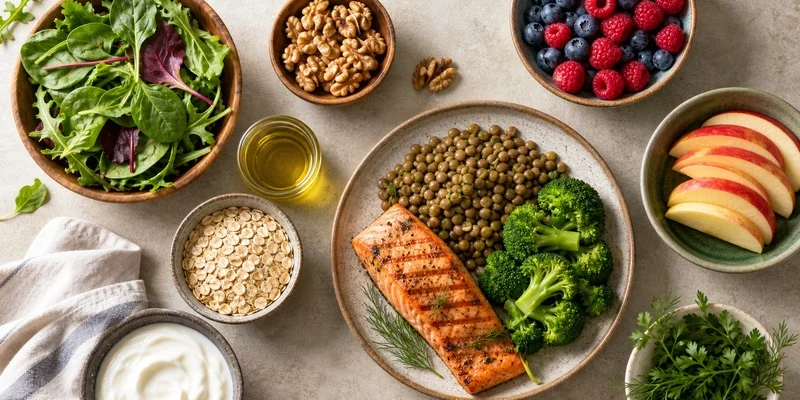
In this post, I share 31 foods to eat for insulin resistance with fiber and protein numbers that make balanced meals easier to plan.
In This Guide
My Insulin Resistance Grocery List

I used to look at every carbohydrate in my cart like it had to go. I ended up relying on eggs, chicken, and plain greens while treating oats, beans, berries, and yogurt as if they were automatically off-limits. Eventually, I learned to build a more balanced plate without giving up that variety.
These foods to eat for insulin resistance are the choices I find easiest to use in everyday meals. Each item includes a typical serving and a useful fiber or protein number, so you can see how it might fit alongside vegetables, protein, and unsaturated fat.
I also looked to the Cleveland Clinic insulin resistance diet guide, which recommends vegetables, whole grains, lean proteins, fruit, beans, and healthier fats. Talk with your clinician or a registered dietitian if you take glucose-lowering medicine, have kidney disease, or need a personal carbohydrate target. This is grocery guidance, not medical advice.
Key Takeaways
- Build a mixed plate: Pair foods to eat for insulin resistance with protein, fiber, and unsaturated fat.
- Keep useful carbs: Beans, oats, fruit, and whole grains bring nutrients that refined choices lose.
- Use real portions: The table gives serving numbers so the grocery list turns into practical meals.
31 Foods to Eat for Insulin Resistance
Use these foods to eat for insulin resistance to compare a typical serving, then choose combinations you already enjoy cooking.
🌱
Whole Foods Grocery Shortcut
Stock vegetables, beans, whole grains, fish, yogurt, berries, nuts, and olive oil in one run.
| Food | Fiber / Protein | Pro Tip |
|---|---|---|
| #1. Broccoli | About 5 g fiber and 4 g protein per cooked cup | Roast florets at 425°F until the edges brown, then finish with lemon. |
| #2. Spinach | About 4 g fiber and 5 g protein per cooked cup | Fold a frozen handful into eggs, soup, or beans when fresh leaves run out. |
| #3. Kale | About 3 g fiber and 3 g protein per cooked cup | Massage raw leaves with olive oil, or simmer them until the stems soften. |
| #4. Brussels Sprouts | About 6 g fiber and 4 g protein per cooked cup | Halve them before roasting so the flat sides caramelize instead of steaming. |
| #5. Bell Peppers | About 3 g fiber and 1 g protein per sliced cup | Keep strips ready for hummus, salads, omelets, and fast skillet dinners. |
| #6. Mushrooms | About 3 g protein and 1 g fiber per cooked cup | Brown them in a dry pan first, then add oil after the moisture cooks away. |
| #7. Lentils | About 8 g fiber and 9 g protein per cooked half-cup | Use canned or batch-cooked lentils to add body to soup and grain bowls. |
| #8. Black Beans | About 7 g fiber and 8 g protein per cooked half-cup | Rinse canned beans well, then combine them with peppers and chicken. |
| #9. Chickpeas | About 6 g fiber and 7 g protein per cooked half-cup | Roast them for crunch or add them to a prediabetes Greek salad bowl. |
| #10. Edamame | About 4 g fiber and 9 g protein per shelled half-cup | Microwave frozen edamame and season it with lemon, pepper, and a pinch of salt. |
| #11. Rolled Oats | About 4 g fiber and 5 g protein per dry half-cup | Cook old-fashioned oats, then add yogurt, chia seeds, and berries for balance. |
| #12. Barley | About 3 g fiber and 2 g protein per cooked half-cup | Make a pot on Sunday and spoon it into soups or vegetable bowls. |
| #13. Quinoa | About 3 g fiber and 4 g protein per cooked half-cup | Cool cooked quinoa before packing lunch so the grains stay separate. |
| #14. Sweet Potato | About 4 g fiber and 2 g protein in 1 medium potato | Keep the skin, choose a fist-sized portion, and serve it beside protein. |
| #15. Apples | About 4 g fiber and 95 calories in 1 medium apple | Pair crisp slices with walnuts, almonds, or plain yogurt instead of juice. |
| #16. Pears | About 6 g fiber and 100 calories in 1 medium pear | Let firm pears ripen on the counter, then chill them for a portable snack. |
| #17. Raspberries | About 8 g fiber and 1.5 g protein per cup | Frozen berries thaw quickly over oatmeal and cost less outside summer. |
| #18. Grapefruit | About 2 g fiber and 50 calories per half fruit | Check for medication interactions before adding grapefruit to your routine. |
| #19. Salmon | About 22 g protein and 0 g carbohydrate per 3 oz | Use leftovers in this high-protein salmon salad with avocado and blueberries. |
| #20. Sardines | About 22 g protein per 3.75 oz can, plus omega-3 fats | Mash boneless sardines with lemon and mustard for a quick toast topper. |
| #21. Chicken Breast | About 26 g protein and 0 g carbohydrate per 3 oz | Cook extra for a chicken avocado salad that is ready the next day. |
| #22. Eggs | About 6 g protein and less than 1 g carbohydrate each | Boil six at once so breakfast and snack protein stays within reach. |
| #23. Firm Tofu | About 10 g protein and 2 g fiber per half-cup | Press cubes dry and sear them before adding sauce for a firmer texture. |
| #24. Plain Greek Yogurt | About 17 g protein per 6 oz, depending on the brand | Choose unsweetened yogurt and add berries or cinnamon yourself. |
| #25. Cottage Cheese | About 14 g protein and 5 g carbohydrate per half-cup | Spoon it over tomatoes, cucumbers, and pepper for a savory snack. |
| #26. Walnuts | About 2 g fiber and 4 g protein per 1 oz | Freeze the bag and portion small handfuls before the nuts turn stale. |
| #27. Almonds | About 4 g fiber and 6 g protein per 1 oz | Count roughly 23 almonds for an ounce instead of eating from the container. |
| #28. Chia Seeds | About 10 g fiber and 5 g protein per 2 tbsp | Stir them into yogurt or soak them overnight so they soften before breakfast. |
| #29. Ground Flaxseed | About 4 g fiber and 3 g protein per 2 tbsp | Buy ground flax or grind whole seeds so your body can access them. |
| #30. Avocado | About 7 g fiber and 15 g unsaturated fat per half | Use a quarter or half to make a grain bowl or salad more satisfying. |
| #31. Extra-Virgin Olive Oil | About 14 g unsaturated fat and 0 g carbohydrate per tbsp | Whisk it with vinegar and mustard for a fast dressing without added sugar. |
Foods for Insulin Resistance: Pinterest Pin
📌 Save these foods to eat for insulin resistance to your healthy grocery board for later.

3-Day Foods to Eat for Insulin Resistance Meal Planner
These foods to eat for insulin resistance sample days pair high-fiber carbohydrates with vegetables, protein, and unsaturated fat; portions can change with your needs.
| Meal | Day 1 | Day 2 | Day 3 |
|---|---|---|---|
| Breakfast | Oats, plain Greek yogurt, raspberries, chia seeds; about 14 g fiber and 28 g protein | Eggs, spinach, mushrooms, one apple; about 10 g fiber and 23 g protein | Use a choice from our prediabetes breakfast ideas; target vegetables plus protein |
| Lunch | Salmon, lentils, broccoli, olive-oil dressing; about 13 g fiber and 38 g protein | Greek salad bowl with chickpeas and chicken; about 12 g fiber and 35 g protein | Chicken, quinoa, peppers, avocado; about 11 g fiber and 36 g protein |
| Snack | Pear with walnuts; about 8 g fiber and 4 g protein | Greek yogurt with berries and flax; about 8 g fiber and 19 g protein | Choose one of these prediabetes snack ideas; pair produce with protein |
| Dinner | Tofu, edamame, barley, Brussels sprouts; about 18 g fiber and 30 g protein | Chicken, sweet potato, kale, olive oil; about 12 g fiber and 35 g protein | Mediterranean tuna salad with black beans; about 13 g fiber and 34 g protein |
| Day total | About 53 g fiber and 100 g protein | About 42 g fiber and 112 g protein | Varies with the selected breakfast and snack |
Insulin Resistance Foods to Limit
Making room for foods to eat for insulin resistance gets easier when these concentrated sources of refined carbohydrate and added sugar become occasional choices.
1. Sugary Drinks
A 12 oz soda can carry about 39 g added sugar.
Swap: Sparkling water with citrus.
2. Refined Breakfast Cereal
Many sweetened cereals deliver 10 g or more added sugar before milk.
Swap: Oats with yogurt and berries.
3. White Bread and Pastries
Two slices may offer less than 2 g fiber, while pastries add sugar and saturated fat.
Swap: Whole-grain toast with eggs.
4. Candy-Sized Coffee Drinks
A flavored 16 oz drink can exceed 30 g added sugar.
Swap: Plain coffee with milk and cinnamon.
For a longer swap list, use our guide to prediabetes foods to avoid.
Foods for Insulin Resistance Shopping Tips
Use these five rules to turn foods to eat for insulin resistance into a cart that covers complete meals, not isolated ingredients.
- Start with vegetables: Pick three non-starchy choices you will actually cook this week.
- Add two proteins: Combine one quick option, such as eggs, with one dinner anchor.
- Choose two high-fiber carbs: Rotate beans, oats, barley, quinoa, or sweet potato instead of buying all five.
- Read added-sugar lines: Compare yogurt, cereal, sauces, and drinks by serving, not package claims.
- Plan the snack pair: Match fruit or vegetables with yogurt, eggs, nuts, or edamame; our prediabetes food list offers more combinations.
Insulin Resistance Cookbook for Faster Meal Planning
The 30-Minute Prediabetes Cookbook turns many of these foods to eat for insulin resistance into quick breakfasts, lunches, and dinners built around ordinary ingredients.
The Companion Cookbook


Compare more options in the best diabetes diet cookbooks roundup.
FAQs
These answers cover portions, carbohydrates, fruit, timing, and the foods to eat for insulin resistance that belong in a first grocery run.
1. What makes a food useful for insulin resistance?
The most useful foods combine fiber, protein, or unsaturated fat with minimal added sugar and refined flour. Those traits make foods to eat for insulin resistance easier to build into mixed meals that digest more slowly. No single item fixes the condition, so the pattern across breakfast, lunch, dinner, and snacks matters more than any superfood.
2. How much carbohydrate should I eat?
Carbohydrate needs vary with medications, activity, kidney health, and your glucose response. Foods to eat for insulin resistance can include oats, beans, fruit, and whole grains when portions fit a balanced meal. A registered dietitian or diabetes care specialist can help set a personal range instead of forcing everyone into one very low-carb number.
3. Which foods to eat for insulin resistance should I buy first?
Start with broccoli or spinach, eggs, plain Greek yogurt, lentils or black beans, berries, walnuts, oats, salmon, and extra-virgin olive oil. That short cart covers vegetables, protein, high-fiber carbohydrates, and unsaturated fat. It also builds several breakfasts, salads, bowls, and snacks before you need specialty products, powders, or expensive substitutes. Keep the list simple at first.
4. Can I eat fruit if I have insulin resistance?
Whole fruit can fit because fiber slows the trip from digestion to your bloodstream compared with juice. Berries, apples, pears, and grapefruit are practical foods to eat for insulin resistance when portions work for you. Pair fruit with yogurt, nuts, or another protein source, and use your clinician’s advice if you monitor glucose or take glucose-lowering medication.
5. Are oats and beans too high in carbs?
Oats and beans contain carbohydrate, but they also bring soluble fiber; beans add protein too. That combination earns them a place among foods to eat for insulin resistance for many people. Start with a half-cup portion, pair it with vegetables and protein, then adjust using hunger, glucose readings, and guidance from your care team.
6. Does meal timing matter?
A steady schedule can help some people, but meal composition and total intake still matter. Use foods to eat for insulin resistance to build repeatable meals instead of chasing a perfect clock. If long gaps make you overeat later, plan a protein-and-fiber snack. Medication timing, shift work, and exercise can change what schedule fits best.
7. How is insulin resistance different from prediabetes?
Insulin resistance means cells respond less effectively to insulin. Prediabetes is a blood-glucose category diagnosed with specific test ranges, and insulin resistance can exist before those numbers rise. The same foods to eat for insulin resistance often support prediabetes meal planning, but diagnosis and monitoring belong with a qualified clinician because the terms are not interchangeable.
Foods for Insulin Resistance Research Resources
The practical foods to eat for insulin resistance above align with these clinician-reviewed meal-planning and healthy-eating resources.
- Cleveland Clinic: Insulin Resistance Diet explains the whole-food and Mediterranean-style pattern behind this guide.
- American Diabetes Association: Eating Well and Managing Diabetes shows the nine-inch plate method.
- Centers for Disease Control and Prevention: Diabetes Meal Planning covers portions, carbohydrates, and meal structure.
- Our Mediterranean diet foods guide expands the plant-forward pattern into a larger pantry list.
Video: Foods and Insulin Resistance Basics
Mayo Clinic endocrinologist Eleanna De Filippis, M.D., Ph.D., explains insulin resistance and why fruits, vegetables, nuts, beans, and lean proteins belong among foods to eat for insulin resistance.
Video credit: Mayo Clinic.
Your Foods to Eat for Insulin Resistance Plan

Start with foods to eat for insulin resistance you can repeat: vegetables, a clear protein, and a measured high-fiber carbohydrate.
- Fill half with non-starchy vegetables: Start with broccoli, greens, peppers, mushrooms, or Brussels sprouts.
- Add a clear protein: Use fish, chicken, eggs, tofu, yogurt, cottage cheese, beans, or lentils.
- Choose the carbohydrate on purpose: Keep a measured portion of oats, barley, quinoa, fruit, beans, or sweet potato.
Use the 3-day planner as a starting point, then repeat the combinations that fit your appetite and schedule. If you want recipes and shopping ideas built around the same structure, the best diabetes diet cookbooks roundup is a practical next stop.