
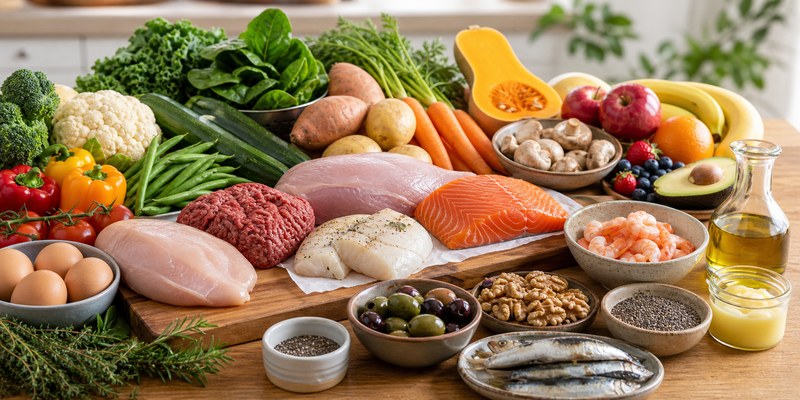
These Whole30 foods pair 51 compliant staples with label gotchas, serving ideas, and clean swaps for sugar, grains, dairy, and legumes.
Table of Contents
Whole30 Grocery Run Reality

Day one of a strict 30-day reset starts in the store, and it humbles most people fast. You flip the bacon over and find sugar in the first three ingredients, put back honey-roasted almonds with added sugar, and stand in the produce aisle wondering whether corn counts as a grain.
A working list of Whole30 foods is what turns that guesswork into a fast lap. Every compliant plate is built from the same lanes: an egg or a chicken thigh, a bowl of greens, a salad with lemon, a roasted potato, avocado, and a clean fat. Once each food carries its own compliant note and its own gotcha, the reading-every-label portion of the elimination gets much quieter.
The compatibility notes below follow the current Whole30 program rules and the official rule-change log. A registered dietitian or your own doctor should hear about any 30-day elimination first, especially alongside medication or a medical condition. This list is grocery guidance, not medical advice.
Key Takeaways
- Read every label: Whole30 foods can hide added sugar in bacon, broth, sausage, and sauces.
- Start with whole ingredients: Meat, seafood, eggs, vegetables, fruit, and natural fats simplify compliance.
- Remember the exceptions: White potatoes, green beans, and most peas fit; corn and peanuts do not.
51 Whole30 Foods With Label Gotchas
Use this compliant grocery tracker to compare whole ingredients, easy servings, and the label detail that can break the reset.
🌱
Whole Foods Grocery Shortcut
Stock plain proteins, produce, potatoes, fruit, and compliant fats in one run.
| Food | Why It Helps | Pro Tip |
|---|---|---|
| #1. Eggs | Eggs are compatible and provide about 6 g protein each; cook them in olive oil, coconut oil, or ghee instead of butter. | Hard-boil a dozen on prep day for grab-and-go breakfasts. |
| #2. Chicken thighs | Compliant and about 21 g protein per fillet; the skin is fine, but pre-marinated packs often hide sugar and soy, so buy plain. | Roast skin-on at 425°F for crisp edges without any coating. |
| #3. Chicken breast | Plain chicken breast is compatible; a cooked 3-oz portion has about 26 g protein, while flavored packs can hide added sugar or dairy. | Pound to even thickness so it cooks without drying out. |
| #4. Ground beef | Plain ground beef is compatible; 3 oz cooked brings about 22 g protein, while pre-seasoned patties may contain breadcrumbs or sugar. | Grass-fed 85/15 stays juicy for compliant burgers and taco bowls. |
| #5. Sirloin steak | Plain sirloin fits, with about 40 g protein in 6 oz; skip marinades and rubs with added sugar. | Salt ahead, sear hot, and finish with ghee instead of butter. |
| #6. Pork tenderloin | Plain pork tenderloin is compatible; a cooked 3-oz portion adds about 22 g protein, while glaze packets often contain added sugar. | Rub with just salt, pepper, and herbs, then roast to 145°F. |
| #7. Bacon | Bacon fits only when its ingredients contain no added sugar; 2 cooked slices supply about 6 g protein. | Check for “no sugar added” and skip anything ending in “-ose.” |
| #8. Salmon | Compliant with omega-3 fats that anti-inflammatory eating leans on; canned versions can smuggle in soy broth, so read the tin. See our anti-inflammatory foods guide. | Frozen wild fillets cook straight from the freezer in minutes. |
| #9. Sardines | Sardines packed in water or compatible oil fit; 3 oz gives about 21 g protein plus calcium from the soft bones. | Fork them over greens for a two-minute compliant lunch. |
| #10. Tuna | Tuna is a shelf-stable compatible protein; a 3-oz portion supplies about 22 g protein, but broth or stock may contain soy. | Bind it with compliant mayo and lemon, not sweet relish. |
| #11. Cod | Compliant white fish with about 20 g protein per fillet; only battered or breaded cod breaks the reset. | Butter-baste with ghee and finish under the broiler. |
| #12. Shrimp | Plain shrimp is compatible and quick to cook; 3 oz delivers about 20 g protein, while prepared sauces may add sugar. | Sauté in ghee for three minutes until just pink. |
| #13. Ground turkey | Plain ground turkey is compatible; a cooked 3-oz serving has about 23 g protein, while flavored blends may add sugar or soy. | Buy plain 93/7 and season it yourself with herbs. |
| #14. White potatoes | White potatoes have been compatible since 2014; 1 medium potato has about 900 mg potassium, but commercially prepared fries and chips remain out. | Roast wedges in olive oil, or boil and smash them. |
| #15. Sweet potatoes | Sweet potatoes are compatible; 1 medium potato brings about 4 g fiber plus beta-carotene, while candied versions add excluded sweeteners. | Bake whole at 400°F for a naturally sweet, no-sugar side. |
| #16. Butternut squash | Compliant, filling, and about 4 g fiber per cup; pre-cubed bags are a huge prep shortcut with no gotcha at all. | Roast until the edges caramelize on their own natural sugar. |
| #17. Spaghetti squash | Spaghetti squash is a compatible noodle swap; 1 cooked cup brings about 2 g fiber while grain-based pasta stays out. | Halve, roast cut-side down, then rake into strands with a fork. |
| #18. Carrots | Compliant, purely whole, and about 4 g fiber per cup; only “glazed” or honey-roasted prep would break compliance. | Roast whole with cumin for a sweet, no-sugar side. |
| #19. Spinach | Plain spinach is compatible fresh or frozen; 2 raw cups add about 1 g fiber plus folate and vitamin K. | Baby spinach folds into an omelet or a warm bowl instantly. |
| #20. Kale | Plain kale is compatible; 1 chopped cup adds fiber and vitamins A, C, and K, while salad kits may include sugar or dairy. | Massage with olive oil and salt to soften the raw chew. |
| #21. Broccoli | Compliant, high in vitamin C, and about 5 g fiber per cup; steamed or roasted plain keeps it firmly in the reset. | Roast at 425°F until the florets char at the tips. |
| #22. Cauliflower | Cauliflower is a compatible rice-and-mash swap; 1 raw cup supplies about 2 g fiber, while prepared gnocchi may contain grain starch. | Rice it in a food processor for a compliant stir-fry base. |
| #23. Zucchini | Zucchini is a compatible noodle swap; a sliced cup has about 20 calories and needs no specialty product. | Spiralize and sauté hot for two minutes, no longer. |
| #24. Cucumbers | Compliant, hydrating, and about 95 percent water; only jarred pickles with sugar or a sweet brine fall outside the reset. | Slice into salads or scoop compliant guacamole with them. |
| #25. Bell peppers | Red bell pepper is compatible raw or cooked; 1/2 cup provides about 95 mg vitamin C. | Roast and store slices in olive oil for the week. |
| #26. Tomatoes | Fresh tomatoes are compatible; a chopped cup has about 2 g fiber, while some jarred sauces contain added sugar. | Choose a jar whose label lists tomatoes, herbs, and salt only. |
| #27. Mushrooms | Plain mushrooms are compatible; 1 raw cup contains about 15 calories, while breading, cheese, or soy-based sauces can break the reset. | Cook hot and dry first, then add compliant fat after they brown. |
| #28. Green beans | Green beans are a named legume exception; 1 cooked cup gives about 4 g fiber and is compatible. | Blister in a hot pan with garlic and olive oil. |
| #29. Sugar snap peas | Sugar snap peas are compatible along with most peas; 1 raw cup brings about 3 g fiber. | Eat raw with guacamole or blister them quickly in ghee. |
| #30. Brussels sprouts | Plain Brussels sprouts are compatible; 1 cooked cup has about 6 g fiber, while restaurant glazes may add sugar. | Halve and roast cut-side down until deeply browned. |
| #31. Asparagus | Compliant, quick, and about 2 g fiber per six spears; nothing to watch for beyond a non-compliant hollandaise. | Roast at high heat and finish with lemon, not sauce. |
| #32. Cabbage | Plain cabbage is compatible and inexpensive; 1 chopped cup adds about 2 g fiber, while deli slaw often contains added sugar. | Dress your own slaw with olive oil, vinegar, and salt. |
| #33. Beets | Compliant, earthy, and nitrate-rich; only pickled beets in a sweet brine fall outside the 30-day reset. | Vacuum-packed cooked beets skip the staining prep mess. |
| #34. Eggplant | Plain eggplant is compatible; 1 cooked cup carries about 2 g fiber, while breaded Parmesan versions add grains and dairy. | Roast rounds in olive oil until silky and collapsed. |
| #35. Avocado | Compliant natural fat with about 700 mg potassium each; check guacamole tubs for added sugar, dairy, or soy. | Mash your own with lime, salt, and cilantro. |
| #36. Olives | Plain olives are compatible; 5 large olives have about 25 calories, while cheese-stuffed versions contain dairy. | Keep a jar at your desk for the mid-afternoon craving. |
| #37. Olive oil | Plain olive oil is compatible; 1 tablespoon carries about 14 g fat, and current rules also permit other unflavored cooking oils. | Use extra-virgin cold and a lighter olive oil for heat. |
| #38. Coconut oil | Plain coconut oil is compatible; 1 tablespoon contains about 14 g fat for roasting or sautéing. | Great for high-heat pans where olive oil would smoke. |
| #39. Ghee | Ghee is a named dairy exception in the official rules; 1 tablespoon supplies about 14 g fat, though dairy allergies still warrant caution. | Use it anywhere a recipe would have called for butter. |
| #40. Coconut milk | Unsweetened coconut milk is compatible; 1/2 cup of canned milk adds creaminess, while sweetened or dairy-blended versions do not fit. | Full-fat canned blends into compliant curries and coffee. |
| #41. Almonds | Plain almonds are compatible; 1 oz offers about 6 g protein, while honey-roasted varieties contain added sugar. | Portion into small containers so the ounce does not creep. |
| #42. Walnuts | Compliant with omega-3 ALA; nothing hidden in raw walnuts, though candied or “glazed” bags obviously break the reset. | Toast in a dry pan to wake up the flavor before salads. |
| #43. Cashews | Plain cashews are compatible and blend into sauces; 1 oz has about 5 g protein, while sweetened flavors do not fit. | Soak raw cashews to blend a dairy-free compliant cream. |
| #44. Almond butter | Almond butter is compatible when it contains no excluded ingredients; 2 tablespoons deliver about 7 g protein, but added sugar or peanuts do not fit. | Stir the natural oil back in and store it upside down. |
| #45. Chia seeds | Compliant with about 10 g fiber per ounce; plain seeds are safe, but flavored “pudding kits” often carry sugar and dairy. | Soak in compliant coconut milk overnight for breakfast. |
| #46. Apples | Whole apples are compatible; 1 medium apple has about 4 g fiber, while sweetened dried apple products do not fit. | Slice with almond butter for a compliant afternoon snack. |
| #47. Berries | Fresh or plain frozen berries are compatible; 1 cup of raspberries contains about 8 g fiber, while sweetened blends do not fit. | Keep a bag of plain frozen berries for a fast bowl. |
| #48. Oranges | Compliant with about 70 mg vitamin C each; eat the whole fruit, since bottled juice is concentrated sugar and out. | Segment one over a spinach salad for brightness. |
| #49. Bananas | A plain banana is compatible; 1 medium fruit provides about 420 mg potassium, while sweetened banana chips do not fit. | Freeze ripe ones to blend into a compliant nice-cream. |
| #50. Compliant coconut aminos | Coconut aminos are a named soy-sauce exception; use about 1 tablespoon and check flavored versions for added sugar. | Use it splash-for-splash where a recipe wants soy sauce. |
| #51. Fresh herbs | Fresh herbs and plain spices are compatible; even 1/4 cup of chopped herbs adds flavor without a bottled sauce. | Stir them in at the end so the aroma survives the heat. |
Whole30 Food List: Pinterest Pin
Save these Whole30 foods to your reset board, then use our plant-based meal ideas after reintroduction when legumes return to the menu.
📌 Hover over this pin to save this post for later.

One Day Whole30 Meal Planner
Here is how the Whole30 foods above assemble into one repeatable day with protein and produce in every main meal. For a gentler everyday pattern, compare our Mediterranean diet foods.
| Meal | Plate | Protein |
|---|---|---|
| Breakfast | Three eggs scrambled in ghee with spinach and roasted potatoes | ≈18 g |
| Lunch | Salmon over a big salad with avocado, cucumber, and lemon | ≈25 g |
| Snack | Sardines with sugar snap peas and a handful of olives | ≈12 g |
| Dinner | Sirloin with roasted Brussels sprouts and spaghetti squash | ≈40 g |
| Dessert | Berries with a spoon of compliant coconut milk | ≈2 g |
| Day total | Protein at every meal, produce in every slot | ≈97 grams of protein |
Whole30 Foods to Limit
The reset removes several broad categories for 30 days. The 51 picks above replace them, while our prediabetes foods guide offers practical swaps for steadier meals afterward.
1. Sweeteners and grains
Two eliminated lanes include every sweetener plus wheat, oats, rice, and corn.
Swap: Whole fruit, cauliflower rice, or spaghetti squash
2. Legumes and dairy
Two excluded groups cover beans, lentils, soy, peanuts, milk, cheese, and yogurt.
Swap: Tree nuts, almond butter, coconut milk, or ghee
3. Alcohol and hidden sugar
Two label flags are alcohol and any added sweetener, including honey or syrup.
Swap: Sparkling water, whole cuts, and unsweetened cans
4. Baked-good recreations
The 30-day reset also excludes pancakes, breads, and cookies made from compliant ingredients.
Swap: A plate of eggs, vegetables, and fruit
Whole30 Shopping Tips
Shopping for Whole30 foods comes down to a handful of label-reading habits that keep hidden sugar and additives out of the cart. For everyday eating after reintroduction, compare our vegetarian foods, low-carb foods, and high-fiber cookbook guide.
Whole30 Foods: Five Label Checks
- Read every ingredient list, not the front of the box: look for added sweeteners, grains, legumes, dairy, or alcohol.
- Shop the store perimeter first, where whole meat, seafood, eggs, and produce need no label reading at all.
- Vet the three sneaky staples by name every trip: bacon, broth, and sausage almost always carry added sugar unless marked otherwise.
- Check cans and flavored fats carefully, since coconut milk, fish, and seasoning blends may hide added sugar, soy, or dairy.
- Stock compliant backups in the freezer, so a chaotic week ends in roasted salmon and vegetables instead of a broken streak.
FAQs
Quick answers to the questions people actually ask about Whole30 foods before a 30-day reset.
1. Are potatoes allowed on Whole30?
White potatoes are compatible and have been since a 2014 rule change. Roast, boil, or mash them, but commercially prepared fries and chips remain outside the program regardless of cooking oil. Among Whole30 foods, plain potatoes are a practical starchy vegetable. That distinction matters because all unflavored cooking oils are now compatible under current rules.
2. Is corn a vegetable or a grain?
Corn counts as a grain on this plan, so it lands on the eliminated list beside wheat, oats, and rice, no matter how vegetable-like it looks on the cob. That rules out popcorn, cornmeal, corn tortillas, and grits. Lean on other Whole30 foods instead, swapping in spaghetti squash or a pile of roasted vegetables.
3. Which Whole30 foods make the best snacks?
Reach for whole ingredients that need no label check: a hard-boiled egg, olives, apple slices with almond butter, or sugar snap peas with guacamole. Compliant jerky and canned sardines both travel well for a desk drawer. The program actually prefers a real mini-meal over constant grazing, so treat these picks as simple bridges between your main plates.
4. Can I drink coffee on the reset?
Black coffee is fully compliant, and it survives most people’s morning routine intact. The catch is entirely what you add: milk, cream, sugar, and sweetened creamers are all out for the reset. Compliant Whole30 foods stand in nicely, so splash in full-fat coconut milk or simply brew it strong enough to drink plain.
5. Is peanut butter compliant?
Peanuts are a legume, not a tree nut, so both peanuts and peanut butter sit outside the elimination for all thirty days. Among Whole30 foods, almond, cashew, and other tree-nut butters are fine, provided the jar lists only nuts and salt. That single legume distinction trips up more first-timers than any other rule.
6. How do I spot hidden sugar?
Scan the full ingredient list, since added sugar hides under dozens of names, from cane juice to dextrose to fruit-juice concentrate. Bacon, sausage, broth, and canned sauces are the usual offenders. The Whole30 foods approach is simple here: if any sweetener appears anywhere in the ingredients, put the package back on the shelf.
7. What about restaurant meals?
Order simply and ask the server direct questions, because kitchens routinely hide added sugar, dairy, or soy in sauces, dressings, and marinades. A plain grilled protein with steamed vegetables and olive oil is the safest bet. Whole30 foods travel well too, so packing your own compliant lunch beats gambling on a menu you cannot verify.
Whole30 Video: Program Basics
Melissa Urban explains the elimination and reintroduction framework behind Whole30 foods, including why the program is a short-term experiment rather than a permanent weight-loss diet.
Video credit: Melissa Urban.
Your Whole30 Foods Reset Plan

Build most meals from eggs, meat, seafood, vegetables, potatoes, fruit, and simple fats. Use ingredient labels to screen out added sugar, grains, most legumes, dairy, and alcohol during the 30-day elimination.
The sample day puts protein in every meal, adds produce throughout, and reaches about 97 grams of protein without added sugar. Change the protein and vegetables as needed while keeping the same label checks.
Keep this 51-item list as your grocery backbone, and if the elimination leaves you leaning low-carb afterward, our best keto diet foods guide picks up where the reset ends.
