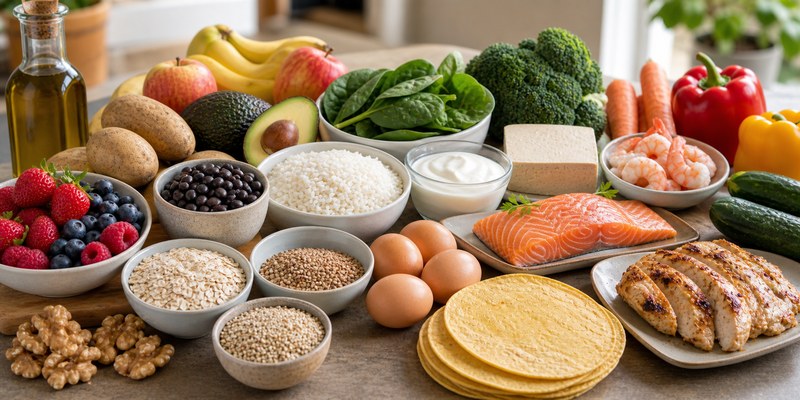
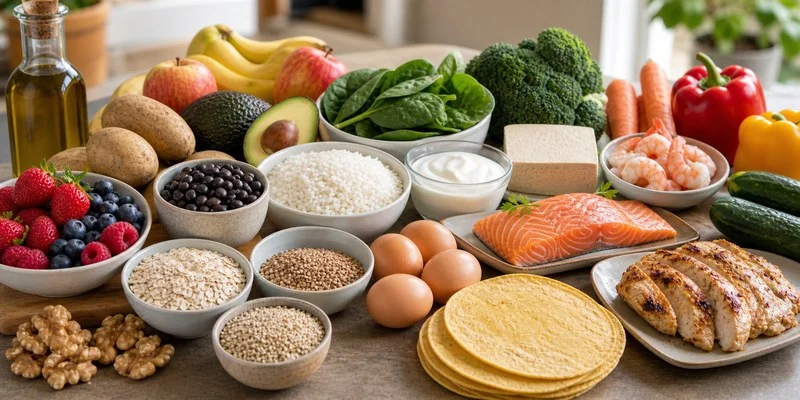
These gluten-free foods separate naturally safe staples from label-check products, with cross-contact notes, serving ideas, and a three-day plan.
Table of Contents
Where Gluten Hides

When I first sorted through a gluten-free grocery list, chicken, rice, and plain yogurt looked simple. The slowdown came with soy sauce, deli meats, oats, cooking sprays, salad dressings, and products that looked safe until the ingredient list said otherwise. I learned to check the package as carefully as the ingredient.
I mark these gluten-free foods by the decision you actually make: naturally safe, certified, or check the package. That distinction matters for celiac disease, non-celiac gluten sensitivity, and wheat allergy, where the same shelf can carry very different cross-contact risks.
I checked the framework against NIDDK guidance for eating with celiac disease. Cross contact can turn a safe ingredient into a problem, and medical professionals recommend testing before removing gluten when a diagnosis is still in question. Treat this as grocery guidance, not medical advice.
Key Takeaways
- Start with whole food: Gluten-free foods are easiest when the ingredient list has one item.
- Certify the risky staples: Oats, breads, flours, and shared-line grains need a trustworthy label.
- Control the kitchen: A separate toaster, colander, fryer, and cutting board prevent common cross contact.
51 Gluten-Free Foods With Label-Check Notes
Use these gluten-free foods to compare fresh produce, fresh fish, dairy products, certified grains, and packaged options. Whole ingredients are straightforward; food products with sauces, coatings, or seasoning need a closer read.
🌱
Whole Foods Grocery Shortcut
Stock produce, plain proteins, dairy, rice, potatoes, beans, and certified staples in one run.
| Food | Why It Helps | Pro Tip |
|---|---|---|
| #1. Eggs | Naturally safe, about 6 g of protein each, and never a gluten risk unless a diner batter or filler is added. | Watch pre-made omelet mixes and diner pancake batter on shared griddles. |
| #2. Chicken breast | Naturally gluten-free with about 26 g protein per 3 oz; only breading, marinades, or self-basting brine turn it risky. | Skip the flour dredge – build a chicken avocado salad instead. |
| #3. Turkey | Plain fresh turkey is naturally safe with about 25 g protein per 3 oz; deli and processed turkey is the label-check version. | Cross-contamination lurks in deli slicers shared with wheat-crumbed meats. |
| #4. Lean beef | Fresh cuts are naturally gluten-free with iron and about 22 g protein per 3 oz. | Check seasoning blends and pre-marinated cuts for wheat or malt. |
| #5. Pork tenderloin | Naturally safe and lean with about 22 g protein per 3 oz; only rubs and glazes need a label read. | Many spice rubs use wheat flour as an anti-cake filler – read them. |
| #6. Salmon | Naturally gluten-free with about 22 g protein per 3 oz; watch teriyaki and smoked-fish cures. | Bottled teriyaki almost always hides soy sauce made with wheat. |
| #7. Tuna | Plain canned tuna is naturally safe, about 20 g protein per can. | Some flavored pouches add soy sauce or broth – check the pouch. |
| #8. Shrimp | Fresh or frozen plain shrimp has about 20 g protein per 3 oz; breaded and popcorn versions are not. | Buy raw, not the breaded freezer bags near the fish sticks. |
| #9. Tofu | Plain tofu is naturally safe with about 10 g protein per half cup; marinated tubs are the label version. | Pre-marinated tofu often swims in wheat-based soy sauce. |
| #10. Greek yogurt | Plain yogurt is naturally gluten-free with about 17 g protein per cup. | Cookie-and-granola cups add wheat – buy plain and add your own fruit. |
| #11. Milk | Plain dairy milk is naturally safe with about 8 g protein per cup. | Malted milk and some flavored milks carry barley malt – skip those. |
| #12. Cheddar | Block and sliced natural cheese is gluten-free with about 7 g protein per oz. | Blue cheese and shredded blends occasionally use a wheat-starch anti-cake dust. |
| #13. Cottage cheese | Naturally safe, about 14 g protein per half-cup with almost no carbs. | Modified food starch on the label is worth a quick source check. |
| #14. Rice | White and brown rice are naturally gluten-free, with about 4 g protein per cooked cup. | Skip boxed rice pilaf mixes; the seasoning packet often carries wheat. |
| #15. Quinoa | Naturally safe complete grain, about 8 g protein per cooked cup. | Rinse well and buy certified when a brand shares lines with wheat. |
| #16. Certified gluten-free oats | Oats provide about 4 g fiber per cooked cup, but cross-contact makes the certified label essential. | Never buy bulk-bin oats; shared scoops and silos carry wheat. |
| #17. Buckwheat | Despite the name, buckwheat is gluten-free with about 6 g protein per cooked cup. | Watch buckwheat pancake mixes that blend in regular wheat flour. |
| #18. Amaranth | Naturally safe pseudo-grain with about 9 g protein per cooked cup. | Buy certified brands if you react to trace cross-contamination. |
| #19. Corn tortillas | Made from masa, one corn tortilla has about 2 g protein; flour tortillas are not gluten-free. | Read the bag – some brands blend in wheat flour for stretch. |
| #20. Corn polenta | Plain cornmeal polenta is naturally safe with about 2 g fiber per cooked cup. | Pre-seasoned polenta tubes can carry wheat-based flavorings. |
| #21. Potatoes | One medium potato is naturally gluten-free and provides about 4 g protein. | Restaurant fries share fryer oil with breaded foods – cross-contact central. |
| #22. Sweet potatoes | One medium sweet potato is naturally safe with about 4 g fiber. | Casserole toppings and pre-cut seasoned wedges are the label version. |
| #23. Cassava | One cup of cassava provides about 3 g fiber and is naturally gluten-free. | Cassava flour is a clean one-word ingredient – verify nothing else is added. |
| #24. Beans | Cooked beans provide about 15 g protein per cup; canned beans are usually clean. | Baked beans and chili-seasoned cans can hide wheat – read them. |
| #25. Lentils | Naturally gluten-free with about 18 g protein per cooked cup. | Boxed lentil-soup kits sometimes tuck barley into the grain blend. |
| #26. Chickpeas | Cooked chickpeas provide about 15 g protein per cup for bowls and hummus. | Falafel mixes and some hummus brands add wheat – check the tub. |
| #27. Plain nuts | Raw nuts are naturally gluten-free and average about 6 g protein per oz. | Skip wheat-dusted honey-roasted tins and shared bulk bins. |
| #28. Spinach | Cooked spinach is naturally safe with about 3 g protein per half cup. | Creamed-spinach mixes use a wheat-flour roux – make it fresh. |
| #29. Kale | Cooked kale is naturally gluten-free with about 3 g fiber per cup. | Bagged kale-salad kits can carry crouton or wheat-based dressing packets. |
| #30. Romaine lettuce | Romaine is naturally safe with about 1 g fiber per shredded cup. | Watch pre-made Caesar kits for crouton and malt-vinegar dust. |
| #31. Broccoli | Naturally gluten-free with fiber and vitamin C in one head. | Steamer bags with cheese sauce often use a wheat-starch thickener. |
| #32. Cauliflower | Naturally safe and the base of many GF rice and crust swaps. | Store-bought “cauliflower” crusts frequently sneak in wheat flour. |
| #33. Carrots | Naturally gluten-free, sweet, and cheap by the pound. | Glazed and honey-dipped baby carrots can carry a starch coating. |
| #34. Bell peppers | Naturally safe with more vitamin C than a whole orange per cup. | Stuffed-pepper kits and fajita seasoning packets are the label version. |
| #35. Cucumbers | Naturally gluten-free, water-heavy crunch for snacks and salads. | Skip pre-made dips; some use wheat-based thickeners. |
| #36. Zucchini | Naturally safe, mild bulk for noodles, sheet pans, and grills. | Spiralize it fresh instead of buying breaded zucchini fries. |
| #37. Tomatoes | Naturally gluten-free fresh; jarred sauces are the ones to read. | Some pasta sauces thicken with wheat flour – scan the label. |
| #38. Eggplant | Naturally safe and meaty; only breading turns it risky. | Skip pre-crumbed eggplant cutlets in the freezer aisle. |
| #39. Green beans | Naturally gluten-free with fiber and folate in a light package. | Casserole kits with fried onions carry wheat – build it fresh. |
| #40. Asparagus | Naturally safe spears, quick-roasting, and vitamin-K rich. | Skip hollandaise and cream sauces that lean on a flour roux. |
| #41. Mushrooms | Naturally gluten-free with a meaty chew and no carbs to speak of. | Canned cream-of-mushroom soup is thickened with wheat – read it. |
| #42. Cabbage | Naturally safe, cheap, and endlessly slaw-able. | Bagged coleslaw dressing packets sometimes carry malt vinegar. |
| #43. Peas | Naturally gluten-free with about 8 g protein per cooked cup. | Frozen pea “steamer” sauces can hide a wheat-starch thickener. |
| #44. Radishes | Naturally safe peppery crunch, mostly water and vitamin C. | A clean raw snack – nothing to check when eaten plain. |
| #45. Celery | Naturally gluten-free, hydrating, and dip-friendly. | Fill the groove with plain nut butter, not wheat-thickened spreads. |
| #46. Avocado | Naturally safe good fat plus potassium and fiber. | A whole avocado is clean; only pre-made guac dips need a scan. |
| #47. Berries | Naturally gluten-free antioxidants for snacks and yogurt bowls. | Pie-filling cans thicken with wheat – buy fresh or plain frozen. |
| #48. Bananas | Naturally safe potassium and quick energy for pocket change. | Whole bananas are clean; banana-bread mixes obviously are not. |
| #49. Apples | Naturally gluten-free fiber that travels well in any bag. | Caramel-dipped apples can carry a wheat-based coating. |
| #50. Oranges | Naturally safe with about 70 mg of vitamin C each. | Whole fruit only – the peel and flesh are clean by default. |
| #51. Pears | Naturally gluten-free, high-fiber, and gentle on the stomach. | A clean whole-fruit snack; canned pears in syrup are usually fine but worth a scan. |
Gluten-Free Food List: Pinterest Pin
On Pinterest? Save the naturally safe grid beside our chicken avocado salad for an easy lunch that starts with single-ingredient staples.
📌 Save these gluten-free foods to your grocery board before the next label-reading trip.

3-Day Gluten-Free Meal Planner
These gluten-free foods become three ordinary days built from fresh ingredients, certified oats, plain dairy, and simple cooking oils. Check every packaged label, especially tamari, oat products, broth, and seasoning blends.
| Meal | Day 1 | Day 2 | Day 3 |
|---|---|---|---|
| Breakfast | Certified oats with Greek yogurt and berries | Eggs, potatoes, spinach, and bell peppers | Plain yogurt with banana, peanut butter, and certified granola |
| Lunch | Chicken, brown rice, avocado, and salsa | Tuna over quinoa with cucumbers and olive oil | Lentil soup with corn tortillas and cabbage slaw |
| Snack | Apple with plain nuts | Carrots with certified hummus | Orange with hard cheese |
| Dinner | Salmon, potatoes, and roasted broccoli | Beef, rice noodles, vegetables, and certified tamari | Chicken, quinoa, green beans, and mushrooms |
| Day total (protein focus) | About 104 g | About 111 g | About 98 g |
Gluten-Free Label Rules for Packaged Food
These gluten-free foods still require special attention once a package or restaurant kitchen gets involved. A gluten-free label in the United States means the U.S. Food and Drug Administration standard applies: the food must contain less than 20 parts per million of gluten. Third-party certifications may use tighter controls, but the package label still matters. Read the ingredients list and allergen statement every time, because manufacturers can change different ingredients without announcing it on the front.
Wheat, barley, rye, wheat gluten, wheat flour, wheat starch, malt flavoring, malt vinegar, and brewer’s yeast are common gluten-containing ingredients. Soy sauce often begins with wheat, while brown rice syrups, salad dressings, cooking sprays, granola bars, tortilla chips, ice cream, hot dogs, imitation meat, and imitation seafood may use a binding agent or shared equipment.
Cross contact is the other half of the decision. Bulk bins, shared fryers, bakery counters, deli meats, French fries, and oat products can pick up gluten even when the base ingredient is safe. Certified gluten-free oats are the better choice, and a separate toaster, colander, cutting board, and condiment jar help keep a strict gluten-free diet workable at home.
The claimed benefits of the diet depend on why it is used. Celiac disease involves an immune reaction to gluten proteins; wheat allergy and gluten intolerance are different medical conditions. If gastrointestinal symptoms or symptoms of celiac disease are unexplained, follow the advice of your physician, a healthcare professional, or a registered dietitian before removing the trigger, because testing becomes harder after gluten is gone.
Gluten-containing foods and every gluten-containing grain are obvious exclusions, but some edge cases deserve a second look. Alcoholic beverages, dietary supplements, gluten-free versions of sauces, spice mixes with juniper berries, and naturally gluten-free ingredients processed on shared lines can all need verification. Whole grains can still fit through rice, quinoa, corn, and certified oats, giving healthy foods room to supply fiber and other important nutrients.
The presence of gluten is not always visible, and the amount of gluten matters more than a front-of-package promise. Reading current medical information is a good idea, especially when health care access is limited or testing is incomplete. In everyday language, gluten free should still mean verified, not assumed, and packaged choices remain part of a gluten-free diet only when the label and preparation hold up.
Gluten-Free Foods to Limit
Some gluten-free foods are safe by formula but weak as everyday staples, while others become risky through processing or cross contact. These four swaps keep the focus on useful nutrition and reliable labels.
1. Regular Soy Sauce and Malt Vinegar
One tablespoon can carry wheat or barley-derived malt even when the rest of the meal is safe.
Swap: Certified tamari plus distilled or apple cider vinegar.
2. Shared-Fryer French Fries
A 350 F shared fryer used for breaded chicken can still transfer crumbs that matter for celiac disease.
Swap: Oven-roasted potatoes or fries from a dedicated fryer.
3. Low-Fiber Packaged Snacks
Some gluten-free breads, cookies, and crackers provide under 2 g fiber per serving.
Swap: Brown rice, quinoa, beans, fruit, or the whole-grain ideas in our high-fiber cookbook guide.
4. Unverified Deli and Imitation Products
One marinade, slicer, or wheat-based binder can change an otherwise safe meat product.
Swap: Fresh roasted chicken, plain fish, eggs, or single-ingredient beans.
Gluten-Free Shopping Tips
Shopping for gluten-free foods gets faster when grocery stores are divided into naturally safe choices and products that need certification. Our Mediterranean diet foods and prediabetes foods guides overlap with the same fresh-produce foundation.
- Start with whole foods: fresh produce, fresh fish, plain meat, eggs, dairy, rice, potatoes, beans, nuts, seeds, olive oil, and other simple cooking oils.
- Use the certified label for gluten-free breads, flours, oats, oat milk, granola bars, sauces, and starchy foods produced on shared lines.
- Check package labels for wheat, barley, rye, malt, brewer’s yeast, wheat starch, and any form of wheat, including ingredients hidden in seasoning blends.
- Keep local resources handy: the Celiac Disease Foundation’s Medical Advisory Board and dietitian education can help when food deserts or a small local grocery store limit gluten-free options.
- At deli counters and restaurants, ask about clean gloves, knives, boards, fryers, and sauce containers before ordering; a safe ingredient can pick up crumbs at the last step.
FAQs
These answers cover the label, diagnosis, kitchen, and restaurant questions people ask about gluten-free foods.
1. Which choices are naturally safe to eat?
Fresh meat, fish, eggs, plain dairy, fruit, vegetables, rice, potatoes, beans, nuts, and seeds are naturally gluten-free foods. Trouble starts when sauces, coatings, seasoning, or shared equipment enter the picture. A single-ingredient item is usually straightforward, while deli counters, marinades, and prepared meals need a current label and a cross-contact question before they are safe.
2. Do oats count as gluten-free?
Oats do not contain wheat gluten, but farming and milling often place them beside wheat, barley, or rye. Only certified oats belong among reliable gluten-free foods for someone with celiac disease. Bulk-bin oats and ordinary cartons carry more cross-contact risk. A small number of people also react to pure oats, so symptoms still deserve professional guidance.
3. Which gluten-free foods can still hide gluten?
Processed products cause most surprises: soy sauce brewed with wheat, malt flavoring, seasoning blends, deli meats, salad dressings, gravies, imitation seafood, and shared-fryer French fries. The front label is not enough. Read the ingredient list, allergen statement, and certification, then ask how the food was prepared when a restaurant or deli controls the equipment.
4. Is cross contact really a problem?
For celiac disease, trace exposure from a toaster, colander, fryer, cutting board, bulk bin, or condiment jar can matter. Gluten-free foods stay safe only when preparation keeps crumbs and flour away. Separate tools at home, dedicated fryers at restaurants, and clean prep surfaces remove the most common routes without turning every meal into an exhausting inspection.
5. Can I eat out safely?
Restaurant meals can work when the kitchen understands cross contact. Ask about a dedicated fryer, separate utensils, clean grill space, and verified sauces, then order simple gluten-free foods such as grilled protein, rice, potatoes, or steamed vegetables. Skip any dish when the staff cannot identify the ingredients or explain how shared breading, flour, or fryers are handled.
6. Are packaged gluten-free products healthier?
A gluten-free claim describes gluten content, not overall nutrition. Cookies, snack bars, breads, and cereals can still be high in sugar, sodium, or refined starch and low in fiber. Build most meals from whole gluten-free foods, then use packaged versions for convenience. Weight loss is not automatic, and specialty products do not replace balanced meals.
7. How do I start a gluten-free kitchen?
Begin with the naturally safe staples you already cook, then replace three high-risk items: use certified tamari instead of soy sauce, certified oats instead of bulk oats, and single spices instead of uncertain blends. Keep gluten-free foods in a separate cabinet area, label condiments, and add a dedicated toaster, colander, cutting board, and fryer basket if needed.
Video: Gluten-Free Diet Basics
AsapSCIENCE explains what gluten is and why the medical reason matters. Pair that overview with the label and cross-contact rules beside these gluten-free foods.
Video credit: AsapSCIENCE.
Conclusion: Best Gluten-Free Foods

The easiest gluten-free foods plate usually starts before the specialty aisle: plain protein, fruit, vegetables, rice, potatoes, beans, dairy, nuts, and seeds. Packaged substitutes help, but they carry more label and cross-contact work.
- Best grocery base: Fresh meat, fish, eggs, produce, rice, potatoes, beans, and plain dairy.
- Best certification targets: Oats, flours, breads, granola, sauces, and shared-line grains.
- Best kitchen control: Separate high-contact tools and ask direct questions about fryers and prep surfaces.
Once those habits are automatic, the diet feels less like a scavenger hunt. For more meal overlap, use our foods to reduce inflammation, prediabetes foods to avoid, and vegan food list to build combinations that fit the same grocery trip.