

Thanksgiving on GLP-1: 31 familiar foods, flexible serving examples, holiday hosting suggestions, and practical leftover-storage guidance.
In This Guide
Thanksgiving Without a Food Test

My goal for this holiday guide is simple: keep the foods people look forward to, without making a full plate feel like an obligation. Turkey, stuffing, potatoes, and pie offer plenty of choices. I would rather help you choose comfortably than hand you another list of foods to fear.
For Thanksgiving on GLP-1, I have organized the familiar foods first, then the small adjustments that might make them more comfortable. The portion examples below are serving ideas, not medical targets or instructions to undereat. Your appetite, symptoms, and care plan still set the pace.
UC Davis Health’s holiday guidance emphasizes smaller portions, slower eating, and stopping at comfortable fullness. That is the approach behind this guide: choose what sounds good, leave room to change your mind, and do not let an untouched spoonful of stuffing become the story of your day.
Key Takeaways
- Keep favorites: Thanksgiving on GLP-1 does not require a separate holiday menu or a perfect plate.
- Start comfortably: Use familiar foods and modest starting portions; stop at comfortable fullness rather than finishing by habit.
- Plan safely: Keep medication decisions with your prescriber and refrigerate perishable leftovers within 2 hours.
31 Foods for Thanksgiving on GLP-1
The Thanksgiving on GLP-1 examples in this list are deliberately small so you can picture a tasting portion. They are not prescribed serving sizes, minimum intakes, or a complete day’s nutrition. Take more if you need it, less if you are comfortably satisfied, and leave out foods that reliably disagree with you. No single food guarantees freedom from nausea.
🌱
Whole Foods Grocery Shortcut
Find turkey, tofu, squash, green beans, yogurt, and other familiar ingredients in one grocery trip.
As an Amazon Associate, I earn from qualifying purchases.
| Food | Why It May Fit | Pro Tip |
|---|---|---|
| #1. Skinless Roast Turkey | A familiar lean-protein centerpiece; an illustrative 2 to 3 oz helping leaves space for sides. | Slice across the grain and offer cooking juices separately rather than soaking every plate in gravy. |
| #2. Roast Chicken | A practical alternative for a smaller gathering; try 2 thin slices before deciding on more. | Remove the skin if rich foods tend to bother you. A small bird also means fewer leftovers to manage. |
| #3. Baked Tofu | A plant-protein option that can share the roasting pan; set out 3 or 4 cubes as a tasting portion. | Bake with sage and thyme, then put sauces on the side. See other GLP-1 dinner ideas for everyday alternatives. |
| #4. Plain Greek Yogurt Dip | Adds a tangy dip without requiring a large bowl of creamy dressing; start with 2 tbsp. | Stir in dill and lemon zest. Use lactose-free yogurt if that is what you already tolerate. |
| #5. Halved Hard-Boiled Eggs | An easy appetizer to portion individually; 1 egg half is a small starting taste. | Keep the tray refrigerated until serving. Do not leave it out through both football games. |
| #6. Lentil and Herb Side | A meat-free choice with protein and fiber; 2 tbsp is a modest tasting scoop. | Skip a big first-ever serving if beans tend to bloat you. Familiar foods beat a holiday fiber experiment. |
| #7. Hummus | Works as a small spread rather than another heavy casserole; consider 1 tbsp on a cracker. | Label sesame for guests with allergies, and keep the container chilled between rounds of appetizers. |
| #8. Soft Green Beans | Bring a familiar vegetable to the plate; an illustrative 1/4 cup can fit beside turkey. | Steam or roast until tender and serve crunchy toppings separately. |
| #9. Roasted Butternut Squash | Offers autumn flavor without a marshmallow topping; set out a 1/4 cup serving spoon. | Use cinnamon or rosemary, and keep added butter light enough that guests can choose more themselves. |
| #10. Baked Sweet Potato | A simple alternative to candied yams; try a few spoonfuls from 1 small potato. | Split before serving so nobody feels obliged to take a whole large potato. |
| #11. Tender Carrots | A colorful cooked side; an illustrative 1/4 cup is easy to serve in a small bowl. | Use parsley or thyme rather than a thick sugary glaze. |
| #12. Roasted Zucchini | A softer vegetable option when a giant raw salad is unappealing; offer 3 or 4 slices. | Salt just before serving so the tray does not turn watery while guests arrive. |
| #13. Cooked Spinach | Fits in a small portion; 2 tbsp can add variety without a large mound of greens. | Drain well and offer it plain instead of automatically turning it into creamed spinach. |
| #14. Cauliflower Mash | An alternative texture, not a required potato replacement; start with 2 tbsp if cauliflower is familiar. | Cruciferous vegetables can still cause gas. Choose regular potato instead if it sits better with you. |
| #15. Tender Brussels Sprouts | A traditional side some readers enjoy; begin with 1 or 2 halves rather than a heaping scoop. | Roast until soft, skip the bacon coating, and pass if these reliably trigger your bloating. |
| #16. Mashed Potato | A plain, soft starch option; an illustrative 1/4 cup can anchor a small plate. | Keep gravy separate. There is no rule that every holiday carbohydrate must disappear. |
| #17. Brown Rice | An alternative for guests who prefer grains; use 1/4 cup cooked as a small serving example. | Its fiber may not suit everyone during nausea. Plain white rice is another option if better tolerated. |
| #18. Quinoa | A grain-style side that works warm or cold; try 2 tbsp alongside a familiar protein. | Rinse before cooking and keep the dressing separate. This is a food choice, not a glucose-control promise. |
| #19. Plain Dinner Roll | A familiar bread option; splitting 1 small roll makes room to choose other favorites. | Put butter in a separate dish rather than brushing every roll repeatedly. |
| #20. Herbed Stuffing | A holiday favorite need not become an all-or-nothing decision; 2 tbsp is a possible tasting portion. | Serve a less buttery version if you prefer. Rich sausage stuffing may feel different from plain herb stuffing. |
| #21. Cranberry Sauce | Adds a sharp-sweet accent; 1 tsp can flavor turkey without becoming a large side. | Treat it as a condiment, not a source of medical benefits. Pick the version you actually enjoy. |
| #22. Mushroom Gravy | Can provide savory flavor in a measured amount; try 1 tbsp on the side. | Mushrooms and onions bother some sensitive stomachs. Ask what is in the gravy before pouring. |
| #23. Sliced Pear | A simple fruit option for the dessert table; set out 2 or 3 thin slices. | Peel if that texture is easier for you. Fruit is optional, not something to force after fullness. |
| #24. Baked Apple | Gives a warm dessert alternative; an illustrative 1/4 apple works as a taste. | Bake until soft with cinnamon, and offer nuts separately for preference and allergy reasons. |
| #25. Berries | A fresh counterpoint to rich desserts; 2 tbsp can garnish yogurt or a small slice of pie. | Wash just before serving and refrigerate cut-fruit platters promptly. |
| #26. Pumpkin Pie | Can stay on the menu when it agrees with you; a 2-bite taste is one option, not a compulsory limit. | Take the rest home if comfortable fullness arrives first. Explore more GLP-1 dessert ideas for other occasions. |
| #27. Plain Yogurt With Cinnamon | An uncomplicated dessert alternative; start with 1/4 cup if dairy suits you. | Do not substitute it out of guilt when a small piece of your favorite dessert would be more satisfying. |
| #28. Turkey and Rice Soup | A way to reuse leftovers in a different format; serve 1 small bowl with turkey pieces. | Use safely refrigerated meat and reheat to 165°F. The turkey rice bowl is another leftover format. |
| #29. Turkey Sandwich | A familiar next-day lunch; make 1 small sandwich rather than stacking every leftover inside. | Keep cranberry and mayonnaise optional. See GLP-1 lunch ideas for other manageable combinations. |
| #30. Plain Oatmeal | A familiar breakfast before the gathering; 1 small bowl avoids the save-up-all-day approach. | Choose your usual portion and toppings. These GLP-1 breakfast ideas offer alternatives if oats are not your thing. |
| #31. Unsalted Crackers | A simple pantry backup if a rich buffet feels unappealing; keep a packet of 4 to 6 available. | Crackers alone are not a balanced daily plan. Persistent difficulty eating deserves a conversation with your care team. |
Thanksgiving Plate Ideas: Pinterest Pin
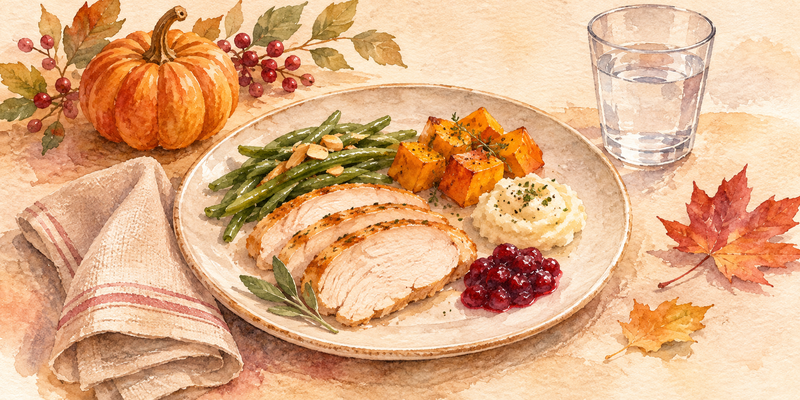
📌 Save this Thanksgiving on GLP-1 reminder for your shopping list or share it with the person hosting. The six pictured foods are options, not a required plate, and the illustration is not a portion prescription.

3-Day Thanksgiving Meal Planner
This Thanksgiving on GLP-1 planner covers the day before, the holiday, and the next day. It is an illustration of regular eating opportunities, not a calorie-controlled menu. Adjust amounts and snacks to your usual needs; the holiday meal may happen at lunch rather than dinner. Keep your diabetes or other medical eating plan in place.
| Meal | Day Before | Thanksgiving | Day After |
|---|---|---|---|
| Breakfast | Your usual oatmeal with yogurt or another protein | Egg and toast, or your familiar breakfast | Yogurt and fruit, with toast if wanted |
| Lunch | Turkey sandwich and cooked vegetables | A regular lunch if dinner is late; move the holiday meal here if served at noon | Turkey and rice soup using safely stored leftovers |
| Snack | A familiar snack if hungry | A small snack if there is a long gap before the meal | Crackers and hummus or another usual snack if hungry |
| Dinner | Baked tofu or chicken with rice and squash | Turkey or tofu, selected sides, and dessert if wanted and comfortable | An ordinary meal rather than a compensatory fast |
| Plan Ahead | Put shallow containers and a food thermometer where you can find them | Pause before seconds; pack perishable leftovers within 2 hours | Label refrigerated leftovers with the date and freeze surplus |
UNC Health suggests avoiding the save-up-all-day approach. A familiar breakfast and a realistic plan for a late meal can be more useful than arriving determined to fit an entire day’s food onto one plate.
Thanksgiving Foods to Limit
For Thanksgiving on GLP-1, “limit” means consider the amount and preparation, not declare a food forbidden. These four categories deserve a little thought if you have nausea, reflux, or uncomfortable fullness. The everyday foods-to-avoid guide has broader context beyond the holiday.
1. Rich Gravy and Creamy Casseroles
A plate with 3 rich sides can be much heavier than a small taste of one favorite. High-fat foods may aggravate gastrointestinal symptoms for some people.
Swap: Choose one favorite rich side and offer plain vegetables or potatoes alongside it.
2. Fried Appetizers and Fatty Meats
A handful of appetizers before dinner can become a second meal without much notice. Start with 1 choice and see how you feel rather than grazing automatically.
Swap: Try a small serving of a familiar protein or a yogurt dip, then sit down away from the serving tray.
3. Large Raw Salads or Sudden Fiber Loads
Adding 2 unfamiliar high-fiber dishes at once can be uncomfortable when you already feel bloated. More fiber is not always the answer to nausea or early fullness.
Swap: Use a familiar cooked vegetable and keep a first taste of beans or cruciferous vegetables modest.
4. Large Desserts and Alcoholic Drinks
A 2nd large serving of dessert or a rich cocktail may not feel like a small addition after dinner. Alcohol also deserves individual advice when medicines or medical conditions are involved.
Swap: Choose a small dessert if wanted, save more for later, and make a nonalcoholic drink easy to find.
Cleveland Clinic’s side-effect guidance supports smaller meals and attention to foods that worsen symptoms. If you repeatedly cannot eat enough or keep fluids down, a different side dish is not a substitute for medical advice.
Thanksgiving Shopping Tips
I would make the Thanksgiving on GLP-1 shopping plan boring in the best possible way: familiar ingredients, flexible portions, and somewhere safe to put leftovers. Use the GLP-1 grocery list for the ordinary meals around the celebration, rather than buying an entirely new pantry for one dinner.
- Choose one dependable protein. Turkey, chicken, or tofu can anchor the table without requiring every guest to eat the same amount.
- Buy vegetables you already tolerate. A holiday is not the ideal time to test five new high-fiber foods. The everyday food guide can help with the weeks around it.
- Put sauces and toppings in separate bowls. People can choose their own gravy, butter, nuts, or dressing without a special plate or explanation.
- Check the container supply before cooking. Shallow containers let you divide leftovers promptly; labels prevent the mystery box at the back of the fridge.
- Give guests permission to stop. “Take some home if you like” is kinder than repeatedly insisting on seconds, whatever medication someone does or does not take.
FAQs
These are the practical questions I would settle before Thanksgiving on GLP-1, especially when the meal time, menu, or pressure to take seconds is outside your control.
1. What Can I Eat for Thanksgiving on GLP-1?
Your holiday meal does not require an entirely separate menu. Start with familiar foods, take a modest first helping, and give yourself time to notice fullness. A small amount of a favorite side may fit better than a plate of supposedly perfect foods you dislike. Individual symptoms and your clinician’s advice still matter.
2. Should I Skip Breakfast Before the Big Meal?
Skipping breakfast to save room can make the day harder to manage. For Thanksgiving on GLP-1, keep a familiar meal or snack earlier in the day instead of deliberately fasting for dinner. Your needs may differ if you have diabetes or other conditions, so follow the eating plan you already agreed with your clinician.
3. Which Foods Are More Likely to Feel Uncomfortable?
Rich, fried, or very fatty dishes may worsen nausea or uncomfortable fullness for some people. Thanksgiving on GLP-1 can also feel harder when a large portion of beans or raw vegetables suddenly increases fiber. Notice your own patterns rather than assuming every food on an avoid list will affect you the same way.
4. Do I Have to Give Up Pumpkin Pie?
Pumpkin pie is not automatically off limits for Thanksgiving on GLP-1. Consider a small taste if you want it and feel comfortable eating more. You can also take dessert home for another day. The useful question is what feels manageable, not whether one dessert makes the whole holiday meal a success or failure.
5. What Should I Say When Someone Pushes Seconds?
A simple response usually needs no medical explanation: “It was lovely; I am comfortable for now.” During Thanksgiving on GLP-1, you can ask for a takeaway container or change the subject to the gathering itself. Decide beforehand whether you want to discuss medication. Sharing your health information is your choice, not a hosting obligation.
6. How Long Can I Keep the Leftovers?
FoodSafety.gov recommends refrigerating perishable leftovers within two hours and using refrigerated leftovers within three to four days. For Thanksgiving on GLP-1, smaller labeled containers can make later meals easier to portion without keeping food too long. Freeze what you will not use, and reheat leftovers to 165°F before eating them again. Use a thermometer.
7. When Should I Call My Prescriber About Symptoms?
Contact your care team if nausea, vomiting, or difficulty eating is persistent or interferes with drinking enough fluids. Severe or persistent abdominal pain needs prompt medical assessment. Thanksgiving on GLP-1 is not a reason to change medication timing yourself. Follow your medicine’s safety information and seek urgent help for severe symptoms rather than waiting.
Resources
For Thanksgiving on GLP-1, the most useful references are practical rather than promotional. UNC Health’s holiday tips address eating patterns and social pressure. FoodSafety.gov’s leftover guidance explains the two-hour refrigeration window, three-to-four-day refrigerator limit, and 165°F reheating temperature. Your prescriber or registered dietitian remains the right source for advice tailored to your symptoms and treatment.
Video: Meal Inspiration Beyond Thanksgiving
The American Medical Association has a general GLP-1 meal video titled “What to Eat While Taking a GLP-1 | High Protein Greek Bean Salad.” It is broader meal inspiration, not Thanksgiving on GLP-1 medical guidance. Beans may not suit everyone during bloating; choose foods you already tolerate.
Video credit: American Medical Association (AMA).
Thanksgiving Conclusion: Leave Room for the Gathering

The most useful Thanksgiving on GLP-1 plan is one you can actually use while people are talking and dishes are being passed. I would start with familiar foods, choose a few things that sound good, and leave the decision about seconds until later. A smaller first helping is an option, not a rule that you must stay hungry.
You do not owe anyone a medication explanation or a clean plate. If dinner is comfortable and you still want dessert, there is no need to turn that into a moral debate. If you are full, a container can save the food for another day.
Keep the medical decisions separate from the menu. Persistent or severe symptoms need proper advice, and changing medication timing to accommodate a holiday is not a food-planning strategy. For an ordinary day afterward, the seven-day GLP-1 meal plan offers more meal ideas. Once the leftovers are safely packed, let the gathering be about the people rather than the amount left on your plate.

Leave a Reply