
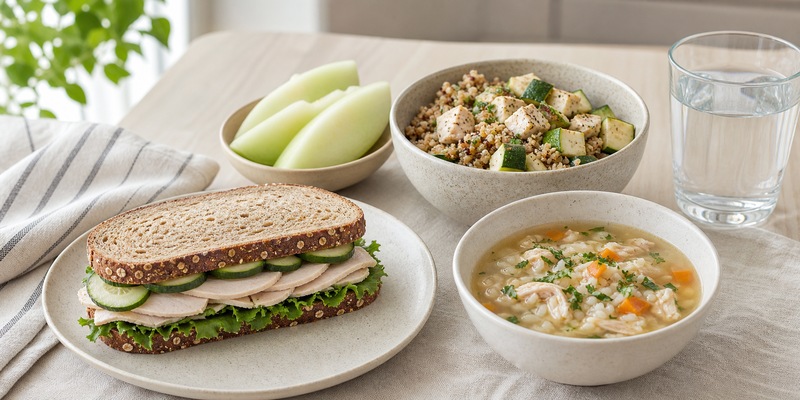
These GERD lunch ideas build workday meals around lean protein, whole grains, lower-acid produce, and practical trigger swaps.
Table of Contents
GERD Lunches That Actually Work

When I skip lunch planning, the easy defaults are a big sandwich, tomato-heavy leftovers, chips, or a rushed takeout. The better approach was simpler: one lean protein, one grain or potato, and produce I know agrees with me.
These GERD lunch ideas apply that formula across sandwiches, rice bowls, soups, wraps, and cold lunchboxes. Each entry keeps portions concrete and includes a trigger swap, because GERD is personal. Cucumber may sit fine with one person, while yogurt, beans, or another ingredient may not agree with someone else.
The NIDDK eating guidance for GERD and our GERD foods guide are the baseline. Common triggers include high-fat, spicy, caffeinated, mint, citrus, and tomato foods, but your clinician sets the right list. Meal-planning guidance, not medical treatment.
Key Takeaways
- Build smaller: GERD lunch ideas start with a moderate portion, lean protein, and familiar produce.
- Pack your swap: Replace personal triggers instead of assuming one universal reflux diet fits everyone.
- Track the pattern: Note portions, sauces, drinks, timing, and symptoms before cutting whole food groups.
51 GERD Lunch Ideas for Work and Home
Each meal gives you a practical portion, a rough protein cue, and one easy way to remove a common reflux trigger.
🌱
Whole Foods Grocery Shortcut
Stock lean poultry, fish, tofu, whole grains, potatoes, cucumbers, greens, melon, and low-fat dairy in one run.
Packable GERD Lunch Ideas
Sandwiches, bowls, soups, and wraps lead because they travel well and keep sauces or trigger ingredients easy to separate.
| Lunch Idea | Why It Fits | Pro Tip |
|---|---|---|
| #1. Turkey cucumber sandwich | Three ounces of turkey on 2 whole-grain slices supplies about 25 g protein without a fried filling. | Use cucumber and lettuce; skip tomato, hot peppers, and minty spreads if those are triggers. |
| #2. Chicken quinoa zucchini bowl | Three ounces of chicken plus 1/2 cup quinoa lands near 30 g protein in a moderate bowl. | Season with parsley and a small drizzle of olive oil instead of chili sauce or citrus dressing. |
| #3. Salmon rice cucumber bowl | A 3-ounce salmon portion with 1/2 cup brown rice provides about 25 g protein plus a steady grain base. | Choose baked salmon and a yogurt-dill spoonful; leave out sriracha, onions, and lemon if needed. |
| #4. Tuna white bean lettuce cups | Two ounces of tuna and 1/3 cup white beans bring roughly 21 g protein in 3 crisp lettuce cups. | Rinse the beans and bind with plain low-fat yogurt rather than a heavy mayonnaise dressing. |
| #5. Chicken and rice soup | A 2-cup broth bowl with 3 ounces of chicken offers about 26 g protein and a smaller-volume lunch. | Adapt our chicken soup recipe with mild broth and omit any spice that triggers symptoms. |
| #6. Turkey rice soup | Three ounces of lean turkey and 1/2 cup rice provide about 25 g protein with soft, reheatable texture. | Start from our turkey rice bowl, add broth, and keep the seasoning gentle. |
| #7. Lentil carrot soup | One cup of lentil soup contributes about 15 g protein and 8 g fiber, depending on the recipe. | Use carrots, celery, and herbs; omit tomato, garlic, or onion individually when your log flags them. |
| #8. Sweet potato cottage cheese bowl | One small sweet potato with 3/4 cup low-fat cottage cheese reaches about 22 g protein. | Add steamed green beans or spinach and chives instead of butter, bacon, or hot sauce. |
| #9. Egg white spinach wrap | Five egg whites in 1 whole-grain wrap give about 22 g protein with less yolk fat. | Wilt spinach first and use a light cheese sprinkle; avoid salsa when tomatoes or spice bring symptoms. |
| #10. Garlic-free hummus cucumber pita | One small pita with 1/3 cup hummus has roughly 12 g protein and a portable 400-calorie range. | Blend hummus without garlic or lemon, then add cucumber and lettuce for crunch. |
Meal-Prep GERD Lunch Ideas
These combinations hold up in containers, making them useful when Sunday prep needs to cover several workdays.
| Lunch Idea | Why It Fits | Pro Tip |
|---|---|---|
| #11. Tofu brown rice bowl | Five ounces of firm tofu with 1/2 cup brown rice supplies about 19 g protein. | Bake the tofu and use ginger-herb broth sparingly; test soy sauce if salty meals worsen symptoms. |
| #12. Lean turkey burger plate | A 4-ounce turkey patty delivers about 25 g protein without the higher fat load of many beef burgers. | Serve with lettuce, cucumber, and a baked potato half; skip pickles, ketchup, and raw onion as needed. |
| #13. Baked cod couscous box | Four ounces of cod and 1/2 cup couscous provide around 27 g protein in a light meal-prep box. | Add steamed green beans and dill; pack dressing separately so the portion stays modest. |
| #14. Shrimp quinoa vegetable bowl | Four ounces of shrimp with 1/2 cup quinoa supplies about 28 g protein and a measured grain portion. | Use zucchini and carrots with parsley; replace acidic vinaigrette with a spoonful of plain yogurt. |
| #15. Chickpea cucumber couscous salad | One cup built from 1/2 cup chickpeas and 1/2 cup couscous carries about 12 g protein. | Dress with yogurt, dill, and a teaspoon of olive oil; leave lemon and raw onion optional. |
| #16. White bean rosemary sandwich | Half a cup of mashed white beans on 2 whole-grain slices offers about 15 g protein and 10 g fiber. | Mash with rosemary and water instead of garlic, citrus, or a large pour of oil. |
| #17. Chicken melon spinach salad | Three ounces of chicken on 2 cups spinach with melon brings about 27 g protein and watery produce. | Use a mild yogurt dressing and consult our chicken avocado salad for prep, keeping avocado to a tolerated portion. |
| #18. Turkey low-fat cheese wrap | Three ounces of turkey plus 1 ounce low-fat cheese reaches roughly 31 g protein in one small wrap. | Add cucumber and greens; choose mustard only if vinegar and spice are not personal triggers. |
| #19. Yogurt egg salad lettuce cups | Two eggs with 1/4 cup Greek yogurt supply about 18 g protein across 4 lettuce cups. | Use dill and celery for flavor, then reduce yolk or portion size if higher-fat meals cause symptoms. |
| #20. Greek yogurt oat lunch bowl | One cup nonfat Greek yogurt with 1/3 cup oats provides about 26 g protein. | Top with banana or melon; leave chocolate, peppermint, citrus, and large nut portions out. |
Warm GERD Lunch Ideas
Oats, pasta, polenta, potatoes, farro, and rice make this group especially practical for reheating at home or work.
| Lunch Idea | Why It Fits | Pro Tip |
|---|---|---|
| #21. Banana oatmeal with egg whites | Half a cup dry oats plus 4 egg whites mixed in delivers about 20 g protein and 6 g fiber. | Cook the whites fully into the oats and use cinnamon only if it agrees with you. |
| #22. Quinoa edamame lunch bowl | One cup split between quinoa and shelled edamame supplies about 17 g protein. | Add steamed carrots and cucumber; use a light tamari drizzle instead of a spicy sesame sauce. |
| #23. Mild chicken pasta primavera | Three ounces of chicken and 1 cup cooked pasta land near 33 g protein before vegetables. | Use zucchini, carrots, and spinach with broth; skip tomato sauce, garlic, and red pepper flakes. |
| #24. Turkey meatballs with polenta | Four small lean turkey meatballs and 3/4 cup polenta provide about 24 g protein. | Bake the meatballs and spoon over herb broth instead of marinara or a heavy cream sauce. |
| #25. Chicken baked potato bowl | Three ounces of chicken over 1 small potato supplies about 29 g protein and a familiar starch. | Use steamed broccoli and low-fat yogurt; leave butter, bacon, and hot sauce off the counter. |
| #26. Chicken farro vegetable box | Three ounces of chicken with 1/2 cup farro provides about 31 g protein and 4 g fiber. | Roast zucchini and carrots without charring, then pack a mild herb dressing separately. |
| #27. Tuna pasta yogurt salad | Two ounces of tuna with 1 cup pasta and yogurt dressing offers approximately 25 g protein. | Fold in cucumber and celery; test vinegar, raw onion, and pepper one at a time. |
| #28. Bean and rice burrito bowl | Half a cup black beans plus 1/2 cup brown rice contributes about 11 g protein and 11 g fiber. | Build it without salsa, jalapeños, raw onion, or sour cream; use lettuce and plain yogurt. |
Fast GERD Lunch Ideas
These rely on leftovers, canned staples, or short assembly so lunch does not turn into an oversized takeout order.
| Lunch Idea | Why It Fits | Pro Tip |
|---|---|---|
| #29. Turkey quinoa stuffed zucchini | One zucchini half filled with 3 ounces turkey and 1/2 cup quinoa gives about 30 g protein. | Bake with herbs and a small cheese sprinkle instead of tomato sauce. |
| #30. Cottage cheese cucumber plate | One cup low-fat cottage cheese brings about 28 g protein alongside cucumber and whole-grain crackers. | Choose a lower-sodium carton when salt bothers you and keep crackers to a measured serving. |
| #31. Baked tofu sandwich | Five ounces tofu on 2 whole-grain slices provides around 24 g protein. | Add lettuce and cucumber with a mild yogurt spread; avoid chili crisp, pickles, and raw onion. |
| #32. Salmon potato yogurt salad | Three ounces salmon with 1 small potato and yogurt dressing supplies roughly 25 g protein. | Use dill and cucumber, then chill well; omit lemon and vinegar if acidity is a problem. |
| #33. Split pea vegetable soup | One and a half cups of split pea soup brings about 16 g protein and 12 g fiber. | Use carrots and herbs without ham, tomato, or pepper; start smaller if beans increase pressure. |
| #34. Chicken grain lunchbox | Three ounces chicken, 1/2 cup barley, and melon provide about 30 g protein in 3 compartments. | Keep wet ingredients separate and stop at comfortable fullness instead of finishing the box automatically. |
| #35. Turkey spinach rice bowl | Three ounces turkey with 1/2 cup rice and cooked spinach offers around 27 g protein. | Warm it with low-sodium broth and parsley; add no sauce until you know what your stomach tolerates. |
| #36. Ricotta spinach baked potato | Half a cup part-skim ricotta over 1 small potato provides about 16 g protein. | Fold in cooked spinach and chives, then skip butter, chili flakes, and tomato-based toppings. |
| #37. Chicken barley vegetable soup | A 2-cup bowl with 3 ounces chicken and 1/2 cup barley supplies roughly 29 g protein. | Use carrots, celery, and low-sodium broth; leave garlic and onion out when they appear in your symptom log. |
| #38. Turkey pear grain plate | Three ounces turkey, 1/2 cup farro, and 1 small pear deliver about 27 g protein. | Pack each part separately and swap pear for melon if that fruit is easier for you. |
| #39. Tofu rice noodle broth bowl | Five ounces tofu with 1 cup rice noodles contributes about 20 g protein in a warm lunch. | Add bok choy and carrots to mild broth; avoid chili oil, lime, and a large soy-sauce pour. |
| #40. Egg quinoa vegetable bowl | Two eggs with 3/4 cup quinoa offer about 18 g protein and 4 g fiber. | Serve with cooked zucchini and spinach, reducing yolk or oil if higher-fat meals bother you. |
| #41. White fish sweet potato plate | Four ounces baked haddock and 1 small sweet potato provide close to 27 g protein. | Use dill and steamed green beans instead of lemon, tartar sauce, or blackening spice. |
| #42. Chicken couscous stuffed pepper | One pepper half with 3 ounces chicken and 1/2 cup couscous reaches about 29 g protein. | Bake it without tomato sauce, and replace the pepper with zucchini if bell pepper is a trigger. |
| #43. Tempeh rice cucumber box | Four ounces tempeh with 1/2 cup rice brings around 25 g protein to a compact container. | Steam or bake the tempeh and use cucumber with mild herbs; test fermented soy in a small portion first. |
No-Reheat GERD Lunch Ideas
These eight cold or room-temperature choices work for commutes, school runs, and days when a microwave is not available.
| Lunch Idea | Why It Fits | Pro Tip |
|---|---|---|
| #44. Turkey hummus pinwheels | Three ounces turkey and 1/4 cup garlic-free hummus give about 25 g protein in 6 pinwheels. | Roll them with cucumber and lettuce, keeping lemon, garlic, pickles, and hot sauce out. |
| #45. Banana yogurt overnight oats | One cup nonfat Greek yogurt with 1/2 cup oats supplies about 27 g protein. | Use sliced banana and a little cinnamon; skip chocolate chips, peppermint, and a heavy nut-butter swirl. |
| #46. Chicken pasta cucumber salad | Three ounces chicken with 1 cup pasta contributes roughly 32 g protein before vegetables. | Mix with cucumber, dill, and low-fat yogurt, then carry vinegar separately if you are still testing it. |
| #47. Tofu soba lunch box | Four ounces tofu plus 1 cup cooked soba offers around 22 g protein in a chilled box. | Add steamed carrots and cucumber; season lightly with tamari rather than chili-garlic dressing. |
| #48. Salmon whole-grain cracker plate | Three ounces cooked salmon with 8 small whole-grain crackers provides about 24 g protein. | Pair with cucumber and melon, using plain yogurt and dill instead of lemony mayonnaise. |
| #49. White bean roasted zucchini salad | Three-quarters cup white beans and 1 cup zucchini bring about 13 g protein and 9 g fiber. | Roast the zucchini ahead and dress with herbs plus 1 teaspoon oil; omit raw onion and vinegar as needed. |
| #50. Cottage cheese melon oat jar | One cup low-fat cottage cheese, melon, and 1/4 cup oats delivers about 30 g protein. | Keep the oats in a separate cup until lunch so the texture stays firm and the portion stays measured. |
| #51. Egg barley cucumber salad | Two eggs with 3/4 cup cooked barley supplies about 17 g protein and 5 g fiber. | Chill it with cucumber and a yogurt-herb dressing, reducing yolk if richer lunches predict symptoms. |
GERD Lunch List: Pinterest Pin
Save these GERD lunch ideas to your meal-prep board so the lower-acid sandwich, soup, bowl, and lunchbox options stay easy to find.
📌 Hover over this pin to save this post for later.

3-Day GERD Lunch Meal Planner
Use these GERD lunch ideas as three repeatable workdays, then add a smaller afternoon choice from our GERD snack ideas only when hunger returns.
| Plan | Day 1 | Day 2 | Day 3 |
|---|---|---|---|
| Main lunch | Turkey cucumber sandwich | Chicken quinoa zucchini bowl | Lentil carrot soup |
| Produce side | 1 cup melon | 1 cup cucumber | 1/2 cup cooked carrots |
| Optional bridge | Low-fat yogurt | Banana | Whole-grain crackers |
| Pack-ahead step | Assemble sandwich in morning | Batch-cook quinoa Sunday | Freeze soup in 2-cup jars |
| Personal trigger check | Dairy and mustard | Oil and herbs | Beans and portion size |
GERD Lunch Foods to Limit
These GERD lunch ideas are only a starting point, so compare each swap with your symptoms and the wider trigger guidance in our gastritis foods guide when upper-digestive discomfort overlaps.
1. Fried Lunches
A fried chicken sandwich can carry 20 g or more fat before fries, slowing the meal and increasing reflux pressure for some people.
Swap: Baked chicken on whole-grain bread with cucumber.
2. Tomato-Heavy Meals
One cup of marinara can turn pasta, pizza, or meatballs into an acidic lunch when tomato is a known trigger.
Swap: Herb broth, yogurt sauce, or a small tolerated oil dressing.
3. Oversized Takeout
A restaurant burrito can weigh more than 1 pound, stretching lunch far beyond a comfortable portion.
Swap: Order a bowl, eat half, and box the rest before starting.
4. Carbonated Lunch Drinks
A 12-ounce fizzy drink adds gas and may worsen belching or pressure even when it contains zero sugar.
Swap: Still water or a non-mint herbal drink you already tolerate.
GERD Lunch Shopping Tips
Shopping for GERD lunch ideas gets easier when the cart stays modular; our plant-based meal ideas add more grain, tofu, and bean combinations when those foods fit your tolerance.
- Buy two lean proteins, such as turkey and tofu, so every lunch has an anchor without needing a drive-through.
- Choose three familiar produce items instead of a giant trigger-free list; cucumber, carrots, greens, melon, and banana are practical starting points.
- Keep sauces modular and mild, with plain yogurt, dill, parsley, broth, and small oil portions stored separately.
- Read labels for tomato, citrus, peppermint, chili, garlic, onion, caffeine, and high fat only when your own symptom log flags them.
- Portion lunches into smaller containers before work so a family-size leftover box does not become the default serving.
FAQs
These quick answers cover the most common planning questions about GERD lunch ideas.
1. What is a good lunch for someone with GERD?
A useful lunch starts with a moderate portion of lean protein, a whole grain or potato, and produce you already tolerate. Turkey and cucumber sandwiches, chicken rice bowls, broth soups, tofu bowls, and baked potatoes are practical GERD lunch ideas. Keep sauces separate, eat slowly, and note which ingredients or portions predict symptoms.
2. Are sandwiches okay for acid reflux?
Sandwiches can fit when the filling and portion match your triggers. Try lean turkey, chicken, tuna, tofu, cucumber, and lettuce on two whole-grain slices. GERD lunch ideas become less predictable when fried meat, bacon, high-fat cheese, tomato, raw onion, hot peppers, or large mayonnaise portions pile into an oversized sandwich. Track your own response.
3. What are the best GERD lunch ideas for work?
Pack meals that hold well and keep trigger ingredients optional: turkey cucumber sandwiches, chicken quinoa bowls, tuna pasta salad, lentil soup, cottage cheese plates, tofu rice bowls, and salmon potato salad. Use smaller containers, keep dressing separate, and include still water. Refrigerate perishables promptly and reheat leftovers to a food-safe temperature before eating.
4. Should lunch be the biggest meal with GERD?
Some people prefer more food earlier and a lighter dinner, especially when nighttime symptoms are the problem. That does not make a huge lunch necessary. GERD lunch ideas should still use comfortable portions and personal trigger notes. NIDDK recommends finishing meals at least three hours before lying down when symptoms occur at night, so timing matters.
5. Can I eat salad with GERD?
Salad can work, but the usual toppings may matter more than the greens. Start with lettuce, cucumber, cooked vegetables, and lean chicken or tofu. Keep tomato, raw onion, citrus dressing, vinegar, spicy seasoning, cheese, and large avocado portions optional. GERD lunch ideas should be adjusted one ingredient at a time, not treated as a universal safe list.
6. What can I order at a restaurant for lunch?
Look for grilled chicken or fish, plain rice, baked potatoes, broth soup, steamed vegetables, or a sandwich with sauces and trigger toppings removed. Ask for dressing separately and box half before eating when portions are large. GERD lunch ideas at restaurants work best when you control fat, spice, acidity, carbonation, and total volume.
7. What snacks pair with a GERD-friendly lunch?
Choose a small snack only when hunger returns, such as banana, melon, low-fat yogurt, whole-grain crackers, or a measured serving of nuts if fat is tolerated. Our gastritis snack ideas offer overlapping gentle options. GERD lunch ideas do not require constant grazing, and late eating may worsen nighttime symptoms for some people too.
Video: GERD Lunch Basics
JJ Medicine explains common trigger patterns in the video below; use it to understand why GERD lunch ideas emphasize smaller, lower-fat meals and personal testing.
Video credit: JJ Medicine.
Your GERD Lunch Ideas Plan

Start with one lunch you already like, then make it smaller, leaner, and easier to adjust. A turkey cucumber sandwich, chicken rice bowl, or mild soup is more useful than chasing a perfect reflux menu that removes every flavorful food at once.
Use the 3-day planner for one week and write down the ingredient, portion, drink, timing, and symptom pattern. If a food causes no problem, it does not need to disappear just because it appears on a generic trigger list.
Pair lunch with our live GERD foods guide and GERD snack ideas. The cluster continues with GERD breakfast ideas and best GERD dinner ideas. Persistent reflux, trouble swallowing, bleeding, unexplained weight loss, or chest pain needs medical attention.
