
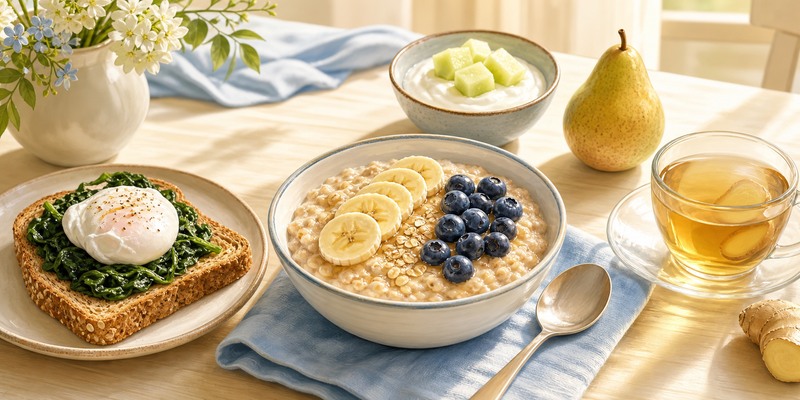
These GERD breakfast ideas focus on foods most often cited in GERD dietary guidance, with a portion or preparation note included for each entry.
Table of Contents
What GERD Changes About Breakfast

When I build a breakfast list for a GERD post, several standard morning choices get reconsidered. Coffee, orange juice, high-fat meat, and an oversized pastry are common defaults, but they are not the only way to start the day.
These GERD breakfast ideas cover oatmeal, eggs, lower-fat dairy, whole grains, cooked vegetables, and non-citrus fruit. Every row includes a portion or preparation note, because even a reasonable food can become uncomfortable when breakfast is oversized or rushed.
Johns Hopkins Medicine notes that high-fat, spicy, tomato-based, citrus, chocolate, mint, and carbonated choices commonly trigger heartburn, while personal tolerance still varies. I use that as planning guidance, not treatment. Talk with a clinician about frequent symptoms, chest pain, difficulty swallowing, vomiting, digestive bleeding, or unexplained weight loss.
Key Takeaways
- Keep breakfast balanced: GERD breakfast ideas pair protein with a gentle grain, vegetable, or non-citrus fruit.
- Question the defaults: Coffee, juice, bacon, chocolate, mint, and fried potatoes are common morning triggers.
- Test one change: A simple food-and-symptom log is more useful than a universal safe-food claim.
31 GERD Breakfast Ideas
Start with a familiar healthy breakfast option, a modest serving, and one change at a time so you can tell what actually works.
🌱
Breakfast Grocery Shortcut
Stock oats, eggs, yogurt, cottage cheese, rice, quinoa, whole-grain bread, bananas, melon, pears, spinach, and ginger tea.
Everyday GERD Breakfast Ideas
Start here for oatmeal, toast, yogurt, and other familiar breakfasts that need only a small trigger-aware adjustment.
| Breakfast | Why It Fits | Pro Tip |
|---|---|---|
| #1. Banana oatmeal with chia | One cooked cup of oats supplies about 4 g fiber, while banana adds sweetness without citrus. | Use 1 teaspoon chia and unsweetened almond milk if tolerated; skip chocolate, peppermint, or a heavy nut-butter swirl. |
| #2. Egg and spinach toast | Two eggs provide roughly 12 g protein, and one whole-grain slice keeps the bread portion defined. | Use our egg toast recipe, cooking spinach soft and leaving tomato, hot sauce, and pepper off. |
| #3. Low-fat yogurt with melon | Three-quarter cup Greek yogurt can deliver about 15 g protein with a naturally low-acid fruit. | Choose plain yogurt, add 1 cup cantaloupe or honeydew, and test dairy tolerance separately. |
| #4. Quinoa pear breakfast bowl | Half a cup cooked quinoa provides about 4 g protein and 2.5 g fiber alongside soft pear. | Warm with milk, cinnamon, and diced pear; keep nuts to 1 tablespoon if fat is a trigger. |
| #5. Turkey egg breakfast bowl | Three ounces lean turkey plus one egg contributes about 28 g protein without bacon or sausage. | Add 1/2 cup soft potatoes and spinach, using herbs instead of salsa or chili seasoning. |
| #6. Cottage cheese with pear | One cup low-fat cottage cheese offers around 24 g protein in a simple no-cook bowl. | Use half a ripe pear and cinnamon; switch to lactose-free dairy if regular cottage cheese bothers you. |
| #7. Banana oat pancakes | Two 4-inch pancakes made with oats, banana, and egg combine carbohydrate with about 10 g protein. | Cook on a nonstick pan with minimal oil and keep maple syrup to a light drizzle if sweetness does not bother you. |
| #8. Chicken rice breakfast congee | Two cups of rice porridge with 3 ounces chicken provides moisture and about 22 g protein. | Add carrots and mild ginger, leaving garlic, scallions, chili crisp, and vinegar out. |
Warm GERD Breakfast Ideas
These cooked bowls, scrambles, and toast plates suit mornings when a warm meal feels more appealing than juice or cold cereal.
| Breakfast | Why It Fits | Pro Tip |
|---|---|---|
| #9. Blueberry oat smoothie bowl | Half a cup blueberries, oats, banana, and yogurt creates a spoonable bowl near 20 g protein. | Keep it to 12 ounces and test berries, since even non-citrus fruit can be personal. |
| #10. Egg white zucchini scramble | Four egg whites supply about 14 g protein with very little fat, plus cooked zucchini volume. | Add one whole egg for flavor if tolerated and pair with a single whole-grain toast. |
| #11. Baked oatmeal cup with banana | Two muffin-size oat cups make portion control visible and can supply about 5 g fiber. | Bake 8 at once, freeze extras, and avoid chocolate chips, orange zest, or peppermint flavor. |
| #12. Cream of rice with banana | One cooked cup is a lower-fiber grain option for mornings when rough texture feels uncomfortable. | Add milk or yogurt for protein and use half a banana rather than a large sugary topping pile. |
| #13. Polenta egg breakfast bowl | Three-quarter cup polenta with two eggs offers about 14 g protein in a warm savory breakfast. | Fold in spinach and basil, keeping cheese to 1 tablespoon or leaving it out. |
| #14. Tofu scramble with spinach | Half a block of firm tofu provides about 20 g protein in a plant-forward morning plate. | Season with turmeric and mild herbs, then serve with 1/2 cup roasted sweet potato. |
| #15. Pear ricotta toast | Half a cup part-skim ricotta adds about 14 g protein across two smaller toast slices. | Top with thin pear slices and cinnamon, avoiding jam with citrus acid or mint. |
| #16. Poached egg sweet potato plate | Two eggs and half a medium sweet potato create a balanced breakfast near 300 calories. | Add cooked spinach and use 1 teaspoon olive oil instead of frying everything in butter. |
Protein-Forward GERD Breakfast Ideas
Eggs, turkey, yogurt, chickpeas, and tuna turn the middle of the list into breakfasts that can hold hunger longer.
| Breakfast | Why It Fits | Pro Tip |
|---|---|---|
| #17. Overnight oats with melon | Half a cup dry oats, milk, and yogurt can provide about 15 g protein by morning. | Use honeydew or cantaloupe, and keep the jar to 12 ounces rather than filling a large container. |
| #18. Egg and brown rice bowl | Two eggs over 1/2 cup brown rice supply roughly 14 g protein and a measured grain base. | Add steamed zucchini and parsley, skipping kimchi, hot sauce, vinegar, and raw onion. |
| #19. Yogurt banana oat jar | Three-quarter cup yogurt plus 1/3 cup oats can deliver around 18 g protein and 3 g fiber. | Layer one small banana and cinnamon; leave granola at 1 tablespoon for crunch. |
| #20. Couscous pear breakfast bowl | One cup cooked couscous provides about 6 g protein before yogurt or milk is added. | Use warm pear and cinnamon, then add 1/2 cup low-fat yogurt for a stronger protein anchor. |
| #21. Savory oats with turkey | One cup oats with 3 ounces turkey brings roughly 26 g protein plus soluble fiber. | Cook with low-sodium broth and spinach, avoiding tomato, pepper, sausage, and greasy cheese. |
| #22. Chickpea spinach toast | Half a cup chickpeas adds about 7 g protein and 6 g fiber to an open-faced breakfast. | Mash with yogurt and dill, then start with one slice if fiber increases pressure or bloating. |
| #23. Steamed egg custard | Two gently steamed eggs supply about 12 g protein in a soft, warm texture. | Use low-sodium broth at a 1-to-1 ratio and add cooked spinach after setting. |
| #24. Tuna cucumber toast | Three ounces tuna contributes about 20 g protein on one whole-grain slice with watery cucumber. | Adapt the tuna toast recipe with yogurt, leaving lemon, tomato, onion, and vinegar out. |
Make-Ahead GERD Breakfast Ideas
Batch-cooked grains, baked fruit, and pre-portioned protein make these final options useful for rushed mornings.
| Breakfast | Why It Fits | Pro Tip |
|---|---|---|
| #25. Pumpkin oatmeal | One cup cooked oats with 1/3 cup pumpkin provides roughly 6 g fiber and gentle sweetness. | Use cinnamon and milk, then add yogurt rather than turning it into a sugary dessert bowl. |
| #26. Barley breakfast porridge | One cooked cup of pearled barley carries about 6 g fiber and a chewy whole-grain texture. | Cook until very soft and top with banana; reduce the portion if high fiber causes pressure. |
| #27. Egg spinach corn tortilla | Two eggs and one 6-inch corn tortilla deliver about 14 g protein in a compact breakfast. | Fold in cooked spinach and skip salsa, hot sauce, tomato, raw onion, and fatty sausage. |
| #28. Melon cottage cheese plate | One cup cottage cheese and 1 cup melon offers approximately 24 g protein plus watery fruit. | Add plain whole-grain crackers if needed and stop before the plate becomes oversized. |
| #29. Baked pear yogurt oats | One baked pear half, 3/4 cup yogurt, and 1/4 cup oats supplies about 17 g protein. | Bake pears in batches and use cinnamon instead of citrus juice, chocolate, or peppermint. |
| #30. Chicken quinoa breakfast bowl | Three ounces chicken and 1/2 cup quinoa brings about 25 g protein to a savory morning. | Add cooked zucchini or spinach and use mild herbs rather than an acidic bottled dressing. |
| #31. Whole-grain cereal with banana | One measured cereal serving with low-fat milk can provide 8 to 12 g protein by brand. | Choose under 8 g added sugar, avoid chocolate flavor, and use banana instead of citrus fruit. |
Busy-Morning GERD List: Pinterest Pin
Save these GERD breakfast ideas so the oatmeal, egg, yogurt, and gentle-grain options are ready on busy mornings.
📌 Hover over this pin to save this post for later.

3-Day Workday GERD Morning Meal Planner
This GERD breakfast ideas rotation is a great way to reuse oats, eggs, spinach, yogurt, banana, and melon without serving the same bowl 3 days straight.
| Day | Breakfast | Prep Shortcut | Drink |
|---|---|---|---|
| Day 1 | Banana oatmeal with chia | Cook 2 oat servings and chill one | Water or mild ginger tea |
| Day 2 | Egg and spinach toast | Wash and cook spinach the night before | Water; test coffee separately |
| Day 3 | Low-fat yogurt with melon | Portion one 12-ounce jar ahead | Still water, not citrus juice |
Morning GERD Triggers: Foods to Limit
These GERD breakfast ideas replace four common trigger-heavy defaults, including citrus fruits that can worsen GERD symptoms for some people; the live GERD foods guide gives the wider eat-and-limit picture.
1. Coffee before food
One large coffee can concentrate caffeine and personal symptoms before breakfast starts.
Swap: Eat first, downsize, try decaf, or choose mild ginger tea.
2. Citrus juice
An 8-ounce glass delivers acidic liquid quickly and adds little meal structure.
Swap: Drink still water and eat banana, melon, or pear.
3. Bacon and fried potatoes
One diner plate can combine 3 high-fat, fried, or oversized components.
Swap: Choose eggs, baked sweet potato, and cooked spinach.
4. Chocolate mint pastry
One pastry can stack chocolate, mint, butter, sugar, and a large portion.
Swap: Try oatmeal, baked pear, or banana oat pancakes.
Shop Once for GERD Mornings: Shopping Tips
Build GERD breakfast ideas from repeatable bases so a rushed morning does not default to juice, coffee, and a greasy drive-through plate.
- Start with two proteins: Eggs, yogurt, cottage cheese, tofu, chicken, turkey, tuna, or milk cover several mornings.
- Buy three gentle fruits: Banana, melon, and pear give easy non-citrus options while you track tolerance.
- Keep two grains: Oats plus whole-grain bread, rice, quinoa, barley, or polenta prevent breakfast boredom.
- Read flavor labels: Chocolate, peppermint, citrus, coffee, high-fat dairy, and spicy seasoning can hide in convenient products.
- Portion before eating: Use one bowl, one jar, or one plate instead of grazing from a family-size package.
FAQs
These common questions turn GERD breakfast ideas into a usable morning routine while leaving diagnosis, treatment, and medication decisions to clinicians.
1. What is a good breakfast for GERD?
A useful starting meal combines lower-fat protein, a gentle grain, and non-citrus fruit or cooked vegetables. GERD breakfast ideas such as banana oatmeal, egg and spinach toast, yogurt with melon, quinoa porridge, or cottage cheese with pear are easy to portion. Replace any ingredient that repeatedly worsens your symptoms, because individual triggers vary.
2. Is oatmeal good for acid reflux?
Oatmeal is a whole grain and a practical lower-fat base for many people. GERD breakfast ideas using oats work best when the bowl stays moderate and toppings avoid known triggers. Try banana, pear, melon, cinnamon, yogurt, or a small amount of chia. Reduce the serving if a high-fiber meal increases bloating or pressure.
3. What are the best GERD breakfast ideas?
Good starting options include banana oatmeal, egg and spinach toast, low-fat yogurt with melon, cottage cheese with pear, quinoa porridge, tofu scramble, steamed egg custard, chicken congee, pumpkin oatmeal, and baked pear with yogurt. Choose a modest serving, avoid known triggers, and change one ingredient at a time so your response stays clear.
4. Can I drink coffee with breakfast?
Coffee and other caffeine sources commonly worsen symptoms for some people, but tolerance is personal. GERD breakfast ideas do not require a universal coffee ban. Try eating first, reducing the cup size, switching to decaf, or testing a non-mint herbal tea. Record the amount and response instead of changing several morning habits at once.
5. Are eggs a good breakfast choice for GERD?
Eggs can fit many morning plans, especially when poached, boiled, steamed, or softly scrambled with limited added fat. GERD breakfast ideas using eggs should watch the usual extras: bacon, sausage, fried potatoes, tomato, hot sauce, and heavy cheese. Start with one or two eggs and pair them with toast, spinach, rice, or sweet potato.
6. Which fruits fit breakfast best?
Bananas, melons, and pears are common non-citrus starting points, while personal reactions still matter. GERD breakfast ideas can pair fruit with oatmeal, yogurt, cottage cheese, toast, or quinoa instead of drinking a large juice. Citrus is a common trigger category. Berries and apples may work for some people, so test modest portions individually.
7. When should morning reflux be checked?
Talk with a clinician when symptoms are frequent, worsening, or not improving with over-the-counter care and lifestyle changes. GERD breakfast ideas cannot assess chest pain, painful or difficult swallowing, persistent vomiting, digestive bleeding, loss of appetite, or unexplained weight loss. Seek urgent help for severe chest pain or symptoms that could reflect another serious condition.
GERD Breakfast Video
This Johns Hopkins Medicine overview explains gastroesophageal reflux disease, including how the lower esophageal sphincter relates to reflux symptoms, evaluation, and treatment. GERD breakfast ideas can support planning, but they do not replace medical care.
Video credit: Johns Hopkins Medicine.
Your GERD Breakfast Ideas Plan

Pick two breakfasts you can repeat and one no-cook backup. Oatmeal, eggs on toast, and yogurt with melon cover three different textures while using a short grocery list; the egg toast recipe gives you one complete version to follow. Keep portions moderate and test coffee, dairy, fruit, and higher-fiber foods one at a time.
Use the GERD snack list when the morning meal needs to be smaller. For later meals, move to the GERD lunch ideas or best GERD dinner ideas, then use the GERD foods guide to compare the wider eat-and-limit pattern.
Track the ingredient, portion, preparation, and response. Bring that pattern to a doctor or registered dietitian if symptoms persist or breakfast choices feel too restricted.
