
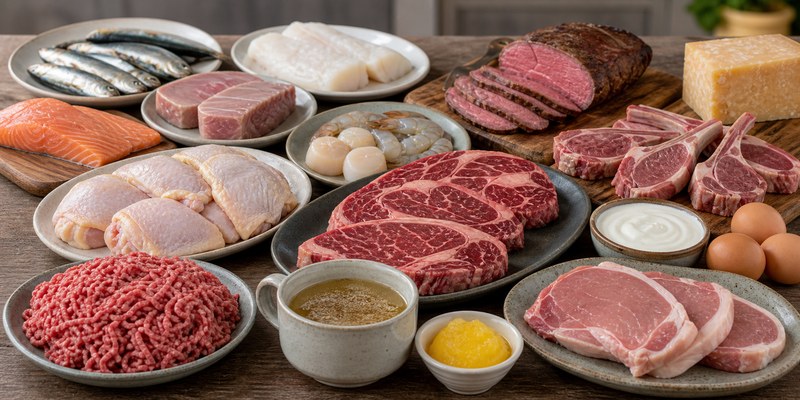
These carnivore diet foods compare protein, standout nutrients, shopping tips, and realistic limits across meat, seafood, eggs, and dairy.
Table of Contents
Why Carnivore Variety Matters

When I first organized a carnivore grocery list, the easy part was naming meat. The harder part was showing what each cut contributes, where organ meats and seafood matter, and why an all-beef cart can still leave obvious gaps. Comparing labels made the differences much clearer.
That is why I gave these carnivore diet foods protein numbers and a standout nutrient instead of vague praise. A ribeye, oyster, egg, tin of sardines, and mug of bone broth do different jobs, even though every one comes from animal products.
I checked the safety framing against the Cleveland Clinic carnivore diet overview. Long-term controlled studies are limited, fiber disappears, and saturated fat can push LDL cholesterol higher. Treat this as grocery guidance, not proof that a restrictive diet fits your health history or medical needs.
Key Takeaways
- Lead with variety: Carnivore diet foods work better as beef, fish, eggs, shellfish, and organs than beef alone.
- Use the numbers: Protein helps compare lean cuts, fattier cuts, dairy, and seafood without guesswork.
- Keep the caveats: Fiber, vitamin C, cholesterol, and long-term health still deserve a clinician conversation.
51 Carnivore Diet Foods With Protein and Nutrient Notes
Use these carnivore diet foods to compare muscle meat, organ meats, seafood, eggs, hard cheese, and simple animal fats. The protein figures are rounded serving estimates, not promises about a specific package.
🌱
Whole Foods Grocery Shortcut
Stock plain meat, fish, eggs, broth, dairy, and cooking fats in one run.
| Food | Why It Helps | Pro Tip |
|---|---|---|
| #1. Ribeye steak | Ruminant beef with about 42 g protein per 6 oz, and its B12 covers a full day in one cut with none coming from plants. | Salt an hour ahead and cook to medium-rare so the fat renders instead of leaking. |
| #2. Sirloin steak | Leaner beef at about 46 g protein per 6 oz, dense with heme iron the body absorbs far better than plant iron. | Slice against the grain; a lean cut turns chewy the moment you cut with it. |
| #3. Ground beef (80/20) | Animal-based workhorse, about 28 g protein per 6 oz cooked, carrying zinc for immunity and wound repair. | Brown in a dry pan and keep the rendered fat for cooking eggs later. |
| #4. Beef chuck roast | Tough ruminant cut, about 45 g protein per 6 oz, rich in the creatine that muscle relies on for power. | Braise low for three hours until the collagen melts into the sauce. |
| #5. Brisket | Fatty beef, about 43 g protein per 6 oz, a heavy source of B12 for red-blood-cell production. | Cook fat-side up and rest it a full 30 minutes before slicing. |
| #6. Beef short ribs | Marbled ruminant meat, about 38 g protein per 6 oz, with zinc concentrated in the surrounding fat. | Sear hard, then oven-braise; the connective tissue needs time to soften. |
| #7. Beef ribs | Bone-in beef, about 40 g protein per 6 oz, delivering heme iron alongside its rendered fat. | Peel the silverskin off the bone side so the rub actually sticks. |
| #8. Lamb chops | Ruminant red meat, about 36 g protein per 6 oz, unusually high in the zinc a plant-free plate depends on. | Cook fast and hot; lamb fat turns waxy once it cools on the plate. |
| #9. Lamb shoulder | Fattier lamb, about 42 g protein per 6 oz, carrying B12 and iron in one grass-fed package. | Slow-roast until it pulls apart, then crisp the shreds in their own fat. |
| #10. Lamb shank | Collagen-rich lamb, about 40 g protein per 6 oz, with iron for oxygen transport. | Braise submerged in broth so the meat never dries at the top. |
| #11. Ground lamb | Versatile ruminant mince, about 40 g protein per 6 oz, bringing zinc and B12 to burgers and meatballs. | Keep patties thick; lean spots overcook before the fat renders. |
| #12. Pork chops | About 46 g protein per 6 oz, and pork’s thiamine is a nutrient beef leaves comparatively short. | Pull at 140 F and rest; carryover heat finishes it without drying. |
| #13. Pork tenderloin | One of the leanest animal cuts, about 47 g protein per 6 oz, with selenium for thyroid function. | Sear then roast to 145 F; a minute past that turns it to chalk. |
| #14. Pork belly | Fat-forward pork, about 22 g protein per 6 oz, useful for hitting calories when muscle cuts feel too lean. | Score the skin and render slowly so it crisps instead of steaming. |
| #15. Bacon (no sugar) | About 30 g protein per 6 oz cooked, with sodium that helps replace the electrolytes a zero-carb diet flushes. | Check the label for added sugar and dextrose, which sneak into most brands. |
| #16. Chicken thighs | Dark poultry, about 40 g protein per 6 oz, with more iron and zinc than the breast. | Cook skin-on to render the fat, the flavor a plain plate needs. |
| #17. Chicken breast | Lean poultry, about 54 g protein per 6 oz, the highest protein-per-calorie pick on the list. | Brine 30 minutes in salt water so it stops drying to cardboard. |
| #18. Chicken wings | Skin-heavy poultry, about 30 g protein per 6 oz, with collagen from the joints and cartilage. | Bake at 425 F on a rack so the fat drips away and the skin snaps. |
| #19. Turkey (dark meat) | Lean poultry, about 40 g protein per 6 oz, carrying selenium for antioxidant defense. | Ground 85/15 turkey needs added fat like tallow to stay juicy. |
| #20. Duck | Rich poultry, about 34 g protein per 6 oz, with iron closer to red meat than to chicken. | Prick the skin and start it cold in a dry pan to melt the fat out. |
| #21. Duck legs | Fatty dark poultry, about 38 g protein per 6 oz, and the rendered duck fat is prized for cooking. | Confit slow in fat, then blast the skin under the broiler to finish. |
| #22. Eggs (whole) | About 12 g protein per two eggs, and the yolks are one of the few real sources of choline for the brain. | Soft-scramble low and slow in butter; high heat turns them rubbery. |
| #23. Egg yolks | The nutrient core of the egg, about 5 g protein per three yolks, dense with retinol, choline, and fat-soluble vitamins. | Stir raw yolks into ground beef for a richer, glossier bite. |
| #24. Salmon | Fatty fish, about 40 g protein per 6 oz, and the omega-3 fats a zero-plant plate would otherwise miss – try our high-protein salmon salad. | Cook from frozen straight in the pan; it is cheaper and just as good. |
| #25. Sardines | Small oily fish, about 30 g protein per 6 oz, with omega-3s plus calcium from the soft, edible bones. | Tinned in olive oil, eaten straight from the can, is a two-minute meal. |
| #26. Mackerel | Oily fish, about 38 g protein per 6 oz, one of the densest omega-3 and vitamin D sources going. | Grill skin-side down; the strong flavor stands up to hard heat. |
| #27. Trout | Freshwater fish, about 40 g protein per 6 oz, with omega-3s and vitamin B12 in one mild fillet. | Pan-fry in butter, skin-on, for a fillet that stays together. |
| #28. Tuna | Lean fish, about 44 g protein per 6 oz, shelf-stable and heavy in selenium. | Canned in oil beats water-packed for a plate with no other fat source. |
| #29. Cod | White fish, about 41 g protein per 6 oz, delivering B12 and iodine with almost no fat. | Butter-baste in a pan; it flakes apart the second you overcook it. |
| #30. Anchovies | Tiny cured fish, about 29 g protein per 6 oz, packing omega-3s and calcium into a salty punch. | Melt a few into hot tallow to season a pan of ground beef. |
| #31. Shrimp | Lean shellfish, about 36 g protein per 6 oz, with selenium and iodine for thyroid health. | Buy raw and frozen, not pre-cooked; it sautes in three minutes. |
| #32. Scallops | Sweet shellfish, about 24 g protein per 6 oz, carrying B12 and magnesium. | Dry them hard with paper towels or they steam instead of searing. |
| #33. Oysters | The zinc champion, about 16 g protein per 6 oz, with more zinc per bite than any other food here. | Eat raw or quickly grilled; long cooking turns them to rubber. |
| #34. Mussels | Shellfish, about 36 g protein per 6 oz, exceptionally high in B12 and iron. | Steam in butter and broth until the shells just open, then stop. |
| #35. Crab | Shellfish, about 30 g protein per 6 oz, with zinc and selenium in a low-fat package. | Buy it pre-picked to skip the shell-cracking labor on a busy night. |
| #36. Beef liver | The most nutrient-dense food on the list, about 45 g protein per 6 oz, loaded with retinol, B12, and copper. | Soak in salt water, then sear fast and rare; overcooking makes it bitter. |
| #37. Chicken liver | Milder organ meat, about 42 g protein per 6 oz, dense with folate and heme iron. | Blend cooked livers with butter into a smooth, spreadable pate. |
| #38. Beef heart | Lean organ meat, about 47 g protein per 6 oz, uniquely rich in CoQ10 for cellular energy. | Trim the silverskin and grill it fast; it eats like a tender steak. |
| #39. Beef kidney | Organ meat, about 43 g protein per 6 oz, with selenium and B12 far beyond muscle cuts. | Soak overnight to mellow it, then dice small into a slow braise. |
| #40. Beef tongue | Fatty organ meat, about 32 g protein per 6 oz, rich in zinc and B12. | Simmer until tender, peel the outer skin, then crisp the slices. |
| #41. Bone marrow | Pure animal fat and collagen, about 6 g protein per 6 oz, prized for its fat-soluble nutrients. | Roast the split bones and spread the soft marrow like butter. |
| #42. Bone broth | About 9 g protein per cup, mostly the collagen and glycine that muscle-only plates skip. | Simmer joint bones 24 hours; a proper broth gels solid when chilled. |
| #43. Veal | Young beef, about 44 g protein per 6 oz, leaner than beef with B12 intact. | Cook gently and keep it pink; lean veal dries out in a heartbeat. |
| #44. Venison | Wild ruminant, about 52 g protein per 6 oz, exceptionally lean and rich in iron. | Add tallow or butter; it has almost no fat of its own to cook in. |
| #45. Bison | Grass-fed ruminant, about 48 g protein per 6 oz, leaner than beef with strong iron and B12. | Cook a notch below your usual steak time; lean bison overcooks fast. |
| #46. Oxtail | Gelatin-rich beef, about 30 g protein per 6 oz, with collagen and iron from the bone. | Braise until the meat slides off, then reduce the broth to a glaze. |
| #47. Pork rinds | Fried pork skin, about 30 g protein per 2 oz, a zero-carb crunch when you miss chips. | Crush them into a coating for pan-fried fish or chicken. |
| #48. Hard cheese | Aged dairy, about 12 g protein per 2 oz, with calcium and B12 for those who tolerate dairy. | Aged, low-lactose cheeses like parmesan sit easier on strict eaters. |
| #49. Full-fat cottage cheese | Soft dairy, about 14 g protein per half cup, heavy on the casein that digests slowly. | The full-fat tub fits the macros better than any low-fat version. |
| #50. Plain full-fat Greek yogurt | Strained dairy, about 9 g protein per half cup, carrying calcium and gut-friendly cultures. | Only unsweetened plain qualifies; flavored cups smuggle in sugar. |
| #51. Butter | Nearly pure dairy fat, trace protein, with the retinol and vitamin K2 that come only from animal fat. | Grass-fed butter finishes steaks and carries any fat-soluble nutrient. |
Carnivore Food List: Pinterest Pin
On Pinterest? Keep the protein-and-nutrient chart beside our keto foods guide when you compare a strict meat diet with broader keto diets.
📌 Save these carnivore diet foods to your grocery board for the next butcher-counter run.

3-Day Carnivore Meal Planner
These carnivore diet foods become a three-day carnivore diet meal plan built around animal protein, seafood, eggs, and varied animal fats. The totals are estimates, so adjust portions to appetite, medical needs, and clinician guidance.
| Meal | Day 1 | Day 2 | Day 3 |
|---|---|---|---|
| Breakfast | Three eggs in butter with two bacon strips | Full-fat Greek yogurt with two boiled eggs | Ground beef patty with two eggs |
| Lunch | Sardines with hard cheese and bone broth | Chicken thighs with a mug of broth | Tuna with egg yolks and butter |
| Snack | Plain cottage cheese | Two ounces of plain jerky | Oysters with a small cheese serving |
| Dinner | Ribeye with a small serving of beef liver | Salmon with shrimp cooked in ghee | Lamb chops with roasted bone marrow |
| Day total (protein focus) | About 171 g | About 158 g | About 166 g |
Carnivore Nutrition Gaps to Watch
A strict animal-based diet removes entire food groups, including plant-based foods, whole grains, legumes, fruit, and vegetables. That makes nutrient deficiencies a real concern, particularly for fiber, vitamin C, folate, magnesium, and potassium. The carnivore diet foods in the main table broaden the animal side with several animal-based foods, but they do not recreate a varied diet.
Potential benefits reported by followers do not replace controlled studies. Fewer high-carb diets may lower calorie intake or change blood sugar for some people, yet the eating plan is not magic for weight loss. Early scale changes can include water, and a new diet can also change appetite simply because the choices become narrower.
Long-term health is the hard part. Large amounts of red meat, animal fats, processed meat, and high-protein diets can matter when someone has heart disease, high blood pressure, kidney disease, or other health issues. A serving of fish, shellfish, or organ meat can be part of a carnivore diet and bring beneficial nutrients, but an animal-based diet still needs individual medical review.
Carnivore Foods to Limit
Even among carnivore diet foods, four choices deserve more scrutiny because added sugar, fillers, sodium, or excessive saturated fat can crowd out simpler animal-based products.
1. Sugared Bacon and Jerky
Some packages list 3 to 8 g added sugar per serving, which works against the zero-sugar premise.
Swap: Plain bacon or jerky with a short ingredient list.
2. Processed Meat at Every Meal
Three daily servings can push sodium far above 2,300 mg before broth or cheese is counted.
Swap: Fresh ground beef, chicken, fish, or eggs for most meals.
3. Butter and Tallow as a Side Dish
One tablespoon carries roughly 7 g saturated fat, so several spoonfuls add up quickly.
Swap: Let fattier cuts provide energy and rotate salmon or sardines into the week.
4. Muscle Meat Without Variety
Seven straight days of beef alone leave the plate short on the nutrients seafood, eggs, and organs contribute.
Swap: Rotate oysters, sardines, eggs, liver, bone marrow, and bone broth in modest portions.
Carnivore Shopping Tips
Shopping for carnivore diet foods gets easier when the cart has a few roles instead of one giant pile of red meat. Compare the broader protein logic in our high-protein salmon salad and the fat-quality cautions in our fatty liver diet foods guide.
- Choose two simple ingredients for weeknight anchors: ground beef and eggs, then add one roast for leftovers.
- Rotate animal foods by role: muscle meat for protein, oily fish for omega-3 fats, shellfish for zinc, and modest organ portions for vitamin A and B12.
- Read ingredient lists on bacon, sausage, broth, jerky, and sour cream so added sugar, starch, and plant fillers do not sneak into a strict carnivore diet.
- Match leanness to the meal: fattier cuts can carry dinner, while chicken breast or cod may need butter, ghee, or another measured fat.
- Keep a backup shelf of canned salmon, sardines, tuna, and broth, then compare the wider whole-food pattern in our Mediterranean diet foods guide.
FAQs
These answers cover common safety and shopping questions about carnivore diet foods without treating a restrictive plan as a cure.
1. Do I need fiber on a carnivore diet?
Fiber disappears when plant foods disappear, and that matters for bowel habits and the gut microbiome. Carnivore diet foods do not provide it. Some people report regular digestion without fiber, but constipation, pain, or bleeding deserves medical attention. Hydration alone is not a complete fix, and a clinician can discuss whether a non-carnivore fiber source makes sense.
2. Where does vitamin C come from without plants?
Fresh meat and organ meat contain small amounts of vitamin C, but far less than fruit and vegetables. Carnivore diet foods may not reliably meet needs when meat is heavily cooked and variety is low. A clinician can review intake, symptoms, and labs before recommending a supplement, because guessing at high doses is not safer long term.
3. Can dairy be part of carnivore diet foods?
Dairy fits looser versions of the diet, especially butter, hard cheese, sour cream, cottage cheese, and plain full-fat yogurt. It is optional, not required. Lactose, milk-protein intolerance, calorie density, and added sugar can make some products a poor fit, so choose unsweetened labels and judge tolerance instead of assuming every animal product works equally well for you.
4. Will a carnivore diet raise my cholesterol?
LDL cholesterol can rise when saturated fat intake climbs, although responses vary. Carnivore diet foods such as fatty red meat, butter, cheese, and processed meat can supply large amounts. Anyone with heart disease, high blood pressure, diabetes, or family history should discuss the pattern and follow-up labs with a clinician before treating internet anecdotes as reassurance.
5. How much protein will I actually eat?
The sample days land near 160 to 170 grams because the portions are intentionally generous, not because everyone needs that amount. Carnivore diet foods make high protein easy, but needs change with body size, age, activity, and kidney health. Use the table as comparison math, then let a qualified professional set a sensible personal range for you.
6. Are organ meats really necessary?
Organ meats are not mandatory, but they carry nutrients that ordinary muscle cuts provide in smaller amounts. Carnivore diet foods such as liver, heart, and kidney bring vitamin A, B12, copper, iron, selenium, and CoQ10. Portions matter because more is not always better, particularly with liver, where vitamin A and copper can build up quickly over time.
7. Is the carnivore diet safe long term?
Long-term safety is uncertain because controlled research on strict carnivore eating is sparse. Carnivore diet foods can supply protein, B12, iron, zinc, and omega-3 fats when seafood is included, yet fiber and several plant-associated nutrients remain absent. People with kidney disease, heart disease, gout, pregnancy, diabetes, or eating-disorder history need individualized medical guidance before starting.
Video: Carnivore Diet Basics
KenDBerryMD discusses common risk claims around the diet. Use the video as another viewpoint, while keeping the Cleveland Clinic caveats and the nutrient notes beside these carnivore diet foods.
Video credit: KenDBerryMD.
Conclusion: Best Carnivore Diet Foods

A carnivore diet foods plan should not be 51 versions of steak. It mixes muscle meat, fish, shellfish, eggs, modest organ portions, broth, and dairy when tolerated, while keeping processed products from taking over.
- Best everyday base: Ground beef, eggs, chicken thighs, and canned fish keep cost and prep under control.
- Best nutrient rotation: Salmon, sardines, oysters, liver, and bone broth broaden a narrow plate.
- Best safety move: Treat cholesterol, digestion, kidney health, and nutrient gaps as real follow-up questions.
If the restriction feels harder than it sounded online, that is useful information. Compare this approach with our foods to reduce inflammation, prediabetes foods to eat, and vegan foods guides before deciding how narrow your own plan should be.
