
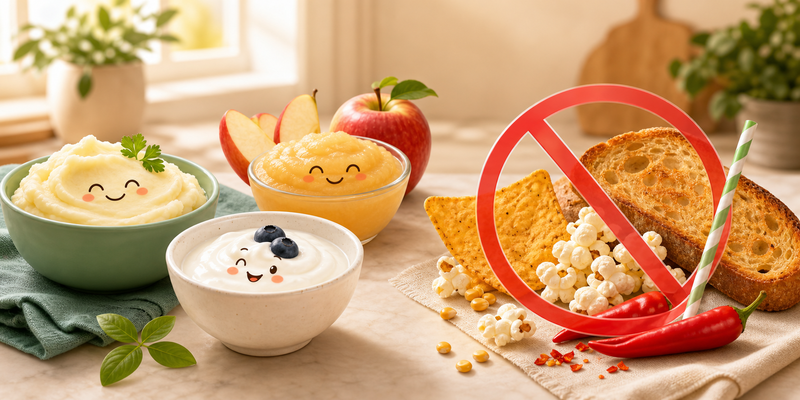
These foods to avoid after oral surgery cover crunchy, sticky, spicy, acidic, hot, and fizzy choices, plus gentler swaps.
Table of Contents
Avoid Foods: Oral Surgery Recovery

When I plan a recovery grocery list, texture comes before nutrition labels. Chips, seeds, crusty bread, and sticky candy can turn an ordinary bite into extra work for a tender mouth and sore jaw. I also keep the written aftercare sheet beside the grocery list.
This list of foods to avoid after oral surgery sorts 21 choices by the problem they can create. Each row also gives a softer swap, so taking something off the menu does not leave an empty plate.
The American Association of Oral and Maxillofacial Surgeons recommends soft or liquid foods right after an extraction and warns against several irritating choices. Your surgeon’s instructions come first, especially for implants, grafts, stitches, bleeding, worsening pain, or trouble drinking enough fluid.
Key Takeaways
- Protect the site: Foods to avoid after oral surgery are usually hard, sharp, sticky, hot, acidic, or spicy.
- Use a real swap: Replace crunch with smooth, lukewarm, seedless food that requires little chewing.
- Follow your surgeon: Procedure type and healing progress determine when ordinary textures return.
21 Foods to Avoid After Oral Surgery
The foods to avoid after oral surgery start with items most likely to scratch, lodge near, pull at, or irritate a healing area. Timing varies, so use the swaps only when they also match the written instructions from your dental team.
🌱
Build a Softer Recovery Cart
Stock yogurt, eggs, smooth soup, mashed vegetables, applesauce, and other surgeon-approved soft basics.
| Food | Why It Can Be a Problem | Eat This Instead |
|---|---|---|
| #1. Potato chips | Sharp crumbs can scrape tender tissue or settle near 1 healing socket. | Choose smooth mashed potatoes cooled to a comfortable temperature. |
| #2. Popcorn | Hulls and hard kernels can hide around 1 extraction site and resist gentle rinsing. | Use pudding or seedless applesauce when you want an easy snack. |
| #3. Whole nuts | Firm pieces demand repeated chewing and can break into dozens of pointed fragments. | Ask whether a thin, smooth nut butter is appropriate for your procedure. |
| #4. Seeds | Tiny sesame, chia, and sunflower seeds can lodge in 1 small healing opening. | Check breads, yogurts, and smoothies for hidden seeds before eating. |
| #5. Raw carrots | A raw carrot needs many forceful bites that can stress a sore jaw. | Cook peeled carrots until they mash easily with 1 fork. |
| #6. Celery | Stringy fibers require prolonged chewing and can catch near 1 stitch. | Blend cooked vegetables into a smooth, lukewarm soup instead. |
| #7. Crusty bread | Hard edges can rub the surgical area during the first several recovery days. | Move to very soft bread only after your surgeon allows more texture. |
| #8. Bagels | Dense chewiness makes 1 bite a long workout for a tender mouth. | Try oatmeal, cream of rice, or another spoon-soft grain. |
| #9. Tough steak or jerky | Even 1 strip can demand prolonged chewing from a sore jaw. | Pick finely flaked fish, soft eggs, or another approved protein. |
| #10. Taffy | Sticky candy can tug on 1 stitch or cling around a healing site. | Choose smooth custard without nuts, cookie pieces, or caramel ribbons. |
| #11. Caramel | A chewy caramel repeatedly pulls against teeth and soft tissue with every bite. | Use plain pudding for a sweet option that slides off the spoon. |
| #12. Chewing gum | Continuous chewing repeats the same jaw motion dozens of times. | Use water and the mouth-care instructions from your surgical team. |
| #13. Hot sauce | Capsaicin can sting exposed or tender tissue within 1 bite. | Season soft foods mildly with herbs your surgeon has approved. |
| #14. Spicy salsa | Heat, tomato acid, seeds, and chunks combine 4 possible irritants. | Top eggs with a little smooth, mild cheese if dairy is allowed. |
| #15. Oranges and grapefruit | Citrus acid can burn a sensitive site during the first few days. | Choose banana, melon puree, or applesauce for a milder fruit. |
| #16. Tomato sauce | Acid plus heat can create 2 sources of discomfort in one bowl. | Dress very soft pasta with olive oil or a mild approved sauce. |
| #17. Vinegar-heavy dressing | A sharp acidic dressing can sting 1 fresh incision or extraction area. | Use a mild creamy dressing only when the texture stage allows it. |
| #18. Piping-hot soup | Very hot liquid can irritate tissue and may worsen discomfort with 1 sip. | Let blended soup cool to lukewarm before testing a small spoonful. |
| #19. Hot coffee or tea | High temperature can be uncomfortable before you finish 1 cup. | Ask when cooled coffee or tea can return, then sip without a straw. |
| #20. Soda and sparkling water | Carbonation can feel irritating around 1 tender surgical area. | Keep plain water nearby and drink from a cup as directed. |
| #21. Alcohol | Alcohol can conflict with at least 1 medication and may impair safe recovery choices. | Wait for explicit clearance from your surgeon or prescribing clinician. |
Oral Surgery Foods to Avoid: Pinterest Pin
📌 Hover over this pin to save this post for later. The foods to avoid after oral surgery will be easy to find when you build your recovery cart.

5-Day Oral Surgery Avoid-List Meal Planner
This sample uses the foods to avoid after oral surgery as guardrails, with each “Eat This Instead” entry serving as the day’s softer dinner option. The texture progression must follow your procedure-specific instructions.
| Day | Breakfast | Lunch | Eat This Instead |
|---|---|---|---|
| Day 1 | Cool smooth yogurt, if allowed | Lukewarm blended soup | Applesauce with smooth pudding |
| Day 2 | Soft scrambled eggs | Mashed potato with smooth cottage cheese | Pureed squash soup |
| Day 3 | Very soft oatmeal | Flaked fish with mashed potato | Soft pasta with mild olive oil |
| Day 4 | Cream of rice with mashed banana | Tender tofu with mashed sweet potato | Blended carrot soup cooled to lukewarm |
| Day 5 | 1 small bowl of smooth yogurt with seedless applesauce | Soft scrambled eggs with mashed avocado | Finely flaked fish with mashed squash |
For more options, use our soft breakfast ideas, soft lunches, and soft food dinners as idea banks. Filter every choice through the timeline your oral surgeon gave you.
Oral Surgery Avoid List: Foods to Limit
The foods to avoid after oral surgery often show up in mixed dishes, so watch these four situations even when the main ingredient looks soft.
1. Crunchy toppings
One spoonful of granola can add hard oats, nuts, and seeds.
Swap: Use a smooth yogurt without mix-ins.
2. Chunky soups
Even a soft broth may hide 3 firm vegetable or meat pieces.
Swap: Blend the soup until completely smooth.
3. Seeded smoothies
One berry blend can contain hundreds of tiny seeds.
Swap: Blend banana with seedless fruit and drink from a cup.
4. Extra-hot takeout
One closed container can keep soup too hot to test comfortably.
Swap: Let a smooth meal cool before the first bite.
Our complete soft-food guide and soft snack list offer more replacements for familiar crunchy foods.
Oral Surgery Avoid List Shopping Tips
Use the foods to avoid after oral surgery as a label-reading checklist before your procedure, when shopping is easier.
- Check every mix-in. Nuts, seeds, candy pieces, and granola can hide in otherwise soft foods.
- Buy single-serve basics. Small yogurt, applesauce, and pudding cups reduce prep when your mouth is sore.
- Choose smooth versions. Creamy soup and mashed vegetables are easier to control than chunky alternatives.
- Plan protein. Keep eggs, smooth yogurt, cottage cheese, tofu, or flaky fish ready as allowed.
- Keep a cup nearby. Hydrate without a straw and follow the rinse instructions from your surgical team.
For simple meal assembly, browse the soft diet recipes. The cottage cheese egg bites and protein smoothie bowl can also inspire softer formats, but remove seeds, crunchy toppings, and straws and follow your surgeon’s rules.
FAQs
These foods to avoid after oral surgery questions cover the practical details people often remember only after they get home.
1. How long should I avoid crunchy foods after oral surgery?
Your surgeon should set the timeline because an extraction, implant, graft, and jaw procedure heal differently. The foods to avoid after oral surgery may stay restricted for days or weeks. Do not use reduced pain alone as clearance. Wait until your clinician says the site can handle normal chewing without disrupting stitches, clots, or tissue.
2. Why should I skip a straw after a tooth extraction?
Suction can disturb the blood clot that protects an extraction site, so drinking method matters alongside foods to avoid after oral surgery. Sip water, smoothies, or other approved drinks from a cup instead. Follow the exact no-straw period in your discharge instructions, since complex extractions or grafts may require a different recovery timeline.
3. What are the main foods to avoid after oral surgery?
Skip foods that are hard, crunchy, sharp, sticky, chewy, spicy, acidic, carbonated, or very hot unless your oral surgeon says otherwise. Common examples include chips, popcorn, nuts, seeds, taffy, citrus, salsa, and steaming soup. Alcohol also needs explicit clinician clearance, especially when you take prescription pain medicine, antibiotics, or any strongly sedating medication.
4. Can I drink coffee after oral surgery?
Very hot coffee belongs with the foods to avoid after oral surgery because heat can irritate tender tissue. Your surgeon may allow cooled or lukewarm coffee later, depending on the procedure and bleeding. Do not use a straw. Check whether caffeine, dairy, sugar, or coffee itself conflicts with medicines or individualized aftercare instructions.
5. Can I eat rice after oral surgery?
Rice may be soft, but individual grains can collect around an extraction site, so it may temporarily join the foods to avoid after oral surgery. Ask when small particles are appropriate for your procedure. If rice is cleared, cook it very soft, take small bites, chew away from the site, and rinse only as directed.
6. Are smoothies safe during oral surgery recovery?
A smooth, seedless blend may fit recovery, but berries, chia, crunchy toppings, citrus, and a straw can create problems. Treat those additions like other foods to avoid after oral surgery. Drink from a cup, keep the mixture thin enough to sip without suction, and use ingredients that match your surgeon’s temperature and texture instructions.
7. When should I call my oral surgeon about eating?
Call when pain, swelling, bleeding, fever, foul taste, or trouble drinking is worsening rather than improving, or when food becomes lodged and gentle care does not help. A list of foods to avoid after oral surgery cannot diagnose dry socket, infection, dehydration, or another complication. Use the urgent contact instructions your surgical office provided.
Oral Surgery Foods to Avoid Video
This short overview adds visual context to the foods to avoid after oral surgery and the softer options that can replace them.
Video credit: DentaVacation.
Your Foods to Avoid After Oral Surgery Plan

Recovery eating gets easier when foods to avoid after oral surgery are concrete: protect the surgical area from sharp crumbs, sticky pulls, excess chewing, acid, spice, heat, and carbonation. Choose a smooth bowl, soft egg, mashed vegetable, or seedless snack instead of trying to make a risky food work.
The 5-day planner is a menu framework, not a medical timeline. Your written discharge instructions decide when to move from liquids to spoon-soft foods and then to more texture. For more approved choices, use our 101 soft foods after oral surgery guide.
Shop before surgery when possible, keep the list nearby, and call your surgical team if pain, swelling, bleeding, or hydration is worsening. Less pain alone is not clearance to test a crunchy favorite.
