
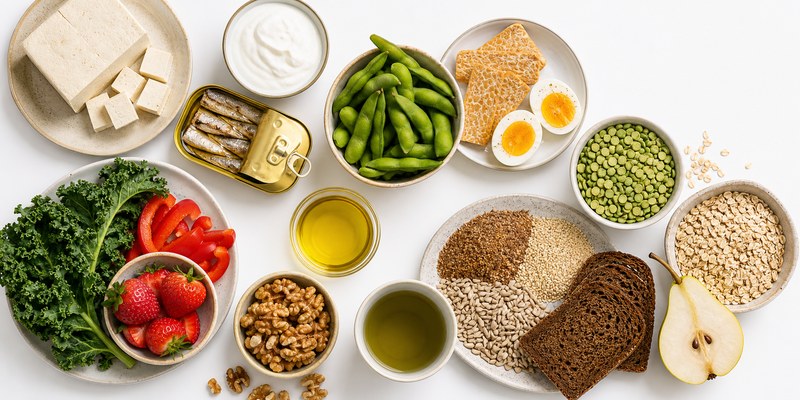
Here are 51 menopause diet foods, grouped by what each one supports, with a real calcium, protein, fiber, or plant estrogen number on every pick.
In This Guide
Reading the Menopause Aisle

The menopause shelf at my grocery store runs about three feet wide and holds nothing but jars of pills. Not one word on that shelf, or anywhere near it, tells you what to put in the cart instead.
This list of menopause diet foods is what I put together after doing the reading that shelf never offered. Every pick carries a real number for calcium, protein, fiber, or plant estrogens, so you can see what a food brings before it goes in the basket.
The Office on Women’s Health puts calcium at 1,200 mg a day for women 51 and older, with 600 IU of vitamin D from 51 to 70 and 800 IU after 71. Talk with your clinician before a big change if you take hormone therapy, thyroid medicine, or a blood thinner, and especially before adding soy in quantity. This is grocery guidance, not medical advice.
Key Takeaways
- Calcium climbs after 51: The target is 1,200 mg a day, and food covers most of it.
- Protein protects muscle: Spread it across all three meals rather than loading it into dinner alone.
- Pick a pattern, not a cure: These menopause diet foods work as a weekly habit, not a fix.
Video: Menopause Eating Basics
A short expert walkthrough of how menopause diet foods fit into an ordinary week of shopping and cooking, which helps most when the advice you have been given so far came off a supplement label.
📹 Video Credit: Dr. Eric Berg DC
Menopause Food List: Pinterest Pin
📌 Save this roundup of menopause diet foods to your grocery board and all 51 numbers come along on the next shopping trip. The save is much appreciated.

10 Menopause Diet Foods for Bone Strength
Bone is lost faster once estrogen falls, which is why the calcium target moves up to 1,200 mg a day at 51. Canned fish with the soft bones left in is the easiest overlooked source, and it doubles as my no-mayo tuna salad lunch.
🌱
Whole Foods Grocery Shortcut
Greek yogurt, canned sardines, calcium-set tofu, edamame, ground flaxseed, split peas, walnuts, and green tea in one Whole Foods order.
- Calcium-set tofu: about 434 mg of calcium per half cup, the biggest plant number on this page. Check the label for calcium sulfate, because not every block is set that way.
- Canned sardines with bones: about 325 mg of calcium in one 3.75 oz tin. The bones are soft enough to mash straight into the fish.
- Fortified soy milk: about 300 mg of calcium per cup, close to cow’s milk. Shake the carton first, since the calcium settles at the bottom.
- Collard greens: about 268 mg of calcium per cooked cup, absorbed well by the body. Slice the leaves into ribbons so they cook in half the time.
- Plain Greek yogurt: about 250 mg of calcium per 6 oz cup, with protein alongside it. Straining removes some calcium, so regular yogurt edges it out here.
- Part-skim mozzarella: about 222 mg of calcium per 1 oz, one of the densest slices in the case. It melts over roasted vegetables without much saturated fat.
- Canned salmon with bones: about 180 mg of calcium per 3 oz, plus omega-3 fats. Crush the vertebrae with a fork and they disappear into a patty.
- Chia seeds: about 179 mg of calcium per 2 tablespoons. Stir them into the milk tonight and breakfast has already made itself, like my protein smoothie bowl.
- Rainbow trout: about 645 IU of vitamin D per 3 oz, more than most supplements deliver. Pan roast it skin side down and leave it alone.
- UV-exposed mushrooms: about 1,100 IU of vitamin D per cup when the label says UV treated. Ordinary mushrooms carry very little, so read the package.
10 Protein Picks for Muscle and Fullness
Muscle gets harder to hold onto in this stretch of life, and protein at breakfast is where most days fall short, so this is the group of menopause diet foods I would fix first. A high-protein bagel handles the morning without much thought.
- Tempeh: about 31 g of protein per cup, the densest source in this group. Steam it for 10 minutes first and the slight bitterness goes away.
- Skinless chicken breast: about 26 g of protein per 3 oz. Buy it unbrined, since the injected kind carries several hundred milligrams of added sodium.
- Lean ground turkey: about 22 g of protein per 3 oz. The 93 percent lean grind stays juicy where the 99 percent turns to sawdust.
- Canned tuna: about 20 g of protein per 3 oz at the lowest effort on this page. Buy it in water and drain it well.
- Skyr: about 19 g of protein per 5.3 oz cup, thicker than Greek yogurt. Plain is worth it, then add your own fruit.
- Lentils: about 18 g of protein per cooked cup with no soaking needed. Red ones collapse into soup, green ones hold their shape.
- Edamame: about 17 g of protein per cooked cup, straight from the freezer. Boil the pods for 5 minutes and eat them warm.
- Black beans: about 15 g of protein per cooked cup, plus fiber in the same spoonful. Rinsing the canned ones cuts their sodium noticeably.
- Cottage cheese: about 14 g of protein per half cup. Look for the low-sodium tubs used in my cottage cheese flatbread.
- Eggs: about 13 g of protein in two, and the cheapest complete protein in the store. Boil a batch on Sunday and breakfast is solved.
9 Fiber and Whole Grains for Steady Energy
Fiber steadies blood sugar between meals and keeps digestion moving, which is the quiet half of what menopause diet foods are asked to do. My high-fiber cookbook roundup is built almost entirely out of this group.
- Split peas: about 16 g of fiber per cooked cup, the largest number in the whole pantry. They cook down to soup in 45 minutes without soaking.
- Chickpeas: about 12 g of fiber per cooked cup. Roast them dry at 400F and they turn into something you can eat by the handful.
- Avocado: about 10 g of fiber in a whole one, alongside mostly unsaturated fat. It carries my chicken avocado salad without any mayonnaise.
- Raspberries: about 8 g of fiber per cup, the highest of the common fruits. Frozen ones cost less and work fine stirred into yogurt.
- Whole wheat pasta: about 7 g of fiber per cooked cup. Cook it a minute short of the box and it stops tasting like cardboard.
- Barley: about 6 g of fiber per cooked cup, much of it the soluble kind. Pearled cooks faster, hulled keeps more of the bran.
- Pear with the skin on: about 5 g of fiber in a medium one. Peeling it throws away roughly half of that, so leave the skin.
- Rolled oats: about 4 g of fiber per half cup dry. They also make my banana oat pancakes on a slow morning.
- Brown rice: about 3 g of fiber per cooked cup, with magnesium along for the ride. Cook a double batch and freeze half in flat bags.
8 Plant Estrogen Foods Worth Trying
Isoflavones and lignans are the plant compounds studied for hot flashes, and the results are mixed rather than settled, so treat these menopause diet foods as worth a trial instead of a promise. My vegan food list leans on the same shelf.
- Ground flaxseed: about 85 mg of lignans per tablespoon, far more than any other food here. Buy it ground or grind it yourself, because whole seeds pass through.
- Natto: about 82 mg of isoflavones per half cup, from fermented soybeans. The texture is polarising, so start with a small spoonful over rice.
- Soy nuts: about 42 mg of isoflavones per quarter cup. They are crunchy enough to replace chips in an afternoon slump.
- Miso: about 27 mg of isoflavones per tablespoon. It is salty, so use it in place of salt rather than alongside it.
- Sesame seeds: about 11 mg of lignans per tablespoon. Toast them in a dry pan for a minute and the flavor doubles.
- Sunflower seeds: about 9 mg of lignans per 1 oz. The unsalted kind keeps well in a jar by the stove.
- Pistachios: about 3.5 mg of isoflavones per 1 oz, the highest of the common nuts. Buying them in the shell slows the snacking down.
- Whole rye bread: about 2 mg of lignans per slice, along with more fiber than white. Look for whole rye flour first on the ingredient list.
8 Produce Picks for Hot, Crowded Days
Water-heavy produce and dark greens cover hydration, vitamin C, magnesium, and vitamin K without any cooking, which makes them the easiest menopause diet foods to keep on hand. Half a plate of these is roughly what my Mediterranean power salad is built from.
- Kale: about 472 mcg of vitamin K per raw cup. Talk with your clinician first if you take a blood thinner, since vitamin K interacts with it.
- Spinach: about 157 mg of magnesium per cooked cup, the densest green here. A whole bag wilts down to about one cup in the pan.
- Red bell pepper: about 152 mg of vitamin C per cup, more than an orange by a wide margin. It also brightens my Greek salad bowl.
- Cucumber: about 95 percent water by weight, which is most of the point. Salt it at the table rather than in the bowl to keep it crisp.
- Watermelon: about 91 percent water, and cheap and enormous in summer. Cubed and frozen, it works like ice in a glass of sparkling water.
- Strawberries: about 89 mg of vitamin C per cup. Wash them just before eating, since wet berries turn to mush in the fridge.
- Broccoli: about 81 mg of vitamin C per cooked cup, plus calcium in a well-absorbed form. Steam it for 5 minutes rather than 15.
- Oranges: about 70 mg of vitamin C in a medium one. Eat the segments instead of drinking the juice, so the fiber comes along.
6 Fats, Drinks and Pantry Swaps
Swapping one pantry staple changes every meal made that week, which is the cheapest leverage among all the menopause diet foods on this page. The same logic runs through my insulin resistance food list.
- Extra virgin olive oil: about 73 percent monounsaturated fat, the highest ratio in the oil aisle. Keep it in a dark bottle away from the stove.
- Almonds: about 76 mg of magnesium per 1 oz, one of the densest nut sources. Buy them raw or dry roasted rather than salted.
- Dark chocolate at 70 percent: about 64 mg of magnesium per 1 oz. Two squares after dinner is a habit that survives a whole month.
- Sparkling water with citrus: about 39 g of added sugar avoided per can compared with regular soda. Squeeze in real lemon and it stops tasting like nothing.
- Green tea: about 30 mg of caffeine per cup against roughly 95 mg in coffee. Trading the afternoon cup may make the evening easier.
- Walnuts: about 2.5 g of plant omega-3 per 1 oz, the most of any nut. They go rancid quickly, so keep the bag in the freezer.
Building a Menopause Plate That Holds
Many women gain an average of 5 pounds after menopause, and the plate that holds off hunger for four hours does more about that than any single item on the list of menopause diet foods above. Here is how I would assemble one.
- Anchor breakfast at 25 g of protein: Two eggs with a cup of skyr gets there before the day starts making decisions for you.
- Reach 1,200 mg of calcium in three stops: Yogurt, a tin of sardines, and calcium-set tofu covers the day with room to spare.
- Give soy two weeks before judging it: Isoflavone research runs over months, so one bowl of edamame proves nothing either way.
- Put half the plate under produce: Greens and peppers bring magnesium and vitamin C, the way this anti-inflammatory chicken soup does in one pot.
- Watch sodium as blood pressure risk rises: Heart risk after menopause catches up with men the same age, and my DASH diet food list covers that side.
Recommended Menopause Cookbook
A cookbook turns a list of menopause diet foods into an actual week of dinners, which is where good intentions usually come apart. My Mediterranean cookbook roundup covers the neighboring shelf.
🍳 The Companion Cookbook

FAQs
The questions I hear most about menopause diet foods.
1. How much calcium do I actually need after 51?
Women 51 and older are advised to get 1,200 mg a day, up from 1,000 mg earlier in life. Vitamin D matters alongside it, at 600 IU from 51 to 70 and 800 IU after that. Food sources count toward both, and a clinician can tell you whether a supplement fills a real gap.
2. Will soy make hot flashes better or worse?
Research on soy isoflavones is mixed, with some trials showing modest relief from hot flashes and others showing none at all. Whole soy menopause diet foods such as edamame, tempeh, and tofu are widely considered safe as ordinary food. Concentrated isoflavone supplements are a different question, so raise those with your own clinician first.
3. Which menopause diet foods help with weight gain?
Protein and fiber do the heaviest lifting, because they are what keeps a meal working for four hours instead of two. Split peas, lentils, skyr, and eggs all land near the top on both counts. Many women gain an average of 5 pounds through this stretch, and steadier meals blunt the drift over time.
4. Do I need to give up coffee and wine?
Neither one has to go entirely, though both are common triggers for hot flashes and broken sleep. Trading an afternoon coffee for green tea cuts caffeine by roughly two thirds. Try one change for two weeks, note what happens, and let your own notes decide it rather than general menopause diet foods advice from a stranger.
5. What are the best menopause diet foods for sleep?
Magnesium-rich picks such as spinach, almonds, brown rice, and dark chocolate are the usual starting point, and a lighter dinner helps more than any of them. Keeping caffeine to the morning is the change most people notice first. Alcohol close to bedtime tends to fragment sleep even when it speeds falling asleep at the start.
6. Is a supplement easier than changing how I eat?
Easier in the moment, and narrower in what it delivers. A calcium tablet brings calcium, while menopause diet foods bring calcium with protein, fiber, magnesium, and potassium in the same bite. Supplements make sense when a real gap exists in the diet, which is a conversation to have with your own clinician at the next visit.
7. How long until menopause diet foods make a difference?
Energy and digestion often shift within two or three weeks of eating differently every day. Bone density moves on a scale of years and is measured by a scan, not by feel. Hot flash patterns vary so much between people that a month of notes is the only honest answer. Give it that long.
Menopause Diet Foods: The Bottom Line

Nothing on this page works as a single fix, and that is the useful part: the picks that matter are the ones you can repeat on a Tuesday without thinking about them.
- Start with breakfast protein: Eggs, skyr, or a bagel built for it changes how the rest of the day goes.
- Hit calcium in three stops: Yogurt, tinned fish, and tofu reach 1,200 mg without a single tablet.
- Give a change two weeks: One bowl of edamame or one week without wine tells you nothing yet.
If this list helped, my MIND diet food list covers the brain and memory side of the same years, and my flexitarian food list is an easier way in if the soy picks appeal but a full switch does not. Pick three swaps, hold them a month, and let how you feel pick the next three.
