
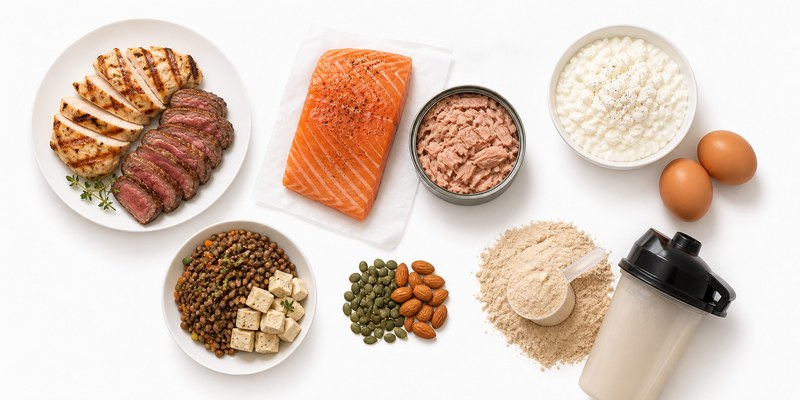
In this post, I share 101 high protein foods with real gram counts per serving, so hitting your daily target stops being guesswork.
In This Guide
Eating More Protein Daily

For years I ate what I thought was a solid breakfast: cereal with milk and a banana. That is about 12 g of protein. By ten in the morning I was back in the pantry, wondering why I was always hungry.
This list of high protein foods is how I fixed that. Every item shows a real serving and a real gram count, so you can see that one cup of cottage cheese does the same work as four eggs.
The RDA is 0.8 g of protein per kilogram of body weight, which the Harvard Nutrition Source protein guide puts at roughly 51 g a day for a 140-pound adult. Harvard also notes that the protein package matters more than the raw number. Talk with your clinician first if you have kidney disease or are pregnant. This is grocery guidance, not medical advice.
Key Takeaways
- Aim for 25 to 30 g per meal: Spreading protein across the day beats one huge dinner.
- Cheapest wins are canned and dry: Tuna, eggs, lentils, and cottage cheese give the most protein per dollar.
- Check the serving, not the label: These high protein foods each list grams in a real, everyday portion.
18 High Protein Foods From Lean Meat and Poultry
Poultry and lean cuts of red meat deliver the most grams per ounce of anything in the store, and they reheat well for lunches.
🌱
Whole Foods Grocery Shortcut
Chicken, eggs, canned tuna, Greek yogurt, cottage cheese, lentils, and tofu in one Whole Foods order.
- Chicken breast: 26 g protein per 3 oz cooked. Poach a batch on Sunday, shred it, and lunch is solved all week.
- Chicken thigh, skinless: 21 g per 3 oz. More forgiving than breast, because the extra fat keeps it juicy at higher heat.
- Turkey breast: 25 g per 3 oz with very little saturated fat. Roast a small one outside the holidays.
- Ground turkey, 93/7: 22 g per 3 oz. Brown it hard in a dry pan first so it does not steam.
- Lean ground beef, 93/7: 22 g per 3 oz, with roughly half the fat of an 80/20 blend. Good in a keto taco casserole.
- Sirloin steak: 25 g per 3 oz. Slice it thin against the grain and a small portion still eats like a real steak dinner.
- Eye of round: 24 g per 3 oz and one of the cheapest cuts by the pound. Slow-roast it, then slice it cold for sandwiches.
- Flank steak: 23 g per 3 oz. Marinate 30 minutes, sear hot, rest 10 minutes, then cut across the grain.
- Pork tenderloin: 22 g per 3 oz. It is nearly as lean as chicken breast and cooks in about 20 minutes.
- Pork loin chop: 23 g per 3 oz. Brine it for an hour so a lean chop does not dry out on you.
- Canadian bacon: 12 g in two slices for roughly 60 calories, which beats three strips of streaky bacon on every number.
- Ground bison: 22 g per 3 oz and leaner than most beef. Pull it a shade earlier than you would ground chuck.
- Venison: 26 g per 3 oz with very little fat, so keep the heat moderate and take it off early.
- Lamb loin chop: 23 g per 3 oz. Trim the fat cap before cooking and the calorie math stays reasonable.
- Rotisserie chicken: 24 g per 3 oz once the skin comes off, and it often costs less than raw breast. Try it in a chicken avocado salad.
- Deli turkey, low sodium: 13 g per 2 oz. Read the label, because sodium swings from 350 to 900 mg per serving.
- Beef jerky: 11 g per 1 oz and shelf-stable, which makes it the glovebox option when the alternative is a gas station pastry.
- Chicken sausage: 14 g per link. Precooked links heat in four minutes and turn two eggs into a real breakfast.
16 Protein-Packed Fish and Seafood Picks
Seafood brings high protein foods together with omega-3 fats, and my pescatarian food list goes deeper on building whole weeks around it.
- Canned tuna in water: 20 g per 3 oz for well under a dollar. It anchors my no-mayo tuna salad.
- Salmon: 22 g per 3 oz plus omega-3 fats. Roast it at 400F for about 12 minutes and stop there.
- Canned salmon: 20 g per 3 oz, and the soft bones add calcium if you mash them in rather than picking them out.
- Cod: 19 g per 3 oz with almost no fat. It takes on whatever seasoning you give it.
- Tilapia: 21 g per 3 oz. Cheap, mild, and on the plate in under 10 minutes straight from frozen.
- Halibut: 23 g per 3 oz. Pricey, so I buy it frozen in portions and treat it as a weekend fish.
- Shrimp: 20 g per 3 oz and it cooks in three minutes. Keep a bag in the freezer for emergency dinners.
- Sardines: 21 g in one 3.75 oz tin, plus calcium and vitamin D. Mash them onto toast with lemon.
- Mackerel: 20 g per 3 oz and rich in omega-3 fats. The strong flavor stands up to mustard or vinegar.
- Rainbow trout: 21 g per 3 oz with a milder taste than salmon. It pan-fries in a single skillet.
- Scallops: 17 g per 3 oz. Dry them thoroughly before they hit the pan, or they steam instead of searing.
- Crab meat: 17 g per 3 oz. Canned lump crab turns a salad into a meal with no cooking at all.
- Lobster: 16 g per 3 oz. More of a treat than a staple, but the protein number holds up next to steak.
- Mussels: 20 g per 3 oz and among the cheapest shellfish. Steam them in broth for about six minutes.
- Oysters: 8 g per 3 oz, lower than most seafood, though they carry more zinc than nearly any other food.
- Tuna pouch: 17 g per 2.6 oz pouch. No draining, no can opener, and it fits in a work bag.
16 Protein-Rich Eggs and Dairy Choices
The dairy case holds the cheapest high protein foods per gram in the whole store, and most of them need no cooking.
- Eggs: 6 g each. Two eggs plus two whites lands near 19 g, and soft scrambled eggs take four minutes.
- Egg whites: 26 g per cup of liquid whites. I add half a cup to whole eggs to lift the number quietly.
- Greek yogurt, plain nonfat: 17 g per 6 oz cup. Buy plain, then blend it into a protein smoothie bowl.
- Icelandic skyr: 17 g per 5.3 oz cup and thicker than Greek yogurt, so it eats more like dessert.
- Cottage cheese: 24 g per cup, the same protein as four eggs. It also makes a cottage cheese flatbread.
- Part-skim ricotta: 14 g per half cup. Spread it on toast with tomato and cracked pepper for a fast lunch.
- Skim milk: 8 g per cup. Swapping it into oats or coffee adds protein you never notice drinking.
- Ultra-filtered milk: 13 g per cup, roughly 60 percent more than regular milk, with the lactose already removed.
- Plain kefir: 9 g per cup plus live cultures. Drink it straight or use it as a smoothie base.
- Cheddar: 7 g per 1 oz. It is calorie-dense, so weigh it once and then eyeball that size afterward.
- Part-skim mozzarella: 7 g per 1 oz with less fat than cheddar. It melts over almost any vegetable.
- String cheese: 6 g per stick. Boring and portable, and the reason I stopped buying vending machine snacks.
- Parmesan: 10 g per 1 oz, the highest protein of the common cheeses. A little grated goes a long way.
- Swiss cheese: 8 g per 1 oz and lower in sodium than most sliced cheeses. Good on a turkey sandwich.
- Nonfat dry milk powder: 8 g per quarter cup. Stir a spoonful into soup, oatmeal, or pancake batter.
- Whole milk plain yogurt: 8 g per cup. Less than Greek, but the texture holds up better in sauces.
17 Plant Protein Foods From Beans, Lentils and Soy
Legumes and soy are the high protein foods that also bring fiber, and my vegan food list builds full meals around them.
- Lentils: 18 g per cooked cup plus about 15 g fiber. They cook in 20 minutes with no soaking, and they sit on my insulin resistance list too.
- Chickpeas: 15 g per cooked cup. Roast them at 400F until they rattle in the pan for a crunchy snack.
- Black beans: 15 g per cooked cup. Rinsing canned beans well drops the sodium by roughly 40 percent.
- Kidney beans: 15 g per cooked cup, and they hold their shape in chili better than most other beans.
- Pinto beans: 15 g per cooked cup. Mash them with a splash of broth for a fast refried side.
- Navy beans: 15 g per cooked cup and the creamiest of the white beans once they hit soup.
- Cannellini beans: 17 g per cooked cup. Blend half a can into soup to thicken it without any cream.
- Split peas: 16 g per cooked cup. One pot of split pea soup covers four work lunches.
- Edamame: 18 g per cooked cup and a complete protein. Buy it frozen and already shelled.
- Firm tofu: 10 g per half cup. Press it 15 minutes before cooking or it will never brown properly.
- Super-firm tofu: 16 g per 3 oz. It needs no pressing and cubes straight out of the package.
- Tempeh: 17 g per 3 oz with a nutty, fermented flavor. Steam it 10 minutes to soften the bitterness.
- Soy milk: 7 g per cup, the only plant milk that matches dairy on protein. Look for unsweetened.
- Textured vegetable protein: 12 g per quarter cup dry. Rehydrate it in broth and stretch one pound of beef into two.
- Chickpea pasta: 13 g per 2 oz dry, roughly double regular pasta. Cook it a minute short of the box time.
- Roasted chickpea snacks: 6 g per quarter cup. Crunchy, shelf-stable, and a better desk snack than crackers.
- Fat-free refried beans: 7 g per half cup. A canned shortcut that turns a plain tortilla into a real meal.
17 Nuts, Seeds and Grains With Real Protein
These are the supporting high protein foods: nothing here anchors a meal alone, but a spoonful adds up fast across a day.
- Peanut butter: 7 g per 2 Tbsp. Buy the jar with peanuts and salt on the label and nothing else.
- Peanuts: 7 g per 1 oz, the highest protein of the common nuts and by far the cheapest.
- Almonds: 6 g per 1 oz. A quarter cup runs about 23 almonds, which is worth measuring once.
- Almond butter: 7 g per 2 Tbsp. Stir the separated oil back in rather than pouring it off.
- Pistachios: 6 g per 1 oz. The shells slow you down, which turns out to be a feature.
- Cashews: 5 g per 1 oz. Lower protein than peanuts, but they blend into a creamy dairy-free sauce.
- Walnuts: 4 g per 1 oz and the best nut source of plant omega-3 fats. Keep them in the freezer.
- Pumpkin seeds: 9 g per 1 oz, the highest protein seed you can buy in a regular grocery store.
- Sunflower seeds: 6 g per 1 oz. A cheap way to add crunch and a few grams to a plain salad.
- Hemp hearts: 10 g per 3 Tbsp with no cooking at all. Spoon them over yogurt or oatmeal.
- Chia seeds: 5 g per 2 Tbsp plus about 10 g fiber. Soak them overnight in milk for pudding.
- Ground flaxseed: 3 g per 2 Tbsp. Buy it ground and keep it refrigerated, since whole seeds pass straight through.
- Quinoa: 8 g per cooked cup and a complete protein. Rinse it first to wash off the bitter coating.
- Farro: 7 g per cooked half cup with a chewy bite that holds up in grain bowls all week.
- Steel-cut oats: 7 g per cooked cup. Stir in one scoop of powder and breakfast clears 30 g.
- Whole wheat pasta: 8 g per 2 oz dry, a couple of grams above white pasta with far more fiber.
- Sprouted grain bread: 8 g in two slices, more than most whole wheat loaves. For a bigger jump, try a high protein bagel.
17 Protein Powders, Bars and High-Protein Swaps
When whole food falls short, these high protein foods close the gap, and my supplement guide covers what else is worth adding.
- Whey protein isolate: 25 g per scoop and the fastest-digesting option. It mixes into plain water without a blender.
- Whey concentrate: 24 g per scoop and cheaper than isolate. It keeps a little more lactose along the way.
- Casein protein: 24 g per scoop and digests slowly, which suits an evening shake better than a post-workout one.
- Pea protein powder: 21 g per scoop. Dairy-free and gritty on its own, so blend it with half a banana.
- Soy protein isolate: 23 g per scoop and a complete plant protein. Neutral enough to disappear into oatmeal.
- Collagen peptides: 18 g per two scoops. It dissolves in hot coffee, though it is not a complete protein.
- Egg white protein powder: 24 g per scoop. A useful middle ground when whey upsets your stomach.
- Ready-to-drink shakes: 30 g per bottle. The most expensive gram of protein in the store, and the one I actually drink.
- Protein bars: 20 g per bar. Check the sugar alcohol count before you commit to a whole box.
- High-protein cereal: 20 g per cup. Poured over ultra-filtered milk, one bowl lands near 33 g.
- Lentil pasta: 14 g per 2 oz dry. It tastes closer to real pasta than the chickpea versions do.
- High-protein bread: about 6 g per slice, roughly double a standard sandwich loaf. Check the label, because the range is wide.
- Nutritional yeast: 8 g per quarter cup with a savory, cheesy flavor. Shake it over popcorn or pasta.
- Protein oatmeal cups: 15 g per cup and they only need hot water. Useful in a hotel room or an office.
- Greek yogurt drinks: 15 g per bottle. Handy on the mornings when chewing breakfast is not going to happen.
- Clear whey protein water: 20 g per bottle with none of the dairy texture. It drinks like juice in summer.
- Bone broth: 9 g per cup. Not an anchor on its own, but it lifts a soup base above plain stock.
Video: Protein Targets Made Simple
A short expert walkthrough of how high protein foods fit into an ordinary day of eating, which helps most if you are starting from a low-protein breakfast.
📹 Video Credit: ATHLEAN-X
High Protein Food List: Pinterest Pin
📌 Are you on Pinterest? Pin this guide to high protein foods on your meal-prep board so the gram counts are handy the next time you shop.

Protein Timing and Meal Structure
Which high protein foods you buy matters less than whether the protein actually lands in each meal instead of piling up at dinner.
- Front-load breakfast: Most people eat 10 g at breakfast and 50 g at dinner. Flipping that split is the single biggest change.
- Anchor every plate first: Pick the protein before the sides, then build the rest of the meal around it.
- Keep two no-cook options: Cottage cheese and a tuna pouch cover the nights when cooking is not happening.
- Round up on training days: Adding 20 to 30 g on days you lift is easier than trying to catch up later in the week.
- Break a fast with protein: If you fast, what you eat first sets the tone for the rest of the day.
Recommended The Complete High-Protein Cookbook
A cookbook turns a list of high protein foods into an actual week of dinners, which is where most good intentions fall apart.
🍳 The Companion Cookbook

FAQs
Here are the questions I hear most about high protein foods.
1. How much protein do I need each day?
The RDA sits at 0.8 g per kilogram of body weight, which works out to roughly 51 g daily for a 140-pound adult. Active people, older adults, and anyone losing weight often do better nearer 1.2 to 1.6 g per kilogram. Ask your clinician before making a large change to your intake.
2. Which foods give the most protein per calorie?
Egg whites, white fish, shrimp, and nonfat Greek yogurt sit at the top, because almost none of their calories come from fat. Chicken breast, canned tuna, and cottage cheese follow closely behind. Among high protein foods, the leanest picks let you hit a daily target on fewer calories, which matters a lot during weight loss.
3. What are the best high protein foods for weight loss?
Lean picks that keep you full on few calories work best: chicken breast, canned tuna, egg whites, plain Greek yogurt, cottage cheese, lentils, and shrimp. Each delivers 17 g or more per modest serving. Protein also has the highest thermic effect of the three macronutrients, so a little more of your intake burns off during digestion.
4. Can I get enough protein without eating meat?
Plenty of people do. Lentils, edamame, tempeh, tofu, chickpea pasta, soy milk, and Greek yogurt all clear 13 g per serving. Building meals from plant high protein foods usually means eating a slightly larger volume, and combining legumes with grains across the day covers the amino acids that any single plant source lacks.
5. Are high protein foods safe for my kidneys?
For adults with healthy kidneys, higher intakes have not been shown to cause damage in the research so far. People who already have chronic kidney disease are a different case, and protein targets are often set individually by a nephrologist or renal dietitian. Check with your own clinician before raising intake if kidney function is a concern.
6. How much protein can my body use at one time?
Roughly 25 to 40 g per meal covers most of the muscle-building response for the average adult, though the rest is still used for other jobs and is not wasted. Spreading high protein foods across three or four meals beats loading a single plate, which is the practical reason breakfast deserves more attention.
7. What are the cheapest high protein foods to buy?
Dried lentils, dried beans, eggs, canned tuna, peanut butter, cottage cheese, and whole chickens run cheapest by the gram. Dried legumes are the clear winner if you are willing to cook a pot. Rotisserie chicken often costs less per pound than raw breast, which makes it the best shortcut in the store on a busy week.
High Protein Foods: The Bottom Line

Protein is the macronutrient most people under-eat without noticing, and fixing it is mostly a shopping problem.
- Start with four staples: Eggs, chicken, canned tuna, and cottage cheese cover most meals cheaply.
- Count the serving, not the food: A number on a package means nothing until you check the portion it describes.
- Add one plant source: Lentils, edamame, or tofu bring the fiber that meat cannot.
If this list helped, my best keto diet foods and carnivore diet foods guides apply the same shopping logic from a lower-carb angle. Pick four staples, learn their numbers, and the rest of the week gets a lot easier to plan.
