
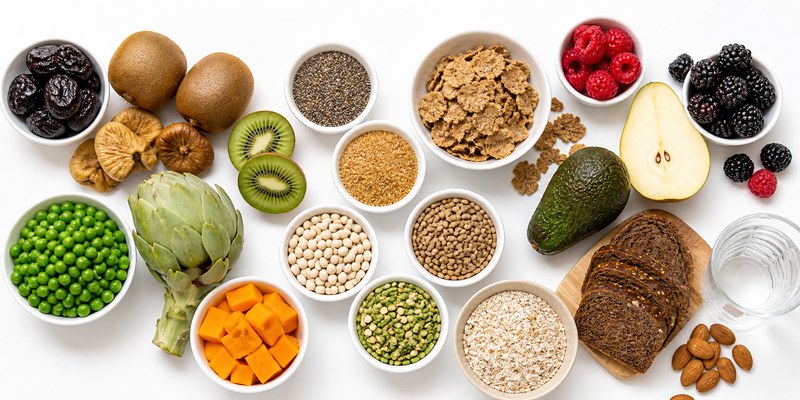
Here are 51 foods for constipation, sorted by how they help, with a real fiber number on every pick so you can see what actually gets things moving.
In This Guide
The Aisle That Sells Powder

The shelf my grocery store keeps for this runs about four feet wide and holds powders, capsules, and gummies. Not one label on it names a single food, even though the produce section sits about thirty steps away.
This list of foods for constipation is the version I wish that aisle offered. Every pick carries a real fiber number, so you can see what a food actually brings before it goes in the cart instead of guessing at it.
The National Institute of Diabetes and Digestive and Kidney Diseases puts the adult target at 22 to 34 g of fiber a day depending on age and sex, and asks you to build up slowly and drink enough liquid alongside it. Talk with your clinician first if this is new for you, lasts more than a few weeks, or comes with pain, bleeding, or weight loss. This is grocery guidance, not medical advice.
Key Takeaways
- Fiber has a real target: Adults need 22 to 34 g a day, depending on age and sex.
- Water does half the work: Fiber without enough liquid can make stools firmer rather than softer.
- Add it slowly: These foods for constipation work better when you build up over a couple of weeks.
Video: Constipation Eating Basics
A short walkthrough from a credible creator on how foods for constipation fit into an ordinary week of shopping and cooking, which lands better than a label on a tub of powder ever will.
📹 Video Credit: Michelle Kenway
Constipation Food List: Pinterest Pin
📌 Pin this roundup of foods for constipation to your grocery board and all 51 fiber numbers ride along on the next shopping trip. Thanks for the save.

10 Foods for Constipation That Work Fastest
These ten combine ordinary fiber with sorbitol, a sugar alcohol that pulls water into the bowel, which is why they tend to be the group people notice first. Chia is the easiest of them to hide, and it disappears into my protein smoothie bowl without changing the taste.
🌱
Whole Foods Grocery Shortcut
Prunes, dried figs, kiwifruit, chia seeds, split peas, oat bran, raspberries, and kefir in one Whole Foods order.
- Chia seeds: about 10 g of fiber per 2 tablespoons, the densest spoonful in the store. Let them sit in liquid for 15 minutes so they gel before you eat them.
- Wheat bran cereal: about 9.1 g of fiber per three quarter cup serving. Buy the plain flakes rather than the frosted version, which trades fiber for sugar.
- Prunes: about 7.7 g of fiber per half cup, plus sorbitol on top of it. Five or six is a normal starting portion, and more is not better here.
- Dried figs: about 7.3 g of fiber per half cup. Chop them into oatmeal so the sweetness spreads instead of arriving all at once.
- Dried apricots: about 6.5 g of fiber per cup, and easier to like than prunes. The unsulfured ones look brown and taste better.
- Pear with the skin on: about 5.5 g of fiber in a medium one, carrying sorbitol as well. Peeling it throws away roughly half of that fiber.
- Ground flaxseed: about 3.8 g of fiber per 2 tablespoons. Buy it ground or grind it yourself, because whole seeds pass straight through.
- Prune juice: about 2.6 g of fiber per cup, mostly working through sorbitol. Half a cup in the morning is plenty to judge it by.
- Rhubarb: about 2.2 g of fiber per cooked cup. Stew it with a chopped apple so it needs far less added sugar.
- Kiwifruit: about 2.1 g of fiber in one fruit, and the gentlest pick in this group. Two a day is the portion most studies have used.
9 High-Fiber Fruits to Keep in the Bowl
Fruit is the easiest place to start, because nothing has to be cooked and the fiber comes with the water that helps it work. Berries carry the biggest numbers of any common fruit, which is also why they anchor my MIND diet food list, and they belong in any set of foods for constipation.
- Passion fruit: about 24.5 g of fiber per cup of pulp, the largest fruit number on this page by a wide margin. Spoon it over yogurt, seeds and all.
- Avocado: about 9.8 g of fiber in a whole one, alongside mostly unsaturated fat. It carries my chicken avocado salad with no mayonnaise at all.
- Guava: about 8.9 g of fiber per cup. Eat the seeds and the skin, since that is where most of that number lives.
- Raspberries: about 8 g of fiber per cup, the highest of the everyday berries. Frozen ones cost less and stir into yogurt just as well.
- Blackberries: about 7.6 g of fiber per cup. They go soft fast, so buy the small container and eat it within two days.
- Dates: about 6.2 g of fiber per half cup, pitted and chopped. Two is a snack and eight is a dessert, so measure them out.
- Apple with the skin on: about 4.4 g of fiber in a medium one. Slice it rather than juice it, because juicing leaves the useful part behind.
- Orange: about 3.4 g of fiber in a medium one, plus a good deal of water. Eat the segments and skip the glass of juice.
- Banana: about 3.1 g of fiber in a medium one. Slightly underripe ones bring more resistant starch, which feeds the bacteria doing the work.
8 Vegetables That Add Real Bulk
Vegetables are where a plate quietly gains several grams without anyone noticing a change, which makes them the least demanding foods for constipation on this page. Half a plate of these is roughly what my DASH diet food list is built around as well.
- Green peas: about 8.8 g of fiber per cooked cup, the top vegetable number here. A bag in the freezer costs almost nothing and never goes off.
- Artichoke: about 6.9 g of fiber in a medium one. The jarred hearts in water are far quicker than trimming a fresh one.
- Butternut squash: about 6.6 g of fiber per cooked cup. Roast it in cubes at 400F and it needs nothing but olive oil.
- Collard greens: about 5.3 g of fiber per cooked cup. Slice the leaves into ribbons and they cook in half the usual time.
- Broccoli: about 5.1 g of fiber per cooked cup. Steam it for 5 minutes rather than 15, since the stems hold plenty of fiber too.
- Carrots: about 4.7 g of fiber per cooked cup, and cheap all year round. They soften into my anti-inflammatory chicken soup without any prep beyond a knife.
- Brussels sprouts: about 4.1 g of fiber per cooked cup. Halve them and roast cut side down so they caramelise instead of steaming.
- Sweet potato with the skin on: about 3.7 g of fiber in a medium one. Bake it whole and eat the skin, which holds a good share of that.
8 Beans and Lentils, the Heaviest Hitters
One cup of almost anything in this group covers a third to a half of a whole day’s fiber, which is why no other shelf competes as foods for constipation. My vegan food list leans on the same aisle for the same reason.
- Navy beans: about 19.1 g of fiber per cooked cup, the biggest single number in this entire post. Half a cup is a sensible first serving.
- Split peas: about 16.3 g of fiber per cooked cup, with no soaking needed. They collapse into soup in about 45 minutes on the stove.
- Lentils: about 15.6 g of fiber per cooked cup and ready in 20 minutes. Red ones melt into sauce while green ones hold their shape.
- Pinto beans: about 15.4 g of fiber per cooked cup. Mash them with a fork and a little of their liquid for an instant refried texture.
- Black beans: about 15 g of fiber per cooked cup. Rinsing the canned ones cuts a noticeable amount of their sodium in about ten seconds.
- Lima beans: about 13.2 g of fiber per cooked cup, and better than their reputation. The baby ones are creamier and cook faster than the large.
- Chickpeas: about 12.5 g of fiber per cooked cup. Roast them dry at 400F, or scatter them cold over my Mediterranean power salad.
- Kidney beans: about 11.3 g of fiber per cooked cup. Always cook dried ones fully rather than eating them undercooked, which can upset your stomach.
8 Whole Grains and Cereals for Daily Fiber
Swapping a refined grain for a whole one changes every meal made that week, which is the cheapest leverage among all the foods for constipation here. If wheat is off the table for you, my gluten-free food list covers the alternatives properly.
- Oat bran: about 14.5 g of fiber per cup dry, much of it the soluble kind. It also thickens my banana oat pancakes on a slow morning.
- Bulgur: about 8.2 g of fiber per cooked cup, and it only needs soaking in hot water. Ten minutes under a lid and it is done.
- Whole wheat pasta: about 6.3 g of fiber per cooked cup. Cook it a minute short of the box and it stops tasting like cardboard.
- Barley: about 6 g of fiber per cooked cup. Pearled cooks faster, while hulled keeps more of the bran that matters here.
- Quinoa: about 5.2 g of fiber per cooked cup, with complete protein alongside. Rinse it first or it carries a soapy edge.
- Popcorn, air popped: about 3.6 g of fiber per 3 cups, which is a genuinely large bowl. Skip the buttered microwave bags and use a pan.
- Brown rice: about 3.2 g of fiber per cooked cup, with magnesium along for the ride. Cook a double batch for my turkey rice bowl and freeze half.
- Whole rye bread: about 1.9 g of fiber per slice, more than double most white loaves. Look for whole rye flour first on the ingredient list.
8 Nuts, Drinks and Fermented Picks
This last group covers the edges: a handful of nuts, enough liquid to let all that fiber do its job, and a couple of fermented picks. If bloating is the bigger problem for you, read these foods for constipation alongside my low FODMAP food list first.
- Almonds: about 3.5 g of fiber per 1 oz, one of the densest nuts in the bin. Buy them raw or dry roasted rather than salted.
- Pistachios: about 2.9 g of fiber per 1 oz. Buying them in the shell slows the eating down enough to notice a portion.
- Pecans: about 2.7 g of fiber per 1 oz. They go rancid quickly, so keep the bag in the freezer rather than the pantry.
- Peanuts: about 2.4 g of fiber per 1 oz, at the lowest cost of any nut here. The unsalted ones keep the sodium out of it.
- Sauerkraut: about 4 g of fiber per cup, plus live cultures if it came from the refrigerated case. The shelf-stable jars are pasteurised and lose them.
- Kefir: about 12 strains of live cultures in a typical bottle, more than most yogurts carry. Start with half a cup rather than a full glass.
- Water: about 91 fl oz a day for women and 125 fl oz for men, food included, is the common benchmark. Fiber without it can backfire.
- Coffee: about 29 percent of people in one survey reported an urge within minutes of a cup. One in the morning is the usual trial.
Building a Day That Reaches 30 g
Reaching the top of the 22 to 34 g range sounds like a project until you see it as four ordinary decisions rather than a diet. Here is how I would assemble a day out of the foods for constipation above.
- Put 10 g into breakfast: Oat bran with a tablespoon of chia and a handful of raspberries gets there before the day starts.
- Let lunch carry the beans: Half a cup of lentils or chickpeas adds 6 to 8 g without changing what the meal looks like.
- Make the snack do work: Five prunes or two kiwis is the slot where the sorbitol picks fit most easily.
- Fill half the dinner plate with vegetables: Green peas, broccoli, and squash bring several grams each, the way my flexitarian food list arranges a plate.
- Move the whole thing up slowly: Add roughly 2 to 3 g a week rather than jumping, and if breakfast timing is the sticking point my post on breaking a fast covers that piece.
Recommended High-Fiber Cookbook
A cookbook turns a list of foods for constipation into an actual week of dinners, which is where good intentions tend to come apart. My high-fiber cookbook roundup covers the rest of that shelf in more detail.
🍳 The Companion Cookbook

FAQs
The questions I get most often about foods for constipation.
1. How much fiber do I actually need each day?
Adults are advised to get 22 to 34 g a day, with the exact figure depending on age and sex. Most people land near half of that without realising it. You do not need to count forever, but three days of honest counting shows you which meal is leaving the gap each day.
2. Do prunes really work better than other dried fruit?
Prunes bring about 7.7 g of fiber per half cup and sorbitol on top of it, which is the combination that sets them apart. Dried figs and apricots come close on fiber but carry less sorbitol. Among foods for constipation, prunes remain the most studied, and five or six is a normal serving.
3. Which foods for constipation should I add first?
Start with one thing at breakfast, because that is the meal most people skip fiber at entirely. Oat bran, chia, berries, or a pear all land easily there. Give it a week before adding a second change, and keep the liquid up, or the extra bulk has nothing to move along with it.
4. Can eating more fiber make bloating worse?
Going from a low intake to a high one overnight is the classic cause of gas and cramping. The advice is to build up a little at a time so your body adjusts. Adding two or three foods for constipation a week, rather than ten in one day, avoids most of that trouble.
5. Do foods for constipation work without drinking more water?
Fiber pulls in liquid to soften and bulk what is passing through, so without enough of it the effect can run the wrong way. Water, clear soups, and unsweetened juices all count toward the total. If you add a large amount of bulk and drink nothing extra, expect things to feel firmer, not looser.
6. Is a fiber supplement easier than changing how I eat?
Easier in the moment, and narrower in what it delivers. A powder brings one kind of fiber, while foods for constipation bring fiber with water, potassium, and the bacteria food that comes along in the same bite. Supplements make sense when a real gap exists, which is a conversation to have with your own clinician.
7. How long do foods for constipation take to help?
Sorbitol picks such as prunes and kiwifruit often show something within a day or two. Bulk fiber from beans and grains works on a slower schedule, closer to two or three weeks of eating that way every day. Keep a short note of what changed, because memory is a poor record of a slow change.
Foods for Constipation: The Bottom Line

Nothing on this page is a one-time fix, and that is the useful part: the picks that matter are the ones you can repeat on an ordinary Tuesday without thinking about them.
- Fix breakfast first: Oat bran, chia, and berries put 10 g on the board before the day gets complicated.
- Drink alongside the change: Extra bulk with no extra liquid tends to make the problem feel worse, not better.
- Move up 2 to 3 g a week: Slow is what keeps the gas and cramping out of it.
If food alone does not close the gap, my roundup of the best fiber supplements covers what to look for on a label and what to ignore, and my 7-day low FODMAP meal plan is the better starting point if bloating rather than slowness is the main complaint. Pick three swaps, hold them for a month, and let how you feel choose the next three.
