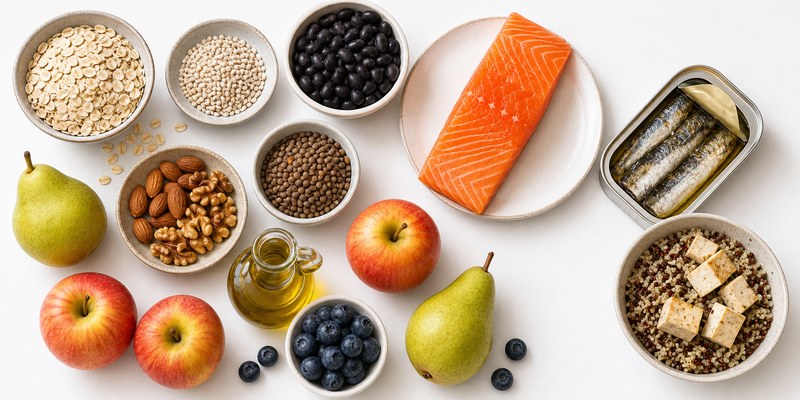
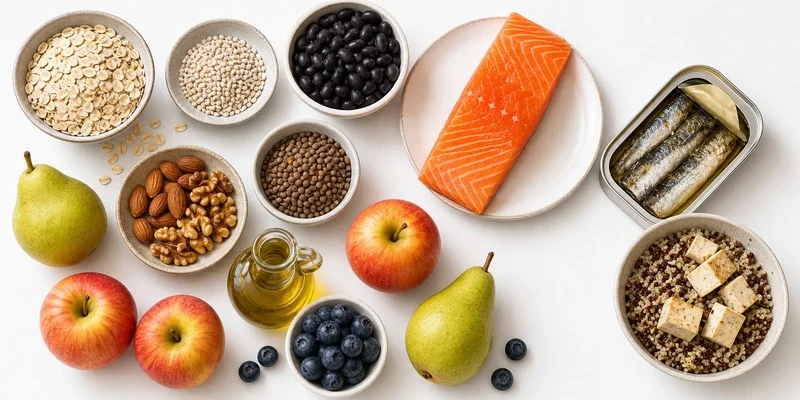
In this post, I share 51 foods to lower cholesterol, each with the fiber, sterol, or fat number that makes it worth putting in the cart.
In This Guide
Getting My Numbers Down

For years my breakfast was two fried eggs, buttered toast, and three strips of bacon. I never once thought about the butter, and oatmeal looked like the thing you ate when the fun ran out.
This list of foods to lower cholesterol is how I rebuilt that plate without dreading breakfast. Every pick carries a real number, so you can see which swaps actually pull their weight and which ones are just vibes.
The Mayo Clinic guide to cholesterol-lowering foods puts 5 to 10 g of soluble fiber a day as enough to move LDL, and notes that about 2 g of plant sterols daily may lower LDL by 5 to 15 percent. Talk with your clinician before making changes if you take a statin or a blood pressure medicine. This is grocery guidance, not medical advice.
Key Takeaways
- Soluble fiber does the heavy lifting: Aim for 5 to 10 g a day from oats, beans, and fruit.
- Swap the fat, do not only add fiber: Olive oil in place of butter moves the number too.
- Stack them, do not rank them: These foods to lower cholesterol work best together, not one at a time.
Video: Cholesterol Eating Basics
A short expert walkthrough of how foods to lower cholesterol fit into an ordinary week of eating, which helps most if you are starting from a butter-and-bacon breakfast like mine.
📹 Video Credit: TODAY
Cholesterol Food List: Pinterest Pin
📌 On Pinterest? Save this guide to foods to lower cholesterol to your heart-healthy board so the numbers are with you at the store. Thanks for the share.

10 Foods to Lower Cholesterol With Soluble Fiber
Soluble fiber is the one mechanism on this page with a target attached to it, so this group is where I would start. If fiber is new to your gut, add one item at a time and drink more water.
🌱
Whole Foods Grocery Shortcut
Rolled oats, barley, dried beans, lentils, apples, walnuts, olive oil, and salmon in one Whole Foods order.
- Rolled oats: about 2 g of soluble beta-glucan per half cup dry. One bowl covers a fifth of the daily target, and they also make banana oat pancakes.
- Oat bran: about 3 g of soluble fiber per half cup cooked, the densest single scoop in the cereal aisle. Stir a spoonful into regular oatmeal.
- Pearl barley: about 2.5 g of beta-glucan per half cup cooked. It holds its chew in soup far better than rice does.
- Black beans: about 7.5 g of total fiber per half cup. Rinsing the canned ones well drops the sodium by roughly 40 percent.
- Kidney beans: about 5.7 g of fiber per half cup, and they keep their shape in chili instead of turning to paste.
- Lentils: about 15.6 g of fiber per cooked cup, the highest number in this group. They cook in 20 minutes with no soaking.
- Chickpeas: about 6.2 g of fiber per half cup. Roast them at 400F until they rattle in the pan for a crunchy snack.
- Psyllium husk: about 5 g of fiber per rounded tablespoon, almost all of it soluble. My guide to fiber supplements covers the forms it comes in.
- Brussels sprouts: about 2.6 g of soluble fiber per cooked cup. Halve them, roast cut side down, and leave them alone until they brown.
- Okra: about 4 g of fiber per cooked cup, and the sliminess that puts people off is the soluble fiber doing its job.
10 Fruits and Vegetables That Protect Your Heart
Produce brings pectin, which is the fruit version of the same soluble fiber, and my high-fiber cookbook roundup is where I go when plain vegetables get boring. Half a plate of these at dinner is the easiest version of foods to lower cholesterol there is.
- Apples with the skin on: about 4.4 g of fiber in a medium apple, and the pectin sits mostly in that skin. Peeling one throws the point away.
- Pears: about 5.5 g of fiber in a medium pear. Buy them hard and let them ripen on the counter for three days.
- Oranges: about 3.1 g of fiber in a medium orange, which juice does not carry. Eat the segments instead of drinking them.
- Prunes: about 3.8 g of fiber in five prunes. They are also the reason my oatmeal has stopped needing brown sugar.
- Strawberries: about 3 g of fiber per cup, sliced. Frozen ones cost less out of season and work fine in oatmeal.
- Blueberries: about 3.6 g of fiber per cup, plus the anthocyanins that give them the color. A cup covers dessert for me.
- Eggplant: about 2.5 g of fiber per cooked cup. Salt the slices for 20 minutes first so they roast instead of steaming.
- Carrots: about 4.7 g of fiber per cooked cup. They also carry pectin, which raw carrot sticks deliver just as well.
- Broccoli: about 5 g of fiber per cooked cup. Steam it 5 minutes, not 15, and it keeps both texture and flavor.
- Spinach: about 4.3 g of fiber per cooked cup and a staple in the MIND diet food list. A full bag wilts down to about one cup.
9 Nuts, Seeds and Better Fats
Cutting saturated fat below 7 percent of daily calories may lower LDL by 8 to 10 percent, so the foods to lower cholesterol in this group earn their place by replacing butter rather than joining it.
- Almonds: about 3.5 g of fiber and 13 g of unsaturated fat per 1 oz. A quarter cup is roughly 23 almonds, worth measuring once.
- Walnuts: about 2.5 g of plant omega-3 fat per 1 oz, more than any other common nut. Keep them in the freezer so they do not turn.
- Pistachios: about 49 nuts in a 1 oz serving. Buying them in the shell slows you down, which turns out to be the feature.
- Extra virgin olive oil: about 10 g of monounsaturated fat per tablespoon. Swapping it for butter on vegetables is the single easiest change here.
- Avocado: about 10 g of fiber in a whole one, mostly with monounsaturated fat. It is the base of my chicken avocado salad.
- Ground flaxseed: about 1.6 g of plant omega-3 fat per tablespoon. Buy it ground and refrigerate it, since whole seeds pass straight through.
- Chia seeds: about 10 g of fiber per 2 tablespoons. Soak them overnight in milk and breakfast is already made.
- Sunflower seeds: about 100 mg of plant sterols per 1 oz, one of the better natural sterol sources. They add crunch to a plain salad.
- Pumpkin seeds: about 8 g of plant protein per 1 oz. I keep a jar by the stove and scatter them over soup.
8 Fish and Lean Protein Picks
Omega-3 fats do not lower LDL directly. They lower triglycerides and raise HDL, and swapping fatty red meat for these keeps the saturated fat down, which is the part that matters most for foods to lower cholesterol. My pescatarian food list goes deeper on building weeks around fish.
- Salmon: about 1.5 g of omega-3 fat per 3 oz. Roast it at 400F for 12 minutes and take it out while it still looks slightly underdone.
- Atlantic mackerel: about 1 g of omega-3 fat per 3 oz. The strong flavor stands up to mustard, vinegar, or a hard squeeze of lemon.
- Herring: about 1.7 g of omega-3 fat per 3 oz, the highest number on this list. Buy it plain rather than in cream sauce.
- Sardines: about 1.2 g of omega-3 fat in one 3.75 oz tin, plus calcium from the soft bones. Mash them onto whole grain toast.
- Albacore tuna: about 0.7 g of omega-3 fat per 3 oz. It anchors my no-mayo tuna salad, which skips the saturated fat entirely.
- Rainbow trout: about 0.8 g of omega-3 fat per 3 oz with a milder taste than salmon. One skillet and 8 minutes does it.
- Skinless chicken breast: about 1 g of saturated fat per 3 oz, against roughly 5 g in the same weight of ribeye. It carries my anti-inflammatory chicken soup.
- Turkey breast: about 0.5 g of saturated fat per 3 oz, the leanest common poultry. Roast a small one outside the holidays and slice it for sandwiches.
8 Whole Grains and Plant Proteins
Trading refined grains and some of your meat for these is the quiet version of foods to lower cholesterol, and my vegan food list shows how far the swap can go if you want to push it.
- Quinoa: about 5.2 g of fiber per cooked cup and a complete protein. Rinse it first to wash off the bitter coating.
- Brown rice: about 3.5 g of fiber per cooked cup, against under 1 g in white. Cook a double batch and freeze half.
- Whole wheat bread: about 2 g of fiber per slice. Check that a whole grain is the first ingredient, since color tells you nothing.
- Bulgur: about 8.2 g of fiber per cooked cup and it needs only a soak in hot water. It is the base of tabbouleh.
- Farro: about 7 g of fiber per cooked cup with a chewy bite that holds up in grain bowls all week.
- Firm tofu: about 9 g of soy protein per 3 oz. Press it 15 minutes before cooking or it will never brown properly.
- Edamame: about 18 g of protein per cooked cup and no saturated fat at all. Buy it frozen and already shelled.
- Unsweetened soy milk: about 7 g of protein per cup, the only plant milk that matches dairy. Good in oatmeal, and a staple on my flexitarian food list.
6 Drinks, Spreads and Pantry Swaps
These are the small, boring changes that need no cooking, and a few of them carry the strongest numbers among all the foods to lower cholesterol on this page.
- Sterol-fortified spread: about 2 g of plant sterols a day may lower LDL by 5 to 15 percent. Use it in place of butter, not alongside it.
- Stanol-fortified orange juice: about 1 g of plant stanols per 8 oz glass, so two glasses reach the daily amount. Watch the sugar if that matters for you.
- Green tea: about 240 mg of catechins per brewed cup. The effect on LDL looks modest in the research, and it costs almost nothing to try.
- Dark chocolate, 70 percent or higher: about 3.1 g of fiber per 1 oz square. The higher the cocoa, the less added sugar comes with it.
- Garlic: about 1 clove a day in the studies that found any benefit. Results are mixed, so treat it as flavor first and see it as a bonus if it helps.
- Canola oil: about 1.3 g of plant omega-3 fat per tablespoon and a higher smoke point than olive oil. It is my pan oil for anything above medium heat.
Meal Structure and Daily Habits
Which foods to lower cholesterol you buy matters less than whether they show up on the plate often enough to add up, and stacking small changes beats chasing one hero ingredient.
- Count the fiber, not the meals: Track soluble grams for one week until 5 to 10 g a day stops taking any thought.
- Make breakfast do the work: Oats with fruit and a spoon of ground flaxseed clears half the daily target before 8 a.m.
- Swap the cooking fat first: Olive or canola oil in place of butter changes every meal you make that week.
- Give beans two dinners a week: Replacing meat twice cuts saturated fat and adds fiber in the same move.
- Borrow a whole pattern: The DASH diet food list and the Mediterranean approach both do this work for you.
Recommended Heart-Healthy Cookbook
A cookbook turns a list of foods to lower cholesterol into an actual week of dinners, which is where most good intentions quietly fall apart. My Mediterranean cookbook roundup covers more of them.
🍳 The Companion Cookbook

FAQs
Here are the questions I hear most about foods to lower cholesterol.
1. How long do diet changes take to show up?
Most people see movement within about four to twelve weeks of steady eating changes, and a clinician will usually recheck a lipid panel near the three-month mark. How far the number moves depends on how much you change, how you cook, and where you started. Consistency across a whole week beats one perfect Monday.
2. How much soluble fiber do I need each day?
Five to 10 g a day is the range where LDL starts to move, and most people land well under it. A bowl of oatmeal, a half cup of beans, and one apple with the skin on gets you there easily. Build the habit around foods to lower cholesterol you already enjoy eating.
3. Which foods to lower cholesterol work fastest?
Oats, barley, psyllium, and beans act first, because soluble fiber binds bile acids in the gut right away. Sterol-fortified spreads move quickly too, at roughly 5 to 15 percent off LDL when you get about 2 g daily. Trading butter for olive oil compounds with both of those, and it costs nothing extra.
4. Do eggs raise my cholesterol?
For most healthy adults, the cholesterol in eggs moves blood levels less than saturated fat does, so the butter and bacon sitting beside them matter a great deal more. Some people do respond strongly and should ask a clinician. I still eat eggs, just alongside foods to lower cholesterol instead of fried in butter.
5. Can foods to lower cholesterol replace a statin?
That is a decision for you and your prescriber, never a swap to make on your own at home. Diet and medicine work through different routes, and the two are often used together. Stopping a prescribed statin without guidance may raise your risk, so bring the food changes to your next appointment instead.
6. What is the best breakfast for high cholesterol?
Oatmeal made with soy or skim milk, topped with berries and a tablespoon of ground flaxseed, lands near 8 g of fiber before you even leave the house in the morning. Swapping the fried eggs and buttered toast for that single bowl covers a good share of a full day of foods to lower cholesterol.
7. Do any foods to lower cholesterol help triglycerides?
Fatty fish does both jobs at once. Salmon, herring, sardines, and mackerel supply omega-3 fats, which reduce triglycerides and nudge HDL upward even though they leave LDL alone. Two servings a week is the usual advice, and cutting back on added sugar tends to move triglycerides faster than any single food does on its own.
Foods to Lower Cholesterol: The Bottom Line

Nothing on this page works alone, which is the whole point: small changes stacked across a normal week are what move the number.
- Start with the breakfast bowl: Oats, fruit, and ground flaxseed cover a large share of your daily soluble fiber.
- Change the fat before you add anything: Olive oil instead of butter reaches every meal you cook.
- Give beans a standing slot: Two meatless dinners a week cut saturated fat and add fiber at the same time.
If this list helped, my fatty liver diet foods and insulin resistance food guides apply the same shopping logic to numbers that usually travel with this one, and my Mediterranean power salad is the lunch I default to. Pick three swaps, keep them for a month, and let the next lipid panel tell you where to go from there.