
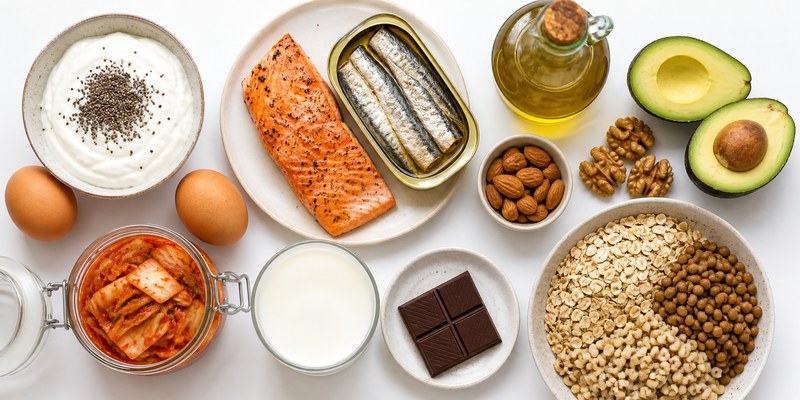
Here are 51 foods that boost GLP-1 naturally, grouped by how they work, with a real number on every pick so you can see what each one brings.
In This Guide
The Hormone Behind the Shot

My grocery store now sells drinks, gummies, and powders that all promise to work the way the shot does. I read six labels on one trip, and not one of them named a food you could simply put on a plate.
This list of foods that boost GLP-1 naturally is the version that starts at dinner instead of at a supplement shelf. Every pick carries a real number for whatever does the work in it, whether that is protein, soluble fiber, or omega-3 fat.
A dietitian at the Ohio State University Wexner Medical Center explains that protein, soluble fiber, healthy fats, and fermented foods all influence how much GLP-1 your gut releases, and that the natural hormone is far less potent than the medication. Talk with your clinician before changing how you eat if you take a GLP-1 drug, insulin, or another diabetes medicine, because appetite and blood sugar can move quickly. This is grocery guidance, not medical advice.
Key Takeaways
- Three levers do most of it: Protein, soluble fiber, and healthy fat each raise the release of this hormone.
- Order changes the answer: Protein and vegetables before carbohydrate produce a stronger response than the reverse.
- Food is the gentler lane: These foods that boost GLP-1 naturally work slowly and cannot match a prescription.
Video: GLP-1 Nutrition Basics
A short walkthrough from a credible creator on where foods that boost GLP-1 naturally fit into an ordinary week of shopping and cooking, which is easier to follow than a paragraph of hormone science.
📹 Video Credit: Dr. Livingood
GLP-1 Food List: Pinterest Pin
📌 Save this board of foods that boost GLP-1 naturally and all 51 picks come with you to the store. Thanks for the pin.

10 Foods That Boost GLP-1 Naturally Every Day
These ten cover all three levers at once, so a single one of them changes a meal more than a whole shelf of the products I read the labels on. If you are already taking a medication, my post on foods to eat on Zepbound and Mounjaro handles that side of it.
🌱
Whole Foods Grocery Shortcut
Greek yogurt, lentils, rolled oats, olive oil, salmon, avocado, chia seeds, and dark chocolate in one Whole Foods order.
- Plain Greek yogurt: about 17 g of protein per 6 oz cup, roughly double what regular yogurt carries. It also anchors my protein smoothie bowl when breakfast has to be quick.
- Eggs: about 6.3 g of protein each, in the cheapest form of complete protein on the shelf. Hard boil a batch on Sunday so the choice is already made.
- Lentils: about 17.9 g of protein per cooked cup, and they bring soluble fiber in the same spoonful. Red ones cook down in 20 minutes with no soaking.
- Rolled oats: about 2 g of beta-glucan per half cup dry, which is the fraction the gut bacteria ferment. Steel cut and rolled both work, but instant packets carry less.
- Pearled barley: about 2.9 g of beta-glucan per cooked half cup, more than any other common grain. Cook it in stock and it works as a rice swap.
- Extra virgin olive oil: about 10 g of monounsaturated fat per tablespoon, the fat most studied for slowing the stomach. Pour it over food after cooking rather than only into the pan.
- Salmon: about 1.8 g of omega-3 fat per 3 oz fillet, alongside a full serving of protein. Frozen fillets bake from solid in 20 minutes at 400F.
- Avocado: about 6.7 g of monounsaturated fat in half a fruit, with fiber attached. Half is a portion, and the other half keeps overnight with the pit left in.
- Chia seeds: about 4.1 g of fiber per tablespoon, much of it the soluble kind that gels. Stir a spoonful into yogurt the night before and it thickens by morning.
- Dark chocolate at 70 percent or higher: about 3.1 g of fiber per 1 oz square, plus the flavanols studied for supporting this hormone. One ounce is the standard serving, and it is easy to pass.
9 High-Protein Picks That Trigger the Hormone
Protein is the most reliable of the foods that boost GLP-1 naturally, because the release happens as the gut breaks it down rather than hours later. Roughly 25 to 30 g at a sitting is the range I aim for, and my GLP-1 breakfast ideas show what that looks like before nine in the morning.
- Chicken breast: about 26.7 g of protein per 3 oz cooked, and it clears the target in one portion. Shred a batch cold into my chicken avocado salad and lunch is handled.
- Turkey breast: about 25.6 g of protein per 3 oz cooked, with less fat than chicken thigh. Buy it as a whole cut rather than as pressed deli slices.
- Shrimp: about 20.4 g of protein per 3 oz, ready in the time it takes to boil water. Frozen raw shrimp thaw under cold running water in five minutes.
- Canned tuna in water: about 20.1 g of protein per 3 oz drained, at the lowest effort of anything here. It carries my Mediterranean tuna salad with olive oil instead of mayonnaise.
- Tempeh: about 19.9 g of protein per 3 oz, and it is fermented as well. Steam it for 10 minutes before marinating to take the bitter edge off.
- Edamame: about 18.5 g of protein per cooked cup, shelled. A frozen bag microwaves in four minutes and works as a snack straight from the bowl.
- Black beans: about 15.2 g of protein per cooked cup, with fermentable fiber alongside. Rinsing the canned ones removes a good share of the sodium.
- Cottage cheese: about 14 g of protein per half cup, and it takes sweet or savory equally well. The low fat version keeps the protein and drops the rest.
- Pumpkin seeds: about 8.6 g of protein per 1 oz, the highest of any seed in the bin. Buy them raw and toast them in a dry pan for two minutes.
8 Soluble-Fiber Foods the Gut Ferments
Soluble fiber is the slow lever among foods that boost GLP-1 naturally, because gut bacteria ferment it into short-chain fatty acids such as butyrate first. That fermentation is also what causes gas if you rush it, so if bloating is already your issue, read my low FODMAP food list before you double anything.
- Oat bran: about 5.2 g of beta-glucan per cup dry, the densest source in the cereal aisle. It also thickens my banana oat pancakes without changing the flavor.
- Psyllium husk: about 5.1 g of soluble fiber per tablespoon, which is the highest number on this page for one spoonful. Start with a teaspoon in a full glass of water.
- Navy beans: about 4.4 g of soluble fiber per cooked cup, on top of a large total fiber count. Half a cup is a sensible first serving.
- Brussels sprouts: about 1.9 g of soluble fiber per cooked cup. Roast them halved and cut side down so they brown rather than steam.
- Sweet potato with the skin on: about 1.6 g of soluble fiber in a medium one. Bake it whole and eat the skin, where a good share of that sits.
- Apple with the skin on: about 1.5 g of soluble fiber in a medium one, most of it pectin. Slice it rather than juice it, because juicing leaves the useful part behind.
- Chickpeas: about 1.3 g of soluble fiber per cooked half cup. Roast them dry at 400F for 25 minutes and they turn into a crunchy snack.
- Ground flaxseed: about 0.6 g of soluble fiber per tablespoon, with omega-3 fat riding along. Buy it ground, because whole seeds pass straight through.
8 Healthy-Fat Foods That Slow the Stomach
Monounsaturated fat and omega-3 fat sit at the quiet end of the foods that boost GLP-1 naturally, working mostly by slowing how fast the stomach empties. Two seafood meals a week covers most of it, which is the same rhythm my pescatarian food list is built on.
- Almonds: about 8.8 g of monounsaturated fat per 1 oz, in the most portable form here. They scatter over my Mediterranean power salad for crunch that lasts.
- Pistachios: about 6.6 g of monounsaturated fat per 1 oz. Buying them in the shell slows the eating down enough to notice a portion.
- Walnuts: about 2.5 g of plant omega-3 per 1 oz, the highest of any common nut. Keep the bag in the freezer, because they go rancid fast.
- Hemp seeds: about 2.4 g of plant omega-3 per 3 tablespoons, with a soft texture that hides anywhere. Spoon them over soup at the table rather than during cooking.
- Herring: about 1.7 g of omega-3 per 3 oz, and it costs far less than salmon. The plain smoked fillets need nothing but rye bread.
- Sardines: about 1.4 g of omega-3 per 3.75 oz tin, bones and all for the calcium. The ones packed in olive oil taste better than the water pack.
- Atlantic mackerel: about 1 g of omega-3 per 3 oz, with a rich flavor that stands up to lemon. Grill it skin side down and leave it alone.
- Anchovies: about 0.9 g of omega-3 per 2 oz tin. Melt two into a hot pan of garlic and oil and they disappear into the sauce.
8 Fermented Picks That Support the Gut Side
Fermented foods act on the bacteria that do the fermenting, so they belong with the foods that boost GLP-1 naturally even though the effect is indirect. Sodium is the thing to watch in this group, and my DASH diet food list explains why that matters over a week.
- Skyr: about 19.3 g of protein per 5.3 oz cup, strained thicker than Greek yogurt. Look for live active cultures on the label, since not every brand keeps them.
- Natto: about 15.5 g of protein per half cup, fermented soybeans with a strong smell and a mild taste. Start with a tablespoon stirred into rice.
- Kefir: about 9.2 g of protein per cup, with more culture strains than most yogurts carry. Half a cup is a fair first pour if it is new to you.
- Whole grain sourdough: about 2.7 g of fiber per slice, and the long ferment makes it easier on some stomachs. Check that whole grain flour leads the ingredient list.
- Kombucha: about 2.2 g of sugar per 8 oz glass in the unsweetened versions. The flavored bottles can carry several times that, so read the panel.
- Kimchi: about 670 mg of sodium per half cup, which is the trade-off for the cultures. Cook a spoonful into fried rice and it seasons the whole pan.
- Sauerkraut: about 460 mg of sodium per half cup, from the refrigerated case rather than the shelf. Shelf-stable jars are pasteurised and lose the live cultures.
- Miso paste: about 210 mg of sodium per teaspoon, and a teaspoon flavors a whole bowl. Stir it in off the heat so the cultures survive.
8 Vegetables, Fruits and Extras Worth Adding
This last group is the volume layer, and it matters because vegetables eaten before the carbohydrate part of a meal raise the response more than the same food eaten last. These foods that boost GLP-1 naturally also overlap almost entirely with my MIND diet food list, which is convenient if you are eating for two goals at once.
- Pear with the skin on: about 5.5 g of fiber in a medium one. Let it sit on the counter for two days after buying, because ripe pears are a different fruit.
- Artichoke hearts: about 4.8 g of fiber per cup, and they feed gut bacteria particularly well. The jarred hearts in water save half an hour of trimming.
- Carrots: about 4.7 g of fiber per cooked cup, and cheap in every season. They soften into my anti-inflammatory chicken soup with nothing but a knife.
- Beets: about 3.8 g of fiber per cooked cup, with nitrates that support blood flow. The vacuum-packed cooked ones skip an hour of roasting.
- Blueberries: about 3.6 g of fiber per cup. Frozen ones cost less than fresh and stir into oats without going to mush.
- Orange: about 3.4 g of fiber in a medium one, plus a good deal of water. Eat the segments and skip the glass of juice.
- Asparagus: about 2.8 g of fiber per cooked cup, and it roasts in 12 minutes. Snap the woody ends rather than cutting them, since the stalk breaks where it should.
- Cauliflower: about 2.3 g of fiber per cooked cup, and it takes on whatever seasoning you add. Roast the florets dry at 425F so they brown instead of steaming.
Ordering a Meal So the Signal Lands
What you eat is only half of it, because the same plate produces a different response depending on the order and the pace. Here is how I would put the foods that boost GLP-1 naturally to work across an ordinary day, and my 7-day GLP-1 meal plan lays the same idea out meal by meal.
- Put protein and vegetables on the fork first: Eating them before the carbohydrate part of a meal produces a stronger response than starting with bread or rice.
- Give the meal twenty minutes: Eating slowly, with smaller bites and more chewing, raises the response and lowers how much food it takes to feel done.
- Hold the eating window near twelve hours: The hormone runs on a daily rhythm and sits higher during daylight and evening than it does overnight.
- Eat within two hours of waking, then every three to four: A steady schedule beats a long gap followed by a large plate, which my California burrito bowl is sized for.
- Count sleep and movement as part of it: Moderate and hard exercise both raise levels, and poor sleep can push the after-meal peak later.
Recommended GLP-1 Cookbook
A cookbook turns foods that boost GLP-1 naturally into a week of actual dinners, which is where a good grocery list normally falls apart. My high-fiber cookbook roundup covers the rest of that shelf in more detail.
🍳 The Companion Cookbook


FAQs
The questions I hear most about foods that boost GLP-1 naturally.
1. What does GLP-1 actually do in the body?
Your small intestine releases it after you eat, and it does four jobs at once. It prompts the pancreas to release insulin, blocks the hormone that raises blood sugar, slows how fast the stomach empties, and dials down appetite. That combination is why the medications built around it work the way they do.
2. Can eating differently replace a GLP-1 medication?
No honest version of this list would claim that. The natural hormone is much lower potency than a prescription, and the drug effect grows with the dose. What foods that boost GLP-1 naturally offer is a smaller, steadier benefit without the cost or the side effects, which is worth having on its own terms.
3. How quickly do foods that boost GLP-1 naturally work?
The protein and fat response happens during the meal itself, so a high-protein breakfast can change how the rest of the morning feels on the same day. The fiber side runs slower, because bacteria have to ferment it first, and that shift takes closer to two or three weeks of eating that way consistently.
4. Does the order I eat my food in really matter?
It measurably does. Eating protein or fat together with fiber before the carbohydrate part of a meal enhances the release more than eating the carbohydrate first, and vegetables before starch show a similar pattern. Ordering foods that boost GLP-1 naturally this way also flattens the blood sugar rise that follows the meal itself.
5. Are supplements a shortcut to foods that boost GLP-1 naturally?
A powder delivers one isolated ingredient, while a plate delivers protein, fiber, fat, and the bacteria food that arrives with them. Some products marketed this way rest on very thin evidence. If you want one anyway, treat it as an addition to the eating pattern rather than a replacement, and ask your clinician.
6. Does anything outside of diet change the response?
Three things do. Moderate and hard exercise both raise levels, chronic stress and the cortisol that comes with it appear to blunt release, and poor sleep can delay the peak after a meal. Pairing foods that boost GLP-1 naturally with a decent night of sleep gets more out of exactly the same groceries.
7. Which foods that boost GLP-1 naturally should I add first?
Start at breakfast, because it is the meal most people leave lightest on protein. Greek yogurt with chia seeds, or eggs with a bowl of oats, lands the first change before the day gets complicated. Give it a week, then add one soluble-fiber pick at lunch rather than rebuilding every meal at once.
Foods That Boost GLP-1 Naturally: The Bottom Line

Nothing on this page competes with a prescription, and that is fine, because none of it needs a prescription either. The picks worth keeping are the ones that survive a normal Wednesday.
- Build the plate around protein: Roughly 25 to 30 g at a sitting is the range that does the most work.
- Add one fermentable food a day: Oats, beans, or psyllium give the gut bacteria something to turn into short-chain fatty acids.
- Change the order before the menu: Protein and vegetables first costs nothing and shifts the response at the same meal.
If you are filling a gap that groceries alone cannot close, my roundup of the best supplements for GLP-1 support covers what a label should say and what to ignore, and my foods for insulin resistance guide is the better starting point if blood sugar rather than appetite is the main concern. Pick three swaps, hold them for a month, and let how you feel choose the next three.
